
The best haircut isn’t the one that looks good in a photo—it’s the one that looks good on you, grows out cleanly, and is easy to restyle on a normal morning.
Use this page as your shortcut. First, choose a route: length, face shape, or hair type. Then jump into the most relevant guides, with practical “barber language” you can actually say in the chair.
If you’ve ever walked out thinking “this isn’t what I meant,” it usually comes down to missing details: taper vs fade, how high the sides go, whether the top is textured or blunt, and how the neckline is finished. This hub fixes that—fast.

Start Here: How to Choose the Right Haircut (Without Guessing)
Most haircut pages overwhelm you with images, but leave you with the same problem: you still don’t know which style will work on your head. This hub is built to do the opposite—reduce choices, increase certainty, and give you a clear next step.
Think of a haircut as a system with three inputs: (1) your base length, (2) your natural hair behavior, and (3) how you want your face to look (more defined, more balanced, softer, sharper). Once those are aligned, the “best” haircut becomes obvious.

The fastest route. Pick short, medium, or long first. That instantly narrows the options and makes the rest (fade/taper, top shape, styling) easier.

This route is about proportion. The right haircut can add height, add width, soften angles, or sharpen them. If you’ve ever felt your face looks “rounder” after a cut, this is your fix.
The smartest route for consistent results. Straight hair, waves, curls, coils, thick, fine, thinning—each behaves differently after washing, in humidity, and two weeks after the haircut.
The quick rule (that stops most bad haircuts)
If you want a haircut that stays “right” for longer, choose a shape that grows out cleanly: soft taper or low/mid fade, a textured top, and a natural hairline unless you’re committed to frequent line-ups.
Guys Haircuts by Length
Length is the foundation. It determines how often you need a cleanup, how much styling you’ll do, and whether your haircut feels sharp, relaxed, or statement-level. Pick the category that matches your routine—then refine the details.
Pillar guides: Short Haircuts · Medium Haircuts · Long Hairstyles
If you’re undecided, start with medium length. It’s the most forgiving category: you can go shorter next time or grow it out without the awkward “nothing works” stage.
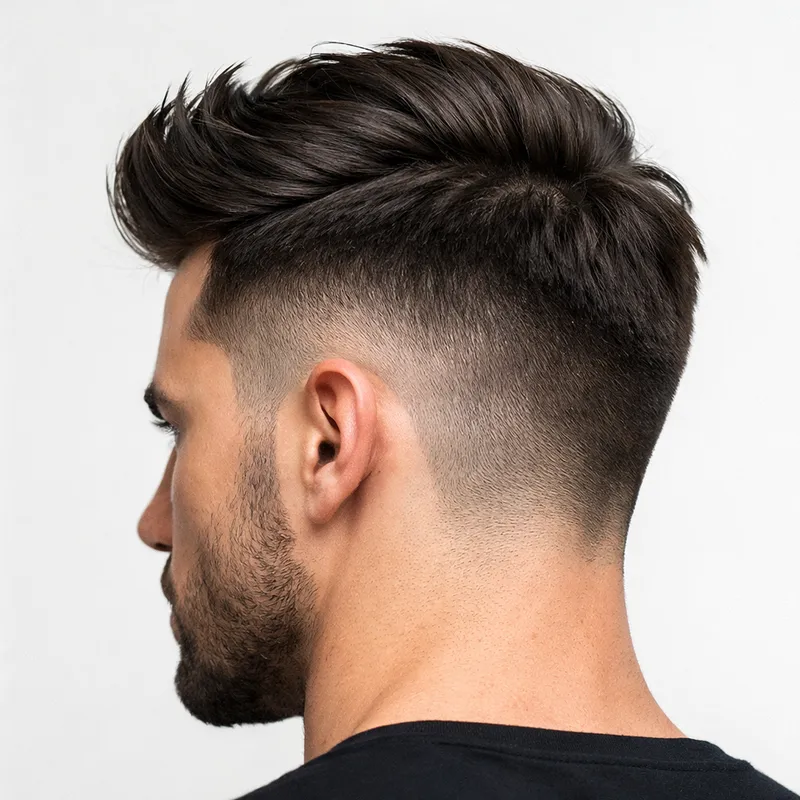
Short Haircuts
Short styles are about clean structure. They sharpen your features, look intentional in any setting, and are easy to maintain if you stay on schedule. The key is choosing the right side finish (taper vs fade) and making sure the top has enough texture to avoid a flat “helmet” look.
Best for
Low styling time, active routines, defined look, frequent shape-ups.
Great pairings: taper + textured top, crop + low fade, crew cut + taper.
Choose this if…
You want a haircut that looks sharp even when you do nothing—just wash, dry, and go.
Watch out: very high fades can make the top look smaller if your face is long/oblong.

Medium Haircuts
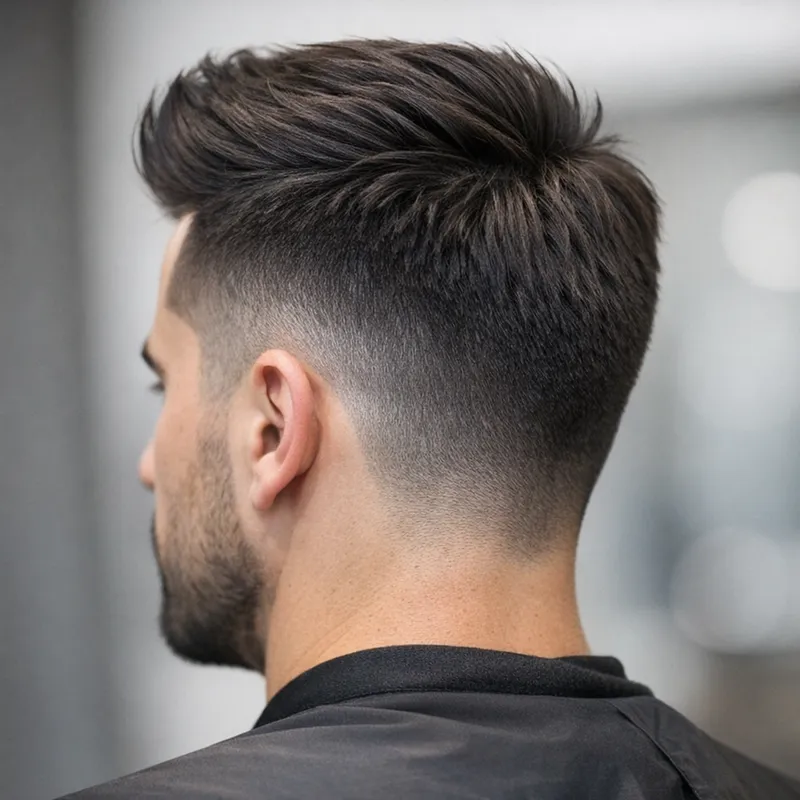
Medium haircuts are the most versatile category: professional when controlled, casual when relaxed, and trend-forward when you add texture and movement. The secret is shape—medium length needs layering and weight control so it looks “designed,” not simply grown out.
Best for
Versatility, styling flexibility, balanced proportions, easy grow-out.
Great pairings: low taper + side part, textured quiff, relaxed curtains.
Choose this if…
You want multiple looks from one cut: forward, side-parted, pushed back, or messy texture.
Watch out: skipping texture can make medium hair look heavy at the sides.
Long Haircuts
Long hair is not “no haircut.” The difference between effortless and messy is usually layering, shape around the face, and whether the ends are healthy. A great long cut keeps movement, reduces bulk where needed, and still looks good tied back.
Best for
Texture, movement, personal style, versatile tie-back options.
Great pairings: long layers, bro flow, modern mullet/flow variations.
Choose this if…
You’re willing to maintain shape (trims) and use basic conditioning so the ends stay sharp.
Watch out: heavy, one-length cuts can widen the sides if your hair is thick.
If you’re stuck between two lengths…
Choose the one you can maintain. A haircut that matches your routine will look better 30 days later than a “perfect” haircut you don’t style. If you’re not going to blow-dry, lean toward textured cuts that work air-dried (crops, messy layers, natural flow).
Guys Haircuts by Face Shape
Face shape guidance isn’t about rules—it’s about control. Your haircut can create structure where you want it: add height, reduce width, soften angles, or sharpen them. When the proportions match, everything looks more “put together,” even with minimal styling.
Fast way to estimate your face shape
Use a straight-on photo in good light. Compare forehead width, cheekbone width, and jaw width. Then choose a haircut that balances what’s dominant. If your face looks wider than it is, keep the sides tighter and add controlled height. If it looks long, avoid excessive height and keep some width/weight on the sides.
Oval
Balanced proportions. Most haircuts work—choose based on hair type and maintenance level.
Round
Add height and keep the sides tighter to create definition and a more structured outline.
Square
Strong angles. Choose texture for a modern look—or go sharp and clean for a bold, classic vibe.
Rectangle / Oblong
Avoid too much height. Keep some width at the sides and consider fringe to balance length.
Diamond
Cheekbones stand out. Balance by controlling side bulk and using texture or fringe strategically.
Heart
Wider forehead, narrower jaw. Controlled volume and softer styling can balance proportions.
Triangle
Stronger jaw presence. Add height/structure on top and avoid heavy width at the jawline.
Face Shape Guide
Want the full breakdown with examples and “what to avoid”? Start with the master guide.
Face-shape rules that actually matter
- Round: keep sides tight + add controlled height.
- Long/oblong: reduce height + keep some side weight; fringe often helps.
- Square: texture softens; sharp lines amplify definition.
- Oval: most styles work—optimize for hair type and lifestyle.
Guys Haircuts by Hair Type
Hair type decides how a haircut behaves in real life: after a shower, in humidity, under a hat, two weeks later, and on a day you don’t style it. The most effective haircut is the one that works with your hair’s natural pattern—not against it.
Straight / Fine / Thin Hair
Straight hair shows every detail: the outline, the layers, and the density. If your hair is fine or thin, the goal is to create the illusion of fullness with texture and smart length choices. Short-to-medium textured styles often look denser than longer slick styles that separate hair and expose the scalp.
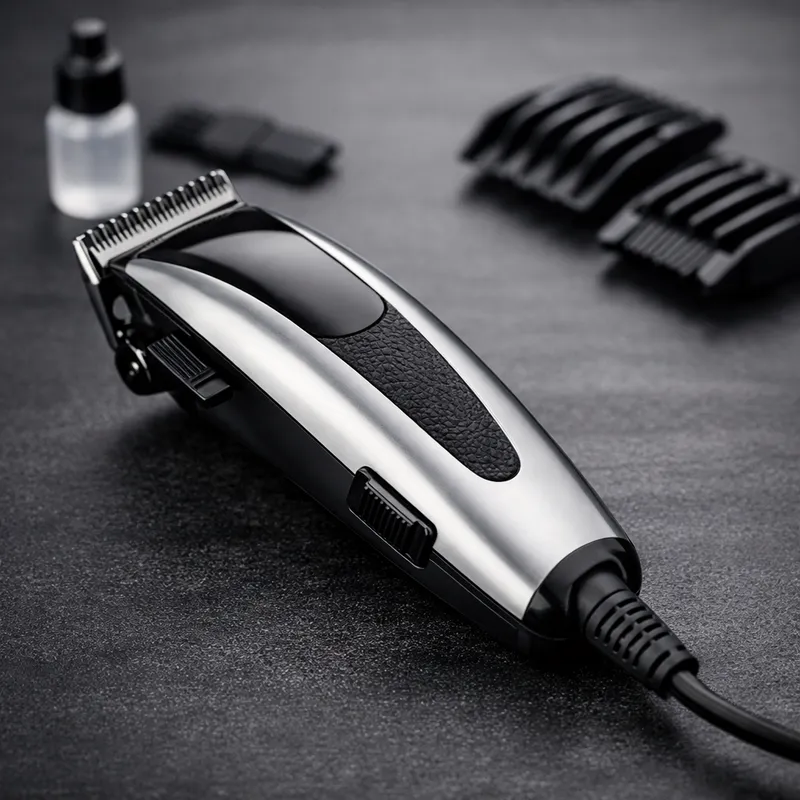
Wavy / Curly / Coily / Thick Hair
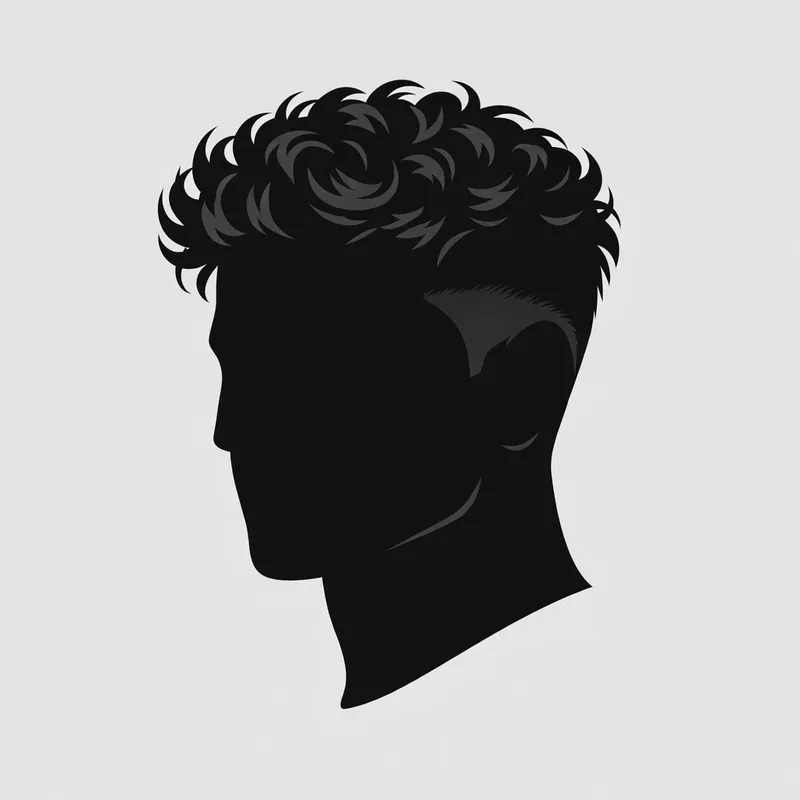
Texture adds personality, but it needs shape control. Wavy hair benefits from layered movement. Curly hair needs a clear silhouette so it doesn’t balloon at the sides. Coily hair looks best with a defined outline (taper/fade) and a top shape that matches your curl size and density.
Hair-type shortcuts (simple, but powerful)
- Straight hair: ask for texture so it doesn’t sit flat; avoid bulky, blunt shapes.
- Wavy hair: layers create flow; avoid over-thinning if it frizzes.
- Curly hair: shape the silhouette; keep edges clean with a taper for a sharper look.
- Coily hair: define outline + top shape; maintenance is about keeping the edges crisp.
- Thin/thinning: prioritize density; go textured; avoid heavy slick-backs that separate hair.
Want a haircut that looks better every week (not worse)?
The difference is usually one decision: choosing a cut that grows out cleanly. If you want that “fresh” look to last longer, ask for soft structure (taper/low fade) and a textured top.
You don’t need more haircut photos—you need the right instructions. That’s what the next section gives you.
Barber Language: How to Ask for the Haircut You Actually Want
“Short on the sides, longer on top” is where misunderstandings begin. Barbers and stylists need a few key details to match what’s in your head: where the sides start changing, how the top is shaped, and what finish you want at the edges.
Use this section like a checklist. If you communicate these points clearly, you’ll get better haircuts even when you’re trying a new barber, switching from fade to taper, or growing your hair out.

Taper vs Fade (and how high)
A taper looks more natural and grows out smoothly. A fade looks bolder and cleaner, especially around the ears and neckline. The “height” (low/mid/high) changes your head shape visually—high fades can make the top look smaller on longer faces.
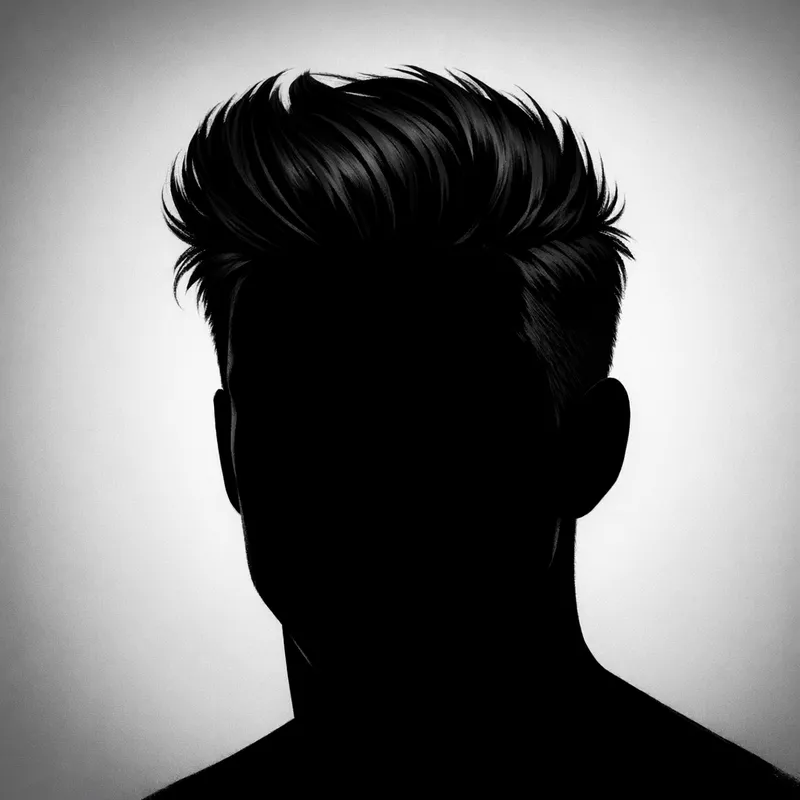
Blended vs Disconnected
Blended means the sides transition smoothly into the top—more timeless and forgiving. Disconnected (undercut style) creates a sharp separation—more dramatic, but it requires clearer styling and can look harsh if your hairline is uneven.
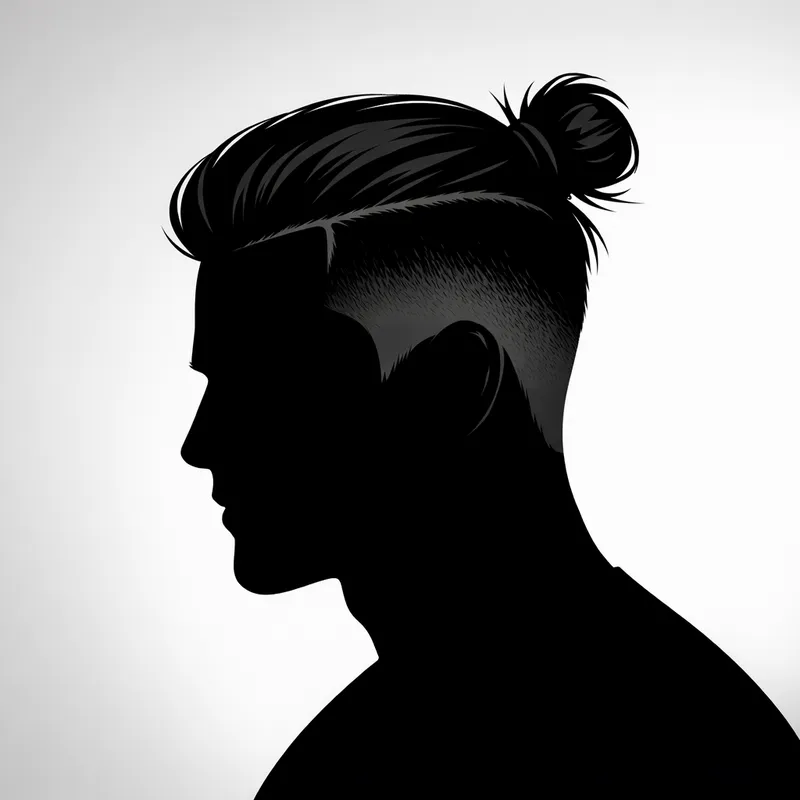
Texture and Direction
Texture is what makes hair look modern and natural. Ask for the top to be texturized so it moves and restyles easily. Then choose a direction: forward (crops), side (classic), up/back (quiff/pompadour), or loose (flow).
Copy‑paste barber scripts (use these verbatim)
1) Clean, low-maintenance, professional
“I want a low taper (not a high fade), a natural neckline, and a textured top that I can wear without much product.
Keep enough length on top to style forward or to the side.”
2) Modern, textured, grows out well
“Give me a mid taper or a soft mid fade, keep it blended (no harsh disconnect),
and add texture on top. I want it to look good as it grows—no boxy edges.”
3) Curly control with a sharp outline
“Keep my curls on top, clean the outline with a taper, and shape the bulk so it doesn’t widen at the sides.
I want definition, not volume everywhere.”
Pro tip: bring 2–3 reference photos that match your hair type. Haircut names vary; photos don’t.
Styling & Tools: Make Your Haircut Look “Finished” in Minutes
A good haircut should work with minimal effort—but the right product turns “fine” into “dialed.” If your haircut collapses, frizzes, or looks flat by midday, it’s rarely the haircut alone; it’s usually a mismatch between your hair type and your product (or applying it the wrong way).

Pomade (shine + structure)
Best for slick backs, side parts, and classic styles where you want control. Start light—more product isn’t better; it just looks greasy. If you hate shine, switch to a matte paste or clay.

Gel (strong hold, high definition)
Use gel when you want a sharp, lasting shape (especially for wet looks). If it feels crunchy, you’re using too much or applying it too dry. For a softer finish, consider mousse or styling cream.
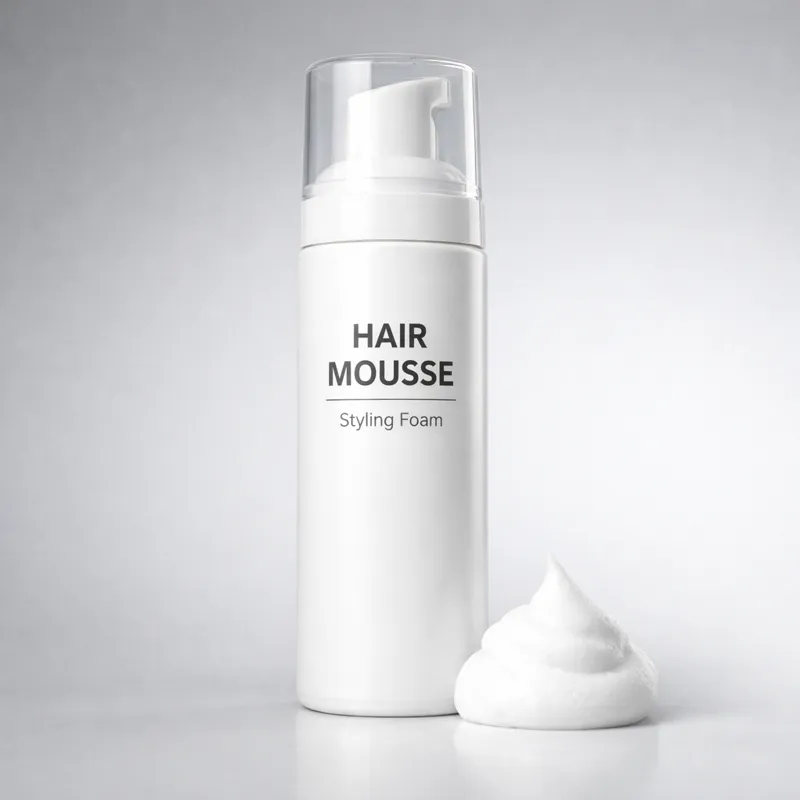
Mousse (volume + natural texture)
The underrated move for fine hair, waves, and curls. Mousse boosts volume and definition without weighing hair down. Apply to damp hair, then air-dry or blow-dry for a clean finish.

Maintenance that keeps a haircut looking expensive
Your haircut doesn’t “go bad” randomly—it loses shape predictably. If you want to look consistently sharp, schedule around the outline: keep edges clean, keep the neckline intentional, and refresh the sides before the top becomes a different hairstyle.
- Short hair: cleanup every 2–4 weeks (outline matters most).
- Medium hair: cleanup every 4–6 weeks (shape + texture).
- Long hair: trim every 8–12 weeks (ends + layers).

The 2-minute styling method (works for most guys)
If you want a reliable everyday routine, keep it simple: control direction first, then add texture or shine. Most styling problems come from applying product too late, on hair that’s already dry and set.
- Start with slightly damp hair (or dampen your hands and run through).
- Set direction with a comb or your fingers (forward / side / back).
- Use a small amount of product (pea-sized), warm it up, apply from back to front.
- Finish by pinching texture or smoothing for control.
Want recommendations that match your exact hair?
If you want a short list of haircuts that match your hair type, face shape, and maintenance level, use our guide pages and save your favorites. When you’re ready, grab the barber script and walk in with confidence.
FAQs: Haircuts for Guys
These are the questions that matter in real life: what to ask for, what works for your hair, and how to avoid the common mistakes that turn a good idea into a bad result.
What haircut should I get if I have no idea what suits me?
What’s the real difference between a taper and a fade?
How do I describe a haircut to my barber so I actually get it?
What haircuts are best for thin or thinning hair?
How often should I get a haircut?
Do I need product for a good haircut?
Next step: choose one route and commit for one haircut cycle
Pick one category (length, face shape, or hair type), choose a style, and run it for one full cycle. That’s how you learn what works fast—without bouncing between random trends.