
Wahl clipper guards made simple: sizes, fit, and the set that actually works
Most people searching “Wahl clipper guards” are trying to solve one frustrating problem: they want the right length and a guard that fits securely — without guessing, wasting money, or ending up with harsh lines in their fade.
This guide is built for real-world results. You’ll get a clean size chart, a fast compatibility checklist (full-size clipper vs trimmer vs detachable systems), and practical techniques that make guards cut smoother — even if you’re trimming your own hair at home.

Guard numbers in inches + mm, plus what each length actually looks like on men’s hair.
Fast checklist for full-size clippers, trimmers, detachable blades, and “5‑in‑1” systems.
A beginner-friendly ladder that reduces lines by using #0.5 and #1.5 correctly.
Guards popping off, snagging/pulling, uneven cuts, and why your “#2” doesn’t look like theirs.
Wahl clipper guard sizes (inches + mm) — with real use cases
Use this as your fast reference. Higher number = more hair left. For fades, the half guards are the secret weapon.
Guard numbers can look simple on paper — but what you actually want is control. The “right” guard is the one that gives you enough length to shape without leaving you stuck with a patchy result.
If you only remember one rule: build your haircut in steps. When you jump from short to long too quickly, your clipper creates a visible shelf (“the line”). This is why the #0.5 and #1.5 matter so much: they’re the bridge lengths that make blending easy.
| Guard | Length (in) | Length (mm) | What it’s best for | Common mistake to avoid |
|---|---|---|---|---|
| #0.5 (often labeled #1/2) | 1/16″ | 1.5 mm | Shortest guarded length; fade base; clean “shadow” finish | Going straight from #0.5 to #2 (creates a hard line) |
| #1 | 1/8″ | 3 mm | Tight buzz; short sides; first blend step | Pressing too hard (can look uneven) |
| #1.5 (often labeled #1‑1/2) | 3/16″ | 4.5 mm | Blending step; smoothing transitions in fades | Skipping it (you’ll see the “#1 to #2” jump) |
| #2 | 1/4″ | 6 mm | Classic buzz length; clean, low-maintenance sides | Cutting too high too fast (boxy look) |
| #3 | 3/8″ | 10 mm | Soft crew sides; safer DIY length (less scalp show) | Not blending into the top (creates a step) |
| #4 | 1/2″ | 13 mm | Balanced “clean but not short”; easy taper length | Expecting it to look like scissor texture (it’s still clipper-cut) |
| #5 | 5/8″ | 16 mm | Longer upper sides; blending to a longer top | Rushing passes (long guards need slower feed) |
| #6 | 3/4″ | 19 mm | Long clipper work; shaping without scissors | Cutting with wet hair (can grab and cut unevenly) |
| #7 | 7/8″ | 22 mm | Clipper-only longer styles; maintaining length | Expecting one pass to be perfect (do multiple light passes) |
| #8 | 1″ | 25 mm | Longest common guard; top length for simple cuts | Using heavy pressure (can bend hair and cut shorter) |
| #10 (extra‑long) | 1.25″ | 32 mm | Extra length without scissors; soft, longer shapes | Skipping sectioning (long guards benefit from direction control) |
| #12 (extra‑long) | 1.5″ | 38 mm | Longest common “long guard”; easy maintenance trims | Expecting it to replace scissor layering (it won’t add texture) |
Tool: Find the closest Wahl guard for a target length
No signup, no forms. Just a fast way to stop guessing.
If you know roughly how much hair you want left — in mm or inches — use this tool to find the closest guard number. It also shows the nearest shorter and longer options so you can decide whether you want a tighter or safer finish.
Guard Length Finder
Wahl clipper guard types (what you’ll actually see when shopping)
“Wahl guards” can mean different guard families. Knowing the category prevents the wrong purchase.
The phrase Wahl hair clipper guards gets used loosely online. In practice, you’ll see a few distinct styles. They all aim to do the same job — hold hair at a consistent length — but the experience can be dramatically different.
1) Standard plastic guards (basic sets)
These are the guards most people start with. They’re fine for basic maintenance trims and one-length buzz cuts. Where they tend to struggle is the moment you ask them to do precision blending: they can flex slightly, feel less stable on thick hair, or shift if you push too hard.
2) “Premium” / reinforced guards (stronger feel, more secure hold)
Premium-style guards are designed to feel more rigid and stay locked in place. If you’ve ever had a guard pop off mid-cut, this category is your upgrade path. The biggest benefit isn’t luxury — it’s consistency. Consistency is what turns “close enough” into “that actually looks clean.”
3) Secure-fit / secure-snap style guards (stability-first)
Some guard lines focus on a more positive snap/lock. This matters most if you cut frequently, work fast, or have dense hair that pushes hard against the comb. A more secure connection reduces surprise slip, which reduces visible mistakes.
4) Color-coded sets (speed and zero confusion)
This is a practical feature, not a gimmick. When you’re mid-cut, you want the next guard instantly — especially when you’re fading and stepping through multiple lengths. Color-coding is one of the simplest ways to reduce DIY errors.
5) Extra-long guards (#10, #12)
If you want to keep more length without switching to scissors, long guards are the bridge. They’re also useful when you want a longer, softer taper instead of a very short fade.

Do Wahl clipper guards fit all Wahl clippers? Compatibility checklist (no confusion)
This is the #1 reason people buy the wrong guards.
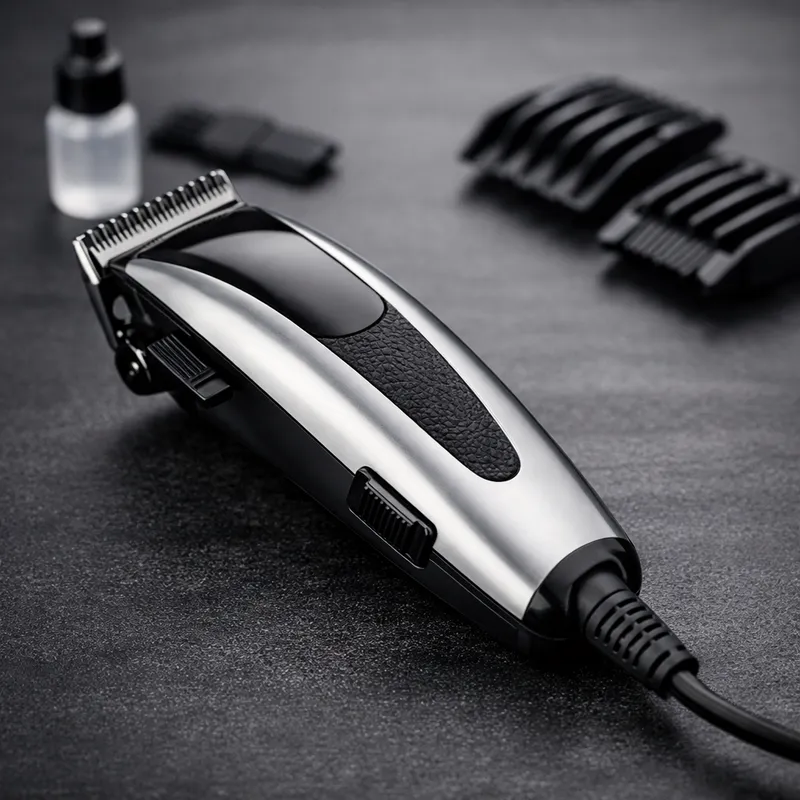
Not every Wahl tool uses the same guard system. “Wahl guards” can refer to: full-size hair clipper guards, trimmer guards, or guards built for detachable blade systems. They can look similar in photos — but they don’t behave the same.
Fast checklist (read this before you buy)
- Full-size hair clipper (wide blade, typical haircut clipper): you want full-size clipper guards / guide combs.
- Trimmer (narrow blade for lineups/edges): you want trimmer guards (different shape).
- Detachable blade clipper (blade unit removes and swaps): you need guards made for detachable blades.
- “5‑in‑1” systems: these usually use their own dedicated attachments — not standard full-size clipper guards.
Compatibility Assistant
Choose what you’re using and get the correct guard category plus a buying tip.
Which Wahl clipper guard set should you buy? A practical decision guide
You’re not buying plastic — you’re buying fewer mistakes and better consistency.
The “best” guard set isn’t the most expensive one. It’s the set that matches your tool, includes the lengths you actually need, and stays stable while cutting. Use these scenarios to pick the right direction fast.
If you only need replacements (lost a couple guards)
- Match your category first: full-size clipper vs trimmer vs detachable blade.
- If your old guards were loose, replacements won’t fix the underlying issue — consider a more secure style set.
- If you cut often, a full set + case prevents the “one missing guard ruins the whole fade” problem.
If you want cleaner fades and smoother blending
- Non‑negotiable lengths: #0.5 and #1.5.
- Choose a set that feels stable: less flex usually means less accidental line creation.
- Plan to do fades in steps. A clean fade is usually more passes, not more pressure.
If your guards pop off or shift
- Upgrade to a more secure-fit style (the goal is a stronger lock and more rigidity).
- Also fix technique: heavy pressure increases slipping risk and creates uneven cutting.
If you want longer hair without switching to scissors
- Add extra-long guards like #10 and #12.
- Long guards work best with slow, consistent passes and hair that’s dry and brushed out.
How to attach Wahl clipper guards correctly (so they don’t pop off)
Most “guard problems” are attachment + pressure problems.
Guards are designed to lock onto the blade. If they’re not seated correctly, the guard can shift mid-pass. That usually creates a sudden short patch or a visible line — the exact thing you’re trying to avoid.
- Start clean: brush out the blade teeth so hair isn’t blocking the guard from seating.
- Hook then snap: align the guard and press until it feels fully locked (avoid forcing at an angle).
- Do a quick tug test: if it slides, reattach. Don’t “hope it holds.”
- Use light pressure: let the clipper cut; pressure is what turns stable guards into slipping guards.
- Repeat for safety: when switching guards during a fade, do the tug test every time.
How to fade with Wahl clipper guards (and avoid harsh lines)
Clean fades come from transitions — not from cutting “closer.”
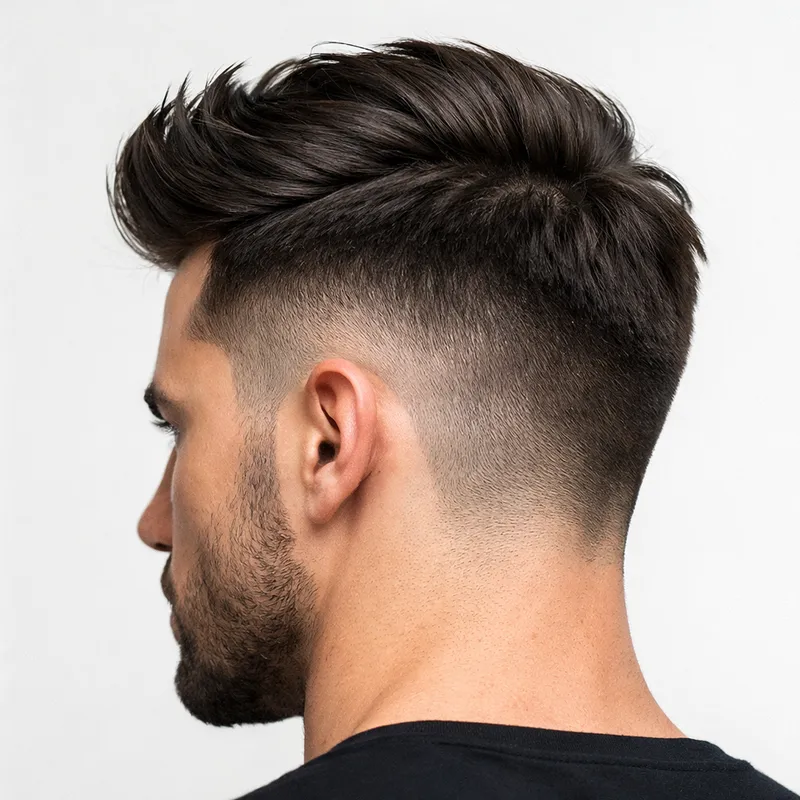
A fade is a controlled transition between lengths. The fastest way to ruin it is to treat the haircut as one big pass upward. Instead, think in stacked zones with small overlaps — and use the half guards as the “bridge” lengths.
The “no-drama” fade ladder (beginner-friendly)
- Base (lowest section): #0.5
- Blend step: #1
- Blend step: #1.5
- Shape: #2
- Upper sides: #3 (or #4 for a softer, more natural finish)
The motion matters: move upward, then flick out at the top of each zone. Flicking out prevents the clipper from digging into the next length and carving a hard line.
Fade Ladder Builder + Barber Script
Build a simple ladder, then copy a clear script you can use at home or bring to your barber.

Guard number recipes for common men’s cuts
Use these as starting points, then move one guard up or down based on hair density and how much scalp you want showing.
These “recipes” are designed to be realistic. They focus on lengths that are forgiving and easy to maintain. If you’re cutting your own hair, the goal is not perfection on the first attempt — it’s building a repeatable system.
1) One-length buzz cut (clean, minimal effort)
- #1: very short, more scalp visibility
- #2: classic buzz (most common)
- #3: longer buzz, softer look
2) Low taper (clean sides without looking “faded”)
- Sides/back: #1 → #2
- Upper sides: #3
- Top: keep as-is (scissors) or use #6–#8 for a clipper-only maintenance trim
3) Low fade (safe, wearable, easy to maintain)
- Bottom: #0.5
- Blend: #1 → #1.5
- Shape: #2
- Upper sides: #3 or #4
4) Crew cut vibe (structured, classic)
- Sides: #2–#3
- Top: #4–#6
Common problems (and the real fixes)
Most issues are either compatibility, attachment, blade condition, or pressure.
“My Wahl clipper guards don’t fit.”
This usually means you bought the wrong category: full-size clipper guards vs trimmer guards vs detachable blade guards. Start by identifying your tool type. Full-size hair clippers use wide blades; trimmers are narrow and made for edges.
If your guard “almost fits,” don’t force it. Forcing a mismatched guard can cause slipping and uneven cutting. Use the Compatibility Assistant above to get the right guard category fast.
“The guard keeps popping off.”
First fix attachment: hook, snap, then tug test. Second fix technique: lighten pressure. Guards pop off when they aren’t seated or when you’re pushing hair into the comb too aggressively.
If it still happens, upgrade to a more secure-fit style set. The goal is a tighter lock and less flex.
“It pulls hair or snags.”
Pulling is often friction: a dry blade, a dull blade, or hair packed into the teeth. Brush out the blade, oil it, and cut more slowly with smaller passes.
Also cut with direction awareness. Cutting hard against growth can be effective, but if the hair is long and dense, do a light pass first to reduce bulk, then refine.
“I keep getting lines in my fade.”
Lines come from big jumps. The simplest fix is to add bridge steps: #0.5 → #1 → #1.5 → #2. Then flick out at the top of each zone.
Avoid “digging into the line.” Instead, blend around it with lighter pressure and short, controlled strokes.
“My #2 doesn’t look like the pictures online.”
Density and texture change everything. A #2 on thick, dark hair can look fuller than the same #2 on fine hair. Also, lever position can subtly change the cut, and some brands round lengths differently.
Use pictures as style references, but use guards as your measurement system. If it looks too short, go one guard up next time.
Cleaning and storage (guards + blades)
A clean clipper cuts smoother. A smooth cut looks more expensive.
Guards don’t “go bad” easily — but blades do. Most performance problems that get blamed on guards are actually blade issues: hair packed in the teeth, dry metal, or a blade that’s overdue for maintenance.
- Brush after every use: trapped hair changes feed and can cause snagging.
- Oil the blade regularly: less heat, less friction, cleaner cutting.
- Store guards in a case: loose drawer storage is the fastest way to lose the one guard you always need.
- Keep guards dry: moisture can warp cheaper plastics over time.
FAQs about Wahl clipper guards
Clear answers to the questions people actually ask before buying or cutting.
What size is a #1 Wahl guard?
A #1 guard is typically 1/8 inch (about 3 mm). It’s a common short-side length and a key blend step.
What is a #0.5 Wahl guard used for?
#0.5 (often labeled #1/2) is typically 1/16 inch (about 1.5 mm). It’s used for tight fades, clean base sections, and “shadow” finishes that look sharp without going fully skin.
Do I really need a #1.5 guard?
If you fade or blend, yes. #1.5 is the bridge between #1 and #2. Without it, many DIY fades end up with a visible step where the lengths jump.
Are Wahl clipper guards universal?
Not across all Wahl tools. Full-size clipper guards are different from trimmer guards, and detachable blade systems use a different approach. Always match the guard category to the tool type.
Why do guards sometimes leave a different length than expected?
Hair density, growth direction, blade sharpness, lever position, and pressure can all change the final look. Use the guard chart as your baseline, then adjust one step up or down to dial in your personal result.
What’s the best Wahl guard set for beginners?
The best beginner set is the one that fits your tool securely and includes the half guards. Look for a full-size clipper set that includes #0.5 and #1.5, plus a stable feel. That combo makes clean blending dramatically easier.
What are Wahl long guards (#10 and #12) used for?
Long guards help you keep more length without switching to scissors. They’re useful for longer maintenance trims and softer tapers where you don’t want short sides.
How do I stop my guards from popping off?
Seat the guard correctly (hook, snap, tug test) and reduce pressure while cutting. If it still happens often, switch to a more secure-fit style guard set for better stability.
Can I do a good fade at home with Wahl guards?
Yes, if you fade in steps and use half guards. Use the Fade Ladder Builder above and focus on light pressure + flick-out motion at the top of each zone.
What should I tell my barber if I want a specific guard fade?
Use a simple script: fade height + bottom guard + blend steps + top-of-sides guard. The builder above generates a clear script you can copy and show at the shop.
Next step: stop guessing and get your exact look
If you’re cutting at home, your fastest improvement is consistency: the same guard ladder, the same zones, the same light pressure. If you want a guaranteed clean result, a skilled barber can match your target guard numbers and perfect the blend in minutes.
