
Trim a cleaner beard at home — with the right trimmer, the right length, and the right technique
A “good beard trimmer” isn’t the one with the most hype. It’s the one that matches your beard length, your hair type, and how you actually groom in real life (sink, shower, travel, quick weekday touch-ups).
This page is built to help you choose confidently and trim better — without overcutting your neckline, creating uneven sides, or ending up with a patchy silhouette. You’ll also find quick tools that generate a shopping checklist and guard-length starting point in seconds.
Stop guessing specs
The Finder turns your beard situation into a clear spec profile: precision range, guard system, cleaning needs, and what to prioritize if you have thick, curly, or coarse facial hair.
Get the right length (first try)
“Short beard” can mean anything. Use the guard-length chart and slider to choose a safe starting setting — then step down only where needed. That single habit prevents most trimming disasters.
Sharper lines, more natural look
You’ll learn the neckline and cheek line rules that make a beard look clean without looking carved or artificial — especially important if your cheeks are patchy or your beard grows in uneven zones.
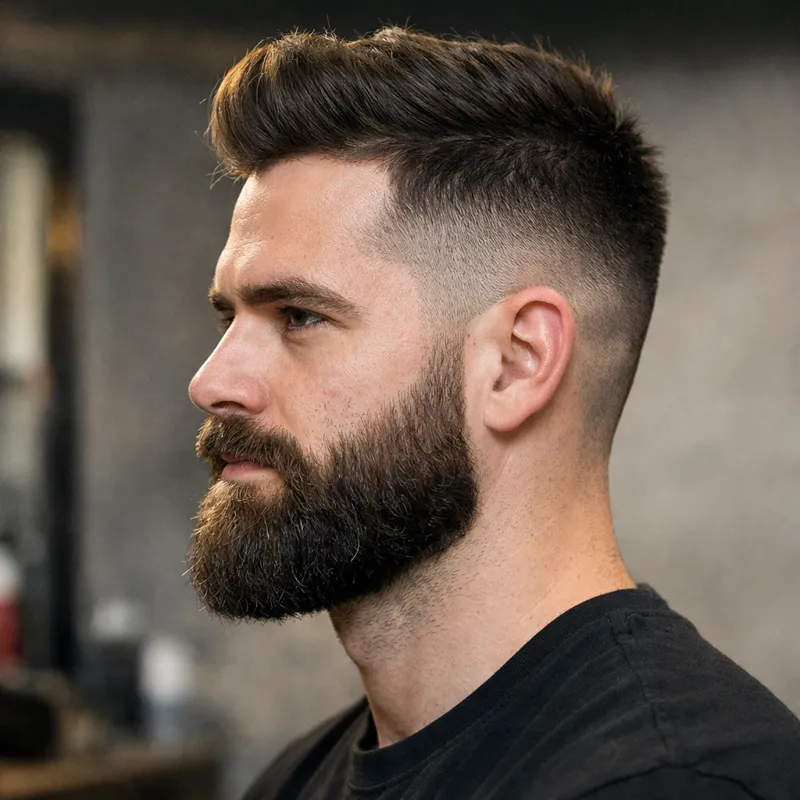
Beard Trimmer Finder (60 seconds)
Most “best beard trimmers” pages give you a list and hope you match yourself to it. That’s backwards. The smarter approach is: define your trimming profile first, then shop with a checklist.
Use this tool to generate a practical recommendation that covers: the best tool type (beard trimmer, clipper-style trimmer, detail trimmer, or hybrid), what features matter for your beard length, and a safe starting guard length to avoid overcutting.
Important: This tool is designed to improve decisions, not sell a specific brand. You can use the result to compare any beard trimmer, beard clipper, face trimmer, or beard-and-stubble trimmer you’re considering.
Your result will appear here
Tip: start by selecting a beard length chip (stubble/short/medium/long) — that one choice changes what “best beard trimmer” really means.
Top Picks (by real use case, not hype)
Here’s the truth: there’s no single “best beard trimmer” for everyone. The best pick depends on whether you’re controlling stubble every other day, maintaining a short beard, shaping a longer beard, or dialing in crisp lines around the neck and cheeks.
A versatile cordless beard trimmer (adjustable guard + easy cleaning)
If you want one tool that handles most beard lengths without drama, prioritize a stable adjustable guard system, consistent cutting (no snagging), and cleaning that’s simple enough to actually do.
- Look for: solid guard lock, multiple length steps, good grip, rinseable head.
- Avoid: flimsy combs that flex (they cause uneven length).
- Best for: short to medium beards, weekly maintenance.
A stubble trimmer with tight precision steps (0–5mm)
Stubble is where most tools fail: you need small adjustments, comfortable cutting, and a setting that stays consistent across the jawline. If you keep a “designer stubble” look, precision matters more than raw power.
- Look for: micro-steps, comfortable blades, predictable settings.
- Avoid: aggressive no‑guard trimming if you’re prone to irritation.
- Best for: 5 o’clock shadow, daily/near-daily upkeep.
A detail trimmer (edger) for neck + cheeks + mustache
Clean lines are a different job than trimming overall length. A dedicated detail trimmer (often a T‑blade style) gives you visibility and control for borders without forcing you to “freehand” with a bulky tool.
- Look for: precision head, good visibility, stable handling.
- Avoid: edging too high on the neck (it shrinks the beard).
- Best for: goatees, cheek lines, under-lip cleanup, neckline detailing.
A higher‑torque trimmer or clipper‑style tool (bulk control)
Thick, coarse, or curly facial hair needs consistent torque. If your trimmer pulls, stalls, or leaves random long hairs, you usually need more cutting power and better comb stability.
- Look for: consistent power, strong battery, rigid guards.
- Avoid: rushing against the grain (it increases tugging).
- Best for: dense beards, faster bulk reduction.
A trimmer + longer guards (often paired with scissors)
Long beards look best when you preserve density and refine the silhouette. Many long-beard mistakes come from trying to “even everything out” with one aggressive pass. For length, think: shape first, then detail.
- Look for: longer guards, stable comb teeth, easy maintenance.
- Avoid: setting one short length across the whole beard (it flattens the shape).
- Best for: medium to long beards, silhouette shaping.
A washable trimmer (or vacuum-style) if sink mess stops you trimming
Consistency is the real secret. If beard hair all over the sink is what makes you procrastinate, choose a setup that’s easier to clean. That alone increases how often you maintain your beard — which increases how good it looks.
- Look for: washable head, easy disassembly, quick dry.
- Optional: a vacuum / hair‑collector design (if available).
- Best for: busy routines, tidy grooming.
Want the fastest path to a “barber-clean” result?
If you’re fixing a shape that has drifted (uneven sides, harsh neckline, patchy cheeks) the quickest win is one professional reset — then you maintain it at home with fewer mistakes.
Beard Trimmer vs Clippers vs Shavers (quick decision matrix)
Confusing tools is how people buy the wrong thing. Use the matrix below to decide if you need a beard trimmer, beard clippers, a face trimmer, a detail trimmer, or an electric shaver.
| Tool | Best for | Not great for | Best buyer profile |
|---|---|---|---|
| Beard trimmer | Setting beard length, blending, shaping, general maintenance | Skin-close shaving and ultra-crisp edging | Most men with short-to-medium beards |
| Hair clippers / beard clippers | Bulk removal, fast reduction, thick beard control | Fine detail around lips and tight cheek lines | Thick/coarse beards or long beards that need bulk management |
| Detail trimmer (edger) | Neckline, cheek lines, mustache corners, goatee edges | Even length across a full beard | Anyone who cares about crisp borders |
| Electric shaver | Smooth finish, shaving below the neckline, clean cheeks | Length control and shaping longer beards | Men who like clean-shaven areas next to a beard |
| Hybrid (trimmer + shaver) | Stubble control + light shaving, quick daily cleanup | Long beard length control | “Always stubble” routines and fast touch-ups |
Practical rule: if you want shape + length, start with a beard trimmer. If you want skin-close, add a shaver or hybrid. If you want clean lines, add a detail trimmer.
How to Choose a Beard Trimmer (the 10‑point framework)
A beard trimmer can look “premium” and still trim badly for your beard. This framework helps you choose based on what actually affects results: comfort, consistency, guards, cleaning, and how well the tool matches your beard length.
The only goal that matters
You’re not buying features. You’re buying a result: even length + clean silhouette + clean borders without tugging. Every point below supports that outcome.
1) Precision range (especially for stubble)
For stubble and short beards, precision steps matter because 1–2mm changes your entire look. If you trim at 2mm, 3mm, or 4mm, you want those settings to be repeatable. For medium and long beards, you care more about stable guards than micro-steps.
2) Guard system (cheap guards destroy good trims)
Guards should lock in solidly and stay flat against the face. Flexible guards create inconsistent pressure, which creates uneven length along the jaw and under the chin. If your beard always looks “randomly longer” in spots, it’s often a guard stability issue.
3) Cutting comfort (tugging is a signal)
Tugging usually means dull blades, poor maintenance, or using the wrong direction/pressure. Don’t solve tugging by pressing harder. A trimmer should cut smoothly at a normal pace. If it pulls frequently, either the blades need cleaning/oiling/replacing, or the trimmer isn’t strong enough for your hair type.
4) Motor consistency (thick/coarse hair needs torque)
Thick beards punish weak motors. You’ll see it as stalling, snagging, or leaving long hairs behind. If you have coarse facial hair, prioritize consistent power and rigid guards — that combination is what creates a clean finish.
5) Cleaning (the trimmer you clean is the trimmer that works)
If cleaning is annoying, you won’t do it. And if you don’t clean it, performance drops. Choose a trimmer that can be rinsed easily (when supported), or one that disassembles without tools. A clean head cuts smoother and helps reduce irritation.
6) Cordless vs corded (what matters in real life)
Cordless makes angles easier, especially when you’re trimming your neckline or detailing a mustache. Corded offers consistent power, but the cord can get in the way. If you travel or touch-up often, cordless is usually the move. If you want a backup that never dies, a corded option can be smart.
7) Waterproof vs “rinseable” (know the difference)
Some trimmers are fully waterproof; others are only safe to rinse under water. If you plan to trim in the shower, waterproof matters. If you trim at the sink, rinseable is often enough — but always follow the manufacturer’s cleaning instructions for your model.
8) Ergonomics (control beats power)
Control is what makes lines clean. Look for a grip that doesn’t slip, a head shape that gives visibility, and a balance that feels stable when you rotate around the jaw and under the chin.
9) Attachments (only count what you’ll actually use)
A grooming kit can be great — or it can be a drawer of unused plastic. The attachments that actually matter are: a stable guard set, a detail head for edges, and (optionally) a body hair head if you truly want one tool.
10) Replacement parts (blades and guards)
Blades don’t last forever. If you trim often, being able to replace blades or guards is practical. A trimmer that’s slightly more expensive but easy to maintain can be the better long-term buy.
Quick self-check: If your beard looks worse after trimming, your trimmer isn’t always the problem — it’s usually (1) starting too short, (2) trimming wet, or (3) setting the neckline too high. Fix the method first. Then upgrade the tool if the problem remains.
Guard Length Guide (stubble to long beard) + Quick Length Tool
Beard trimmers become easy when you stop thinking in “short / medium / long” and start thinking in millimeters. This section gives you a practical length map and a slider tool to pick a safe starting point.
Common beard length zones
- 0.4–1mm: shadow / ultra-short stubble (high precision, high risk if you go too low)
- 2–3mm: tight stubble (clean, defined, still looks natural)
- 4–6mm: stubble-to-beard transition (great “always sharp” range)
- 7–10mm: short beard sweet spot (most forgiving range)
- 11–20mm: medium beard (needs stable guards + silhouette thinking)
- 20mm+: long beard (shape first; many guys pair trimmer + scissors)
Tip: “Shortest beard trimmer” isn’t automatically better. Ultra-short settings are less forgiving and can highlight patchiness.
Move the slider to see what the length usually looks like and how to use it safely.
Length guidance
Move the slider to see recommendations.
Safe rule: If you’re unsure, start longer than you think, do one full pass with the grain, then step down only where it’s bulky (usually the sides and jaw corners).
| Length | Best use | What it fixes | Common mistake |
|---|---|---|---|
| 1–3mm | Stubble beard trimmer routines, sharp “shadow” | Uneven stubble, rough texture | Going too short and highlighting patches |
| 4–6mm | Defined stubble, low-maintenance beard look | Scruffy growth without committing to a beard | Carving harsh lines that look unnatural |
| 7–10mm | Short beard maintenance | Messy jawline, uneven sides | Trimming against the grain too aggressively |
| 11–20mm | Medium beard silhouette shaping | Bulk in the sides, beard looking wide | Using one length everywhere (flattens shape) |
| 20–30mm+ | Long beard shape + cleanup | Flyaways and uneven edges | Over-evening and losing density |
How to Trim Your Beard With a Beard Trimmer (Start Long → Step Down → Detail)
Most trimming mistakes come from one move: starting too short. The method below makes it hard to ruin your beard because it forces you to preserve length until you’ve established an even baseline.
Prep (dry, comb, and choose a safe start length)
Trim your beard dry. Wet hair lies flatter, so you’ll accidentally trim more than you intended. Comb through to lift the hair and reveal the true shape. Set a length that feels “too long” on purpose.
- Dry beard, clean comb-through
- Start longer, you can always go shorter
- If you get irritation, don’t press hard — slow down
Baseline pass (with the grain)
Do one full pass with the grain to even things out. This creates a clean starting canvas. It also shows you where the beard is naturally dense or thin, so you can shape intentionally.
- Even out length first
- Check symmetry from front + side + 45° angle
- Don’t chase perfection in one pass
Step down only where it’s bulky
Most men need less length on the sides and jaw corners than on the chin. Step down in small increments, only in the areas that create width or a “helmet beard” silhouette.
- Shorter on sides can make the face look sharper
- Keep more length on the chin if you want a stronger jaw look
- Blend rather than “cut a shelf” into the beard
Mustache control (don’t over-trim)
Mustache trimming is high-risk because mistakes are obvious. If you want a clean look, start by removing only the hairs that touch your lip, then refine slowly.
- Trim conservatively around the corners
- Comb down, trim lightly
- Keep shape consistent with your beard style
Detail lines (neckline + cheeks)
This is where beards become “clean.” Use a detail trimmer if possible, or a trimmer without a guard. Keep lines intentional, but not aggressively carved unless you’re going for a very sharp style.
- Neckline too high makes the beard look smaller
- Cheek line too low makes the face look droopy
- Clean first, then soften if needed
Final check (lighting + angles + cleanup)
Change lighting and check your beard from multiple angles. If you spot uneven areas, fix them with the same guard length — don’t drop length across the whole beard.
- Different lighting reveals missed spots
- Remove strays (don’t “re-cut” everything)
- Rinse/clean your trimmer after use
Common mistakes (and quick fixes)
- Mistake: starting too short. Fix: always start long, then step down.
- Mistake: trimming wet. Fix: trim dry; wash after.
- Mistake: harsh neckline. Fix: set the neckline correctly, then soften edges.
- Mistake: chasing symmetry too hard. Fix: aim for “balanced,” not identical.
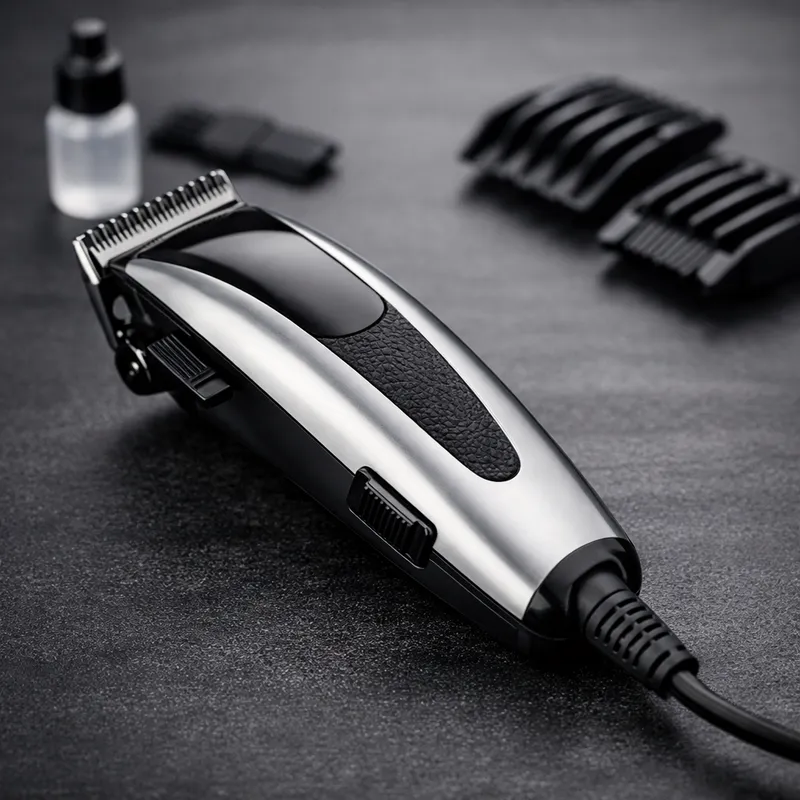
Neckline & Cheek Line Rules (the clean-but-natural blueprint)
The cleanest beard trims don’t look “stamped on.” They look intentional, balanced, and natural. These rules help you avoid the two extremes: messy growth, or over-carved lines that look artificial.
Neckline rules (most important for the final look)
A neckline that’s too high is the fastest way to make your beard look smaller and your neck look wider. A neckline that’s too low makes the beard look messy. The goal is a clean boundary that still looks natural.
- Rule: avoid setting the neckline high under the jaw.
- Better shape: a soft U-curve (not a straight horizontal line).
- Finish: clean it, then soften if your style is natural/relaxed.
Select your beard style and your goal. This tool gives a conservative neckline approach that’s hard to regret.
Neckline guidance
Choose your style and click “Generate guidance”.
Cheek line rules (clean without looking carved)
A cheek line is not a “high school geometry problem.” It’s a visual balance tool. The more you carve, the more you commit to constant maintenance. If your cheeks are patchy, carving hard usually makes it worse.
- Natural look: clean stray hairs above your natural line, keep it soft.
- Sharp look: define a consistent line, but don’t drop it too low.
- Patchy cheeks: stay conservative and let density build.
Easy win: If you want a cleaner beard instantly, focus on even length + mustache cleanup + neckline. Cheek lines are optional — and often overdone.

Cleaning & Maintenance (how to stop tugging and irritation)
A trimmer that tugs is usually not “bad.” It’s usually dirty, dull, or used too aggressively. Maintenance is boring — but it’s one of the highest ROI upgrades you can make.
60‑second after‑use routine
- Brush out hair from the head and guard teeth.
- If your model supports it, rinse the head — then dry completely.
- Store it dry (trapping moisture makes performance worse over time).
Consistent cleaning helps prevent: uneven cutting, snagging, and that “scratchy” feel on sensitive areas.
Weekly + monthly checks
- Weekly: deep clean the head, remove buildup in guard corners.
- Every few weeks: oil blades if your model requires it.
- When performance drops: replace blades/foil heads as recommended by your model.
If you get irritation: reduce pressure, trim dry, and slow down. The trimmer should glide — not scrape. If irritation continues, consider a hybrid tool for stubble or keep slightly more length.
Pro tip: the “missed hairs” problem
If you notice random long hairs after trimming, it’s usually one of three things: (1) a dirty head, (2) weak cutting power for your hair type, or (3) going too fast with inconsistent angle. Fix cleaning first. Then slow down and keep the guard flat. Upgrade the tool only if the issue persists.
Where to Buy Beard Trimmers + “Near Me” Search Builder
If you want the widest selection, online usually wins. If you need a beard trimmer today, in-store is faster. Either way, the right search phrase saves time and helps you find the right tool type (beard trimmer vs beard clippers vs face trimmer).
Buying routes (practical)
- Online: wide selection, easier comparisons, more guard options.
- In-store: same-day pickup (helpful if your trimmer died mid-week).
- Barber supply: good if you want pro-grade clipper-style tools.
If you’re searching locally, phrases like “beard trimmer near me” or “beard clippers near me” work — but you can do better with the tool on the right.
Build a targeted query to find the right tool fast — including “open now”, “same day”, or “barber supply”.
Your search phrase
Click “Generate search phrase”.

One pro reset can save months of DIY frustration
If your beard shape is off (uneven sides, too-high neckline, patchy cheeks that keep getting carved), the fastest fix is a professional reset. Once the shape is set, maintaining it at home is dramatically easier — and you’ll need fewer tools and fewer passes.
If you’re browsing services locally, a good search phrase is: beard trim near me.
FAQs about Beard Trimmers
These are the questions that come up most often when people compare beard trimmers, beard clippers, stubble trimmers, and face trimmers — and when they’re trying to fix common trimming problems.
What’s the difference between beard trimmers and beard clippers?
People use the terms interchangeably, but in practice: a beard trimmer usually focuses on precision and comfort for facial hair, while clippers are typically designed for bulk cutting and can feel more “barber-grade.” If you need precise edging, add a detail trimmer; if you need bulk removal for a thick beard, clippers or a higher‑torque trimmer can help.
What beard trimmer length should I start with?
Start longer than you think, do one full pass with the grain, then step down only where it’s bulky. If you’re unsure: 3mm is a safe stubble start, 8–10mm is a safe short-beard start, and 16–20mm is a safe medium-beard start. Use the Guard Length Tool above to get a tailored starting point.
What’s the best beard trimmer for stubble (0–5mm)?
For stubble, prioritize tight precision steps, comfort (no tugging), and predictable settings. Stubble is sensitive to small changes, so a trimmer that can hold a consistent 2–4mm range is often more valuable than a huge guard kit.
Why does my trimmer pull or tug?
Tugging is usually caused by a dirty head, dull blades, trimming too fast at a bad angle, or using a low‑torque tool on thick/coarse hair. Clean the head, slow down, keep the guard flat, and trim dry. If tugging persists after maintenance, you may need a stronger tool for your hair type.
Should I trim my beard wet or dry?
Dry is usually safer for consistent results. Wet hair lies flatter and can cause you to remove more length than intended. Wash and condition after trimming if you want a cleaner finish.
How do I set a neckline without ruining my beard?
The common mistake is setting the neckline too high. Aim for a clean boundary that still looks natural. Use the Neckline Helper above for conservative guidance, then soften the edge if your style is natural rather than sharp.
Is a waterproof beard trimmer worth it?
If you trim in the shower or you want easy rinsing, yes. The main benefit is not “water trimming” — it’s that cleaning is easier, so the trimmer stays sharper and more comfortable. If you only trim at the sink, a rinseable head may be enough.
Do I need a separate trimmer for beard lines?
Not always, but it helps. A beard trimmer sets length well; a detail trimmer (edger) makes crisp lines easier and safer. If sharp borders matter to you, a dedicated detail trimmer improves precision and reduces accidental overcutting.
How often should I trim my beard?
Stubble usually needs touch-ups every few days. Short and medium beards often look best with weekly maintenance. Long beards can be shaped less often, but benefit from consistent cleanup of flyaways, mustache, and neckline.
What is a “zero-gapped” trimmer, and do I need it?
Zero-gapping adjusts the blades to cut closer. It can create sharper edges but increases the chance of nicks and irritation. Most men don’t need it for a clean beard. Clean technique and the right tool type usually matter more than going ultra-close.
Is a beard trimmer with vacuum actually useful?
If sink mess is what stops you trimming consistently, it can be worth it. Consistency is the real win: trimming regularly at a stable length usually looks better than “big trims” every few weeks.
I want the cleanest possible result — should I go to a barber?
If your beard shape needs a reset, a professional trim is often the fastest route to a clean silhouette. After a pro sets the shape, it’s easier to maintain at home with fewer mistakes. If you want that route, use the “Find a beard trim near you” link on this page.
Reminder: The best beard trimmer is the one that helps you maintain consistently. If you want a clean look every week, choose a trimmer that’s easy to clean, comfortable to use, and matched to your beard length.