
Choose the right Philips beard trimmer type in minutes — then trim like a pro at home.
Philips beard trimmers are easy to find and easy to use, but most people still buy the wrong one. The real difference is not “Series numbers” — it’s whether you need mess-free trimming, an all‑in‑one Multigroom kit, a beard‑only precision trimmer, or a hybrid shaver + trimmer for finishing lines.
- A quick picker that matches your beard length and routine to the right Philips category (including vacuum and Multigroom searches).
- A 10‑minute trimming routine that fixes the two most common problems: uneven length and a neckline that ruins the beard.
- Conversion-focused shortcuts: when to stop experimenting and get a professional shape‑up that instantly upgrades your look.
Note: Model names and included accessories can vary by retailer and region. This guide helps you pick the right type (vacuum vs Multigroom vs beard‑only vs hybrid), then confirms what to check before you buy.
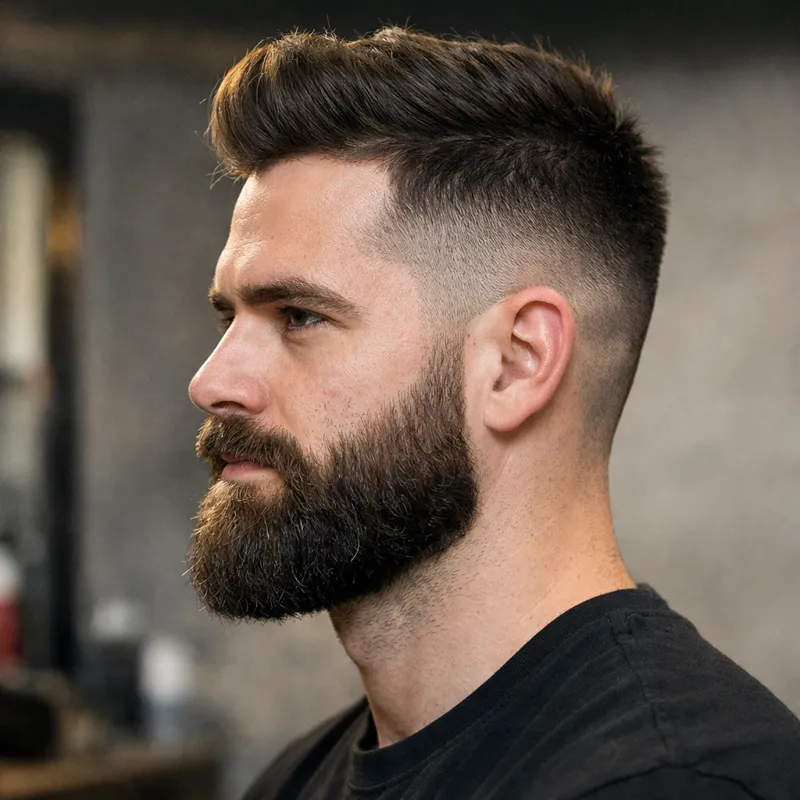
Quick picks: the best Philips beard trimmers by goal
These are not “one trimmer wins” recommendations. This is the fast, practical way to pick the right Philips category so your beard looks controlled, your lines look intentional, and the trim takes under 10 minutes instead of turning into a mirror fight.
Best for less mess: Philips vacuum beard trimmer (7200 searches)
If you trim over a sink and hate cleanup, choose a Philips vacuum beard trimmer. People specifically search “Philips Norelco beard trimmer 7200” because vacuum trimming is a lifestyle feature: it keeps hair from taking over your bathroom routine.
Best all‑in‑one: Philips Norelco Multigroom beard trimmer kits
If you want one kit for beard length, detailing, nose/ear, and often body grooming, a Philips Norelco Multigroom beard trimmer is built for versatility. This is the category for guys who hate owning five gadgets.
Best beard‑only precision: Philips Beardtrimmer (Series 3000/5000/9000 style)
If your goal is a consistent beard length every week and clean shaping, a dedicated Philips beard trimmer is usually the simplest path. Fewer parts, fewer choices, and an easier “same trim every time” routine.
Best trim + finish: Philips shaver beard trimmer (hybrid searches)
If you keep stubble or a short beard and want to trim and also finish edges cleanly, a Philips shaver beard trimmer (hybrid category) can be the fastest way to tidy cheeks and neckline without switching tools.
Best budget: entry Philips beard trimmers (starter maintenance)
If you’re maintaining short growth and don’t need extras, budget Philips models are fine — but only if they cover your target length range with a stable guard. The biggest “budget mistake” is buying a trimmer that can’t reach your preferred beard length.
When to choose clippers instead of a beard trimmer
If you have a very thick or long beard and you’re removing a lot of bulk, clippers can be faster for the “heavy work.” Then use your Philips beard trimmer for precision: cheek line, mustache edge, and neckline.
Conversion shortcut: if you want the “freshly barbered” look (especially clean cheek and neck lines), do your at‑home length maintenance — then get a professional shape‑up when the lines start drifting. One good shape‑up can make your next 3–4 home trims dramatically easier.
Trimmer Finder: match your routine to the right Philips beard trimmer type
Most “bad trimmer reviews” are actually bad matches. This tool recommends the right Philips category based on your beard length goal, your priority (mess-free vs all‑in‑one vs precision vs finishing), and your beard density. It also tells you what to verify in the box so you don’t get stuck with the wrong guard or missing detail head.
Your picks (tap to choose)
No email, no form. Just practical output you can use immediately — including the search phrasing that matches how people shop (for example: “Philips Norelco beard trimmers”, “Philips Norelco beard trimmer 7200”, “Philips vacuum beard trimmer”, and “Philips Norelco Multigroom beard trimmer”).
Tip: Extras are where bundles vary the most. If extras matter to you, prioritize the right “kit category” first (often Multigroom), then confirm the included heads and guards in the product listing.
Recommendation will appear here
Choose your beard length and priority above. The output will tell you the best Philips trimmer category, what to check before buying, and a fast path if you want professional results instead of trial-and-error.
- Pick the category
- Verify the box contents
- Use the 10‑minute routine below
Comparison table: Philips beard trimmer categories (what each is best for)
Use this to choose the category that fits your routine. Then confirm the listing details for the specific model you’re buying. The goal is to avoid the classic mistake: buying a great trimmer that’s wrong for your lifestyle (mess, length range, or missing accessories).
| Category / common search | Best for | Ideal beard range | Edging strength | Cleanup | Bundle variability | Who should skip |
|---|---|---|---|---|---|---|
| Philips vacuum beard trimmer “Philips Norelco beard trimmer 7200” |
Mess‑free sink trims and fast weekly maintenance | Stubble → Medium | Good (especially with a detail head) | Best for minimizing hair mess | Medium | Guys who only trim in the shower, or want the simplest cleaning routine with fewer parts |
| Philips Norelco Multigroom beard trimmer | All‑in‑one versatility (beard + detail + nose/ear + body options) | Stubble → Medium (and beyond with guards) | Very good (with precision head) | Usually easy (varies by kit) | High | Anyone who wants beard-only simplicity and minimal accessories |
| Philips Beardtrimmer (beard-only) Series 3000/5000/9000 style |
Repeatable length control and consistent results | Short → Medium | Good to very good | Easy | Low → Medium | Guys who want a single kit for face + body + detail |
| Philips shaver beard trimmer Hybrid trim + finish |
Stubble looks and quick edge finishing | Stubble → Short | Great for quick line cleanup | Easy | Medium | Long-beard maintenance where stable longer guards are the priority |
| Hair clippers (not a beard trimmer) | Fast bulk removal and blending beard into haircut | Medium → Long (bulk work) | Not ideal for cheek/neck precision alone | Depends on setup | Varies | Anyone who mainly needs clean lines and short/medium length control |
What to do if you’re torn: if you value clean lines and hate mess, choose vacuum. If you want one kit to handle everything, choose Multigroom. If your beard is your only grooming task, choose beard-only. If you keep stubble and want fast finishing, choose a hybrid.
Buying guide: what actually matters in Philips beard trimmers
A good purchase decision is not about memorizing model numbers. It’s about buying a tool that matches how you actually trim: where you trim (sink vs shower), how often you trim, whether you care more about mess, and whether your beard routine includes other grooming tasks (nose/ear, body, travel).
1) Pick the right Philips “family” first
Your best outcome comes from selecting the correct category: vacuum beard trimmer, Multigroom kit, beard-only trimmer, or hybrid shaver + trimmer. Once you choose the right family, you can compare within that family without getting overwhelmed.
If you skip this step, you’ll do what most shoppers do: buy something highly rated that doesn’t match your routine — and then blame the trimmer for a mismatch problem.
2) Length control beats “more settings”
Most beards look better with fewer, repeatable choices. The trimmer should glide smoothly, hold a stable length, and make it easy to reproduce the same result every week.
A simple rule: if you want consistency, prioritize a stable guard system and comfortable handling over a long list of micro settings.
3) Edging is where the beard looks “expensive”
The difference between “grown out” and “intentional” is usually the cheek and neckline. If you care about looking sharp, make sure your setup supports: visibility (you can see what you’re doing), control under the jaw, and a clean finish for the neckline.
If you want the fastest improvement: spend 80% of your effort on your lines, and 20% on chasing a perfect length everywhere.
4) Vacuum trimming is a lifestyle feature
If you trim frequently, share a bathroom, or simply hate cleaning the sink, a vacuum trimmer can remove a huge source of friction. When trimming is easy and clean, you trim more often — and that’s what keeps the beard looking intentional.
If you only trim occasionally and don’t mind cleanup, you might prefer a simpler beard-only trimmer.
5) Bundle-proof checklist (before you buy)
Retail listings often look similar, but bundles vary. Before buying any Philips beard trimmer, verify:
- Your target length range is covered (don’t guess).
- Detail/precision option exists if you care about cheek/neck lines.
- Cleaning method matches your routine (washable vs brush-only).
- Replacement parts are easy to find (blades/heads, if applicable).
- Travel/storage fits your needs (pouch/case can matter more than you think).
6) The fastest “better beard” strategy
If you want to look sharper with less effort, use a two-step mindset:
- Length tool: set an even, repeatable beard length.
- Line tool: clean the neckline and cheek line with control.
Sometimes that’s one device with the right attachments; sometimes it’s two tools. The win is not “owning more.” The win is making the routine simple and repeatable.

Conversion reality: the hardest part to DIY is a perfect neckline and cheek line that stays natural-looking. If you want guaranteed symmetry (especially for photos, events, or professional work), a quick barber shape‑up often beats 30 minutes of home trial-and-error.
Use your Philips beard trimmer for maintenance, and treat a professional trim like a “reset” that keeps your beard looking premium.
The 10‑minute Philips beard trimming routine (length + lines)
This routine is designed to produce a clean, repeatable result. It solves the two problems that make a beard look messy even when it’s “trimmed”: (1) uneven length and (2) a neckline that’s too high, too low, or uneven.
You can use this routine with most Philips beard trimmers (including Philips Norelco beard trimmers, vacuum beard trimmers, and Multigroom kits). The steps are technique-driven — which is exactly why they work across models.
Trim dry for the most consistent length. Comb the beard down and out — especially under the jaw where growth changes direction. Choose a guard one step longer than you think for your first pass. You can always go shorter; you can’t go back.
Start on the cheeks and jaw with your chosen guard. Trim with the grain first. If needed, do a light second pass against the grain — but don’t “scrub” one spot endlessly. Consistency beats perfection.
The under‑jaw area is where beards look untidy because hair grows in multiple directions. Tilt your head slightly up and use short passes. Don’t chase total smoothness — you’ll tighten it with the neckline step.
Find your natural cheek line and clean the stray hairs above it. A good cheek line looks sharp but believable. If you want extra crispness, use a precision head or edging attachment.
Place two fingers above your Adam’s apple — that’s a solid starting point for most men. Set the neckline there and curve it gently up toward the back corners of your jaw. Too high looks like a chin strap; too low looks like the beard is “floating.”
Look straight ahead in the mirror (don’t tilt your head). Check both sides. Small asymmetries are normal — fix the obvious ones, then stop. Over-correcting is how people ruin the neckline.
Fast improvement tip: If your beard always looks “almost good” but never clean, your issue is usually the neckline. A professional beard trim can reset your neckline in minutes — then your home trims stay easy for weeks.
Beard Length & Schedule Planner (quick presets that look good)
This tool gives you a practical beard plan: suggested lengths for cheeks, jaw/chin, and mustache — plus a realistic schedule. The goal is not a “perfect beard.” The goal is a beard that looks clean without daily effort.
Choose a style and growth speed
These presets are designed to be simple, flattering, and easy to maintain with most Philips beard trimmers. Adjust them to your face shape and density, but start here if you want a reliable baseline.
Growth speed is only used to adjust the schedule. If you’re unsure, choose “Average.”
Your plan will appear here
Choose a preset and growth speed. You’ll get length targets, a schedule, and a short “do this, not that” checklist that prevents common mistakes.
- Cheeks, jaw/chin, mustache targets
- How often to trim length vs edges
- What to do when it stops looking sharp
Maintenance & care: keep your Philips beard trimmer cutting clean
Many trimmers don’t “get worse” — they get clogged, dirty, and inconsistent. Clean cutting equals clean lines. If your trimming starts feeling like it’s tugging, skipping, or requiring too many passes, maintenance is usually the first fix.

After every trim (2 minutes): remove the guard/head and brush out trapped hair. If your model supports rinsing, let the parts dry fully before reattaching. A clean head reduces pulling and improves line clarity.
Weekly (quick check): inspect guards for cracks or wobble. If the guard shifts, your length becomes inconsistent — and inconsistency is what makes a beard look “patchy” even when it’s not.
Beard comfort tip: if your beard feels rough after trimming, a small amount of beard oil can help softness and control. The beard often looks better simply because it lies flatter and reflects light more evenly.
Common reason trims look uneven
The #1 reason: you do too many random passes in different directions. Pick a method (with the grain first), then do a short second pass only where needed. Consistency creates uniformity.
Common reason the neckline looks wrong
The #1 reason: setting the neckline too high. You get a “chin strap” effect and your beard loses its weight. Use the two-finger-above-Adam’s-apple rule as your starting point.
FAQs about Philips beard trimmers (Philips Norelco)
These answers are written for real buying decisions: which Philips beard trimmer type to choose, what to verify before buying, and how to get a clean result without over-trimming.
Are Philips beard trimmers good?
Which Philips Norelco beard trimmer should I buy?
- Mess-free trimming: look for a Philips vacuum beard trimmer (often searched as “Philips Norelco beard trimmer 7200”).
- One kit for everything: choose a Philips Norelco Multigroom beard trimmer kit.
- Beard-only consistency: choose a dedicated Philips beard trimmer (beard-only category).
- Stubble + finishing: choose a Philips shaver beard trimmer (hybrid category).
Is the Philips Norelco beard trimmer 7200 worth it?
What’s the difference between Philips Multigroom and a Philips beard trimmer?
Can I use a Philips beard trimmer to shave clean?
How do I stop my beard from looking uneven after trimming?
What’s the best neckline for a natural-looking beard?
When should I get a professional beard trim instead of DIY?
Want the fastest upgrade? Combine smart maintenance with an occasional pro shape‑up.
A Philips beard trimmer keeps your length consistent. A barber keeps your lines clean and natural-looking. If you want the “always sharp” look without obsessing over symmetry, that combination is hard to beat.
Use the tools above to pick the right Philips category and follow the 10‑minute routine. When the lines drift, get a quick professional shape‑up and maintain from there.
