
Oster Hair Trimmers: How to Choose the Right One (and Get Cleaner Lines)
If you’ve ever wondered why your lineup looks slightly blurry, why your neckline never feels “finished,” or why a trimmer pulls instead of glides, the problem usually isn’t your hair—it’s the match between the trimmer, the blade setup, and your technique.
This page gives you a no-fluff breakdown of popular Oster hair trimmers, what each model is best at, and how to use a trimmer so the results look intentional—clean hairline, sharp sideburns, and a neckline that doesn’t grow back awkward in three days.
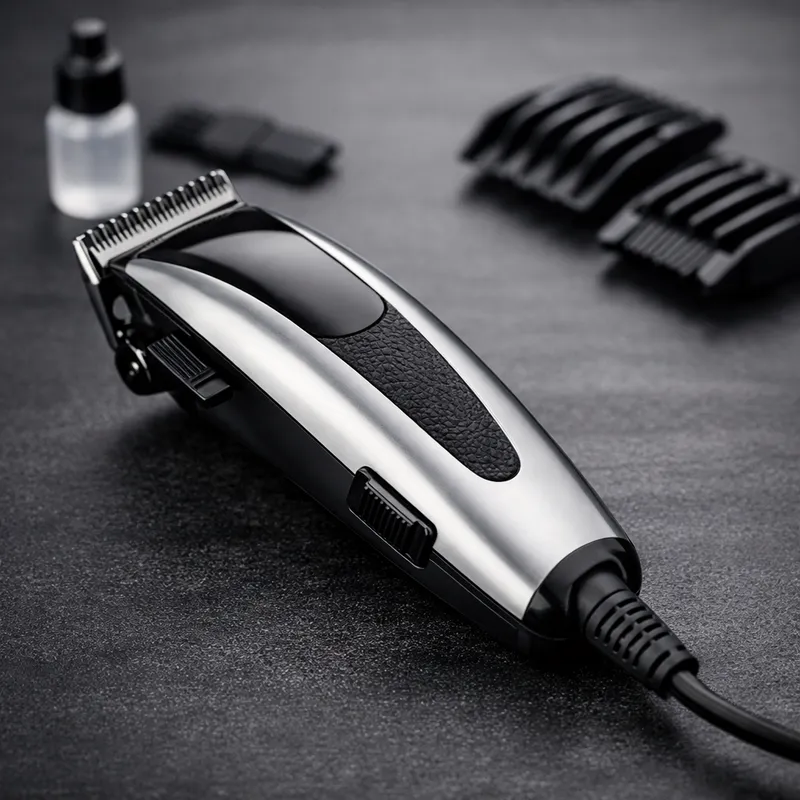
What Most Oster Trimmer Guides Miss (and What Actually Creates Clean Lines)
Most pages talk about “power” and stop there. In real life, a crisp outline is built from four things working together: edge control (how precisely you can place the blade), blade feel (smooth vs. aggressive), skin + hair prep (dry, clean, brushed into place), and maintenance (clean + oiled blades).
If your trimmer is pulling, heating up quickly, or leaving a fuzzy line, it’s almost always one of these: dirty blade channels, dry blades, or too much pressure. The fastest “upgrade” is often not a new device—it’s a better setup and a smarter method.
Quick reality check: A trimmer is for detailing (hairline, sideburns, neckline, beard edges). If you’re removing a lot of hair (buzzing down length, fading sides), you’ll get cleaner results by pairing your trimmer with a proper clipper.
Trimmer Match Tool: Find Your Best Oster Trimmer Type in 60 Seconds
This mini tool narrows you into the best Oster trimmer category for your needs—then gives you technique tips that match your hair type. No account. No signup. No forms. Just a practical answer you can use right now.
1) Choose your routine
Your recommendation will appear here
Pick your options above, then click “Show my best match”. You’ll get a trimmer type + model direction + technique tips.
Note: This is practical guidance for typical grooming scenarios. If you have a skin condition, ingrown hair issues, or irritation that won’t settle, get medical advice and avoid aggressive blade setups.
Oster Hair Trimmers Comparison: What Each One Is Really Best For
Oster’s trimmer lineup has a few “classic” names people search for (especially the T‑blade finishers), plus models that shine for everyday cleanup. The smartest way to choose is not “the most expensive.” It’s picking the model that matches your main use-case and the level of edge sharpness you actually want.
Oster Cordless T‑Finisher
Built for finishing work where precision matters: hairline, sideburns, around-ear detailing, and tight outlines. Cordless convenience makes it easier to hit clean angles without fighting a cable.
- Best for: lineups, sharp outlines, frequent touch-ups
- Watch out for: aggressive pressure can irritate sensitive skin
- Ideal user: anyone who wants barber-style edges at home
Oster T‑Finisher (Corded)
A classic “always-ready” finishing trimmer. If you want consistent power and don’t care about cordless, corded models are often the best long-term value.
- Best for: reliable outlining, home station setup
- Watch out for: cable management in tight angles
- Ideal user: weekly groomers who want consistency
Oster Cordless Ace
A flexible everyday option when you want cleanup plus edging—especially around the neck and ears. Great if you maintain a haircut between barber visits.
- Best for: neckline cleanup, quick edges, general detail
- Watch out for: don’t expect it to replace a clipper for bulk cutting
- Ideal user: the “keep it tidy” routine
Oster Ace Mini (Corded)
A practical choice when you want a corded detailer with straightforward performance. Often a smart option for budget-minded buyers who still want clean results.
- Best for: detailing on a budget, consistent trimming sessions
- Watch out for: cord limits flexibility
- Ideal user: value-first, no battery worries
Oster O’Baby Mini
Compact trimmers shine when control matters. If your priority is tight areas (ears, small cleanups, travel), a smaller body can make precision easier.
- Best for: tight spots, light outlining, travel kits
- Watch out for: not designed for heavy, all-over trimming
- Ideal user: detail-focused, minimal kit
Oster Artisan (Cordless)
Ergonomics can be the difference between “good enough” and “clean.” If your hand gets tired or you struggle to keep a steady angle, a comfort-first trimmer can improve results.
- Best for: comfortable detailing, controlled edging
- Watch out for: keep blades clean for a smooth glide
- Ideal user: longer sessions, comfort priority
Quick comparison table (scroll on mobile)
Use this table when you want a fast answer. Then scroll down to see the “why” behind each pick and how to get cleaner results at home.
| Oster Trimmer | Best for | Good if you… | Not ideal if you… |
|---|---|---|---|
| Cordless T‑Finisher | Lineups, sharp outlines | Want barber-style edges and easy angles | Need bulk cutting (use a clipper) |
| T‑Finisher (corded) | Reliable finishing | Prefer consistent power and a home station setup | Hate cords or trim on the go |
| Cordless Ace | Everyday cleanup | Maintain neckline/ears and quick edges | Want ultra-sharp “drawn-on” lineups |
| Ace Mini (corded) | Value detailing | Want simple performance without battery concerns | Need maximum flexibility in angles |
| O’Baby Mini | Compact control | Need a small tool for tight spots and travel | Need one trimmer for everything |
| Artisan (cordless) | Comfort + control | Want steady handling for longer sessions | Prefer the simplest, no-frills tool |
Best Oster Hair Trimmers by Goal (No Guessing)
“Best” depends on what you’re trying to accomplish. A trimmer that’s perfect for razor-sharp lineups can be too aggressive for sensitive skin. A compact trimmer can be perfect around the ears but underwhelming for full outlining. Below are the best picks by real-life goals.
Best for crisp lineups (hairline + sideburns)
If you care most about the front hairline and you want that “barber finished” outline, aim for a finishing-focused T‑blade style trimmer. These are designed to place the edge precisely and refine the final look.
- Top direction: Cordless T‑Finisher or T‑Finisher (corded)
- Technique tip: Use short “tap” passes—long drags create wobble
- Skin tip: Sensitive skin should avoid aggressive blade setups
Best for neckline + around-ear cleanup
For most guys, the highest ROI is keeping the neckline and ear area clean. That’s what makes a haircut look “fresh” between visits. A flexible everyday trimmer is usually the smarter choice than chasing the sharpest edge possible.
- Top direction: Cordless Ace (or a value corded detailer)
- Technique tip: Outline lightly first, then refine—don’t carve a hard line immediately
- Style tip: A slightly tapered neckline grows back cleaner than a high boxed line
Best for beard edging (without irritation)
Beard edging looks best when it’s clean but not overly “drawn on.” The trick is controlling the angle, keeping the blade smooth, and avoiding repeated passes that inflame skin—especially on the neck.
- Top direction: Cordless Ace / Artisan for controlled handling
- Technique tip: Stretch skin gently and use the blade corner for detail
- Skin tip: If you bump easily, avoid pressing—let the blade do the work
Best compact option for tight areas + travel
Compact trimmers are underrated. When the tool is easier to control, you make fewer mistakes—especially near the ear curve and at the neckline corners.
- Top direction: O’Baby Mini
- Technique tip: Use small, deliberate taps for symmetry
- Use-case: travel kit, quick tidy-ups, small detail zones
How to Choose an Oster Hair Trimmer (The Simple Method)
If you want the fastest path to a great purchase, don’t start with model names. Start with your routine. Then choose the trimmer style that matches it. Here’s the method that avoids regret buys.
Step 1: Decide what you trim most
Your primary goal determines everything. Many people buy a “lineup trimmer” when they really needed a comfortable cleanup tool—or they expect a detail trimmer to remove bulk hair and end up disappointed.
- Hairline & sideburns: finishing trimmer (precise edge placement)
- Neck + ears: flexible daily trimmer (control + comfort)
- Beard edges: steady handling + smooth blade feel
Step 2: Corded vs cordless (what you’re really choosing)
Corded and cordless can both be excellent—this choice is about lifestyle, not quality.
- Corded: consistent power, always ready, best “home station” value
- Cordless: better angles, easier touch-ups, cleaner workflow
- If you trim often: cordless feels smoother because you move freely
Step 3: Be honest about skin sensitivity
The sharpest results come with a tradeoff. If you’re prone to bumps or irritation, you’ll get better outcomes with: fewer passes, less pressure, good lubrication, and a blade setup that doesn’t feel aggressive.
- Sensitive skin: prioritize smoothness + control over ultra-close cutting
- Coarse/curly hair: focus on prep (dry + brushed) and steady technique
- Neck area: avoid repeated “scraping” passes
Step 4: Don’t skip the “maintenance reality”
A brand-new trimmer can feel amazing… until it doesn’t. Maintenance is what keeps a trimmer cutting clean instead of pulling hair. If you want consistent results, commit to a simple routine that takes under a minute.
- Brush out hair after every session
- Oil blades regularly (especially if they sound dry)
- Deep clean when performance drops (not when it’s “too late”)
How to Use a Trimmer for Cleaner Lineups (Without Pushing Your Hairline Back)
Most lineup mistakes come from the same pattern: you start too aggressively, you chase symmetry too hard, and you remove more hair than you intended. The fix is a simple process: prep → light outline → refine.
Before you start (the 30-second prep)
- Work on clean, dry hair. Damp hair hides the true line and makes it easy to cut too much.
- Brush hair forward/down into place. Especially at the front hairline and temple corners.
- Use good lighting. Bad light makes you overcorrect.
- Start with “less.” Your first pass should be so light it feels almost pointless. That’s the point.
Rule of clean edges: You’re not “drawing” a new hairline. You’re refining what’s already there. The best lineups look sharp but natural.

Hairline lineup (front): the steady method
- Start in the center. Make a light mark with short taps (not long drags).
- Work outward. Move toward the corners slowly. Check symmetry after each small change.
- Use the blade corner for control. Corners help you “place” the line instead of bulldozing it.
- Refine with minimal passes. If you need 15 passes, something is off (angle, pressure, blade care).
Around the ears: the “tight spot” approach
- Move the ear gently. Pull slightly down/back to expose the edge area.
- Tap stray hairs away. Don’t dig into the skin. Let the blade skim.
- Check from two angles. Ear curves can hide uneven lines.
Neckline cleanup: tapered vs blocked (what looks better on most men)
A neckline can be tapered (more natural, grows back cleaner) or blocked (sharper but more obvious as it grows). For most men, a soft taper looks better longer—especially if you don’t trim every few days.
- Find your natural neckline (typically just above where the neck curves into the upper back).
- Outline lightly first. Don’t create a hard wall right away.
- Refine the corners last. This prevents the “too high” boxed look.
Beard edging: clean without looking “drawn on”
The best beard edge is sharp up close and natural from a normal distance. Use a steady angle and minimal pressure. Your goal is a clean boundary—without inflaming your skin.
- Comb the beard down so you see the true edge.
- Define the cheek line with light taps.
- Set the neckline carefully. Too high makes the beard look small; too low looks messy.
- Stop early. More passes = more irritation risk.
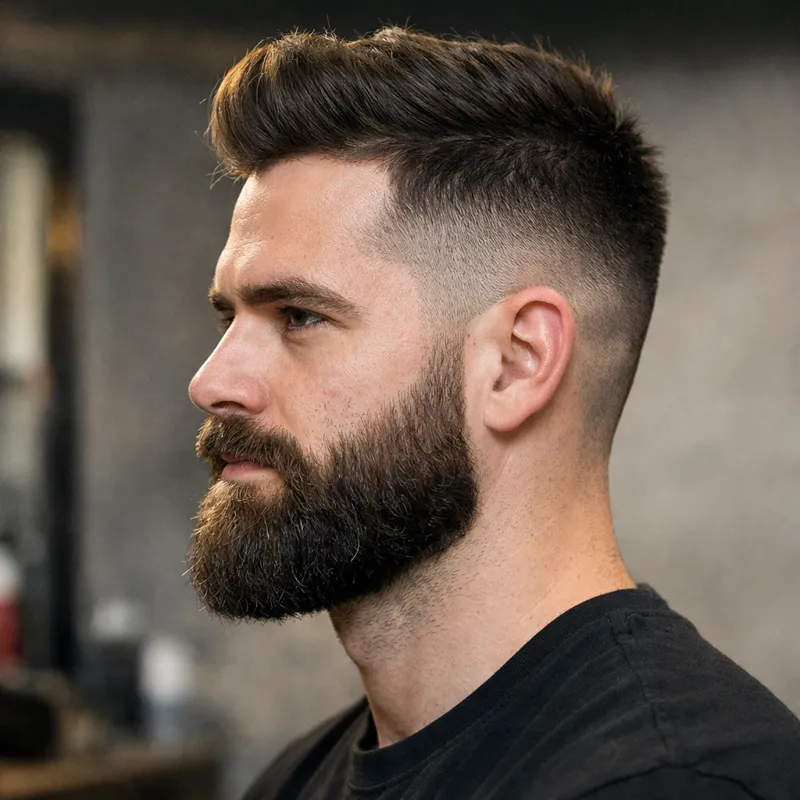
Maintenance: Keep Your Oster Trimmer Cutting Clean (No Pulling, Less Heat)
Most “bad trimmer performance” is not permanent. It’s usually a maintenance issue. When a trimmer pulls hair, runs hot, or sounds louder than usual, it’s a signal: the blade channel is clogged, the blade is dry, or it’s time to deep clean.
The 45-second routine after every use
- Brush out hair from the blade area (especially in the corners).
- Wipe the housing so it stores clean and dry.
- Oil lightly if the blade feels dry or sounds “scratchy.”
- Store it dry to avoid residue and corrosion.
This is what keeps cutting smooth. Skip it and the trimmer starts compensating—more noise, more heat, more pulling.
Troubleshooting (fast fixes)
- Pulling/snags: clean → oil → test. If it still pulls, consider blade replacement.
- Hot blade quickly: reduce pressure, oil, and avoid long continuous passes.
- Fuzzy lines: hair not prepped, too many long drags, or blade is dull/dirty.
- Irritation/bumps: lighten pressure, reduce passes, avoid overly aggressive blade setups.
If your skin is sensitive, your best “performance upgrade” is often fewer passes, not a closer cut.
Maintenance Schedule Tool: Get a simple plan you can follow
Use this to generate a realistic schedule based on how often you trim. It’s designed to keep performance consistent without overthinking it.
Your schedule will appear here
Select your usage level and click “Build my schedule.”
Want Cleaner Results Faster?
If you tell us your haircut style, hair type, and what you want to trim (hairline, neckline, beard, or all of the above), we’ll point you to the right Oster trimmer direction and the simplest technique upgrades for your routine. No pressure—just a clear answer.
Helpful note: MensHaircutStyle is an independent grooming resource. “Oster” is a trademark of its respective owner. We focus on helping you choose and use tools more effectively.

FAQs: Oster Hair Trimmers
These are the most common questions people have when choosing an Oster trimmer for lineups, beard edging, and detail work. The goal is to help you buy once—and use it well.