
Choose the Right Gillette Beard Trimmer — Then Trim Like a Barber
Most “Gillette beard trimmer” pages push specs. This one is built to get you a better result at home: a fast model picker, a guard-length cheat sheet, and a clean step-by-step routine that prevents the two common disasters: uneven bulk and an overcut neckline.
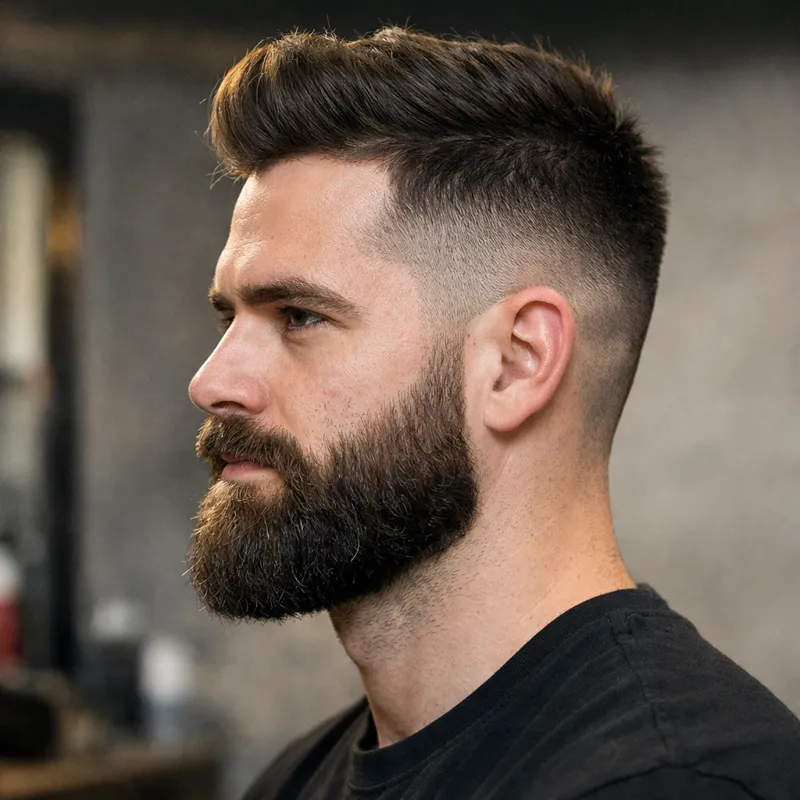
On this page
Quick reality check
People search “Gillette beard trimmer” meaning different things depending on the country: some are looking for the Gillette Styler, others mean the King C. Gillette beard trimmer family. The smartest move is choosing by your maintained length, not by hype.
If your beard outline is already overcut or uneven, a single professional reset often saves months of frustration.
Best Gillette Beard Trimmer Picks (by goal)
These are not “best overall” claims. They’re best fits. If the tool matches your length range and routine, you’ll get a cleaner result with less effort.
King C. Gillette Beard Trimmer
Choose this if you want a straightforward length system (stubble, short beard, long beard) and you care more about consistent bulk than micro-adjustments.
- Built for beard length control up to 21 mm (with stepped settings).
- Great for guys who want an even look on cheeks, jawline, and under-chin.
- Best results come from doing a “safe pass” first (one step longer than target).
Gillette Styler (Trimmer + Shaver + Edger workflow)
Choose this if your “beard” is mostly stubble and you want a clean routine: trim to a short length, edge the lines, then shave below the neckline for contrast.
- Stubble-focused comb options (common kits: 2 mm, 4 mm, 6 mm).
- Ideal for travel and fast maintenance sessions.
- Not the right tool if you regularly stay above ~6 mm.
King C. Gillette Beard Trimmer PRO
Choose this when you want more control than “comb + a few steps.” If your beard is always “almost right but not quite,” precision increments can help — but only if your technique is consistent.
- Designed around a precision wheel (marketed as 40 length settings).
- Best for symmetry-focused trims and maintaining a specific look week after week.
- Pairs well with the barber method in this guide.
King C. Gillette Style Master
Choose this if you live in the 1–5 mm zone and want quick shaping for cheek and neck areas. It’s built for fast direction changes and quick maintenance, not long-beard bulk removal.
- Short-length combs commonly listed as 1 mm, 3 mm, 5 mm.
- Useful for quick edge maintenance between barber visits.
- If your beard is longer than stubble, you’ll outgrow it quickly.
60-Second Gillette Beard Trimmer Picker (interactive)
This tool recommends the best-fit category based on your beard length and your actual routine. No gimmicks — just a fast decision system that prevents the most common mismatch: buying a stubble tool for a longer beard.
Tip: If you’re unsure about your length, set your trimmer to a safe length and measure the result once. Most people guess shorter than reality.
Your result will appear here.
Choose your length range and goal, then click Get my recommendation. You’ll also get a short routine you can copy and use immediately.
Gillette Beard Trimmer Comparison (clear, not noisy)
If you want a clean decision, compare by maintained length first, then by workflow. “More features” doesn’t matter if the tool doesn’t match your beard range.
| Option | Best for | Length logic (simple) | Why it wins | Watch-outs |
|---|---|---|---|---|
| King C. Gillette Beard Trimmer | Most beards (stubble → longer beard) | Fixed + stepped settings up to ~21 mm | Reliable bulk control; easy to maintain evenness | Not “micro” fine; you’ll use technique (safe pass) for best results |
| Gillette Styler | Stubble routines + edge + shave contrast | Common combs: 2 / 4 / 6 mm | Fast, travel-friendly workflow: trim → edge → shave | Not built for longer beards; you’ll outgrow it if you want 10+ mm |
| King C. Gillette Beard Trimmer PRO | Precision-focused maintenance | Precision wheel (marketed as 40 settings) | Fine control for symmetry and “exact look” upkeep | Precision only helps if you trim consistently (direction + pressure) |
| King C. Gillette Style Master | 1–5 mm stubble + quick shaping | Common combs: 1 / 3 / 5 mm | Fast edge cleanup; good for frequent touch-ups | Not a long-beard tool; limited bulk removal above stubble |
The decision rule that beats most “reviews”
If you want a beard that looks intentional, there are only two questions that matter: (1) what length do you maintain most weeks and (2) do you want a shaved contrast zone. Everything else is secondary.
- Mostly stubble (≤ 6 mm): choose a stubble-focused tool and make edging + shave contrast your routine.
- Mostly beard (6–21 mm): choose a beard-length tool and focus on consistent bulk + controlled lines.
- Longer than 21 mm: you need a growth strategy: light bulk trims, careful lines, and occasional professional resets.
Guard & Length Cheat Sheet (stop guessing)
This is a practical problem: you know the look you want, but you don’t know what setting gets you there. Use this tool to match a target length to the closest common options, then apply the barber method so it looks clean.
Length matches will appear here.
Enter a target length in mm, then click Match my length. You’ll see the closest common settings for the most popular Gillette beard-trimmer categories.
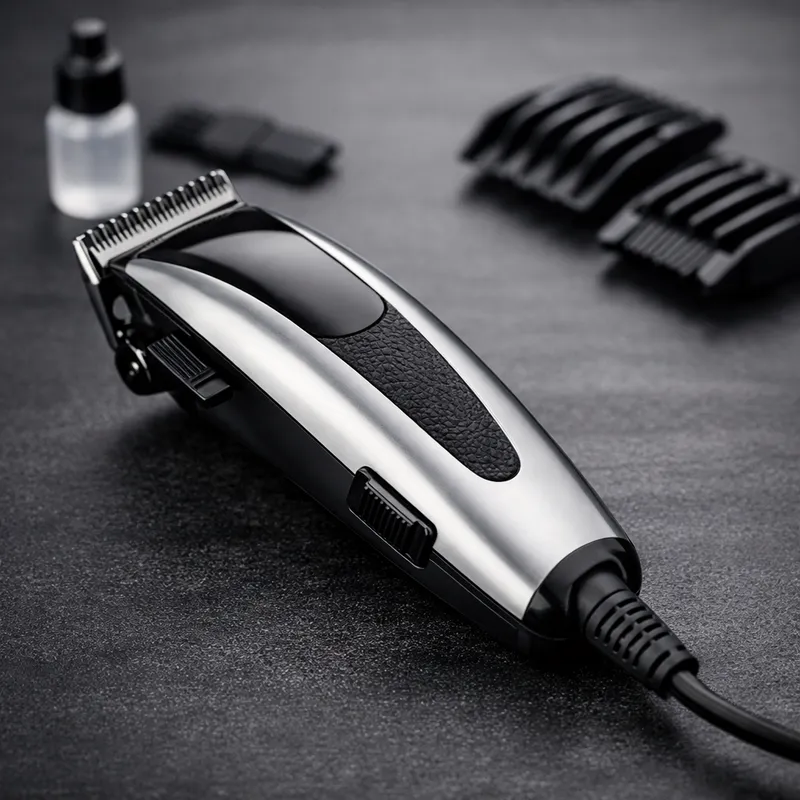
The Barber Method: Trim → Edge → Finish
This is the routine that makes home trims look professional. It’s not about carving. It’s about controlling bulk first, then defining lines slowly, then finishing with small clean-ups.
Phase 1 — Prep (2 minutes, but it changes your result)
- Use bright lighting. Shadows make you overcut one side.
- Dry beard for length setting. Wet hair lies and trims unevenly.
- Comb the beard down and out. You want the real bulk, not the “pressed flat” version.
- Pick a safe starting length. One step longer than your target is the no-regret move.
Phase 2 — Trim (set length first, everywhere)
This is where most people fail: they start edging first, then try to fix bulk, and the beard becomes smaller and patchier. Instead, do bulk first. Keep your pressure light and your strokes consistent.
- Safe pass: do one full pass at a slightly longer length than you want.
- Target pass: move to your intended length and do another full pass.
- Optional taper pass: go half-step shorter under the jawline only (not on cheeks) for a cleaner silhouette.
Phase 3 — Edge (define lines slowly, don’t carve)
Your lines should look clean, but still natural. A beard isn’t supposed to look like a sticker. If you keep chasing “perfect symmetry,” you’ll keep removing hair until the beard looks smaller than your face.
Phase 4 — Finish (small clean-ups that create a “fresh” look)
- Clean below the neckline if you like contrast (especially with stubble routines).
- Check symmetry in neutral posture. Don’t tilt your head; don’t lift your chin.
- Stop early. A “good” result plus healthy skin beats a “perfect” result with irritation.
When the fastest move is a pro reset
If your neckline is too high, your cheeks are uneven, or one side is shorter, you can keep fighting it — or you can reset it once. A single professional beard shape-up often makes DIY maintenance easy again.
Neckline & Cheek Line Rules (the blunt version)
Most beard “mistakes” are not about the trimmer. They’re about cutting the frame of the face too aggressively. Use these rules and your beard will instantly look more intentional.
Neckline rule (barber-proof)
The goal is a clean line that still looks natural. If you set the neckline too high, the beard stops framing your jaw and starts framing your throat — that’s why it looks smaller.
- Neutral chin. Look straight ahead. Don’t lift your chin.
- Two-finger baseline. A safe starting line is about two fingers above the Adam’s apple.
- Soft “U” shape. Curve from behind one jaw corner to the other.
- One pass only. Mark the line, step back, then refine. Don’t keep correcting while you’re close to the mirror.
Cheek line rule (less harsh looks better)
Unless you have extremely dense growth, a slightly natural cheek line often looks better than a sharp low line. Hard lines can emphasize patchiness.
- If you’re dense: define gently and keep it high enough to look full.
- If you’re patchy: clean strays but keep the cheek line natural.
- Make both sides match directionally: don’t chase perfect mirror symmetry; chase “balanced look.”

Maintenance: How to Keep Your Trimmer Cutting Clean
A lot of “this trimmer is bad” complaints are actually maintenance problems: hair packed into the head, dull cutting feel from residue, or too many aggressive passes causing irritation. Keep your setup clean and your technique calm.
Clean the head after every trim (takes 60 seconds)
- Remove the comb/guard and tap out loose hair.
- If your model is washable, rinse the head and combs, then let them dry fully before storage.
- Don’t store a damp trimmer in a closed drawer — that’s how performance drops and “pulling” starts.
Reduce irritation without changing products
- Fewer passes. Don’t keep buffing the same spot.
- Lighter pressure. Let the trimmer cut; don’t press it into skin.
- Start longer. You can always go shorter; you can’t uncut hair.
- Don’t chase ultra-close everywhere. “Clean” does not mean “skin-close” on the entire neck.
Simple schedule (most men get this wrong)
A beard looks best when you do small maintenance often, not big repairs occasionally. If you want consistent lines, do quick touch-ups on a schedule (use the picker routine above).

Local conversion block (no form, clean CTA)
If you want the fastest path to a “barber outline,” do one pro shape-up, then maintain it at home using the method above. That combination is usually cheaper (and less stressful) than repeatedly buying new gadgets.

Gillette Beard Trimmer FAQs
These answers are written for real users, not just for search engines. If you want the fastest improvement, focus on: correct tool range + safe pass + controlled lines.
Which Gillette beard trimmer is best for a longer beard?
If you regularly maintain above stubble lengths, choose a beard-length tool (commonly the King C. Gillette beard trimmer family) that supports longer settings rather than a stubble-only tool. Your result will look more even with fewer passes.
If you’re beyond ~21 mm, your best strategy is: light bulk trims (don’t overcut), careful neckline maintenance, and occasional professional resets.
What’s the fastest way to stop trimming my neckline too high?
Use neutral posture (don’t lift your chin), start the line about two fingers above the Adam’s apple, then create a soft U-shape from one jaw corner to the other. Mark the line once, step back, then refine. The mistake is “correcting” repeatedly while close to the mirror.
Why does my beard look uneven after trimming?
Two common causes: (1) trimming while the beard is damp and lying flat, and (2) starting too short and then “chasing” evenness by repeatedly correcting. Fix it by starting one step longer, doing full passes, then stepping down only where needed.
I get irritation easily — should I still edge sharply?
If you’re prone to irritation or ingrowns, prioritize comfort over maximum sharpness. A clean beard looks better than a razor-tight outline on inflamed skin. Do fewer passes, use lighter pressure, and avoid “skin-close” everywhere.
How often should I trim to keep my beard looking fresh?
In general: stubble looks best with touch-ups every 2–3 days; short beards often weekly; medium beards weekly or every 10 days depending on growth. The key is small, repeatable maintenance — not occasional “repair sessions.”
If you want a consistently clean outline, consider one professional reset, then maintain at home.