
Independent guide • Buyer clarity + barber-style technique
Braun Series 9 Beard Trimmer: pick the right kit, then trim like a pro
If you’re searching for the Braun Series 9 beard trimmer, you probably want two things: (1) the right model (without paying for attachments you’ll never use) and (2) a repeatable method that gives you clean lines, even length, and a beard that matches your haircut. This page does both—without fluff.
- Repeatable length control matters more than hype—Series 9 kits are designed around precise adjustments (often 52 settings in 0.25mm steps) plus a lock to keep your setting stable.
- Clean edges come from the order you trim, not just the blade. We’ll show the same sequence barbers use: bulk → symmetry → edges → detailing.
- Less guesswork: use our on-page tools to generate a trimming plan and a fade map you can follow in the mirror.
Prefer a pro to set the shape once, then maintain it at home? Use beard trim near you and keep it sharp weekly with your trimmer.
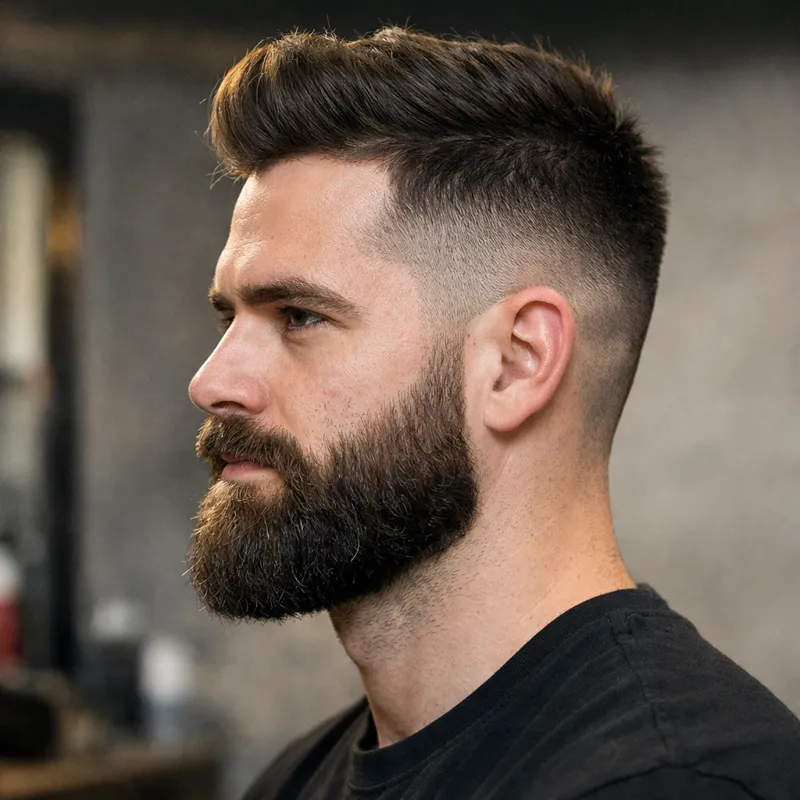
Consistent length + sharp lines
If your beard looks “off,” it’s usually not the density—it’s uneven length and soft edges. A Series 9 kit is built for repeatable settings and controlled detailing, which is exactly how you make your beard look like it belongs on your face.
Get the shape set once by a barber
The fastest path to a top-tier beard is simple: one professional shape-up, then you maintain it weekly at home. It saves time, avoids over-trimming, and keeps your cheek and neckline symmetrical.
Use a plan, not “vibes”
Most trimming regrets happen because people start too short and shape too early. Use the tools on this page to generate a safe starting plan and a fade map—then you only adjust down if needed.
Series 9 clarity: beard trimmer vs Series 9 shaver vs “all-in-one” kits
A lot of people land on the wrong product because “Series 9” is used across different Braun categories. Here’s how to avoid wasting money.
1) Braun Series 9 Beard Trimmer (BT9xxx)
This is the category this page is about: a beard-focused trimmer designed for precision length control, detailing, and (in many kits) an attachment that can go close on the neck and upper cheeks. If you’re aiming for stubble, short boxed beard, a clean goatee, or a fade into sideburns—this is the right direction.
2) Braun Series 9 Electric Shaver (foil shaver)
A shaver is a different tool for a different job: it’s built for clean shaving (near-skin finish), not for managing beard length. If you want the shaver category, go to: Braun Series 9 shaver guide.
3) All‑in‑one kits
These usually include multiple grooming attachments. They can be convenient, but the question is simple: do you want a tool that’s “good at everything,” or a tool that’s excellent at beard control? If beard is your main priority, a dedicated Series 9 beard trimmer kit is usually the better buy.
Explore more options on our hub page: Best beard trimmers (all brands) and our Braun brand hub: Braun beard trimmer guides.
What makes the Braun Series 9 beard trimmer lineup “premium” (in real life)
There are two kinds of “premium” grooming tools: ones that look premium, and ones that make your beard look premium. Series 9 kits focus on the practical stuff that affects results in the mirror—especially consistency.
Precision matters because your beard grows unevenly
Most beards are denser on the chin and moustache area, lighter on the cheeks, and “directional” on the jawline. The more precise your length control is, the easier it becomes to keep the beard uniform without repeatedly going shorter to “fix” an uneven patch.
- Small adjustment steps: Many Series 9 kits are built around fine length increments (often 0.25mm steps across 52 settings). That’s not marketing—those tiny steps help you dial in a “sweet spot” that you can repeat weekly.
- A lock matters: If you’ve ever bumped your setting mid-trim, you know the pain. A lock isn’t exciting—but it prevents the most expensive mistake: accidentally cutting one side shorter.
- Waterproof convenience: Fully washable tools are easier to keep clean. A clean blade cuts smoother and reduces tugging.
- Power modes: Dense beards often need extra power to cut evenly without multiple passes. The practical win is fewer passes, less irritation, and a more uniform finish.
Attachments are what turn “a trimmer” into “a kit”
Two guys can buy “a Series 9 beard trimmer” and have totally different experiences because the box contents differ. Some kits include attachments for detailing, shaping, and fade blending. Others are more minimal.
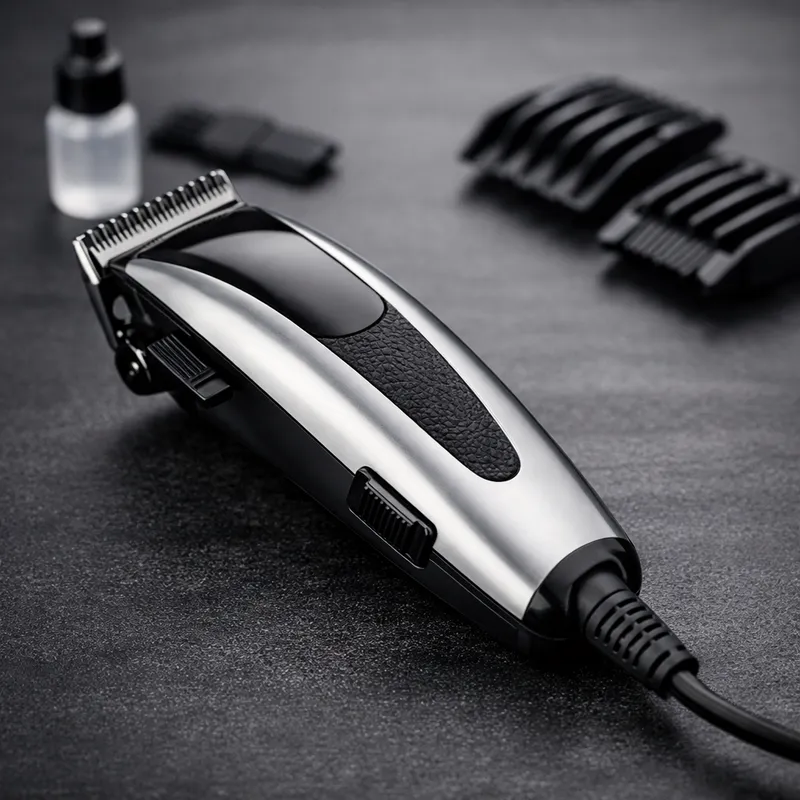


Model comparison: BT9560 vs BT9545 vs BT9565 (what actually changes)
These model numbers show up frequently in Series 9 listings. The biggest differences are usually attachments and what’s included in the box—not the basic idea of “trim precisely.” Use this as a practical reference, then confirm your retailer’s box contents.
| Model | Best for | Notable included items (examples) | Quick take |
|---|---|---|---|
| BT9560 Most complete kit | Guys who want a “one-kit solution” for trim + detail + line work, plus longer-range comb options. | Often listed with: contour-style head, detail head, a foil-shaver style head, a beard comb (0.5–10mm), a hair comb (10.5–20mm), beard fading combs, beard stencil, travel case + pouch, charging stand. | If you want maximum flexibility (and you travel), BT9560 is typically the “buy once, cry once” option. |
| BT9545 Clean + focused | If you mainly keep a beard and want fade tools + strong detailing without chasing every extra accessory. | Often listed with: beard fading combs, precision combs, a dedicated detail trimmer head, a close-shave/foil head, beard stencil, travel case, charging stand. | A leaner kit that still covers the essentials: even length, edges, and clean-up. |
| BT9565 Fade-heavy kit | If you’re serious about beard fades (and sometimes blending into sideburns / hairline) and you want more fade-specific accessories. | Often listed with: beard fading combs + hair fading combs, contour head, detail head, close-shave/foil head, beard stencil, travel case + pouch, charging stand. | If fades are your signature, BT9565 is usually the “attachments-first” choice. |
Quick pick (decision shortcut)
- Pick BT9560 if you want maximum versatility (especially longer comb range and a complete travel setup).
- Pick BT9565 if fades are your main goal and you value fade-specific accessories.
- Pick BT9545 if you want a focused kit that still does clean lines, detailing, and maintenance at a high level.
Want a broader comparison across brands? Use: /beard-trimmers/
Buying checklist: what to look for before you hit “Add to cart”
A good Series 9 beard trimmer is about outcomes, not slogans. Use this checklist to spot a kit that will actually match how you groom. (You can also toggle the checklist and copy it at the bottom.)
Core performance (non-negotiables)
- Fine length adjustments and a way to keep the setting stable (dial + lock = consistent weekly results).
- Comfortable cutting on dense areas (chin/moustache) without repeated passes.
- Washable build if you value easy cleaning and hygiene.
- Battery life that fits your routine (if you travel, long runtime matters more than you think).
Attachments (choose based on your style)
- Detail head if you want crisp moustache edges, goatee lines, and controlled cheek work.
- Contour head if your jawline grows in multiple directions and you want smoother tracking.
- Foil/close-shave head if you like a clean neckline or sharp upper cheek contrast.
- Fade combs if you want a gradient from sideburn → cheek → jaw (the “barber blend” look).
- Beard stencil if you struggle with symmetry (it’s the simplest “training wheels” tool).
- Travel case / pouch if you don’t want your attachments floating around a drawer or suitcase.
Tap-to-toggle checklist (then copy)
The barber-style trimming method (the order that prevents mistakes)
The difference between a “home trim” and a “barber look” is usually not the tool—it’s the sequence. Follow this order and you’ll avoid the classic problems: trimming too short, lopsided cheeks, and a neckline that sits too high.
0) The 60‑second prep that makes the trim cleaner
- Wash or rinse if you’ve used beard balm/oil. Product makes hair clump and cut unevenly.
- Dry for consistency. Wet hair sits differently and can lead to “surprise short” results.
- Comb down and out so you’re trimming the true length, not bends and curls.
1) Set the bulk length first (don’t shape yet)
Choose a safe starting length and trim the whole beard before you touch cheek lines or neckline. Most people do this backwards—and that’s why they regret the trim.
2) Equalize the sides (symmetry beats perfection)
Trim one side, then immediately switch to the other side at the same angle and pressure. Your eyes “adapt” if you only work one side for too long.
3) Shape cheek lines (less is more)
Cheek lines look best when they match your natural growth pattern. The most common mistake is carving them too low (which makes the beard look smaller) or too sharp (which can look drawn-on). If you’re unsure, keep the line higher and softer. You can tighten it later.
4) Set the neckline (keep it natural, not high)
A natural neckline usually sits about one to two fingers above the Adam’s apple and curves smoothly into the jaw. Don’t draw a straight line under your chin—most faces look better with a soft curve that follows the jaw structure.
5) Detail the moustache + corners of the mouth
This is where your beard looks “intentional.” Keep the moustache slightly shorter than the beard if you want a clean, modern look, and make sure hair doesn’t hang over the lip line unless that’s your chosen style.
6) Finish with a light clean-up pass (not a full re-trim)
The final pass is for strays and transitions. Use light pressure, small strokes, and stop as soon as it looks clean. Overworking the beard is how you accidentally turn a medium beard into stubble.
Free tools: build your beard plan, your fade map, and a symmetry timer
These tools are designed for one thing: reducing mistakes. Use them before you trim, then follow the plan in the mirror. Nothing here requires an email and there are no forms.
1) Beard plan builder (recommended length settings)
Choose your target style and how dense your beard feels. You’ll get a safe starting map for cheeks, chin, and moustache, plus a clean neckline strategy.
Your plan will appear here.
Tip: start longer, then step down in small increments until it looks right.
2) Beard fade map (3-zone blend)
A “beard fade” is just controlled zones. Set a bottom length, then blend shorter as you move up the cheek. This tool generates a simple fade plan you can follow.
Your fade map will appear here.
Tip: blend with the grain first, then do a light pass against the grain only where needed.
3) Symmetry switch timer (stop over-trimming one side)
Barbers alternate sides constantly. This simple timer reminds you to switch sides, so your eyes don’t “adapt” and trick you into making one side shorter.
Status: Ready. Press start, trim one side lightly, then switch when prompted.
Note: the timer uses on-screen prompts (no audio).
Beard + haircut pairing: how to look intentional (not accidental)
A beard is part of your haircut, whether you like it or not. When the beard and haircut don’t “talk,” your face looks unfinished. When they match, you look sharper even if the beard is short.
Pairing rules that work for almost everyone
- Short sides / fades: keep cheek work cleaner and consider a light beard fade into the sideburns.
- Classic cuts (crew, side part, slick back): a short boxed beard or heavy stubble looks sharp and professional.
- Longer hair: a slightly fuller beard balances the face and avoids a “top-heavy” look.
- Buzz cuts: either keep the beard crisp and defined, or keep it tight and rugged—don’t let it drift into “in-between.”


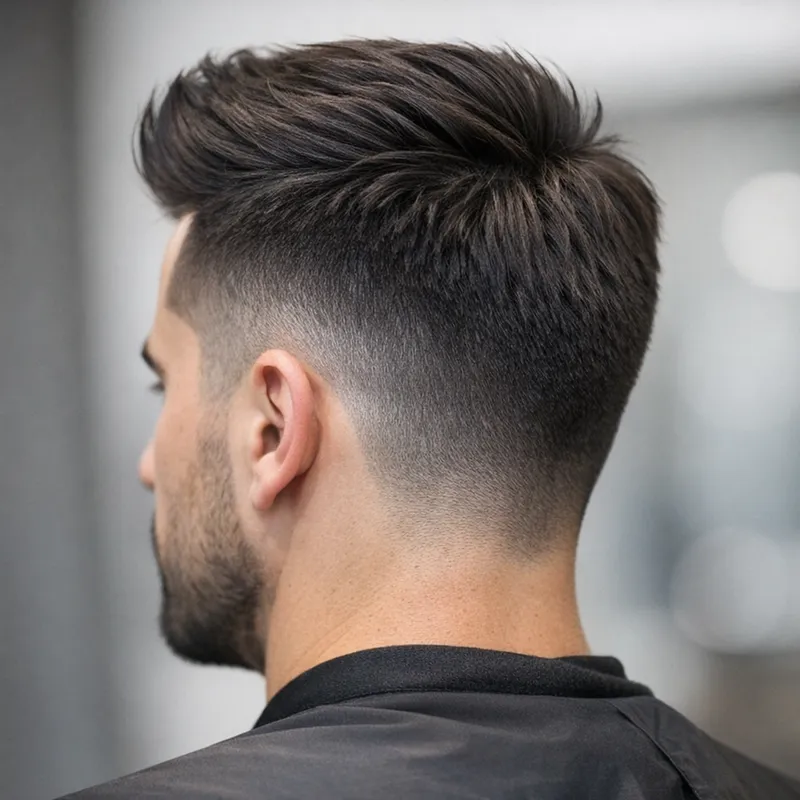
Want haircut inspiration too? Explore MensHaircutStyle’s haircut guides from the main menu and pair them with a beard plan from this page.
Cleaning & maintenance: keep the cut smooth and the lines sharp
A trimmer that’s dirty or clogged doesn’t cut evenly. It tugs, misses hairs, and makes you do extra passes—which is how irritation starts. Maintenance isn’t glamorous, but it’s the easiest way to keep performance consistent.
After every trim (2 minutes)
- Remove combs/attachments and shake out loose hair.
- Brush the head lightly to clear trapped hairs.
- If your model is washable, rinse the cutting head and let it dry fully before storage.
Weekly (or every 2–3 trims)
- Deep clean the head area where hair dust accumulates.
- If you use beard balm/wax, clean more often (product buildup reduces cutting efficiency).
Monthly (performance check)
- Check for uneven cutting (one side finishing faster than the other can signal buildup or a dull edge).
- Replace worn attachments if they no longer sit snugly—wobble = uneven length.
FAQs about the Braun Series 9 beard trimmer (best-practice SEO section)
Short answers first, then practical detail. If you’re deciding between models or trying to improve your trimming results, start here.
What’s the difference between the Braun Series 9 beard trimmer and the Braun Series 9 shaver?
A beard trimmer manages length and shape. A Series 9 shaver is built for clean shaving. If your goal is “keep beard at 6–12mm,” you want the trimmer. If your goal is “smooth skin,” you want the shaver.
Many guys use both: trimmer for the beard length, then a shaver (or close-shave head) to clean the neckline and upper cheeks.
How do I choose between BT9560, BT9545, and BT9565?
Choose based on attachments and how you groom:
- BT9560: typically the most complete “all-in” kit (great if you want flexibility and travel-ready storage).
- BT9565: often the most fade-heavy kit (if beard fades are your signature).
- BT9545: a focused kit for clean maintenance and detailing without chasing every extra accessory.
Always verify the retailer’s box list—regional bundles vary.
How many length settings does a Series 9 beard trimmer usually have?
Many Series 9 kits are marketed with fine adjustment steps (often 52 length settings with 0.25mm increments). The real win is repeatability: once you find your “perfect” setting, you can return to it weekly.
Should I trim my beard wet or dry?
If you want consistent results, trim dry. Wet hair can lay flatter or clump, which can make you cut shorter than intended. Wet trimming can be convenient, but dry trimming is more predictable—especially for beginners.
How do I avoid the most common mistake: trimming the neckline too high?
Use a simple placement rule: the neckline usually looks best about one to two fingers above the Adam’s apple, curving up toward the jaw. Avoid drawing a straight line under the chin—curve it.
If you’re unsure, keep it lower and softer. You can always tighten it later.
How do I fix patchy or uneven-looking areas after trimming?
Patchiness is usually an angle and direction problem, not “bad growth.” Comb the beard, trim with the grain to set the length, then do a light pass against the grain only where it still looks uneven.
Also: don’t chase a tiny patch by going shorter everywhere. Instead, reduce the contrast by softening edges and keeping lines natural.
Can a Series 9 beard trimmer replace hair clippers for full haircuts?
For light cleanup, yes. For regular full haircuts and fades on the head, dedicated hair clippers are usually better. The tool that wins is the one designed for the job: clippers for bulk head hair, trimmers for precision and detailing.
How often should I trim to keep the beard looking “fresh”?
Most guys maintain a sharp look with a quick trim every 5–10 days. The longer the beard, the more forgiving it is. The shorter the beard, the more often you’ll want to tidy lines and symmetry.
What’s the fastest way to upgrade my look with this trimmer?
Do a simple three-part upgrade:
- Even length (bulk trim first).
- Natural neckline (not too high).
- Clean moustache corners (small detail work makes the whole beard look intentional).
Want the best result with the least effort?
Get one professional shape-up (cheeks + neckline), then maintain it weekly at home with your trimmer. You’ll look sharper, spend less time fixing mistakes, and your beard will match your haircut.
If you also want clean-shave performance (not just trimming), check our shaver guide: Braun Series 9 shaver.