
Clippers & Trimmers • Braun Hair Trimmer
Choose the Right Braun Hair Trimmer — then get a cleaner, more even cut at home
A lot of people search “Braun hair trimmer” when what they really need is clarity: trimmer vs clipper, what length range matters, how to avoid patchy fades, and how to keep blades from pulling hair. This page gives you a practical buying checklist, a step-by-step home haircut method, and two quick tools that generate a cut plan in seconds.
-
Zero confusion: trimmer vs clipper Know exactly which Braun tool matches your haircut goals (buzz, taper, fade, cleanup) so you don’t buy the wrong device.
-
Sharper results with fewer mistakes Use a simple “start longer, then dial down” method and a blending strategy that prevents hard lines and uneven spots.
-
Maintenance that keeps blades smooth Cleaning and oiling habits that reduce pulling, heat, and irritation — plus a scheduler tool you can save in your browser.
Braun hair trimmer vs Braun hair clipper: what you should actually buy
The phrase “Braun hair trimmer” is used for two different tools — and choosing the wrong one is the fastest path to frustration. Here’s the simplest way to think about it:
Choose a Braun hair clipper when…
You’re cutting head hair regularly and you want speed, consistency, and fewer passes through thick areas. Clippers are built for efficient bulk cutting and are typically the best fit for buzz cuts, basic tapers, and fade maintenance.
- Faster on head hairWider cutting area helps you finish quicker with fewer “patchy” spots.
- More predictable length controlGreat when you’re trying to repeat the same cut every 2–4 weeks.
- Better for blends and fadesEasier to build smooth transitions when you work in zones.
Choose a Braun trimmer kit (all-in-one) when…
You want one device for multiple jobs: beard edges, body grooming, detail work, and occasional head-hair touch-ups. Trimmer kits win on flexibility — but they usually feel slower if you’re doing full head haircuts often.
- More versatile groomingGreat for beard detail, neckline cleanup, and multi-area grooming.
- Better precision in tight areasHelpful around ears, edges, and finishing lines.
- Travel-friendlyOne kit can cover most maintenance needs when you’re on the go.
Pro reality check: If your main goal is “I want a clean, even haircut at home,” a dedicated clipper is usually the smarter pick. If your main goal is “I want one tool that does a bit of everything,” an all-in-one trimmer kit makes more sense.

The easiest “looks sharp” cut to maintain
A taper is a perfect match for at-home clipping because it rewards small improvements. Even if your fade isn’t perfect, a tidy taper with a clean neckline can still look intentional and professional. If you’re new to cutting your own hair, start here before you attempt a tight skin fade.
Buying checklist: how to choose the best Braun hair trimmer for your cut
Marketing often pushes features you don’t need. The best purchase is the one that matches your haircut routine. Use this checklist to make the decision fast — and avoid paying extra for things that won’t change your result.
| What to check | Why it matters | Best for | Quick recommendation |
|---|---|---|---|
| Length range (in mm) | Most DIY mistakes come from choosing the wrong length too early. A broad range lets you start safer (longer) and dial down. | Buzz cuts, tapers, simple fades | Pick a clipper/trimmer that clearly marks lengths and lets you adjust in small steps. |
| Consistency of the comb/guard | Stable combs reduce accidental “gouges” and patchiness. A guard that flexes or slips causes uneven cutting. | Anyone cutting their own hair | Prioritize a secure attachment mechanism over “extra accessories”. |
| Cordless runtime | Running out of power mid-cut leads to rushed decisions. You want enough battery to finish calmly. | Full haircuts at home | Choose a model with a comfortable buffer beyond your typical cut time. |
| Washable / easy cleaning | Clean blades cut smoother. Buildup increases pulling, heat, and irritation — and makes results look rough. | Frequent maintenance cuts | If you cut often, easy cleaning is not optional. It’s performance. |
| Precision finishing capability | Most “barber-like” results come from the last 3 minutes: edges, around ears, neckline. | Tapers, fades, line cleanup | If your clipper is bulky, consider a small trimmer for finishing work. |
| Noise & vibration comfort | If the tool is uncomfortable, you’ll rush. Rushing causes mistakes. Comfort improves patience. | Beginners | Choose the tool you can hold steadily for 20–40 minutes without fatigue. |
Shortcut rule: If you mainly cut head hair, go clipper-first. If you mainly groom beard/body and only touch up hair, go trimmer-kit first. Then use the tools below to generate a clean plan so you don’t improvise mid-cut.
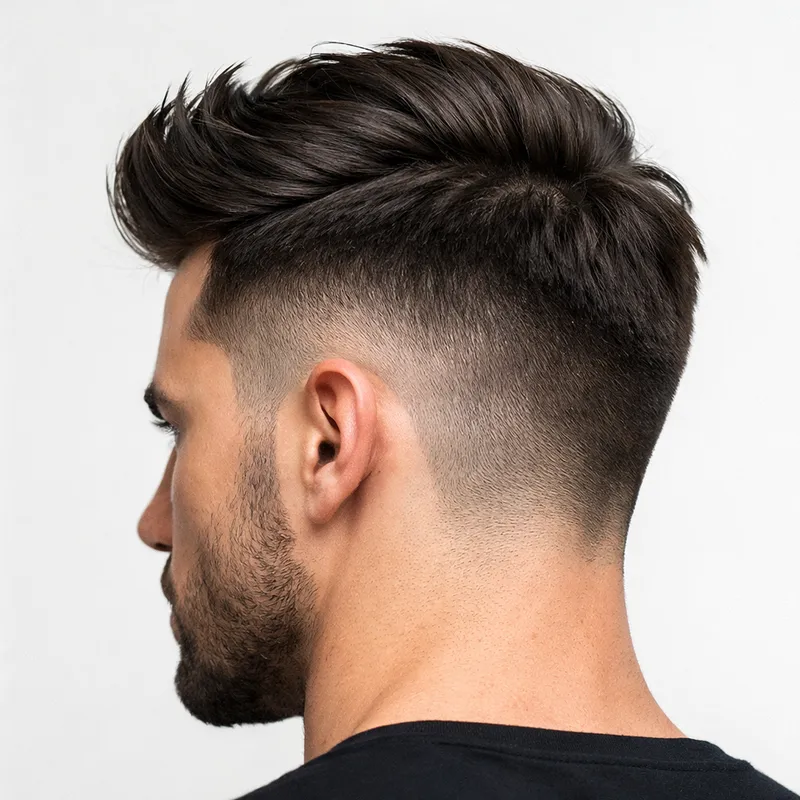
If you want the most repeatable haircut
The buzz cut is the king of consistency: it’s fast, forgiving, and it looks clean even when you’re not an expert. The “upgrade” isn’t going shorter — it’s adding a tidy neckline and a subtle blend on the sides so it looks intentional instead of accidental.
Want a sharper result without guessing?
Use the cut-plan tools below. They’re designed to stop the #1 DIY problem: changing lengths randomly and creating lines you can’t blend out. Build a plan first, then follow it calmly.
Cut Plan Tools: create a haircut plan in under a minute
These mini tools are built for real life: you choose your target length and your style goal, and you get a clear plan you can follow. No hype — just structure. (Nothing is sent anywhere; everything runs in your browser.)
Tool #1: Guard Length Planner (safe, repeatable cuts)
Pick your target length and haircut goal. The planner will suggest a “start longer, then dial down” approach that reduces mistakes. If you’re new, enable Safety Mode — it automatically adds a longer first pass to avoid cutting too much.
Guard numbers vs mm: many brands use guard numbers (#1, #2, #3). Braun often displays lengths in millimeters. Always trust the mm markings on your comb/attachment for accuracy.
Adjust the length and goal to generate a cut plan.
Tool #2: Fade Blueprint Generator (zone-by-zone blending)
A clean fade isn’t “magic.” It’s just working in zones and using small length changes. Choose a fade style and the generator will create a simple blueprint (neckline → lower sides → upper sides → blend).
Beginner tip: if your fades usually look “steppy,” your length jumps are too big. This blueprint keeps the steps small and tells you where to blend.
Choose a fade style and lengths to generate a plan.
Tool #3: Maintenance Scheduler (keeps blades from pulling)
When a trimmer starts tugging hair, the cause is often simple: buildup, dryness, or neglected oiling. Use this scheduler to estimate your next clean/oil date based on how often you trim.
Set your last clean date and trim frequency.
How to cut your hair at home with a Braun hair trimmer (step-by-step)
A good DIY haircut isn’t about being “talented.” It’s about using a repeatable sequence: prep → bulk → zones → blend → finish. The moment you jump around randomly, you create lines and chase mistakes. Use this guide like a checklist and you’ll get better every time.

The 3-tool setup that makes DIY easy
You don’t need a huge kit. For most men, the best setup is: (1) a clipper/trimmer for sides and bulk, (2) a small detail trimmer (optional) for edges, and (3) proper scissors if you keep length on top. This prevents the common trap of trying to force one tool to do everything.
Beginner rule that saves hair: Do your first pass longer than your final target length. Once the bulk is even, you can dial down with confidence.
DIY haircut checklist (save your progress)
Tick off each step as you complete it. Your browser will remember your progress (only on your device), so you can pause and continue without losing track.
Progress: 0/9 completed
-
1) Prep: wash, dry, comb, and set your lighting
Clean, dry hair behaves more predictably. Strong light is not optional — it’s how you see lines before they become a problem. If your hair grows in different directions, comb it the way you normally wear it before you begin. -
2) Choose your “safe first pass” length
Pick a longer length than you think you want. The goal of the first pass is not perfection — it’s evenness. Once everything is even, you can lower the setting gradually without panic. -
3) Sides first: bottom-to-top strokes, consistent pressure
Work from the bottom up in smooth strokes. Don’t “dig in” — let the guard do the work. If hair is thick, do multiple gentle passes instead of one aggressive pass. -
4) Back of the head: go slow and check symmetry often
Most DIY mistakes happen here because you can’t see the angle. Use a second mirror or your phone camera to check shape and evenness. Small corrections beat big “rescues.” -
5) Build zones (taper/fade): lower → middle → upper
A clean blend comes from zones. Pick 2–3 lengths and assign them to areas: lower sides (shortest), middle (medium), upper sides (longest). Then blend the transitions with short strokes. -
6) Top: scissors or longer guard (depending on your style)
If you keep length on top, scissors give the most natural finish. Cut little by little. If you’re using a guard on top, go slow and follow the direction you style your hair to avoid uneven lift. -
7) Around the ears: small movements, steady hands
This area makes the cut look “professional” or “home-made.” Move slowly, keep the tool stable, and tidy small hairs that break the outline. -
8) Neckline: choose a natural shape and clean it up
Don’t chase a perfectly straight line if your natural growth isn’t straight. A neckline that matches your natural shape looks cleaner and grows out better. -
9) Final audit: look for lines, then blend (don’t go shorter everywhere)
The final audit is where you level up. Look for harsh lines and fix them locally. The worst habit is “going shorter everywhere” to hide mistakes — that’s how you end up with a cut you didn’t want.
Cleaning & oiling: the simplest way to keep a Braun hair trimmer cutting smoothly
If your tool starts to feel rough, loud, or “tuggy,” your first assumption shouldn’t be “it’s broken.” Most of the time it’s buildup (hair + oil + skin) or dry blades. A quick routine keeps cutting smooth and helps prevent irritation.
The routine that actually works
-
Brush out hair after each use Even if you do a full clean later, removing loose hair immediately keeps performance stable.
-
Do a full clean regularly (based on your frequency) If you trim weekly, treat cleaning like a scheduled task — it prevents pulling and patchy cutting.
-
Oil lightly (small drops, not a flood) Oiling reduces friction and heat. Wipe excess so it doesn’t attract more buildup.

One underrated skill: comb-checking
A comb helps you spot uneven areas before they become obvious. Lift the hair, look for weight differences, and correct locally. This is especially useful if you’re doing a taper or keeping more length on top.
If you want a “barber-clean” finish
The last 10% of effort creates 90% of the “professional” look: tidy edges, a clean neckline, and a smooth blend. If you’d rather not DIY, use a barber for the cut and maintain it at home with your trimmer in between visits.
FAQs (Braun hair trimmer)
These are the questions people ask right before they buy — and right after their first DIY cut. Read these once and you’ll avoid most beginner mistakes.