
Choose Hairdresser Clippers Professional-Grade — Without Wasting Money
“Hairdresser clippers professional” is one of those searches where people don’t just want a list of products — they want certainty. If you’re cutting men’s hair (clients or at home), the right clipper setup saves time, reduces mistakes, and makes fades look clean instead of “patched.” This page gives you a complete buying framework, plus practical tools you can use immediately.
- How to spot real pro-grade quality (motor, blade stability, lever range, guard fit, serviceability).
- Guard sizes explained with a chart + converter so “#2” and “#3” stop being guesswork.
- Fade planning tools that tell you what to do next (not vague “blend more” advice).
- Maintenance routines that keep clippers cutting smooth, cooler, and cleaner for longer.
Built for barbers, hairdressers, students, and serious home cutters. Practical first — marketing second.
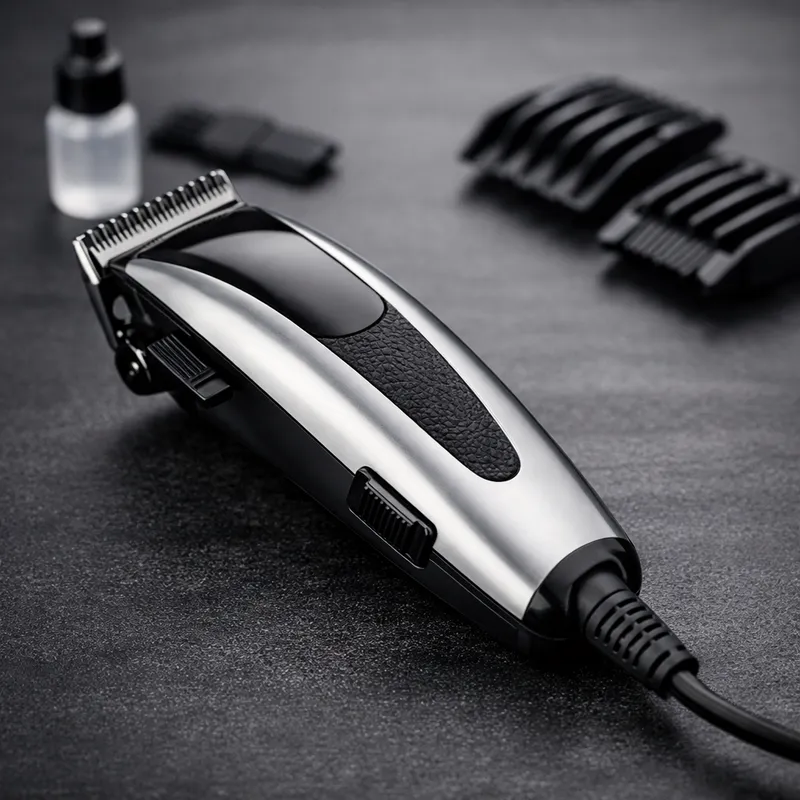
1) What “Professional Hairdresser Clippers” Really Means
A professional clipper is not “professional” because a brand says so. It’s professional because it is designed for repeatable results under real workload. That means consistent power, clean cutting, comfort in the hand, and a tool that stays reliable after months of use.
If you cut men’s hair daily (clients) or you’re trying to get consistently clean fades at home, pro-grade hair stylist clippers are usually worth it because:
- Less tugging on thick/coarse hair because torque stays stable.
- Fewer passes needed to remove bulk.
- Smoother blending because the blade/lever system holds its position.
- Less hand fatigue (balance and vibration matter more than people think).
- You only do one buzz cut every few months.
- You won’t maintain blades (dirty clippers perform like cheap ones).
- You want “one tool for everything” but expect barber-level finishing without practice.
Reality check: technique still matters. But pro clippers reduce the number of “tool-caused problems” (dragging, uneven cutting, overheating, loose guards), so your practice actually translates into better results.
2) Clippers vs Trimmers vs Shavers (Fast Clarity)
If you’re building a kit for men’s cuts, confusion here leads to wrong purchases. Here’s the clean breakdown:
Clippers
Built for bulk removal, fades, tapers, and most head-hair cutting. This is your main workhorse.
Trimmers
Built for edges and detail: necklines, around ears, beard lines, and crisp finishing.
Foil shavers
Built for skin-close finishing after you’ve already cut hair short. Not a replacement for clippers.
A great men’s cut doesn’t require dozens of tools. It requires the right trio: Clipper (bulk + fading) + Trimmer (lines) + Guards/Combs (control). Everything else is optional until your fundamentals are consistent.
3) The 10-Point Buying Framework (Use This to Beat Marketing)
If you want professional hair stylist clippers that actually perform, you need to evaluate what determines real cutting quality. This checklist is the fastest way to compare tools — even when specs look “similar.”
Performance (the cut)
- Torque under load: thick hair should not slow the clipper into snagging.
- Blade stability: a stable blade cuts cleaner and blends easier.
- Lever range: more controlled range helps fades look seamless.
- Guard fit: loose guards = inconsistent lengths and wasted time.
- Heat behavior: a clipper that runs hot forces breaks and affects comfort.
Ownership (the long game)
- Ergonomics: balance and grip reduce fatigue over multiple cuts.
- Noise & vibration: high vibration causes hand fatigue and shaky lines.
- Serviceability: blades and parts should be easy to replace.
- Battery reality (if cordless): stable power delivery matters more than “big numbers.”
- Hygiene workflow: easy cleaning means you’ll actually do it consistently.
If you only remember one thing: clean cutting is a system — the clipper, the blade condition, the guards, and your workflow. Pro results come from removing friction everywhere: fewer passes, fewer mistakes, fewer “why does this look uneven?” moments.
Clipper Selector Tool: Generate Your “Ideal Specs” Profile
This tool doesn’t push brands. It produces a practical spec profile you can shop with. The goal is to match your hair type and cutting goals to the features that actually matter.
Your profile will appear here. Tip: run it twice with different goals (e.g., fades vs buzz) to see what changes.
Note: every brand uses different marketing terms. This profile focuses on the behavior you should feel in your hand and see in the cut.
4) Corded vs Cordless: Make the Decision Like a Pro
Corded vs cordless isn’t a “better/worse” debate. It’s a workflow decision. A lot of professionals use both because each solves a different problem.
Corded clippers (why pros still keep them)
- Stable power all day — no battery drop-off.
- Simple reliability (fewer battery-related failures over time).
- Great for bulk work when you want consistent cutting with minimal friction.
Cordless clippers (why they’re everywhere now)
- Better angles for fades, around ears, and detail work.
- Cleaner station and movement — less cable management.
- Faster transitions between techniques (clipper-over-comb, blending, finishing).
If you cut daily (clients), plan for a backup: either a second clipper or a corded option you can trust. If you cut at home, choose the option you will actually use consistently — the “best” clipper is useless if it’s annoying to handle.
5) Motors, Blades, and Levers: What Actually Changes the Cut
Many pages obsess over labels (magnetic, rotary, pivot, DLC, titanium, etc.). Labels help — but they’re not the real test. The real test is how the clipper behaves when you hit resistance: thick hair, dense growth patterns, or longer bulk.
Motor: focus on torque, not hype
Torque is the “keep going anyway” quality. If your clipper bogs down, you’ll compensate with pressure, repeated passes, and messy blending. A pro-grade motor keeps speed more stable so your technique stays consistent.
If you regularly cut thick or curly/coarse hair, torque is not optional — it’s the difference between “smooth” and “snaggy.”
If it tugs, something is wrong Less pressure = cleaner resultsBlade + lever: where fades are won
Blending is easier when the blade is stable and the taper lever has predictable positions. A sloppy lever or unstable blade makes “half open” feel different every time — and that’s how lines happen.
Also: a dull blade can make an expensive clipper cut like a cheap one. Blade care is a performance upgrade.
If you want better fades, don’t just buy “stronger.” Buy “more controllable.” Control means consistent lever movement, guards that click tight, and a blade that stays aligned.
6) Guard Size Chart (Haircut Numbers) + Instant Converter
Guard sizes are the language of clipper work. If you know the lengths, you can plan a cut instead of improvising. Use this chart as your reference point — then use the converter to move between guard numbers, millimeters, and inches.
| Guard | Length (mm) | Length (inches) | Common use |
|---|---|---|---|
| #0.5 | 1.5 mm | 1/16 in | Very short blending, tight tapers (not skin) |
| #1 | 3 mm | 1/8 in | Low fades, tight sides, “short but not shaved” |
| #1.5 | 4.5 mm | ~3/16 in | Key transition guard for fading |
| #2 | 6 mm | 1/4 in | Classic “short sides,” safe blending length |
| #3 | 10 mm | ~3/8 in | Medium-short sides, balanced look |
| #4 | 13 mm | 1/2 in | Longer sides, softer transitions |
| #5 | 16 mm | ~5/8 in | Long sides; often better with comb blending |
| #6 | 19 mm | 3/4 in | Longer sides, shape control |
| #7 | 22 mm | ~7/8 in | Thick hair shaping, careful blending |
| #8 | 25 mm | 1 in | Long guard work; often paired with scissors |
Guard Converter
Result: Select a guard or enter millimeters, then click “Convert.”
Important: “No guard” length depends on blade type and lever position, so it’s not standardized. Guards are the consistent reference.
7) The Styler Comb (Clipper-Over-Comb): The Shortcut to Cleaner Blending

A styler comb isn’t a “nice extra.” It’s a control tool that turns awkward guard transitions into smooth blending.
People search “styler comb” because guards stop being helpful once the hair gets longer, denser, or grows in tricky directions. Clipper-over-comb is the technique that bridges the gap between guard work and scissor finishing — especially in men’s cuts.
When clipper-over-comb is the better move
- Thick hair: guards can leave “shelves” or bulky weight lines.
- Longer sides: #5–#8 guard work can look heavy without refinement.
- Weird growth patterns: cowlicks and swirls need directional control.
- Faster blending: you can “erase” the last visible line without cycling guards forever.
Use the comb to create a consistent “wall” of hair, then skim the clipper across the comb’s teeth. If you’re digging in, you’re removing too much. If you’re not seeing change, your angle is too flat.
Fade Planner Tool: Build a Clean Guard Progression
This planner generates a practical progression for the sides. It’s not “the only way” — it’s a reliable starting plan that prevents random guard jumping. Adjust based on hair density and head shape.
Your fade plan will appear here. Tip: if you struggle with lines, use smaller “bands” and take less hair each pass.
If you’re new to skin fades: start with #0.5 as the bottom. Skin fades look great, but they punish shaky technique.
8) Cleaning & Maintenance: The Difference Between “Sharp” and “Struggling”
Clippers don’t get bad overnight — they get slow and rough one shortcut at a time: skipped brushing, no oil, guards full of hair, disinfectant used the wrong way, blades never aligned, and suddenly your “pro” clipper is tugging like a bargain kit.
After every cut (fast routine)
- Brush hair out of the blade and guard.
- Disinfect (use a method suitable for hair tools; follow product instructions).
- Add a small drop of clipper oil (if your blade type requires it).
- Run the clipper for a few seconds to distribute oil.
- Wipe excess to avoid attracting hair and dust.
Weekly (performance reset)
- Deep clean the blade area (hair buildup reduces cutting speed).
- Check blade alignment and screws.
- Inspect guards for cracks or looseness.
- Listen for changes: new rattles and buzzing usually mean something shifted.
Pressing harder when the clipper cuts poorly. Pressure increases irritation, creates uneven patches, and makes blending worse. When cutting feels rough, fix the system: clean, oil, check blade alignment, and replace the blade if needed.
Maintenance Schedule Builder (Based on Your Use)
Enter how often you cut. The tool generates a realistic schedule that keeps performance high without turning maintenance into a chore.
Your schedule will appear here. Tip: consistency beats perfection. A simple routine done every time wins.
9) The Pro Kit Essentials (What Completes “Hair Stylist Clippers”)
A common reason hair stylist clippers underperform is not the clipper — it’s the missing support pieces. If you want the cut to look professional, build the kit around control, hygiene, and finishing.

Pro results come from the system: clipper + guards + comb control + finishing + maintenance.
Minimum kit for clean men’s cuts
- Clipper: stable lever, strong cutting power, guards that lock tight.
- Trimmer: for sharp edges around ears, neckline, and beard lines.
- Guards: at least #0.5 to #4 for fades; more for longer sides.
- Styler comb: clipper-over-comb blending and bulk control.
- Disinfecting workflow: tools must be easy to clean or they will be skipped.
Make your life easier: start with a mid fade plan, use smaller blending zones, and avoid skin fades until your transitions are consistent. The “wow” fade is built from boring, repeatable steps.
10) Want the Result Without the Learning Curve?
If your goal is a clean fade for an event, a job interview, or just a consistently sharp look, it’s sometimes smarter to get a pro cut — then maintain it at home between appointments. That approach saves time and avoids the “one mistake that forces you to go shorter.”

Get a pro to set the shape the first time. Then use your clippers for maintenance: neckline cleanup, sideburns, and keeping the fade fresh.
If your site uses a directory or booking flow, link the primary button to that page. If you use a contact page, link it there. No forms are included here by request.

Use this page like a decision system
If you’re shopping: use the selector to create your spec profile, then verify your options using the 10-point framework. If you’re learning: use the fade planner to stop improvising and start repeating a plan until it becomes automatic. If you’re maintaining: use the schedule builder so your clipper stays sharp and comfortable.
Less guesswork Cleaner blends Fewer “lines”FAQs About Professional Hairdresser Clippers
These answers are written for real cutting situations: fades, bulk removal, thick hair, guard lengths, and maintenance.
Are professional hairdresser clippers worth it for home use?
They’re worth it if you care about consistent results and comfort — especially for fades and thick hair. Pro-grade clippers typically cut faster with fewer passes, feel smoother on the scalp, and last longer when maintained. If you only do an occasional buzz cut and won’t maintain blades, you may not benefit as much.
What’s the difference between hair clippers and trimmers?
Clippers are for bulk removal and general cutting. Trimmers are for edges and detail: around ears, necklines, and crisp finishing. If you want clean outlines, clippers alone usually won’t do it as well as a dedicated trimmer.
What length is a #2 haircut?
A #2 guard is typically 6 mm (¼ inch). Use the chart and converter above so you can plan transitions accurately.
Corded vs cordless: which should I buy?
Corded is the most consistent and simple for long sessions. Cordless is easier to maneuver and often better for fades and angles. If you cut daily, plan for a backup option (second clipper or a reliable corded tool) to avoid downtime.
Why do my clippers pull hair?
The usual causes are a dirty blade, lack of oil, dull blade, misalignment, or not enough torque for the hair density. Don’t fix pulling with pressure — fix the system: clean, oil, check alignment, and replace the blade if performance doesn’t return.
What guard sizes do I need for fades?
A strong starting set is #0.5, #1, #1.5, #2, #3, #4. Then use the taper lever for micro-adjustments. If you’re blending longer sides, a styler comb (clipper-over-comb) becomes more useful than stacking higher guards.
Do I need a “styler comb” if I already have guards?
If you only do short guard cuts, you can get by without it. But if you want smoother blends on thick hair or longer sides, a styler comb lets you control bulk and erase the last visible line faster than cycling guards repeatedly.
How often should I clean and oil my clippers?
Brush hair out after every use. Disinfect based on your workflow and product guidance (especially important for client work). Oil frequency depends on blade type, but consistent light oiling helps reduce heat and friction. Use the schedule builder above to keep it realistic.