
Men’s Barber Shop Guide: Choose the Right Cut, Fade & Beard Service (Without Guessing)
Most “bad haircuts” don’t happen because the barber can’t cut hair. They happen because the request is vague, the service is mismatched (taper vs fade vs skin fade), or the style doesn’t fit your day-to-day routine. This page fixes that—fast.
Use this guide to understand what a men’s barber shop is best at, how to pick the right service, what to say in the chair, and how to keep your haircut and beard looking sharp between visits.
- Know what to book Haircut vs fade vs haircut + beard—choose the service that matches your goal.
- Speak barber Get a clear request that prevents “too high” fades and wrong lengths.
- Get a cut that lasts Match the style to your hair type and maintenance level.
- Look sharp between visits Simple upkeep rules that keep edges clean without overdoing it.

What Exactly Is a Men’s Barber Shop?
A men’s barber shop is built around the details that matter most for men’s grooming: precise clipper work, clean blends, sharp edges (when you want them), and facial hair services that match your haircut. While modern barber shops can feel premium and stylish, the real value is practical: you get a cut that looks deliberate and holds its shape as it grows out.
The best barber shops don’t just cut hair—they standardize results. That means: your neckline is consistent, your fade height doesn’t creep up every visit, and your top length doesn’t become a surprise. If you’ve ever walked out thinking “it’s not bad, but it’s not me,” you already know why that matters.
Short-to-medium men’s haircuts, fades, tapers, line-ups, and beard shaping. If your style relies on clippers, clean blending, and tidy edges, a barber shop is usually the best fit.
A quick consultation, a clear service menu (haircut vs fade vs haircut + beard), clean tools, and a finish that looks good under normal lighting—not only in a mirror.
If your barber asks about your daily routine (product, styling, work dress code), that’s usually a good sign.
Important detail: a barber shop isn’t automatically “better” than a salon. It’s more specialized for certain outcomes. The smartest move is choosing the professional who regularly delivers the look you want on hair like yours. You’ll see a clean breakdown later in the barbershop vs salon section.
Men’s Barber Shop Haircut Styles (With Clear “What to Ask For” Examples)
The fastest way to get a better haircut is to stop describing it like a vibe and start describing it like a plan: sides/back (taper or fade, and how high), top (how long and how you’ll style it), and edges (natural vs sharp).
Below are high-performing barber shop haircuts that work in real life—plus the exact language that helps your barber deliver. Use them as templates. You can always adjust the details once you know what you like.

Low / Mid Fade + Textured Top
The “safe modern” choice. It looks sharp without being extreme, and it works for most hair types. The key is fade height: low is more conservative, mid is balanced, high is bold.

Tapered Haircut (Clean + Office-Friendly)
The taper is the “quiet flex” of men’s grooming: it looks intentional, grows out clean, and doesn’t rely on extreme contrast. If you want sharp without loud, start here.

Textured Crop (Low Effort, High Payoff)
Great for thick hair and anyone who wants a modern look without daily styling. The crop looks best when the top has controlled texture and the sides are clean but not overdone.
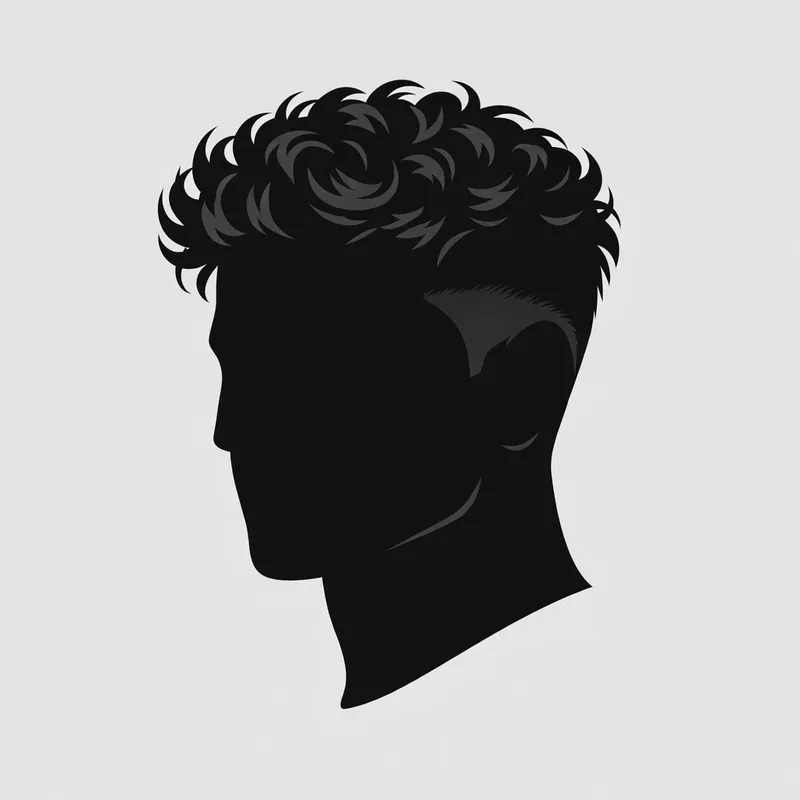
Slick Back / Comb Back (Modern Classic)
Best when you want a polished look that still feels masculine and simple. The trick is removing bulk at the sides so the shape looks strong, not puffy.

Crew Cut + Taper (Reliable + Athletic)
One of the most underrated “always good” choices. It suits most face shapes, looks clean without styling, and you can adjust the top length to stay conservative or more modern.
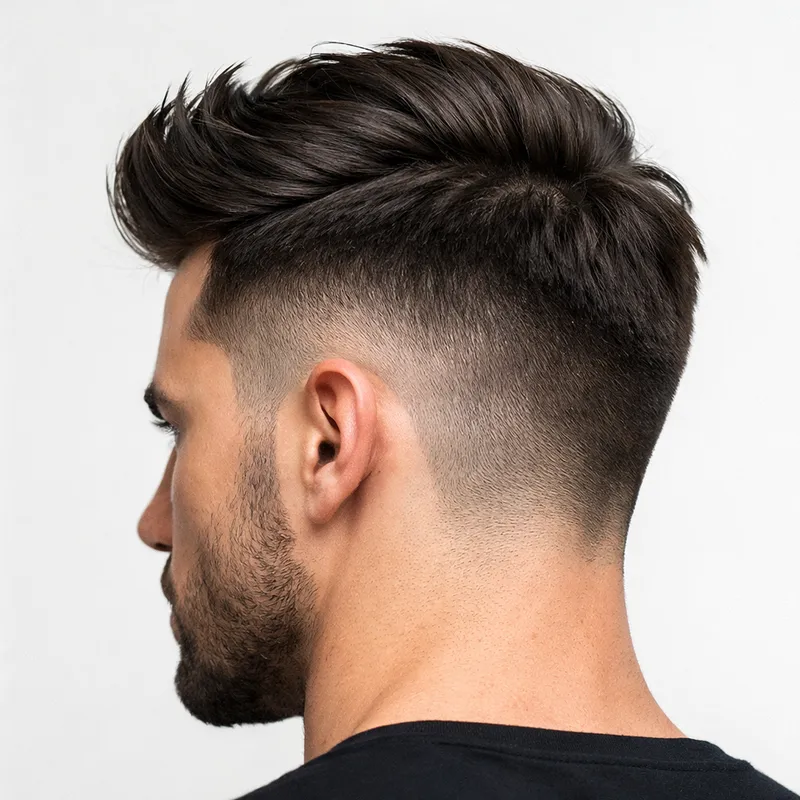
Buzz Cut (Clean, Minimal, No Drama)
If you want the lowest-maintenance haircut, buzz is undefeated. But details still matter: the neckline, sideburns, and (optional) slight fade can make it look premium instead of accidental.
Make the style fit your real life (this is where most guys go wrong)
The “best” haircut is the one that matches your routine. If you don’t style your hair in the morning, don’t choose a haircut that requires styling to look right. If you hate frequent visits, don’t choose a skin fade as your default. A great men’s barber shop will help you choose a look you can actually maintain.
A quick decision framework
Want low effort? Choose a taper, crop, crew cut, or buzz cut.
Want modern contrast? Choose a low/mid fade or drop fade.
Want maximum crisp? Choose a skin fade and plan more frequent touch-ups.
How to Choose the Best Barber Shop for Men (Without Overthinking It)
“Best” doesn’t mean the most expensive or the most Instagram-famous. It means the shop that reliably delivers your look and respects the details you care about—fade height, symmetry, beard balance, and how the haircut grows out.
Green flags (good signs)
- Portfolio match: they regularly show haircuts like yours (hair type + style).
- Clear menu: haircut, fade, skin fade, beard, haircut + beard are separate services.
- They confirm: fade height, top length, and neckline before committing.
- Clean station: tools and work area are obviously maintained.
- Real consultation: they ask how you style your hair and how often you want to visit.
Red flags (avoid frustration)
- No visible examples of fades/blends (yet they offer them).
- They rush your request or won’t clarify “low/mid/high.”
- They push a sharp line-up when you asked for natural edges.
- They treat beard shaping as a 60-second afterthought.
- They won’t show progress until the end (especially risky for fade height).
What to do before you book
Take 30 seconds to make your haircut request “easy to succeed.” Choose one style goal, pick a reference photo, and decide your maintenance level. Most barbers can deliver an excellent haircut—if the request is clear.
1) Pick a style: taper, fade, crop, crew, buzz, slick back.
2) Decide: natural edges or sharp line-up.
3) Choose your timeline: “I come every 2–3 weeks” vs “I come every 4–6 weeks.”
4) Bring 2 photos: one side view, one front view (similar hair type if possible).
Your First Visit Plan (Simple, Realistic, and Built for Better Results)
If you’re trying a new men’s barber shop, your first visit should be about calibration. You’re learning what you like: fade height, top length, how sharp you want the edges, and how your hair grows out. When you approach the first cut like a quick “baseline,” the second cut gets dramatically better.
Step 1: Choose a safe baseline
If you’re unsure, start with a low taper or a low/mid fade. These are adaptable: you can always go tighter or higher later, but you can’t undo a fade that went too high.
Step 2: Match style to your routine
Be honest: do you style daily? If not, choose a cut that still looks good “air-dried.” Crops, crew cuts, tapers, and most low fades are practical. High-contrast styles often require more frequent touch-ups to keep the shape crisp.
Step 3: Keep notes for next time
A great barber shop haircut becomes repeatable when you remember two details: fade height (or taper) and top length. Even a quick note in your phone turns “good luck” into consistency.
Step 4: Don’t overcorrect at home
Many guys ruin a good haircut by “cleaning it up” too aggressively—especially the neckline and beard line. Small touch-ups are fine, but chasing perfect lines every few days usually pushes lines too high.
Tool: Build Your “What to Ask Your Barber” Script (Copy + Paste)
This is the fastest way to eliminate misunderstandings. Choose your sides/back, top, edges, and beard preference, and this tool generates a clear request you can read word-for-word. It’s built to prevent the two most common problems: wrong fade height and unclear top length.
Your Script Will Appear Here
Choose your options and click Generate Script. You’ll get a clear request you can read in the chair, plus quick notes that prevent common mistakes.
- Clear fade/taper direction
- Top length and finish
- Edge preference (natural vs sharp)
- Beard integration (optional)
Tool: Haircut Maintenance Planner (So You Stay Sharp Without Living in the Chair)
A haircut looks its best on day 1. The secret is making it look good on day 10, day 20, and day 30. This planner helps you set a realistic schedule based on your haircut type and how crisp you want to look. It also tells you what to maintain at home without accidentally pushing your lines too high.
Your Plan Will Appear Here
Click Generate Plan to get a practical schedule: when to refresh your haircut, when to clean edges, and what to avoid at home.
- Recommended revisit window
- Optional mid-cycle cleanup (without overdoing it)
- Home upkeep rules that prevent “pushed” hairlines
Barbershop Beard: How to Get a Beard That Looks Sharp (Without Looking Drawn-On)
“Barbershop beard” usually means two things: clean structure and controlled lines. Not necessarily the sharpest lines possible—just lines that make your beard look intentional. The difference between “messy” and “masculine” is often one good trim and a neckline that isn’t creeping upward.
What a good beard trim includes
- Length balance: even where it should be even, fuller where it improves your face shape.
- Neckline: cleaned in a way that looks tidy but still natural.
- Cheek line: refined without carving half your beard away.
- Mustache detail: clean at the lip line for a sharper look.
- Sideburn blend: the beard should connect to the haircut smoothly.
Avoid these common mistakes
- Over-sharpening: super sharp lines can look unnatural on some faces and beards.
- Neckline too high: makes the beard smaller and can exaggerate a double chin.
- Uneven bulk: one side thicker than the other (common without shaping).
- No plan: trimming randomly instead of maintaining a consistent shape.
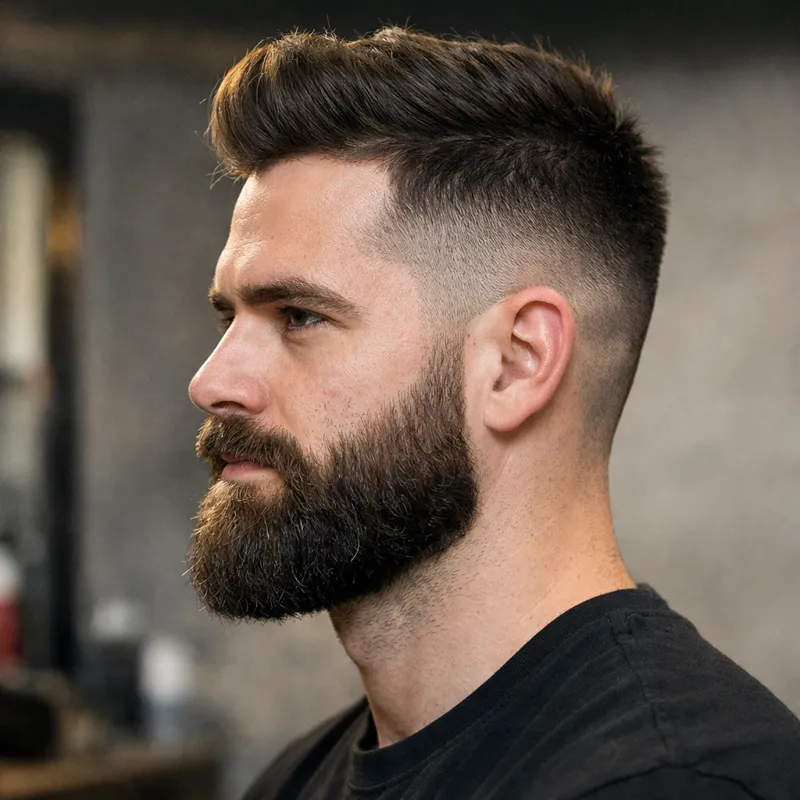
Quick “barber request” for a natural beard
If you want the beard to look sharp but not drawn-on, ask for structure without aggressive angles:
If you want it sharper: add “make the cheek line a little cleaner, but don’t over-square it.”
Barbershop vs Hair Salon for Men: Which One Should You Choose?
A common question is whether a barbershop is basically “a hair salon for men.” The overlap is real, but the specialization is different. Choosing the right place is less about labels and more about outcomes: the haircut you want, the tools required, and the kind of grooming you value.
Choose a men’s barber shop if you want
- Short-to-medium cuts with strong shape
- Fades, tapers, line-ups, and clean detailing
- Beard trims, shaping, and razor finishing
- Consistency and repeatability every few weeks
Choose a salon / men’s stylist if you want
- Longer layered cuts and scissor-heavy reshaping
- Complex color work (bleach, fashion color, heavy highlights)
- Specialized treatments and longer styling sessions
- Haircuts where layering and movement are the main goal
Best practice: pick the professional who regularly produces your target style on hair similar to yours. A strong portfolio beats a fancy label.
FAQs: Men’s Barber Shop (Straight Answers)
These are the questions men actually ask when they’re trying to find the right barber shop, book the right service, and avoid leaving with something that doesn’t fit their style or routine.
How often should I go to a men’s barber shop?
If you want a consistently crisp look, many men refresh every 2–4 weeks. Skin fades and sharp line-ups usually need more frequent visits. If you prefer low maintenance, a taper or classic haircut can look good for 4–6 weeks. Your best interval depends on how fast your hair grows and how sharp you want the edges.
What’s the difference between a taper and a fade?
A taper is subtle and natural—great for professional settings and clean grow-out. A fade is a more visible gradient and can go very tight (even to skin). If you’re unsure, start with a low taper or low fade; you can always go bolder later.
Should I book a haircut or a fade?
Book a fade when the fade is the main feature (low/mid/high or skin fade). Book a haircut when you want a balanced cut—often with a taper—and you care more about overall shape than a dramatic gradient.
What should I say to avoid a fade that’s too high?
Say: “I want a low (or mid) fade. Please show me the fade height in the mirror before going higher.” This one sentence prevents the most common disappointment. You can also use the script generator above to keep it simple.
Do I need a line-up?
Not always. A line-up looks crisp, but if you prefer a natural hairline (or you’re growing your hair out), ask for natural edges or a soft line-up instead of a sharp boxy finish.
What’s included in a “haircut + beard” service?
It should include the haircut plus beard trim and shaping, and—most importantly—the blend between sideburns and beard. That blend is what makes your grooming look intentional, not like two separate appointments.
How do I maintain my haircut at home without ruining it?
Keep home maintenance light: clean stray hairs around the neckline, avoid pushing the hairline up, and don’t chase perfect edges every few days. If you want a consistently crisp look, follow a schedule instead of constant “fixing.” The maintenance planner above helps you do that.
Is a hot towel shave worth it?
If you like a clean-shaven face and want a more relaxing, premium service, yes. If you’re prone to irritation, ask for gentle prep and aftercare. Done well, it’s close, comfortable, and a classic men’s barber shop experience.
Can a barber shop handle longer men’s hair?
Some can, some can’t. Look at their portfolio. If your haircut depends on layers, movement, and reshaping length, a men’s stylist may be a safer choice. If you want to keep length but refine the outline and clean the sides, many barbers can do it well.
What should I bring to my appointment?
Bring 2–3 reference photos (front + side is enough) and know your routine: do you use product, do you style with a comb, do you need it to work for the gym or a formal job? Clear context produces better results.
Get a Better Cut by Booking the Right Service (and Saying the Right Words)
If you take one thing from this page: don’t rely on “short on the sides, longer on top.” Choose taper vs fade, specify fade height, decide natural vs sharp edges, and match the style to your maintenance level. That’s how you turn a random barber visit into a reliable men’s grooming routine.
Want the fastest win?
Use the script generator to create a clear request, then book a shop nearby. It’s the easiest way to reduce miscommunication and get a cut that matches your expectations.
Want consistency long-term?
Build a realistic schedule with the maintenance planner. Staying sharp is not about constant touch-ups— it’s about smart timing and light upkeep.

