
How to Use Wahl Peanut Hair Clippers for Real Haircuts (Not Just Touch-Ups)
Most pages talk about the Peanut like it’s a beard trimmer, then leave you alone when it’s time to cut hair. This guide does the opposite: it’s built for men who want clean, predictable results with Peanut Wahl clippers—especially for short haircuts, edge maintenance, and between-cut cleanup.
- The honest fit: what the Peanut does well for head hair—and where it’s the wrong tool.
- The only guard plan that matters: how to use the 4 core lengths without creating hard lines.
- 3 routines that work: a clean buzz cut, a taper cleanup, and a simple method to fix lines.
- Fast decisions: corded vs cordless (Peanut Li), when to stop DIY, and when to book a barber.
Disclosure: MensHaircutStyle is not affiliated with Wahl. Model bundles and included accessories can vary by region and retailer.
On this page
- Quick verdict: should you use the Peanut as hair clippers?
- 60-second fit tool (interactive)
- Guard sizes + the no-line guard plan
- Corded Peanut vs Peanut Li (cordless)
- How to cut hair with the Peanut (3 routines)
- Best haircuts that match the Peanut’s strengths
- Maintenance (so it doesn’t pull hair)
- The 5 mistakes that ruin home clipper cuts
- When to stop DIY and book a barber
- FAQs (with SEO schema)
Quick Verdict: Should You Use Wahl Peanut Hair Clippers for Head Hair?
The “Wahl Peanut hair clippers” question has a simple answer: yes, if your haircut stays inside the Peanut’s comfort zone. That zone is short lengths, precision work, and controlled cleanup. If you expect it to behave like a full-size fade clipper with a taper lever and long guards, you’ll end up chasing lines—and growing out mistakes.
Use it for haircuts if you want
- Short, clean lengths (up to about 1/2″ / 13mm)
- Buzz cuts with a predictable guard plan
- Taper cleanup between barber visits (neckline, around ears, sideburns)
- Control in tight areas where big clippers feel clumsy
- Simple kids’ haircuts when you want a calm, easy tool
Skip it (as your main clipper) if you need
- Long lengths on top (beyond 13mm / 1/2″)
- Fast full haircuts on thick hair (the Peanut can do it, but it’s slower)
- Easy blending with a taper lever (the Peanut doesn’t give you lever positions)
- True fades from scratch without extra tools or experience
The best mindset: treat the Peanut like a precision mini clipper. It’s brilliant for the right job—and frustrating for the wrong one.
60-Second Fit Tool: Is the Peanut the Right Tool for Your Haircut?
This quick tool gives you a practical recommendation based on the three things that actually decide results: your goal, your top length, and whether you need corded or cordless convenience. No hype—just a clear “use it,” “use it with limits,” or “pick a different tool.”
Choose your situation
Tap one option in each box. The recommendation updates instantly.
Tip: If you selected “Full fade,” you can still use the Peanut for cleanup—but most people get cleaner fades faster with a lever clipper or a barber.
Guard Sizes + The No-Line Guard Plan (Built for the Peanut)
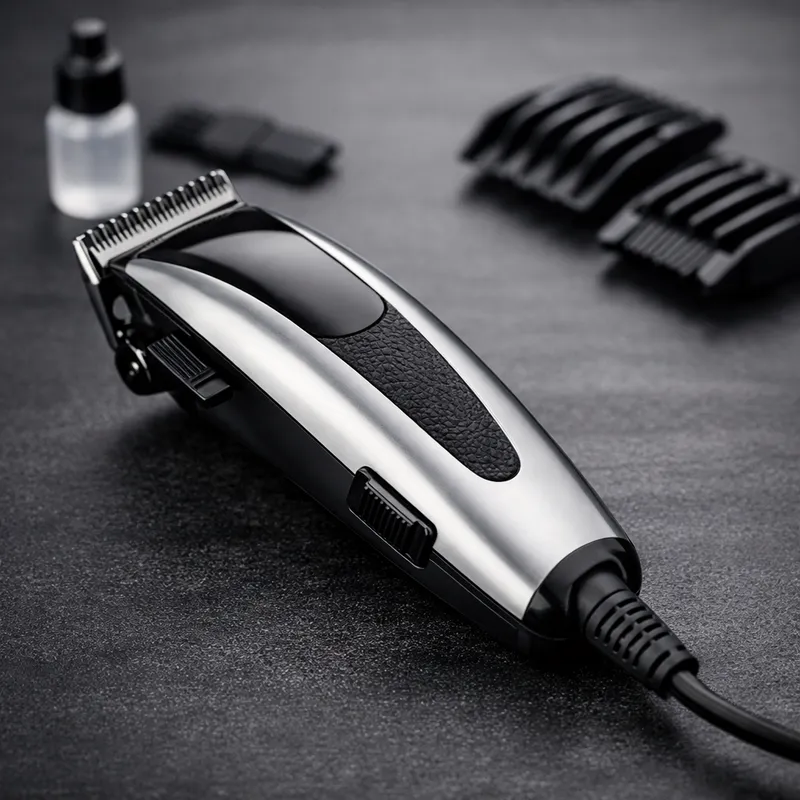
Here’s the biggest difference between successful home cuts and “why is there a stripe on my head?” cuts: your guard plan. The Peanut is simple—usually four core guides up to 1/2" (13mm). That simplicity is an advantage if you treat it like a system.
The safest rule is also the most effective: start longer than you think, then step down only where you truly need it. Most bad DIY cuts happen when someone goes too short too early, then tries to “blend their way back” (you can’t).
| Peanut Guide | Length (inches) | Length (mm) | Best Use for Head Hair | What It Looks Like |
|---|---|---|---|---|
| 1/8" | 0.125" | ~3mm | Very short base, tight cleanup at the bottom edge | Clean, close, shows scalp faster |
| 1/4" | 0.25" | ~6mm | Short sides, first “blend step” above the base | Clearly short but not harsh |
| 3/8" | 0.375" | ~10mm | Upper sides, soft transition into longer hair | Short with a little coverage |
| 1/2" | 0.5" | ~13mm | Short top options, bulk removal, safest starting point | The most forgiving length |
If your haircut goal needs longer guards than 13mm, don’t force it. Use a clipper built for long guides or a scissor-based cut.
The No-Line Plan (the “3-zone” approach)
This is the simplest way to avoid hard lines when using Peanut Wahl clippers on head hair. Instead of thinking “fade,” think “zones.” You’re creating controlled steps that look intentional.
Zone A: Base (lowest 1 inch)
Use your shortest length only at the very bottom (neckline area and lowest sides). Keep the zone small. If you take the shortest guard too high, you’ll create a line that’s hard to soften.
- Typical guides: 1/8" or 1/4"
- Goal: clean perimeter, controlled shortness
Zone B: Transition (next 1–2 inches)
This is where most people fail. The fix is boring but reliable: one step longer than the base, and you blend only inside this band.
- Typical guides: 1/4" → 3/8"
- Goal: remove the “ledge” between short and longer hair
Zone C: Upper sides / bulk control
Stay longer up here. This is your safety buffer. It keeps the haircut masculine and clean instead of “accidentally military.” If you need to reduce bulk, do it with the 1/2" guide first, then reassess.
- Typical guide: 1/2" (13mm)
- Goal: soften shape, keep balance with the top
Corded Wahl Peanut vs Cordless Peanut Li: What Matters for Haircuts
For haircuts, the “best” version isn’t about internet debates—it’s about your routine. The corded Peanut is straightforward: plug in, cut, done. The Peanut Li adds mobility and travel convenience. Both can work for head hair, but the user experience is different.
Pick the corded Peanut if you want
- No charging habits (always ready)
- Simple home setup with predictable power
- One job, one place (bathroom mirror, consistent routine)
Best for: weekly cleanup, home buzz cuts, “I don’t want another device to charge.”
Pick the Peanut Li (cordless) if you want
- Freedom of movement (no cord fighting your angles)
- Travel-friendly cutting (gym bag, trips, second mirror)
- Quick touch-ups anywhere you have good light
Best for: travel, cutting in different rooms, anyone who values convenience over “always plugged in.”
The practical takeaway
If you’re doing clean, short haircuts and you cut in one place, corded is the simplest. If you hate cord management or you travel, cordless becomes worth it. Either way, your results will be decided more by guard logic and overlap than by the power source.
How to Cut Hair with Wahl Peanut Clippers: 3 Routines That Actually Work
This is the part most “review” pages skip. A Peanut haircut looks good when you follow a routine that matches the tool: controlled steps, slow overlap, and edges saved for the end. Below are three routines you can repeat without improvising every time.
Before you start: the checklist that prevents bad results
- Lighting: bright, direct light. Bad light hides lines until you walk outside.
- Mirrors: use a second mirror (or a 3-way mirror) for the back of your head.
- Hair condition: clean and dry is easiest for consistent guard cutting.
- Tool prep: brush out the blade area and oil lightly (dry blades pull).
- Plan: pick a starting guide and commit to a full pass before changing lengths.
Routine 1: The clean buzz cut (predictable)
Best for: men who want one length all over (or a simple short top) without drama. This routine works because it uses the Peanut’s strengths: precision and control.
- Start with 1/2" (13mm) everywhere. Don’t negotiate with your ego—start longer.
- Go against the grain in slow, overlapping passes. Think “mow the lawn,” not “paint the wall.”
- Change direction: do a full pass front-to-back, then side-to-side to catch missed patches.
- Only step down if needed (1/2" → 3/8" → 1/4" → 1/8"). One step at a time.
- Edges last: clean around ears and neckline after the bulk is even.
Why it works: overlap + disciplined guard changes prevents the “patchy” look.
Routine 2: Taper cleanup (between barber visits)
Best for: your haircut is still good—you just need it to look sharp again. The goal is not “new haircut.” The goal is “clean perimeter and controlled bulk.”
- Neckline first: start with a longer guide (often 1/2" or 3/8") and remove fuzzy growth.
- Sideburns next: clean with the same guide so your sides match your neckline.
- Around ears: use small strokes; don’t dig in or you’ll create a notch.
- If needed, step down one guide only in the bottom inch for a sharper taper effect.
- Stop early: the worst DIY mistake is turning “cleanup” into “accidental haircut.”
Pro move: if you’re unsure, stay longer. Longer hair is fixable. Too-short hair is a waiting game.
Routine 3: Fixing lines (the simple rule that saves you)
If you see a hard line, your instinct will be to attack it. That usually makes it worse. Here’s the rule that actually works with Wahl Peanut hair clippers: never try to erase a line with the same guard that created it.
- Identify the two zones the line separates (example: 1/4" below, 3/8" above).
- Work the line with the longer guide (3/8"), but only on the upper half of the line.
- Use “feather passes”: light pressure, quick movement, small area. Don’t keep re-passing the same spot.
- Check in better light. Lines hide indoors and appear outdoors. Confirm before you keep cutting.
- If the line won’t move, you’re either going too fast or trying to fade hair that’s too long for the Peanut’s guard range.
The Best Haircuts for Peanut Wahl Clippers (Styles That Match the Tool)
The Peanut shines when the haircut matches its range. That usually means short, structured styles where precision matters more than speed. If you choose a style that needs long guards or lever blending, you’ll work harder for worse results.



Where people go wrong
Many men try to force the Peanut into jobs that require a different tool: long guards, high-volume bulk removal, and lever-driven fading. You can still keep a modern haircut looking sharp with the Peanut—just focus on what it does best: edges, tight cleanup, controlled short cutting, and repeatable routines.
Smart combo setup (if you want pro-level results at home)
- Peanut: details, cleanup, tight zones, edges
- Lever clipper: blending and easier fades
- Optional: a finishing tool for ultra-close skin results
If you want one tool only, the Peanut is best when you keep your haircut short and simple.
Maintenance: How to Keep the Peanut Cutting Smooth (Without Pulling Hair)
If your Peanut ever starts tugging, it’s almost always a maintenance issue: hair buildup, friction, and a dry blade. A few minutes of basic care keeps the cut smooth and prevents the “this hurts” experience that makes people quit DIY.
After every haircut (2-minute routine)
- Brush hair out of the blade area (don’t let it pack inside)
- Add a small amount of clipper oil
- Run the tool briefly to distribute oil, then wipe excess
Result: less heat, less drag, cleaner cutting.
When performance drops
- Clean deeper (remove and brush under the blade area if your model allows)
- Oil again (most people under-oil, then blame the tool)
- Slow down on thick areas (use smaller passes instead of forcing it)
If a blade is damaged or extremely dull, cleaning won’t fix it. Replace parts when needed.

The 5 Mistakes That Ruin Home Clipper Cuts (And the Fix)
These mistakes show up again and again with Wahl Peanut hair clippers because the tool is small and confident. The fix is not “more cutting.” The fix is better decisions.
1) Starting too short
Once hair is too short, you can’t put it back. Start with 1/2" (13mm), evaluate, then step down.
2) No overlap (patchy results)
Overlap your passes. Go slower than you think you need to. Consistency beats speed every time.
3) Chasing one spot
Re-passing the same area creates hot spots, uneven length, and accidental bald patches. Use wide, consistent passes instead.
4) Cutting in bad light
Bad light hides lines until it’s too late. Use strong lighting and check the back of your head carefully.
5) Turning cleanup into a haircut
If your goal is “look sharp again,” do the minimum. Neckline, around ears, sideburns—then stop. The Peanut makes it easy to keep going. Discipline is what keeps the haircut looking intentional.
When to Stop DIY and Book a Barber (The Smart Shortcut)
DIY is great for simple, repeatable maintenance. But if you want a clean fade, perfect symmetry, and a finish that looks expensive, booking a pro can be the fastest move—then you use the Peanut to maintain the edges between visits.
Book a barber if you want
- A true fade with a smooth blend
- Hairline shaping that matches your face
- Sharp results for events, photos, or work
- A reset after a DIY mistake
Use the Peanut at home if you want
- Clean edges and neckline between cuts
- Short buzz cuts without complexity
- Quick refreshes that keep you looking sharp weekly
- Control in tight areas without heavy tools

Wahl Peanut Hair Clippers FAQs
These are the questions that matter in real life: what the Peanut is best for, whether it can replace full-size clippers, and how to avoid the most common DIY mistakes. (A structured FAQ schema is included at the bottom of this block.)
Is the Wahl Peanut a hair clipper or a trimmer?
It’s best described as a clipper/trimmer hybrid. Many people use it as a trimmer for edges and cleanup, but it can also cut head hair effectively—especially for short lengths and controlled work. It is not a full replacement for a lever clipper if you want easy fades.
Can you cut head hair with Wahl Peanut clippers?
Yes—if your haircut stays within the Peanut’s realistic range (usually up to about 1/2" / 13mm with guides). The most reliable results come from buzz cuts, short sides, taper cleanup, and edge maintenance.
Is the Peanut good for fades?
It can help maintain a fade (cleaning edges and tight zones), but it’s not the easiest tool to create a fade from scratch because it lacks a taper lever. If your priority is fades, a lever clipper (or a barber) will be easier and usually cleaner.
What guard sizes come with Peanut Wahl clippers?
Many Peanut kits focus on four core guides that typically cover short lengths up to around 1/2" (13mm). Bundles vary by model and retailer, so confirm what’s included in the exact listing you’re buying.
How do I avoid hard lines when using the Peanut on hair?
Use a zone plan: keep the shortest length low, blend with the next longer guide in a controlled band, and stay longer on the upper sides. Also: don’t try to erase a line with the same guard that made it—use the longer guide and feather the upper half of the line.
Why does my Peanut pull hair?
Pulling usually comes from friction and buildup: hair packed inside the blade area, a dry blade, or forcing the tool too fast through thick bulk. Clean the blade area, oil lightly, slow down, and use smaller passes.
Corded Peanut or Peanut Li (cordless): which is better for haircuts?
Corded is simplest if you cut in one place and don’t want charging habits. Peanut Li is more convenient if you travel or want freedom of movement. Your haircut result depends more on guard discipline and overlap than on corded vs cordless.
What’s the easiest haircut to do with the Peanut?
A clean buzz cut using a simple “start long, step down” plan. The second easiest is taper cleanup (neckline, around ears, sideburns) between cuts.
Bottom Line: The Peanut Wins When You Use It Like a System
If you want short, clean results without overthinking, the Peanut is a strong choice—as long as you commit to a guard plan and stop chasing lines. Use it for buzz cuts, tight cleanup, and edge maintenance. If you want a perfect fade, use the right tool (or the right barber).
Reminder: MensHaircutStyle is not affiliated with Wahl. Always verify the exact model name and included accessories on the listing you purchase.