
Oster hair trimmers are built for the part of the haircut that makes people notice: crisp lineups, clean necklines, sharp corners, and controlled detailing around ears and beards.
- Pick the right Oster trimmer for lineups, beard edging, or quick touch-ups (corded vs cordless).
- Get cleaner lines with a simple step-by-step method (without pushing back your hairline).
- Avoid irritation and bumps with pressure, angle, and pass-control rules most pages never mention.
This guide is brand-agnostic and technique-first. Product names belong to their respective owners; this page is not affiliated with Oster.
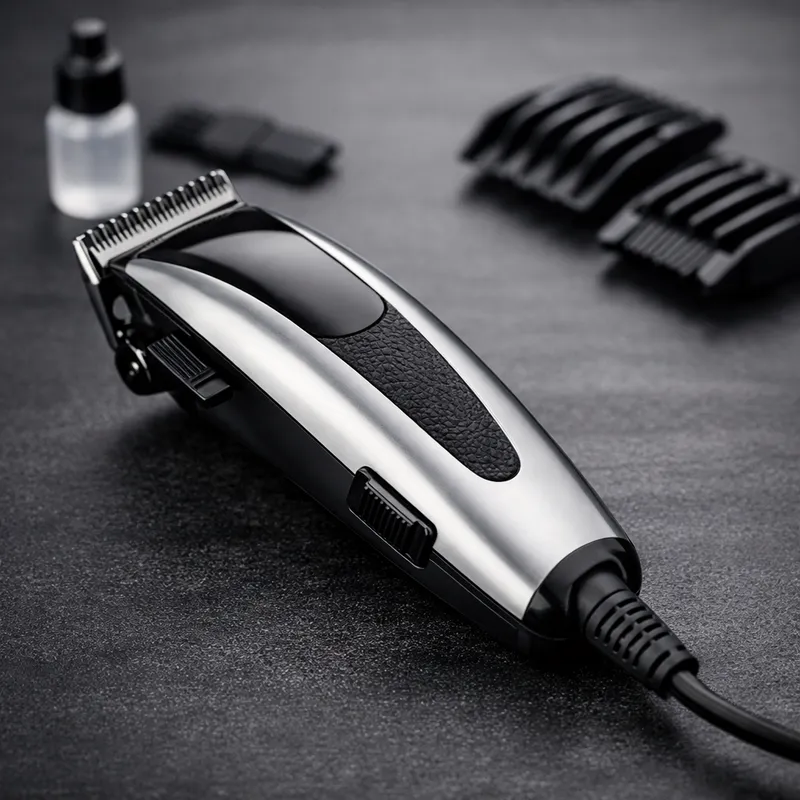
Best Oster Hair Trimmers: Quick Picks
Choose based on what you actually do with a trimmer. “Best” depends on whether you’re lining up every few days, edging a beard, or just cleaning the neck between barber visits.
Oster Professional Cordless T‑Finisher
If you want the most flexible setup for clean edge-ups, this is the simplest “buy once, use for years” choice. Oster states it offers over 200 minutes of runtime on a 100-minute charge, can run cordless or with an 8‑foot cord, and the black T-blade is designed for visibility and can be adjusted to be zero‑gapped.
- Best for: lineups, necklines, frequent touch-ups, travel, pros and serious DIY.
- Why it wins: cordless freedom + “always-ready” option (plug in and keep going).
- Be honest: if you trim once a month, you might not need the premium option.
Oster T‑Finisher T‑Blade Trimmer (corded)
The corded T‑Finisher is a straight-to-the-point finishing trimmer: built for cleaning up around ears, sideburns, and the neckline, plus beard and mustache edging. Oster highlights its Whisper Quiet™ pivot motor, T‑blade design, and durable break‑resistant housing.
- Best for: home users who want dependable power without battery management.
- Why it wins: simple, consistent, always-ready performance.
- Watch-out: the cord can get annoying for self neck cleanups.
Oster Professional Ace Mini Trimmer
A compact, lightweight trimmer that can do detail work and also trim short lengths using included comb attachments. Oster lists 5 comb sizes (#0 to #4), an 8‑foot cord, and a steel T‑blade that can be zero‑gapped for sharper lines.
- Best for: beginners, travel kits, beard edging + short trimming with guards.
- Why it wins: built-in flexibility (you’re not forced to freehand everything).
- Be honest: if you only want ultra-crisp hairline work, the T‑Finisher line is more “finish-first.”
Oster Taler T‑Blade Trimmer
A simple corded trimmer aimed at trimming, shaping, and detailing. Oster highlights a Whisper Quiet™ pivot motor and a lightweight, ergonomic design, plus break‑resistant housing and included cleaning accessories.
- Best for: basic shaping and cleanups when you want something uncomplicated.
- Why it wins: ergonomic handling for detail work.
- Watch-out: if you need cordless, pick the Cordless T‑Finisher instead.
Oster also sells a “Finisher Trimmer (Model 59)” that’s marketed for detailed trimming in delicate areas (commonly used in animal grooming). If your goal is barber-style hairline/neckline lineup work on human hair, the T‑Finisher family is the clearer fit.
Oster Hair Trimmers Comparison Table
Use this table to stop overthinking. Pick the model that matches your trimming pattern, then focus your effort on technique and maintenance.
| Model | Power | Best for | What stands out | Choose it if… |
|---|---|---|---|---|
|
Cordless T‑Finisher Top pick |
Cordless + corded | Lineups, necklines, frequent touch-ups | Oster states 200+ min runtime, 100‑min charge, zero-gap capable T‑blade, adaptive speed control | You want one strong trimmer that fits almost every “finish work” situation |
| T‑Finisher (corded) | AC corded | Finishing around ears, sideburns, neckline | Whisper Quiet™ pivot motor, classic T‑blade finish tool, 8‑foot cord | You want simple reliability and you don’t care about cordless |
| Ace Mini | AC corded | Detail + guard-guided short trimming | Includes 5 comb attachments (#0–#4), compact build, zero-gap capable | You want more control without freehanding everything |
| Taler | AC corded | General shaping + detailing | Lightweight ergonomic design, Whisper Quiet™ pivot motor | You want a basic detail trimmer that feels good in-hand |
Tip: the difference between a “good trimmer” and a “great result” is usually pressure + angle + blade care. The sections below fix that.
Trimmer Match Tool: Find Your Best Oster Option
Tap your preferences and get a clear recommendation (plus how to use it without irritation). No signups, no forms, no fluff.
1) What do you trim most often?
2) Cord preference
3) Skin sensitivity
4) Your experience level
Best fit for crisp lineups and frequent touch-ups. Cordless helps you keep angles clean—especially for self necklines. Keep the blade lightly oiled and use “one clean pass” instead of grinding the same line.
If you’re bump-prone or new to lineups, keep the blade stock. Your result will look cleaner because you won’t inflame the edge.
How to Choose an Oster Hair Trimmer (The No-Regret Method)
Most people choose a trimmer like it’s a “spec sheet contest.” That’s how you end up with a great tool that doesn’t fit your life. Choose based on use case, cord preference, and skin behavior.
Step 1: Decide what “finish work” means for you
- Lineups & necklines: prioritize a true finishing trimmer and clean visibility on edges.
- Beard edging: prioritize control and low irritation—your skin will tell you if you’re doing too much.
- Short trims with guards: choose a model that includes comb attachments (or expect to buy them separately).
If you only own one tool and you cut your own hair, you usually want clippers for bulk + a trimmer for edges.
Step 2: Corded vs cordless (what matters in real life)
- Corded: always ready, consistent power, no charging routine.
- Cordless: easier self-cuts, easier angles, easier travel, less arm fatigue from fighting a cord.
If you trim your own neckline, cordless isn’t luxury—it’s accuracy.
Step 3: Decide your “irritation tolerance” before you chase the closest cut
The biggest mistake is trying to make a trimmer behave like a razor. A closer blade gap can create sharper results, but it can also create bumps, nicks, and redness—especially if you press hard or keep re-tracing the same line.
- If you’re sensitive: focus on clean technique, fewer passes, and blade care. Skip aggressive zero-gapping.
- If you’re confident: zero-gapping can help, but only if you keep the blade aligned and the pressure minimal.
Model Deep Dives: What Each Oster Trimmer Is Best At
Oster Professional Cordless T‑Finisher (why it’s the easiest “best pick”)
This is the modern version built for people who want cordless freedom but still care about crisp finishing. The main advantage is not a gimmick feature—it’s that cordless movement makes your hand steadier, which makes your lines straighter.
- Who it fits: lineups, necklines, frequent touch-ups, travel, barbers, serious home users.
- What to expect: fast edge work, better control around ears, easier symmetry checks.
- How to use it well: do fewer passes; the blade should glide, not scrape.
If you maintain your haircut between barber visits, this is the one that keeps you “fresh” the longest with the least effort.
Oster T‑Finisher (corded): the classic finishing trimmer
The corded T‑Finisher is a finishing tool: clean up lines around ears, sideburns, and neckline, and keep facial hair edges sharp. It’s not trying to be a multi-tool—it’s trying to do the final 10% of a haircut extremely well.
- Who it fits: anyone who wants “plug in and go” consistency.
- Where it shines: finishing strokes, outlining, detail control.
- Where it’s annoying: tight mirror angles when you’re doing your own neckline.
People try to “correct” an uneven lineup by cutting deeper. Fix the angle first; don’t keep trimming the hairline backward.
Oster Ace Mini: compact control + guard flexibility
This model is especially useful if you don’t want every decision to be “freehand.” Included comb attachments help you trim evenly, and the compact body makes it easier to control small areas (especially around the ears).
- Best for: beginners, beard shaping, short trims with guards, travel kits.
- Practical tip: do the outline first, then clean up flyaways. Don’t bounce back and forth.
Oster Taler: simple detail trimmer with ergonomic feel
If you want a corded tool for general shaping and detailing—and you care about comfort in-hand—this is a practical option.
- Best for: trimming, shaping, detailing, predictable home use.
- Practical tip: use it for cleanup and shaping, not for “cutting bulk.” That’s what clippers are for.
How to Get a Crisp Lineup With an Oster Trimmer (Without Irritation)
Most “how to edge up” content focuses on tools. The result comes from tension, angle, pressure, and pass control. Do this method consistently and your lineups instantly look more professional.
Before you start (30 seconds that saves your hairline)
- 1) Work on dry hair for outlining. Damp hair bends and hides. Dry hair shows you the true edge.
- 2) Brush hair forward at the hairline. You want to line up what naturally sits at the edge, not what’s floating behind it.
- 3) Set your “stop line.” Decide where your lineup should be and commit. Over-correcting is how people push back corners.
Edge-Up Blueprint (interactive)
Tap an area to get the exact blade angle and the “don’t mess this up” rule.
Use the trimmer lightly, blade nearly flat, and move in short, controlled strokes. Start in the middle, then work outward. The “pro rule”: stop early—your line should look clean before it looks “carved.”
The 3 rules that prevent bumps
- No digging. If you “press to get closer,” you’re training your skin to inflame.
- No grinding. Re-tracing the same line repeatedly creates friction burns and bumps.
- No dry blade. A dry blade tugs, skips, and makes you press harder (which makes everything worse).

If your lineup looks uneven: fix this first
An uneven lineup usually isn’t “bad hair.” It’s one of these:
- Mirror angle problem: you’re not seeing the corners straight-on, so you cut a curve by accident.
- Hand pressure problem: one side gets pressed harder, so it ends up “lower.”
- Over-correction spiral: you keep trimming until it matches—then both sides are too far back.
Fix the viewing angle, then fix the line. Don’t fix the line while your angle is wrong.
Maintenance & Blade Care: Keep Your Oster Trimmer Cutting Clean
“My trimmer pulls hair” is almost always a maintenance problem: hair buildup, a dry blade, or misalignment. Here’s the routine that keeps finish work clean.
The 60-second routine after every use
- 1) Brush out hair debris. Hair trapped near the blade makes the trimmer tug and skip.
- 2) Add 1–2 drops of blade oil. Too little oil = heat + tugging. Too much oil = mess.
- 3) Wipe the housing. Product buildup (gel/pomade) makes everything feel worse over time.
- 4) Store dry with a guard. A protected blade stays aligned longer.
Maintenance Planner (interactive)
Choose how often you trim to get a realistic maintenance rhythm.
Brush + oil after every session. Once per week: remove the blade (if your model allows), clean beneath it, and wipe everything dry before re-oiling.

Zero-gapping can increase closeness, but it also increases the chance of nicks and razor bumps—especially on sensitive skin. If you’re new, your best upgrade is usually technique + blade oil, not a more aggressive blade gap.
DIY Touch-Ups vs Barber Results (Be Honest With Your Hairline)
A good Oster trimmer keeps you sharp between cuts. But if you’ve ever pushed a corner back, you already know the hard truth: fixing a hairline mistake costs more than preventing it.
- Use a trimmer for maintenance and cleanups.
- Use a barber when you want the shape, symmetry, and fade to be correct the first time.
If you maintain your edges at home, bring reference photos to your barber for the shape you want. Consistency beats constant experimenting.

FAQs About Oster Hair Trimmers
Short answers first. If you want the “how,” scroll up to the technique and maintenance sections.
Are Oster hair trimmers good for lineups?
Yes. Oster’s T-blade trimmers (like the T‑Finisher family) are designed for finishing and outlining: hairline edges, sideburns, necklines, and around the ears. Your result will depend heavily on pressure and pass control.
Which Oster trimmer should I buy for frequent touch-ups?
If you touch up often (every few days to weekly), cordless usually makes it easier to keep angles clean—especially for self necklines. The Cordless T‑Finisher is the most flexible “one tool” option.
Is corded or cordless better for a beginner?
Cordless is often easier for beginners because it reduces awkward wrist angles and mirror gymnastics. Corded is great if you want a simple “always ready” tool and you won’t fight the cord during self-cuts.
Should I zero-gap my trimmer?
Only if you’re confident and your skin tolerates it. Zero-gapping can make cuts closer, but it can also increase irritation, nicks, and bumps—especially if you press too hard or keep retracing the same edge.
Why does my trimmer pull hair?
Most often: a dirty blade, a dry blade (needs oil), or misalignment. Brush hair out after every use and apply a small amount of blade oil. Pulling makes you press harder, which makes irritation worse.
Can I use a trimmer instead of clippers?
For finishing and edge work, yes. For cutting bulk length or doing full fades, clippers are the correct tool. The fastest home setup is clippers for the haircut + a trimmer for the outline and cleanup.
What’s the difference between a trimmer and an outliner?
People often use the words interchangeably. In practice, “outliners” usually refer to strong T-blade trimmers built for crisp outlines. The T‑Finisher style fits that finishing/outlining category.
I keep messing up the corners—what should I do?
Stop “fixing” corners while viewing them at a bad angle. Turn your head and the mirror so you see the corner straight-on, then make one clean line. Re-tracing the corner is how corners disappear.
Editorial note: If you notice heat, tugging, or redness, stop and reset. Most “bad trimming” is too much pressure, too many passes, or a dry blade.