
Kemei clippers are a popular entry point into DIY haircuts because they usually offer a lot of features for the money. The problem is that “Kemei clippers” isn’t one product — it’s a huge range of models, bundles, and versions that can look similar but behave very differently in real cutting.
This page is built to help you choose fast, cut cleaner, and avoid the most common mistakes that lead to patchy sides, harsh lines, and uneven fades.
- Quick picks by haircut goal (buzz, taper, fade, detailing).
- Buyer’s guide that focuses on haircut results (not hype).
- Guard cheat sheet + tools to plan your cut in seconds.
- Maintenance playbook to prevent pulling, snagging, and dull blades.
Note: Kemei models and included accessories can vary by seller and region. Use this guide to choose the right “type” of Kemei clipper — then confirm the exact listing details before you buy.
On this page
Jump to the exact part you need — quick answers first, deep detail when you want it.
Quick picks: the right Kemei clipper for your goal
If you just want the fastest answer: choose the clipper style that matches your haircut goal. The model numbers below are the most common “families” you’ll see when shopping — but remember that sellers may bundle different guards or rename versions.
KM‑1986 style
A strong starting point if you want one clipper to handle most home haircuts: buzz cuts, tapers, basic blending, and general cleanup.
- Choose it if: you want a “main clipper” feel and a simple routine.
- Works well for: most hair types when you use guards and take your time.
- Skip it if: your only goal is sharp line-ups (you’ll want a trimmer for that).
KM‑2600 / 2600PG style
Often chosen by beginners because it fits the fade workflow well: controlled blending, short-to-long transitions, and detail work with the right guard progression.
- Choose it if: you want cleaner blends and smoother “steps.”
- Works well for: low/mid fades, tapers, and side cleanup.
- Skip it if: you only do one-length buzz cuts (overkill).
KM‑3705 style
A popular option when you want long cordless sessions or travel convenience. Great if you hate charging anxiety and prefer simple, repeatable cuts.
- Choose it if: you cut slowly, do multiple passes, or travel often.
- Works well for: buzz cuts, tapers, and consistent maintenance cuts.
- Skip it if: you need ultra-precise edging (again: trimmer).
Simple rule: Clippers do bulk cutting and blending. If you want sharp outlines (neckline, sideburns, line-ups), plan to add a trimmer later. That single upgrade is what makes home haircuts look “finished.”
Clipper Finder: get a recommendation in 30 seconds
This is a practical selector based on haircut outcome, hair type, and how often you cut. It doesn’t sell you a fantasy. It points you toward the Kemei clipper “style” that matches your use — plus the features that actually matter.
Choose your options and click Get my recommendation. Your result appears here.
Tip: If you’re a beginner, prioritize guard quality and a predictable lever workflow over “big numbers” in the listing. That’s what makes the haircut look smooth.
What to look for in Kemei clippers (the parts that change your haircut)
Most product pages obsess over specs. For real haircuts, a handful of details matter far more than the rest. Use this checklist to avoid buying the “wrong” clipper for your goal — and to stop wasting time blaming technique when the setup is the issue.
1) Blade + use-case
A clipper blade is for bulk cutting and blending. It removes hair evenly with guards. If you want razor-sharp edges (neckline, line-ups, beard outlines), that’s usually a trimmer job.
Practical takeaway: build a two-tool plan. Start with a clipper. Add a trimmer when you want “barber-finish” edges.
2) Lever control (for fades)
If fades are your goal, choose a model style that supports a predictable fade workflow: lever open → half → closed. The lever creates micro-length changes that make blending easier and reduce harsh lines.
Practical takeaway: fades become “repeatable” when you follow a consistent guard + lever blueprint.
3) Guard quality
Cheap or flexible guards cause uneven cutting, especially around the parietal ridge (that “corner” where the head changes shape). Many DIY haircut issues are guard issues, not skill issues.
Practical takeaway: if the guards feel flimsy, upgrade guards before you replace the clipper.
4) Power and hair type
Coarse or thick hair needs clean cutting with minimal snagging. If the clipper struggles, you’ll feel pulling and you’ll see patchiness.
- Thick/coarse: slow passes, shorter sections, oil more often.
- Fine hair: light pressure, clean blade, careful blending.
- Coily/afro: start longer than you think and stretch hair before cutting.
5) Battery and consistency
Even if the listing claims long runtime, what matters is consistent power during your cut. A low battery can turn a smooth cut into tugging and uneven results.
Practical takeaway: fully charge before cutting, especially when learning fades (more passes = more time).
6) Ergonomics (underrated)
Heavy clippers can feel “premium,” but fatigue makes your hand drift — and drift causes lines. Comfort is a haircut feature.
Practical takeaway: if your hand gets tired, take breaks. Clean fades are made with patience, not speed.
Reality check: With budget clippers, the seller matters. The exact guards and accessories can change from listing to listing, even under the same model number. Always prioritize clear returns and a complete kit.
Guard cheat sheet (plus a mm ↔ guard converter)
If you’ve ever asked “What guard is 6mm?” or “How do I step down without making a line?” — this section solves it. Guard standards vary a little by brand, but these are the most common reference points for planning a cut.
| Guard label | Approx length | Best use | Common mistakes |
|---|---|---|---|
| #0.5 | ~1.5 mm | Very short blending zone, tight tapers | Too high = harsh line that’s hard to fix |
| #1 | ~3 mm | Fade base, first “soft” step above skin | Pressing too hard creates bald spots |
| #1.5 | ~4.5 mm | Blending between #1 and #2 | Skipping it often leaves a visible line |
| #2 | ~6 mm | Safe starting point for sides | Going straight to #1 can look too aggressive |
| #3 | ~10 mm | Tapered sides, conservative cuts | Not following head shape = uneven look |
| #4 | ~13 mm | Blending into longer top | Over-blending removes too much weight |
| #5–#8 | ~16–25 mm | Longer, safer top/sides maintenance | Expecting these to “fade” like short guards |
Guard Converter
Slide to your target length. The tool suggests the closest common guard and a practical next step for blending.
Move the slider to see the closest guard.
Accuracy note: guard naming is not perfectly standardized across all brands. Use this as a planning tool — then adjust based on how your clipper/guards cut on your hair.
Popular Kemei clipper models (explained like a haircut plan)
Instead of listing endless specs, here’s what each popular Kemei clipper “family” is best at, where it can struggle, and how to use it for better results. Think of this as: match the tool to the haircut.
KM‑1986 style: the “main clipper” choice for most people
If you want one clipper that can handle the majority of home haircut work, the KM‑1986 style is usually the best starting point. It’s commonly positioned as a sturdy, do-it-all clipper: bulk removal, guard cutting, and straightforward blending.
Best for
- Buzz cuts and short maintenance cuts
- Tapers and conservative fades (especially low fades)
- Anyone who wants a predictable routine without overthinking
How to get the best results
- Start longer than you think. You can always go shorter. You can’t uncut hair.
- Do two passes. First pass removes bulk. Second pass evens the cut.
- Oil before and after. Dry blades tug and heat up faster.
Shortcut: If you want a simple, clean look with low risk, use #3 or #4 on the sides and scissor the top. That one decision prevents most “oops” moments.

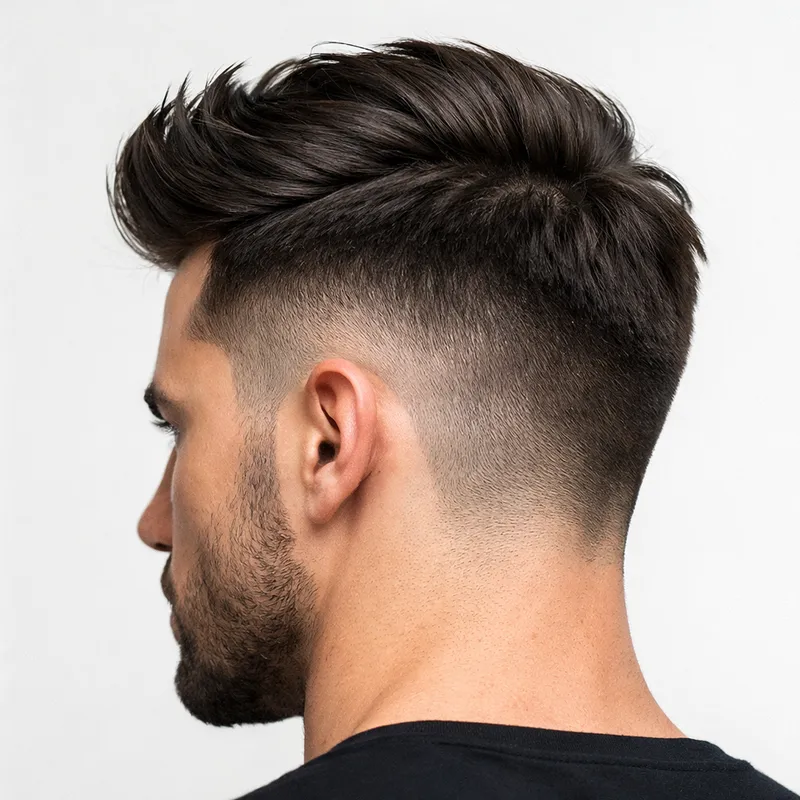
A taper is the safest “looks pro” cut to learn with clippers.
KM‑2600 / KM‑2600PG style: choose this when fades are your main goal
The KM‑2600 family is commonly picked by people who want to learn fades because it fits the fade workflow: short-to-long transitions, repeated blending passes, and control through guard steps.

Fades are basically “controlled transitions” — guard steps + patience.
Best for
- Learning low/mid fades without a premium-brand budget
- People who are willing to do extra passes for smoother blends
- Anyone who wants to follow a repeatable fade blueprint
Make it work (even as a beginner)
- Use a 3-guard system: #0.5 → #1 → #1.5/#2 (then blend upward).
- Blend in zones: don’t chase perfection everywhere. Fix one band at a time.
- Stop early and check symmetry: most fade problems come from cutting one side “higher.”
Common fade mistake: going too short too high. If you’re unsure, start your first guideline lower. A low fade still looks sharp — a high mistake is harder to hide.
KM‑3705 style: best when you want consistency and convenience
If you cut slowly, do multiple passes, or simply want a cordless routine without constantly thinking about battery, the KM‑3705 style is a popular choice. It’s especially good for repeatable maintenance cuts.
Best for
- Maintenance cuts every 1–2 weeks
- Buzz cuts and tapers where consistency matters
- Travel or “grab-and-go” grooming routines
How to make your cuts look sharper
- Comb the hair first. Clippers cut what they can “see.” Tangles create uneven cutting.
- Use the mirror method. Check the back in good light before you “finish.”
- Don’t skip neckline cleanup. That’s the difference between “DIY” and “done.”

Clean sides + controlled top = the modern baseline.
Don’t fall for the “one clipper does everything” myth. Clippers are not the best tool for razor-sharp lines. If edges matter to you, plan for a trimmer later. That upgrade is what makes a cut look intentional.
Clippers vs trimmers: buy the right tool for the job
This is where most beginners waste money: buying a trimmer when they need a clipper (or the opposite). Here’s the clean distinction:
Hair clippers
- Best for: bulk cutting, guards, blending, fades, tapers.
- Typical result: even lengths and smooth transitions.
- When you’ll love them: you want repeatable haircuts without scissors.
Fast win: Start with a clipper if your main goal is “shorter hair that looks clean.”
Trimmers (T-blade / detailers)
- Best for: line-ups, outlines, necklines, sideburns, beard edges.
- Typical result: sharp, crisp finishing details.
- Risk: they can irritate skin if pressed too hard or used un-oiled.
Safety note: go light pressure and move slowly on sensitive skin. Sharp tools punish rushing.
Best setup for most men: 1 clipper (for bulk and blending) + 1 trimmer (for finishing). That combination is what most barbers rely on — you’re simply recreating the system at home.
How to cut your hair at home with Kemei clippers (step-by-step)
A good haircut is not “one pass and done.” It’s a sequence: prep → bulk removal → refine → blend → finish. The following playbooks are designed for real humans cutting at home (limited mirrors, imperfect angles, normal patience).
Before you start: fully charge your clipper, set up bright light, and keep a brush + clipper oil nearby. Most “bad cuts” start with rushing the setup.
Playbook 1: the clean buzz cut (lowest risk)
If you want a result that looks intentional and masculine with minimal chance of messing up, start here. Buzz cuts are also the best way to learn how your clipper and guards behave on your hair.
-
1
Pick a safe length. Start with #3 or #4 if you’re unsure.
Going too long looks normal. Going too short looks like a mistake.
-
2
Two-pass method. First pass removes bulk; second pass evens out missed areas.
Change direction slightly on the second pass to catch stubborn growth patterns.
-
3
Neckline cleanup. Even without a trimmer, you can tidy the neckline carefully.
Use slow movements and check symmetry in the mirror.
Playbook 2: the beginner fade (3 guards + patience)
Fades look advanced, but they’re just controlled transitions. The key is staying disciplined: work in zones, don’t go too high too early, and blend one band at a time.
Beginner rule: keep your first guideline low. You can always push it higher later, but you can’t undo a high mistake.
-
1
Create your base. Use #0.5 or #1 on the lowest band (depends how short you want it).
Work slowly around the head to keep the band even.
-
2
Step up. Use #1.5 or #2 above the first band. Keep strokes outward (flick motion).
Outward strokes reduce hard lines. Don’t “dig in.”
-
3
Blend the line. Go back to the transition area and do short, controlled passes.
This is where the haircut becomes smooth. Most people quit too early.
-
4
Finish the details. Check both sides, clean behind the ears, then refine the back.
The back is where DIY cuts show. Spend extra time there.
Fade Planner (mini tool)
Pick your fade height and how short you want the sides. The planner generates a practical guard map you can follow.
Click Generate my fade map to see your steps.
Pro tip: your fade looks cleaner when you spend extra time on the transition band, not by making it “higher.”
Maintenance & troubleshooting (keep your clipper cutting clean)
If your clipper starts pulling hair, heating up quickly, or leaving patchy spots, the fix is often maintenance — not replacing the tool. A clean blade cuts smoother, stays cooler, and lasts longer.
After every cut (3 minutes)
- Brush hair out of the blade teeth
- Wipe the exterior (keep it dry)
- Apply 2–3 drops of clipper oil, then run the clipper for 5–10 seconds
Why this matters: oil reduces friction. Less friction = less heat + less pulling.
Weekly (or every 2–3 cuts)
- Deep-clean the blade area (hair build-up hides underneath)
- Check blade alignment (crooked blades can irritate skin)
- Inspect guards for cracks or loose teeth
Be careful with “zero gapping.” Too close can cause nicks and irritation, especially on sensitive skin.

A simple comb improves guard cutting, blending, and symmetry checks.
Maintenance Scheduler (mini tool)
Tell us how often you cut. The tool suggests a realistic oiling and deep-clean schedule you can actually follow.
Click Build my schedule to see your plan.
If your clipper starts pulling hair, clean + oil first. Most performance problems start there.
If the clipper is pulling hair: stop, clean the blade, oil it, and try again on a small section. Continuing to push through pulling is how people create bald patches and irritation.
Buy smarter: avoid the most common Kemei clipper mistakes
The biggest risk with budget clippers isn’t the brand — it’s buying the wrong kit from a low-quality listing. Use this checklist to protect your money and your time.
Shopping checklist
- Returns first: clear returns beat “best specs.”
- Guard set: confirm which guards are included (don’t assume).
- Charging: check the port and included cable type.
- Reviews: look for comments about pulling, heating, and guard quality.
Cutting checklist (the part most people skip)
- Lighting: bright, direct light shows uneven blending early.
- Mirror plan: one mirror is not enough for the back of the head.
- Zone cutting: finish one band before moving up.
- Stop to check: symmetry checks prevent “one side higher.”
Want a guaranteed clean result?
DIY is great — but if you want a perfect fade for an event, interview, or photo, a pro cut is the faster route. Use our resources to get the best of both worlds: learn at home, go pro when it matters.
FAQs about Kemei clippers
These are the questions people ask when they’re trying to get a clean result without wasting money or time.
Are Kemei clippers good for home haircuts?
They can be a strong budget option if you match the clipper style to your haircut goal and you buy from a seller with clear returns. Most “bad experiences” come from the wrong model, poor guards, or poor maintenance — not from the concept of budget clippers itself.
Which Kemei clipper style is best for fades?
For fades, prioritize a fade-friendly workflow: a consistent guard progression and lever control that feels predictable. In Kemei’s lineup, the KM‑2600 / 2600PG style is often chosen specifically for learning fades.
Why does my clipper pull hair or leave patchy spots?
The usual causes are: a dirty blade, a dry blade (no oil), low battery, pushing too hard, or rushing the pass. Clean and oil first. Then cut slower in smaller sections and do a second pass to even the result.
Do I need a trimmer as well as clippers?
If you care about sharp outlines (neckline, sideburns, beard edges), a trimmer is worth it. Clippers are for bulk and blending. Trimmers are for the crisp finishing details that make a cut look “barber clean.”
What guard should I start with if I’m nervous?
Start with a longer guard — typically #3 or #4 on the sides if you’re unsure. You can always reduce length. Starting too short too early is the fastest way to regret a DIY haircut.
How do I avoid harsh lines when fading?
Use a structured approach: create a low guideline, step up in guards, blend each band before moving higher, and use outward “flick” strokes. Most harsh lines happen when you try to fix everything at once instead of working one transition at a time.
How often should I oil my clippers?
Ideally before and after each cut. If you’re cutting longer than 30 minutes, a tiny mid-cut oiling can help reduce heat and pulling. Oil is the cheapest way to keep clippers performing well.
Want a faster answer tailored to you? Use the Clipper Finder above and copy your result to keep as a plan.