
King C. Gillette Beard Trimmer: settings, versions & a 10‑minute trimming routine
This is a research-based, no-fluff guide built to help you get cleaner beard lines and more consistent length with the King C. Gillette beard trimmer—without buying the wrong kit or over‑trimming your neckline.
- Stop the confusion: there are common “King C. Gillette trimmer” versions (11 settings vs PRO wheel).
- Pick the right length fast: a cheat sheet for stubble, short boxed, medium and long beards.
- Trim like a barber: length first, edges second, finish last (prevents regret trims).
- Bonus: an on-page tool that builds your trimming plan (no signup, no form).
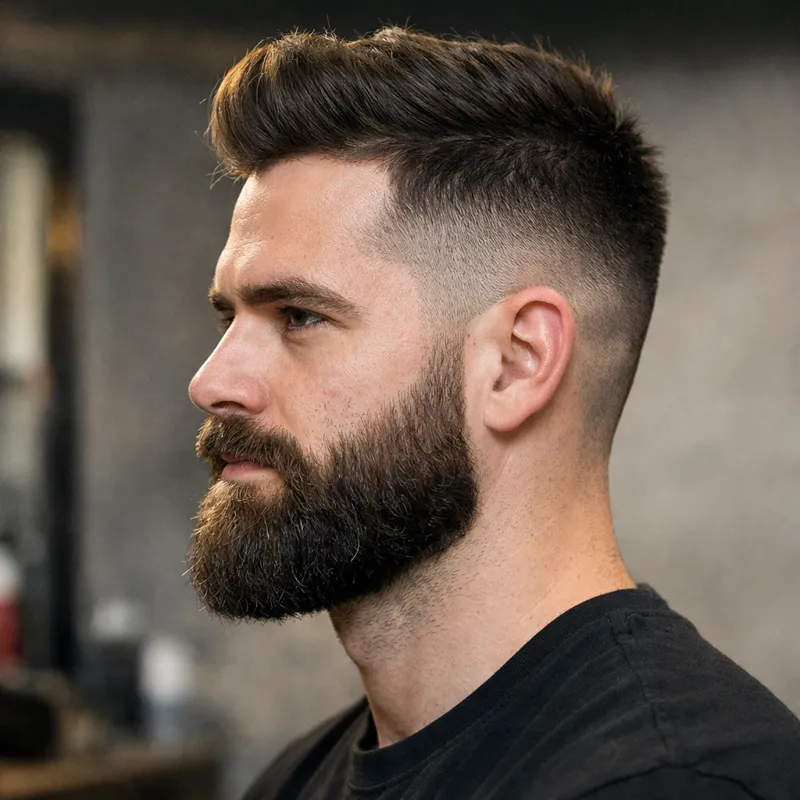
A clean beard looks “expensive” for one simple reason: the length is even and the neckline is intentional. This guide shows you how to get there with the King C. Gillette trimmer.
Important: “King C. Gillette beard trimmer” listings can vary by country and retailer (plug type, included accessories, and naming). Use the version section below to confirm what you’re buying. This page is an independent guide by MensHaircutStyle (not affiliated with Gillette).
On this page
Quick verdict Which version do you have? (11 vs PRO 40) Specs that actually matter Comb lengths & settings cheat sheet Trim Plan Builder (interactive) The 10‑minute barber routine Beard fade / blending method Cleaning & maintenance Common problems (quick fixes) Best alternatives (if it’s not your match) FAQsQuick verdict
The King C. Gillette beard trimmer is a strong choice if your goal is simple, repeatable beard maintenance—especially for short boxed beards and medium lengths. Where most guys go wrong is expecting it to behave like a barber outliner (for razor-sharp corners) or a true shaver (skin‑smooth).
Best for
- Even length across the beard
- Weekly upkeep without guesswork
- Short to longer beards that need stable guards
Not ideal for
- Ultra‑crisp lineups and corners
- Skin-smooth shaving
- “One‑pass” cutting on very dense bulk
Fast win
- Start longer, step down
- Length first, edges second
- Use our Trim Plan Builder
Which King C. Gillette beard trimmer do you mean? (11 settings vs PRO wheel)
A lot of “bad reviews” come from one problem: buying the version that doesn’t match your routine. Some listings refer to the 11‑setting kit with 3 combs, while others refer to the PRO model with a precision wheel (40 settings in 0.5mm steps).
| What you’re looking at | Standard (3 combs / 11 settings) | PRO (precision wheel / 40 settings) |
|---|---|---|
| Who it’s for | Guys who want a simple, repeatable system with fixed guard steps. | Guys who want fine control (0.5mm steps) and smoother blending. |
| Length control | Stubble comb 1mm + short beard comb 3–11mm + long beard comb 13–21mm. No-guard trim often used for 0.5mm cleanups. | Precision wheel with 40 settings in 0.5mm steps. Often described as trimming from 0.5mm up to ~20mm by dial, with combs for longer lengths up to 21mm. |
| Runtime | Commonly listed around 50 minutes per full charge. | Commonly listed around 80 minutes per full charge (often framed as “about a month” of typical use). |
| Washability | Usually: head + combs are washable under running water (don’t assume full waterproofing). | Often listed as fully washable (head + handle). Always verify your exact kit. |
| What people love | Straightforward, “does the job,” good value. | The dial is the “wow” factor: more control, easier to dial in a look. |
| Most common complaint | Limited micro‑adjustments + slower charge time; can feel basic. | People still expect barber‑sharp lineup precision (that’s a different tool category). |
Quick “don’t buy the wrong one” checklist
- Count the combs: 3-comb kits usually indicate the 11-setting system (1mm, 3–11mm, 13–21mm).
- Look for the words: “precision wheel”, “40 settings”, “0.5mm steps” usually indicates the PRO.
- Check the charger details: plug style and what’s included can differ by region.
- Confirm washability wording: “washable head” vs “fully washable.”
If you already own it, you can still get a great outcome—use the Trim Plan Builder below.
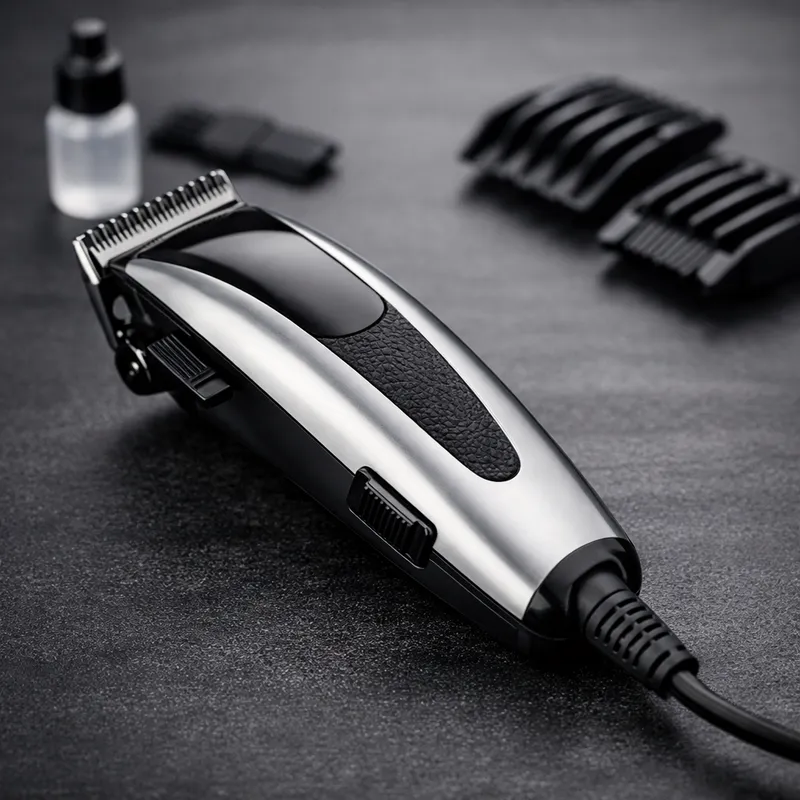
Tip: if you want a cleaner finish without chasing perfection, use the trimmer for length and keep your cheek/neck edges natural. You’ll look sharper and it’ll hold longer.
Specs that actually matter (and what they mean in real life)
Specs are only useful if they change your result. Here’s the short list that actually affects your beard outcome:
Length system
The biggest difference between versions is how you set length. Fixed comb steps are fast and simple. A precision wheel is better if you live in stubble lengths or want smoother blending.
Washability
If you trim often, quick rinse cleaning matters. If your kit only says “washable head + combs,” treat the handle as not waterproof. Keep it dry and you’ll extend its life.
Runtime vs habit
Runtime is less important than your schedule. A “50–80 minute” trimmer is more than enough for weekly trims. What matters more is having a plan so you don’t overcut.
Pro tip: Your beard looks sharper when the jaw/chin area is kept slightly fuller than the cheeks. Most guys accidentally do the opposite—then the beard loses structure.
Comb lengths & settings cheat sheet (quick picks that look good)
Use this when you want a clean result fast. Start with the longer option first; do a full pass; then step down only if needed. That one habit prevents 90% of “I went too short” trims.
| Beard goal | 11‑setting kit (3 combs) | PRO (precision wheel) |
|---|---|---|
| 3‑day stubble look | 1mm stubble comb for uniform scruff; use 0.5mm (no guard) only for neckline cleanup. | Dial a tight range like 2.0–4.0mm depending on density; keep edges natural. |
| Heavy stubble | Start at 5mm (short comb), step down to 3mm if it still looks bulky. | Try 4.0–6.0mm; if it looks patchy, go slightly longer rather than shorter. |
| Short boxed beard | Cheeks: 7–9mm • Jaw/chin: 9–11mm | Cheeks: 8–10mm • Jaw/chin: +1–2mm for structure |
| Medium beard | Cheeks: 13–17mm • Jaw/chin: 17–21mm | Cheeks: 12–16mm • Jaw/chin: 15–21mm |
| Longer / fuller | Keep the jaw fuller: 19–21mm and lightly tidy cheeks 15–17mm | Use subtle drops: jaw 18–21mm, cheeks 14–17mm to keep shape |
These ranges are meant to be practical, not “perfect.” Your hair density and face shape matter more than exact millimeters.
Trim Plan Builder (interactive)
Tap your trimmer version + your beard goal + your growth speed. You’ll get a realistic plan you can follow without overthinking. No forms. No signup. Just a practical routine.
1) Your trimmer
Not sure? If the listing says “precision wheel / 40 settings / 0.5mm steps,” choose PRO.
2) Your goal
3) Growth speed
“Fast” usually means your neckline gets messy quickly (not that your beard grows inches overnight).
The 10‑minute barber routine (trim → edge → finish)
Most DIY beard trims go wrong because the order is backwards. If you edge first, you’ll keep “fixing” the length to match, and your beard will shrink every session.
Step 0 — Prep (60 seconds)
- Trim on a dry, combed beard for consistent length.
- Comb down and out so you cut the true shape, not bends and clumps.
Step 1 — Remove bulk / set length (3–4 min)
- Start longer than you think.
- Do one full pass across the beard before adjusting shorter.
- Use light pressure and short strokes—let the blades work.
Step 2 — Balance both sides (60 sec)
- Do a quick pass on one side, then the other. Avoid “camping” on one side.
Step 3 — Set the neckline (60–90 sec)
This is where beards either look sharp or look accidental. The goal is a neckline that’s clean but not too high.
- Place two fingers above your Adam’s apple—that’s a safe lowest anchor for most men.
- Create a soft “U” shape that connects to the back corners of the jaw.
- Clean below the line; do not keep raising it to “improve” it.
Step 4 — Cheek line cleanup (30–60 sec)
- Don’t redraw your beard. Remove strays above your natural cheek line.
Step 5 — Mustache tidy (30 sec)
- Keep hair off the lip line. If needed, go slightly shorter than beard length.
Step 6 — Finish (30–60 sec)
- Brush off loose hair, do one light final pass for strays, then stop.
Want the fastest upgrade? Get one professional “shape reset” (neckline + cheek line). Then maintain it at home weekly. One good blueprint removes months of trial and error.
Beard fade / blending with the King C. Gillette trimmer (simple method)
A beard fade is not magic. It’s just zones. You don’t need perfect millimeters—you need a consistent pattern.
The 3‑zone blend that flatters most faces
- Zone 1 (jaw/chin): your base length (fullness zone).
- Zone 2 (mid-cheek): one step shorter (or 1–2mm shorter on PRO).
- Zone 3 (upper cheek near the line): one step shorter again (or another 0.5–1mm).
- Edges: clean below the neckline and remove strays above the cheek line for contrast.
The trick is subtlety. If the fade is obvious from across the room, it’s usually too aggressive.
Example “maps” you can copy
Use these as starting points, then adjust based on density (thicker beards often need slightly longer lengths).
- 11-setting kit: 9 → 7 → 5 (short fade) or 7 → 5 → 3 (tight fade)
- Longer 11-setting kit: 17 → 15 → 13 (medium fade) or 21 → 19 → 17 (fuller fade)
- PRO wheel: choose a base length, then drop by 0.5–2.0mm per zone (start small).
Cleaning & maintenance (how to keep it cutting consistently)
Most “weak trimmer” complaints are not a dead trimmer—they’re a dirty head, packed hair, or trying to remove too much bulk in one pass. Clean tools cut better and tug less.
After every trim (1 minute)
- Brush/tap hair out of the cutting head and comb.
- Rinse washable parts as your model allows.
- Dry thoroughly before storing.
Weekly (2–3 minutes)
- Remove comb(s), rinse and dry.
- Check for packed hair near blade edges.
If it tugs or misses hairs
- Clean first, then slow down.
- Trim with the grain first, then refine.
- Reduce bulk at a longer length before going shorter.
A practical charging habit
Instead of trying to remember runtime, pick a rhythm:
- If you trim weekly: charge on the same day each month (or every 2–3 weeks if you trim often).
- If you travel: keep the cable in your toiletry bag so you don’t “borrow” it and lose it.
Note: some kits ship with different plug types or USB charging depending on region.

Consistency beats intensity. A 10-minute weekly routine looks better than a 40-minute “fix everything” trim once a month.
Common problems (and quick fixes)
“My beard looks uneven.”
Usually caused by trimming without combing, changing lengths mid‑pass, or spot-fixing too early.
- Comb, then do one full pass at a longer setting.
- Only step down after the whole beard is consistent.
“My neckline keeps creeping higher.”
This happens when you edge first, then “clean up” again and again.
- Set the neckline once (two fingers above Adam’s apple).
- Clean below it, then stop early.
“It feels weak on dense areas.”
Often caused by taking off too much length at once or by a clogged head.
- Start longer to remove bulk, then refine.
- Clean the head and go slower with light pressure.
“I want sharper lines.”
That’s a tool mismatch, not a skill issue.
- Use this trimmer for length control.
- If you want barbershop corners, use a dedicated detailer/outliner or get a monthly lineup.
Best alternatives (if the King C. Gillette trimmer isn’t your match)
Buying the right tool for the job is the easiest “upgrade” in grooming. Here’s when you should consider other types of trimmers.
If you live in stubble (2–5mm)
Choose a trimmer with micro-increments and strong performance at short lengths. The PRO wheel model is often the better fit than fixed steps.
See top beard trimmersIf you want razor-sharp detail
Look for a dedicated outliner/detailer for cheek corners, goatees, and crisp edges. Use your main trimmer for bulk and length.
Explore trimmersIf you want skin-smooth
A beard trimmer won’t replace a shaver. Consider an electric shaver (foil/rotary) or a razor routine if “no stubble” is your goal.
Explore shaversOur honest positioning: the King C. Gillette beard trimmer is a “consistency tool.” If you follow the order (length → edges → finish) and avoid chasing symmetry, you’ll get a clean, reliable look.
FAQs
These are the questions people ask right before buying—or right after the first trim.
How many settings does the King C. Gillette beard trimmer have?
What are the comb lengths on the 11‑setting kit?
Is the King C. Gillette beard trimmer waterproof?
How do I avoid over‑trimming my neckline?
What’s the biggest beginner mistake with this trimmer?
Can I use it for hair trimming too?
Should I get a barber trim if I’m growing my beard out?
If you want a cleaner look immediately
Book one beard trim and ask the barber for a natural cheek line and a low, intentional neckline. Then maintain the exact shape weekly using the plan you generated above.
No forms on this page. If you want lead capture, link these buttons to your high-converting pages (directory, booking, contact, etc.).

One pro reset + simple weekly upkeep usually beats constant DIY “fixing.”