
Your Men’s Grooming Shop Guide: Haircuts, Beards & the “Finished” Look
If you searched for mens grooming shop, you’re usually not just looking for “a haircut.” You want a clean result that fits your face, your hair type, and your routine—so it looks good the next day, not only when you leave the chair.
This page gives you a complete breakdown of what a men’s grooming shop does, what to book (and why), how to spot quality quickly, and a practical tool that generates a copy‑ready haircut + beard brief you can show to your barber.
- Outcome-based service menu (so you book the right thing)
- How to communicate clearly—even if you don’t know haircut terms
- A simple way to plan your grooming cadence (and keep it consistent)
- FAQ section written for real “near me” searchers

Pick one shop + one barber you trust, then keep a predictable schedule. That’s how you stop gambling with your haircut.
What is a men’s grooming shop?
A men’s grooming shop is the modern, outcome-focused upgrade to “just getting a cut.” Think of it as a place where the haircut, beard work, and finishing details are treated as one complete look—so you leave looking intentional.
The best grooming shops are built around a simple promise: you shouldn’t have to be an expert to get an expert result. That means a real consultation (not small talk), clear service options, and a finish that holds up in real life—workdays, dates, gym sessions, photos, and everything in between.
You’ll often see people search for “mens grooming shop” (without the apostrophe) when they want a place that handles hair + beard + detailing in one appointment.
Use outcome-based booking: Don’t start with “haircut” or “beard trim.” Start with your goal: clean professional, sharp fade, beard reshaping, or special event. Then book the service that matches that goal.
This is the fastest way to avoid the most common disappointment: a cut that looks fine in the chair, but doesn’t match your routine.
What makes a shop “good” (fast signals)
- They ask questions first: how you style, how often you return, what you hate about past cuts.
- They explain options: taper vs fade, natural vs sharp beard lines, neckline choices.
- They finish strong: edges, symmetry, and a style you can repeat at home.
- They respect your maintenance level: not everyone wants weekly line-ups.
- Clean tools and station: you notice it instantly.
If you want a simple rule: choose the place that makes it easiest to get the same result again.
Services you can expect at a men’s grooming shop
Below is the service menu in plain English. It’s written so you can book correctly even if you don’t know the terminology. Each service includes what it does best and when it’s worth upgrading.
Classic / Scissor / Texture Cut
Best for everyday styles that need balance and shape—not just “shorter.” Ideal if you want it to look natural as it grows out.
- Great for: professional, low-drama looks
- Upgrade if: you want texture, volume, or longer top control
- Ask for: “natural neckline” if you hate harsh lines
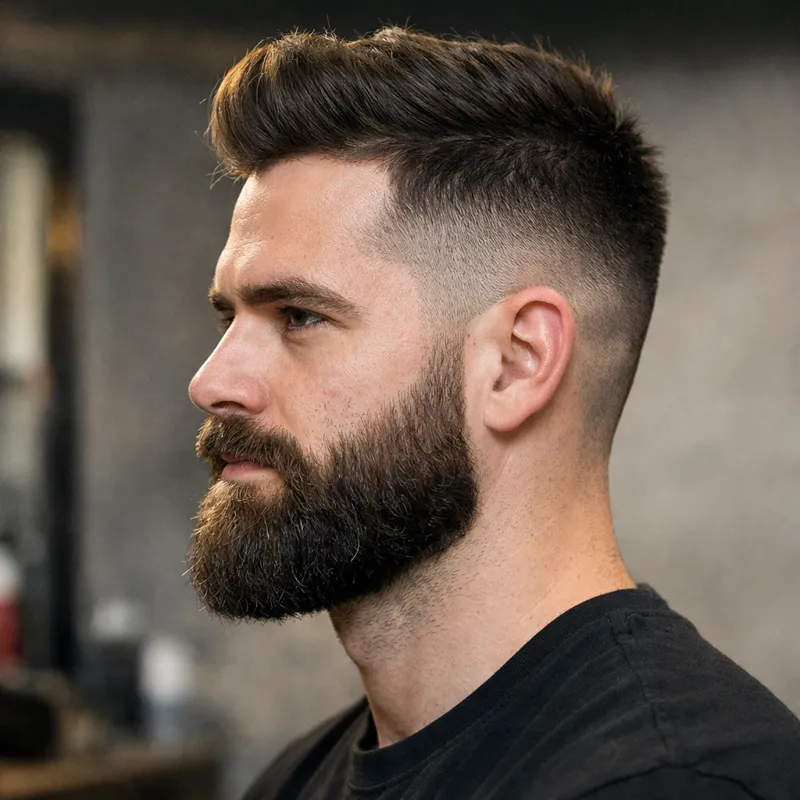
Low / Mid / High Fade (incl. Skin Fade)
Best for sharp, clean contrast on the sides. Fades look elite when fresh—then lose their crispness faster than most cuts.
- Great for: defined shape and “fresh” look
- Upgrade if: you want very clean edges and detailing
- Plan for: more frequent cleanups than a taper
Beard Trim vs Beard Shaping
A trim controls length. Shaping controls geometry. If your beard feels “messy” or uneven, shaping is the fix.
- Trim: maintain your current shape
- Shaping: define cheek + neckline symmetry
- Ask for: “keep length, clean lines” if you fear losing size
Clean Shave / Hot Towel Finish
Best for events, interviews, photos, or when you want a full reset. A good finish reduces irritation and leaves the skin calmer.
- Great for: special occasions, “fresh start” feel
- Upgrade if: you’re prone to razor bumps
- Ask for: a soothing finish if you get redness
Brows / Nose / Ear Cleanup
Small services, big impact. These details are what make you look “put together” from normal conversation distance.
- Great for: quick visible upgrade
- Upgrade if: you want a sharper overall finish
- Tip: keep it clean, not overdone
Wash + Style + Product Match
The haircut is only half of it. Styling is what turns “good cut” into a look you can reproduce at home in five minutes.
- Great for: learning your product and technique
- Upgrade if: your hair falls flat or gets puffy
- Ask for: “show me how to style it” before you leave
The most effective “one appointment” combo
If you want the strongest before/after without spending all day, book Haircut + Beard Shaping. That combination aligns hair and facial structure, so the whole look makes sense together.
If you’re clean-shaven: swap beard shaping for a clean shave or detail grooming (brows/nose/ears).
Special event timing (simple rule)
For most people, the sweet spot is 2 days before the event: sharp enough to look fresh, but settled enough to look natural in photos.
If you’re changing styles drastically (length, part, or beard shape), give yourself 5–7 days to live with it and adjust.


How to choose the right men’s grooming shop (without overthinking)
Most bad grooming experiences come from one of two problems: you booked the wrong service, or you couldn’t communicate the outcome you wanted. Fix those, and your odds of a great result go up immediately.
Green flags (book with confidence)
- Consultation-first: they ask about your routine, not just “what are we doing?”
- They explain tradeoffs: a skin fade is sharp, but needs more upkeep than a taper.
- They match hair + face: beard lines and haircut shape work together.
- They teach you: product choice, amount, and technique in simple terms.
- Consistency is mentioned in reviews: not “good once,” but “good every time.”
Red flags (you’ll pay twice)
- Rushing: no questions, no checking in, no mirror check.
- All clipper, no tailoring: especially if you have cowlicks, waves, or curl.
- Beard lines too high: a common mistake that makes the beard look smaller.
- “One style fits all” advice: your hair type matters.
- Unclear services: vague menu usually means surprises.
A communication shortcut that works
If you don’t know the names of cuts, use this sentence: “I want it to look like this, and I want it to behave like this.” Show 2–3 photos for the look, then explain your routine (how you style, how often you want to return, and what you hate about past cuts).
Great barbers can adapt. They just need clear constraints: length, maintenance, and what must not happen.
Pricing: what you’re really paying for
Prices vary a lot by city, demand, and barber experience—but the pattern is predictable. You’re paying for time, precision, and repeatability.
A basic cut is about shortening hair. A premium grooming appointment is about designing a shape that fits your head, detailing the finish, and making sure you can maintain it. That takes more time and skill, so it costs more.
What usually increases cost
- Skin fades and high-contrast styles: more steps, more precision, more time.
- Beard shaping (not just trimming): symmetry work and line design.
- Razor detailing and finishing: clean edges require careful technique.
- First-time transformations: changing style or beard shape takes longer than maintenance.
- Styling education: learning products and technique is value, not fluff.
Best value move: book the service that matches your goal once, then maintain it. Most men overspend by booking random services instead of committing to a simple cadence.
Your “best” price is the one that lets you look consistently sharp without constant do-overs.
What to book (quick guide)
Use this to choose fast:
- I want clean + professional: Classic cut or taper + light styling.
- I want sharp + modern: Fade + texture styling.
- My beard looks uneven: Beard shaping (not just trim).
- I have an event: Haircut + beard line-up (2 days before).
- I hate daily effort: A cut designed for your natural hair behavior.

What to expect at a quality men’s grooming shop
A good visit follows a structure. When you know the structure, you can spot quality immediately and speak up at the right moments. Here’s what the best appointments look like—start to finish.
1) Consultation (the make-or-break step)
Expect questions about your hair type, growth patterns, and daily routine. This is where you set constraints: how tight you want the sides, how much height you want on top, and how often you’re willing to return.
If you want an easy life, say it: “I want it to look good even when I don’t style it perfectly.”
2) Build the shape, then refine
Strong barbers build the overall silhouette first (length and balance), then refine details. That’s why the haircut can look “unfinished” mid-way—don’t panic.
A clean finish at the end is the point: edges, neckline choice, and symmetry checks.
3) Detailing (where your “sharp” look comes from)
Detailing includes line work, neckline cleanup, beard symmetry, and finishing touches that read well up close. This is why grooming shops feel “premium”—the finish is deliberate.
Ask for a quick mirror check before they go shorter. It’s normal, not rude.
4) Styling lesson (so tomorrow is easy)
The best shops teach you how to recreate the look: what product to use, how much, and what direction to dry/style. A great haircut should be repeatable.
If you only remember one line: “Show me the 60-second version I can do at home.”
Maintenance that actually works (not complicated)
Your schedule should match your style. A high-contrast fade looks best on a tighter cadence. Longer, textured styles can go longer between visits. The mistake is waiting until it looks “bad”—then you’re forced into a bigger change.
- Love the crisp fade look? Plan maintenance sooner.
- Want easy grow-out? Choose a taper or balanced scissor cut.
- Beard looks messy fast? Ask for shaping once, then do shorter maintenance trims.
Memberships or bundles (when offered by your local shop) can be worth it because they remove decision fatigue: you stop postponing, and you stay consistently sharp.
Haircut + Beard Brief Builder (Copy & Use at the Shop)
Pick your preferences and generate a clear, barber-friendly brief. This removes ambiguity and dramatically improves first-visit results. No signup, no forms, no lead capture—just a practical tool.
Tip: show your barber the brief first, then share 2–3 reference photos. The brief handles constraints; the photos handle the visual target.
Choose your preferences, then click “Generate Brief”.
Your brief will appear here in a copy‑ready format.


If you want a conversion-level upgrade
Book Haircut + Beard Shaping once, then maintain it regularly. This “design once, maintain often” approach is how you stop chasing a good result.
If you’re clean shaven: replace beard shaping with detail grooming (brows/nose/ears) for the same “finished” effect.
FAQs: Men’s Grooming Shops
Straight answers to the questions people ask right before they book. (This section is written to match real “near me” search intent and reduce decision friction.)
What’s the difference between a men’s grooming shop and a barbershop?
A barbershop is often haircut-first. A men’s grooming shop typically treats the haircut, beard work, and finishing details as one complete result. You’ll usually see clearer service categories (hair + beard combos, detailing, styling guidance) and a stronger focus on repeatable outcomes.
What should I book for a first visit?
If you have facial hair, the safest high-impact option is Haircut + Beard Shaping. If you’re clean shaven, book a haircut plus a clean finish (neckline + styling) and consider small detail grooming if you want a visible upgrade. The goal is a complete look, not a random menu item.
How often should I get a haircut or fade?
It depends on how sharp you want the sides to look. Fades lose their crispness faster than tapers, so they usually require more frequent cleanups. Longer or more textured cuts can go longer. A good rule: schedule before it looks “bad,” not after.
How do I ask for beard shaping without losing length?
Say: “Keep length, clean lines.” Then specify what you want refined: cheek line, neckline, mustache line, and symmetry. Ask to confirm the neckline placement before they start. That one check prevents most “beard got smaller” regrets.
What is a hot towel shave and who is it for?
A hot towel shave is a close shave with warm prep that softens the hair and helps reduce irritation. It’s ideal for events, photos, or anyone who wants a full reset. If you’re prone to razor bumps, ask for a skin-calming finish.
How can I tell if a shop is high quality in 60 seconds?
Look for: a clean station, clear service options, and a consultation that includes your routine and maintenance preference. Quality shops don’t guess—they confirm. If everything feels rushed or unclear, you’re more likely to pay twice.
Should I bring photos or describe what I want?
Do both. Photos show the target; your words set constraints. Bring 2–3 images, then explain: how you style your hair, how often you want to come back, and what you hated about previous cuts. If you’re not sure what to say, use the Brief Builder tool above.
Is nose/ear/brow grooming worth it?
If you want a noticeable improvement with minimal effort, yes. It’s the kind of small detail that changes the overall impression quickly. The key is moderation: clean, not overdone.
What should I do right before my appointment?
Bring reference photos, know your maintenance preference, and arrive with realistic expectations for your hair type. If you have a beard, decide whether you want length maintenance or a shape redesign. Then communicate one “must not happen” (too high fade, too short beard lines, harsh hairline, etc.).
Related local service pages
If you’re comparing options, these pages help you choose the right type of provider for your goal.
- Barber Close to Me (fastest option when you want something nearby)
- Barber Shop Near Me (best for classic cuts, fades, and beard work)
- Hair Styler Near Me (useful if you want longer styles or scissor-heavy shaping)