
Find the Right Fade Haircut Near You (and Walk In Knowing Exactly What to Ask For)
Searching “fade haircut near me” usually means one thing: you want a clean fade that looks sharp in real life—not just in perfect lighting— and you don’t want to gamble with vague instructions like “just a fade.”
This page gives you a simple advantage: clarity. You’ll use quick tools to pick a fade that fits your face shape, hair type, and maintenance level, then generate a barber-ready script you can show at the chair. The goal is simple: better results on the first try, and a fade that grows out well.
- ✓Fade Match Tool that recommends the best fade type for you (not just “what’s trending”).
- ✓Script Generator to describe your fade clearly—height, guard, top length, finish.
- ✓Barber Checklist to spot a real fade specialist (before you pay for guesswork).
No booking forms here—just practical guidance and interactive tools you can use immediately.

Fade Match Tool: Get Your Best Fade in 30 Seconds
A good fade is not “one-size-fits-all.” The best-looking fades are chosen based on face shape, hair type, your comfort level (subtle vs bold), and how often you’re willing to maintain it. Use the selectors below and you’ll get: (1) your best fade type, (2) a safe second option, and (3) the key details to mention to your barber.
Use this as your starting point. If you want more control, jump to the Script Generator below.
Barber Script Generator: Say It Once, Get It Right
Most bad fades come from a communication gap. “Fade” can mean low, mid, high, taper, skin, drop—each with different results. This tool produces a clear script that covers the details barbers actually need: fade height, lowest length, blend target, top length, and finish.
1) Choose your fade details
- Subtle + professional: taper or low fade + bottom #1 or #0.5.
- Most people’s “best default”: mid fade + bottom #0.5 + blend to #3.
- Ultra-clean look: skin fade (bald) + frequent refresh.
2) Your script (copy/paste)
Read it once, then show it to your barber. Good barbers love clear inputs—because it removes guessing and saves time.

Fade Basics: What a Fade Actually Is (and Why Two “Fades” Can Look Totally Different)
A fade haircut is a controlled blend on the sides and back where hair transitions from shorter to longer. The fade is not “the haircut” by itself—think of it as the foundation. The top can be short, medium, long, textured, slicked, curly, forward, or even tied back.
When someone says “I got a fade,” there are usually three hidden variables that decide the final look:
- Fade height: low, mid, high, taper, drop, burst, temple—where the fade begins on your head.
- Lowest length: skin (bald), #0/#0.5, #1, #2—how much contrast you’re creating.
- Finishing details: edges, neckline, beard connection, and how the weight is removed around the back of the head.
A “cheap-looking” fade usually has one of these issues: visible steps, uneven symmetry, a bulky weight line, or mismatched proportions (tight sides with a top that doesn’t balance your face). A great fade is smooth, symmetrical, and intentional.
If you want your fade to grow out better, choose slightly softer lengths (like #0.5–#1 at the bottom and blend to #3–#4). Skin fades look incredible when fresh, but they show regrowth faster.

Fade Types Explained: Low, Mid, High, Taper, Skin, and Drop
Below are the fade types most people mean when they search “fade near me” or “skin fade near me”. Each card explains what it is, who it suits, and what to ask for—so you can choose based on results, not hype.

Taper Fade
A taper is a gentle, controlled clean-up around the sideburns and neckline. It keeps more “natural width” on the sides, which often looks better in strict professional settings and grows out smoothly.
- Best for: subtle, office-friendly style
- Ask for: “taper at temples + neckline, not too high”
Low Fade
The fade starts just above the ears and stays low around the head. It’s clean without being loud, and it’s one of the easiest fades to wear every day.
- Best for: first-time fade, conservative workplaces
- Ask for: “low fade, keep it low in the back”
Mid Fade
The fade begins around the temples. It’s the safest “upgrade” if you want a modern look without going extreme. If you don’t know what to choose, mid fade is the best high-success default for most people.
- Best for: most face shapes + hair types
- Ask for: “mid fade, smooth blend, no harsh line”

High Fade
A high fade starts higher up the head and creates more contrast. Done well, it looks crisp and athletic. Done poorly, it can feel too “top-heavy.” Choose it when you want the fade to be a main feature of your look.
- Best for: bold style, hot climates, active routines
- Ask for: “high fade, keep the blend even around the back bump”
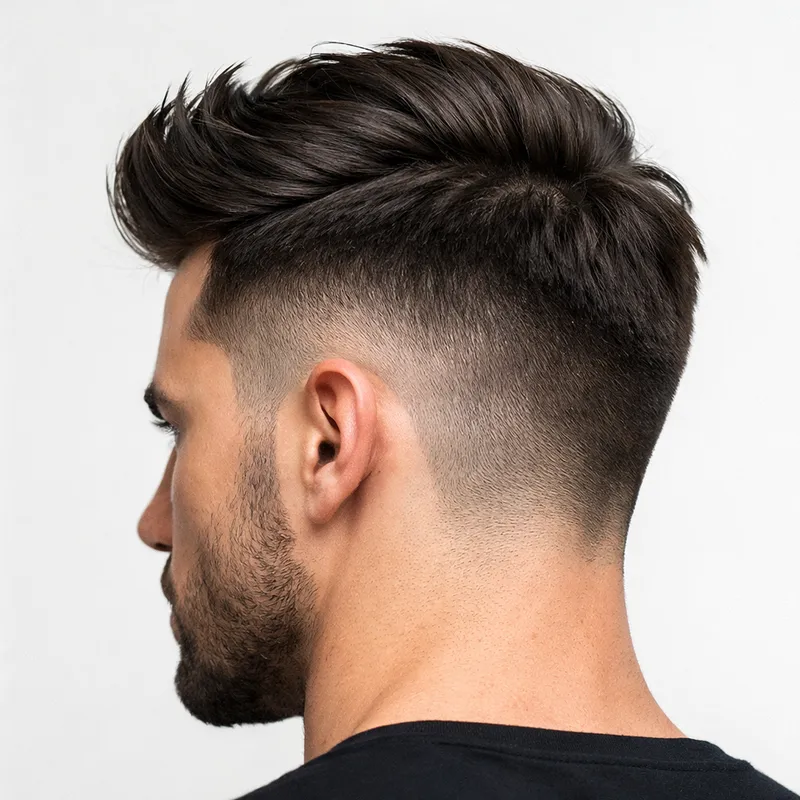
Skin Fade (Bald Fade)
A skin fade fades the hair down to skin at the bottom. It’s the sharpest look and the most “fresh-cut” appearance— but it also shows regrowth fastest. Ideal if you like frequent cleanups.
- Best for: crisp finish, high-contrast look
- Ask for: “skin fade, smooth transition, no steps”
Drop Fade
The fade “drops” lower behind the ear, following the natural curve of your head. It can make a fade look more tailored and helps when you want a cleaner profile without going high.
- Best for: adding structure, balancing rounder shapes
- Ask for: “drop fade, keep it curved and natural in the back”
If you want a fade that’s clean but easy to wear: choose mid fade. If you want low-maintenance grow-out: choose taper or low fade. If you want maximum crispness right now: choose skin fade.
Choose the Best Fade for Your Face Shape (Simple, Not Overcomplicated)
Face shape is not about “rules”—it’s about balance. A fade changes the visual width of your head and the perceived length of your face. Use these guidelines to choose a fade that makes your features look intentional.
Round face
The goal is to add structure. You usually look best when the sides aren’t too bulky and the shape feels cleaner.
- Best picks: mid fade, high fade, drop fade
- Top tip: add texture or some height on top (not excessive)
- Avoid: very low fades with heavy sides (can look wider)
Oval face
You’re balanced already, so you have the most freedom. Choose your fade based on style preference and maintenance.
- Best picks: taper, low, mid, high, skin—choose by boldness
- Top tip: keep proportions consistent (don’t overdo height)
Square face
You already have strong angles. The best fades keep that strength while controlling boxiness around the sides.
- Best picks: low or mid fade, taper fade
- Top tip: textured top softens the “flat” look
- Avoid: extreme high + super tall top if you want a natural look
Long / rectangular face
The goal is to avoid making your face look even longer. Extremely tight sides + lots of height can exaggerate length.
- Best picks: taper fade, low fade
- Top tip: keep some side width and avoid extreme height
- Avoid: very high skin fades paired with tall pomps (unless you want that effect)
Choose the Best Fade for Your Hair Type (What Barbers Don’t Always Explain)
Hair type changes how a fade looks and how it grows out. Straight hair shows blending mistakes more clearly. Curly and coily hair can hide some transitions— but it also needs smart shaping so the silhouette looks clean rather than bulky.
Straight hair
Straight hair is unforgiving: any “step” in the blend can appear as a visible line. The solution is not “shorter,” it’s a cleaner blend and better weight removal.
- Best picks: low fade, mid fade, taper
- Top tip: ask for “no visible steps” and a smooth transition behind the ears
- Style win: texture on top makes the haircut look more modern and less flat
Wavy hair
Waves look best when the sides don’t fight the natural movement. A fade that’s too aggressive can make the top feel disconnected.
- Best picks: low fade, mid fade, drop fade
- Top tip: keep enough length on top to show wave pattern
- Style win: matte products keep waves natural, not crunchy
Curly hair
Curly hair + fades can look elite when the fade supports the curl shape. The key is balancing the sides so curls remain the star.
- Best picks: taper fade, mid fade, drop fade
- Top tip: don’t take the sides too high if you want a fuller silhouette
- Style win: define curls with a light cream or mousse instead of heavy gel
Coily / kinky hair
Coily hair benefits from clean shaping and strong outlines. A good fade here is about silhouette control and consistent edges.
- Best picks: taper fade, temp/temple fade, mid fade, drop fade
- Top tip: if you like sharpness, a line-up can elevate the whole look
- Style win: keep hair moisturized—dry coils can look dull and shrink unevenly
Thinning / receding hair
The goal is to reduce contrast between hair density and scalp visibility. Extremely tight skin fades can draw attention to areas you might prefer to soften. A smarter approach usually looks better: keep the fade lower, and add texture on top for a fuller appearance.
- Best picks: taper fade, low fade, soft mid fade (depending on density)
- Top tip: ask for “soft transition” and avoid extreme height if scalp shows a lot
- Style win: textured crop, messy top, or short quiff can add visual thickness
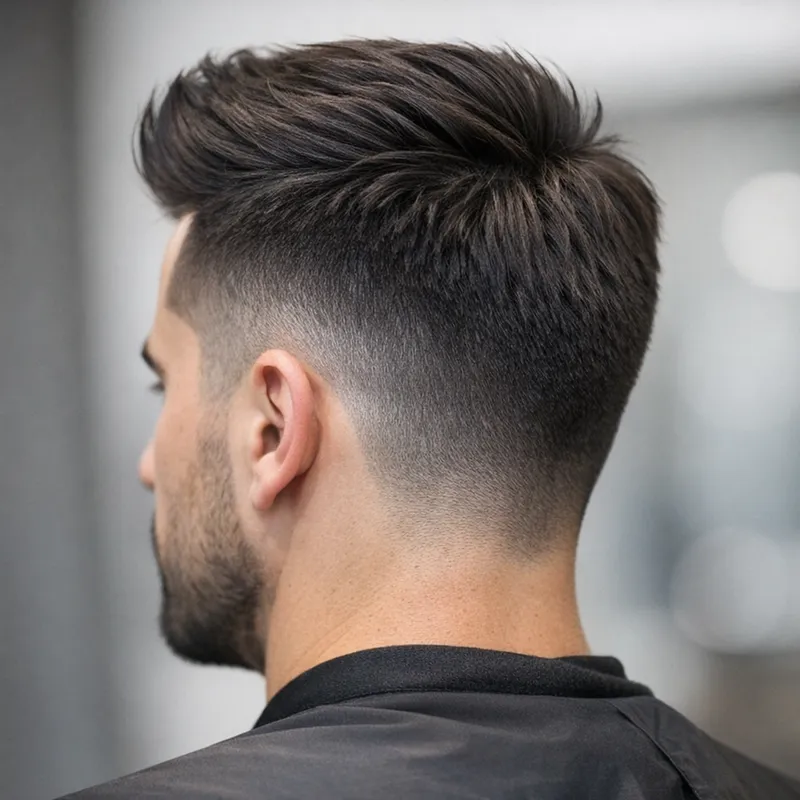
How to Find the Best Fade Barber Near You (Without Wasting a Haircut)
Not every barber is a fade specialist. Fades are technical: the difference between “okay” and “excellent” is usually invisible in the first 10 seconds— then obvious for the next 2 weeks as it grows out. Use this checklist to make sure you’re paying for skill, not luck.
The Fade Specialist Checklist
- They show fades from multiple angles: side + back + close-up. One perfect angle isn’t proof.
- The blend looks smooth: no steps, no “shelf,” no harsh line unless that’s intentionally requested.
- Consistency: multiple clients show the same clean quality, not one standout cut.
- They ask questions: where you want the fade to start, how you style daily, how often you’ll maintain it.
- They understand head shape: especially around the occipital bone (the back bump) where fades often go wrong.
Look for reviews that mention: clean fade, attention to detail, listened, consistent, smooth blend. Avoid shops where reviews are mostly about “fast” if you care about precision.

If you’re unsure which fade suits you, use the tools above, then take your script to a barber you trust. If you run a barbershop and want to be featured as a fade specialist, you can reach us via your website contact page.
Tip: If your site has a dedicated contact URL, update the buttons above to point to it (for example: /contact/).
Fade Maintenance: How Often Should You Refresh It?
“How long does a fade last?” depends on one thing: how sharp you want it to look. A taper can stay presentable longer. A skin fade looks elite when fresh, but it visibly changes faster. Use the planner below to estimate a realistic refresh window—and avoid the common mistake of waiting until it looks messy.
- Neckline discipline: keep it clean and natural; messy necklines ruin fades faster than anything.
- Product match: matte paste/clay for texture, pomade for control/shine, light cream for natural movement.
- Don’t overload: too much product collapses shape and makes even a good fade look heavy.
- If you have a beard: blend the sideburn area so haircut and beard look like one design.

Fade Haircut Near Me: FAQs
These are the questions people ask right before choosing a barber. If you read nothing else, read the first three—because they prevent most “bad fade” outcomes.
What’s the difference between a fade and a taper?
A fade usually blends higher up the head and can be more noticeable. A taper is more subtle and often focuses on the temples and neckline. If you want a clean look that grows out gently, taper is the safest choice. If you want a more modern, defined look, choose a low/mid/high fade.
Is a skin fade the same as a bald fade?
In most shops, yes. Both terms usually mean the hair fades down to skin at the bottom. If you want the crisp “fresh out of the chair” look, skin/bald fade is it—just remember it shows regrowth sooner than softer fades.
How often should I get a fade haircut?
It depends on your sharpness standard and growth rate. Tapers and low fades can look good longer; skin fades need more frequent upkeep to stay razor clean. Use the Maintenance Planner on this page to estimate a refresh window that fits your lifestyle.
What’s the best fade for a professional job?
Usually a taper or low fade. They look clean and intentional without drawing too much attention. If you want something more modern but still office-friendly, a mid fade with a softer bottom length (#0.5–#1) is a strong option.
Can I get a fade with curly or coily hair?
Absolutely. Curly/coily hair often looks excellent with fades because the shape can be very clean. The key is picking a fade that supports the silhouette: taper/mid/drop fades are high-success choices. If you want crisp edges, ask for a line-up—but only if that style fits your look.
What should I tell my barber if I want a great fade?
Don’t say “just a fade.” Specify: fade height (low/mid/high/taper), lowest length (skin/#0.5/#1), and blend target (#3/#4). Then describe the top: how much to keep and how you style it. Use the Script Generator above for a ready-to-show version.
What do guard numbers mean (#0.5, #1, #2, #3)?
Guard numbers are clipper length guides. Lower numbers are shorter. The exact millimeters can vary by clipper system, but the practical takeaway is: #0.5–#1 = tight and clean; #2–#3 = softer and easier grow-out; skin = highest contrast.
Should I get a line-up with my fade?
A line-up makes edges sharper and more defined. It looks great if you want a crisp, high-contrast style. If you prefer a natural look (or want softer grow-out), ask for clean edges but keep them natural.
How do I know if a barber is actually good at fades?
Look for smooth blends from multiple angles, consistent results across many clients, and reviews mentioning “clean fade” or “attention to detail.” In person, a good sign is a barber who asks where you want the fade to start and explains how it will suit your head shape.
How long does a fade haircut take?
A true fade is detailed work. A clean blend + finishing details take longer than a simple clipper cut. If you’re choosing between “fast” and “precise,” precision is what keeps the fade looking good for the next weeks—not just the next hour.
Use the Fade Match Tool → generate your script → then pick a barber whose photos match the fade style you want. That 3-step process beats guessing every time.
Ready to Get a Better Fade Near You?
The fastest way to upgrade your result is to stop describing your haircut vaguely. Use the tools above to choose a fade that suits you, then walk in with a clear script. Better communication + the right barber = a fade that looks intentional from day one.
You can also link these buttons to your preferred contact/lead page if you use this as a service landing page.
