
Clippers & Trimmers
Wahl Peanut Trimmer (Classic Corded vs Cordless Peanut Li): The Complete Buyer + Use Guide
The Wahl Peanut trimmer has a specific superpower: fast, controlled grooming for men who want to stay sharp between barber visits. It’s compact, simple, and built for real-world touch-ups—necklines, sideburns, beard maintenance, and quick cleanups.
- Pick the right model (Classic corded vs Wahl Peanut trimmer cordless) with a 60‑second decision tool.
- Learn exactly what the Peanut does best (and what it’s not designed for).
- Get step-by-step trimming routines + a maintenance checklist that prevents tugging and irritation.
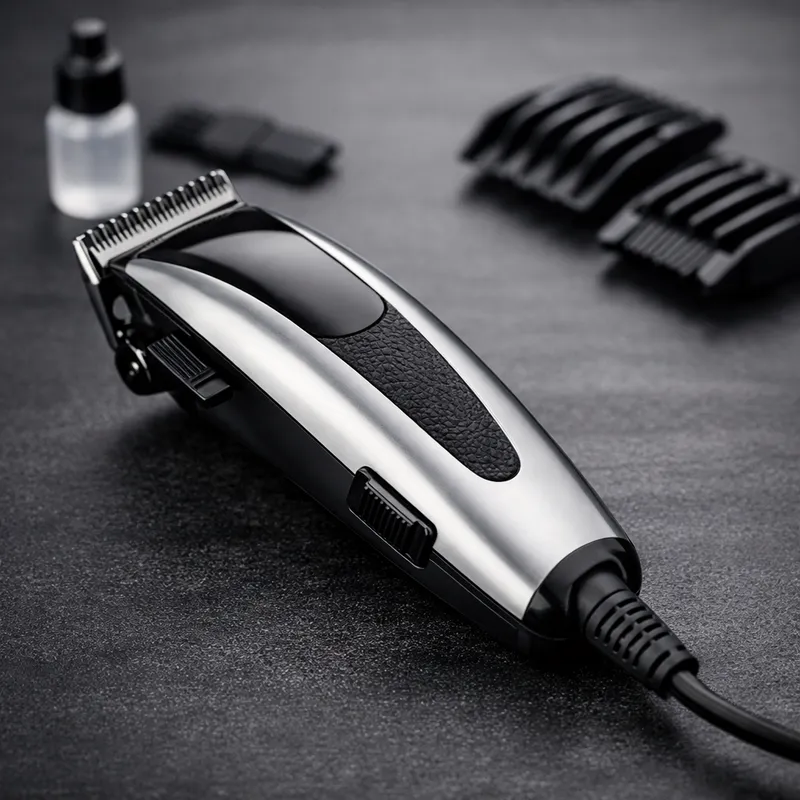
Quick verdict: which Wahl Peanut trimmer should you buy?
Most “Peanut regret” comes from one thing: buying the right tool for the wrong job. The Peanut is a compact Wahl Peanut clipper trimmer style device—amazing for tidy work and maintenance, not a full fade system and not a dedicated T‑blade lineup trimmer.
Pick the corded Classic if you want a simple, always-ready tool with consistent power and zero battery habits. It’s the “plug in and get it done” option for home bathrooms and steady touch-ups.
Best for
- Men who want reliability and don’t care about cords.
- Regular neckline cleanups and beard maintenance.
- Longer sessions without thinking about charge level.
Not ideal for
- Travel grooming or tight spaces where cords get annoying.
- Anyone who wants complete freedom of movement.
Pick the Peanut Li if convenience matters: travel, gym bag, shared bathrooms, or simply moving freely without fighting a cable. This is the modern answer when people search “Wahl Peanut trimmer cordless”.
Best for
- Men who trim in different locations (home + travel).
- Fast touch-ups when you don’t want to plug in.
- Anyone who values quick charging and portability.
Not ideal for
- People who hate charging anything, ever.
- “Set it and forget it” users who won’t maintain battery routine.
Wahl Peanut: corded vs cordless (the comparison that actually matters)
This table focuses on what changes your day-to-day experience: convenience, maintenance behavior, and which model “fits” how men actually groom. Numbers can vary slightly by region, but the practical differences are stable.
| Category | Classic Peanut (Corded) | Cordless Peanut Li |
|---|---|---|
| Daily experience | Always ready. Plug in and go. | Freedom to move. No cable management. |
| Best use case | Home grooming, steady routines, longer sessions. | Travel, gym bag, shared bathrooms, quick touch-ups. |
| Maintenance habit | Blade cleaning + oiling. | Blade cleaning + oiling + basic battery routine. |
| Guard range (typical kit) | 4 guides (1/8”–1/2”). | 4 guides (1/8”–1/2”). |
| Who should avoid | Men who hate cords or trim away from outlets. | Men who refuse to charge devices. |
| What it is not | Not a dedicated fade system with many guard increments, and not a wide T‑blade lineup trimmer. If your #1 priority is razor‑sharp lines or detailed fading, consider a tool designed specifically for that. | |
Tools (unique value): pick your model + find your guard + plan cordless runtime
These quick tools are built for one goal: helping you decide faster, with fewer mistakes. No email gates, no forms—just useful outputs you can copy and use.
Tool 1: Corded vs cordless decision helper
Check what matches your routine. You’ll get a clear recommendation and the reasoning (so you can buy confidently).
Tool 2: Guard length finder (built for the Peanut’s 4-guide kit)
Enter your target beard length and this tool suggests the closest Peanut guide: 3mm, 6mm, 10mm, or 13mm. If your target is outside the Peanut’s sweet spot, you’ll see a clear warning before you overcut.
Tool 3: Cordless runtime planner (for Peanut Li users)
If you’re choosing the Peanut Li, this helps you build a charging habit that matches your real grooming schedule. It’s designed to reduce dead-battery surprises without turning grooming into a chore.
Specs that matter (and how to interpret them)
Specs are useful only when they connect to an outcome. So instead of dumping numbers, this section translates what each spec means for your grooming routine.
The corded Classic is a compact, rotary-motor clipper/trimmer designed for consistent performance without battery management. If you want a tool that behaves the same every time you turn it on, this is the version that matches that mindset.
Key specs (high impact)
- Power: Corded (plug-in use).
- Cord length: Long professional cord (useful when your mirror/outlet setup is awkward).
- Motor type: Rotary (built for steady cutting power in a compact body).
- Blade style: Snap-on/off blade system (fast cleaning and replacement).
- Guide kit: 4 guides, 1/8” to 1/2” (simple, not a fade kit).
The Peanut Li takes the same compact idea and makes it more flexible. If you trim in different places, value quick touch-ups, or simply want your grooming kit to feel modern, this version makes sense.
Key specs (high impact)
- Power: Cordless (built for freedom of movement).
- Charging: USB‑C (easy to charge with modern cables and travel setups).
- Runtime: Built for repeated touch-ups before needing a recharge.
- Travel protection: Travel-lock behavior reduces accidental turn-ons in bags.
- Guide kit: 4 guides, 1/8” to 1/2” (same simplicity as Classic).

How to “read” the Peanut’s specs like a buyer (not a collector)
The Peanut’s biggest selling point is not a flashy feature—it’s control. Its compact shape makes it easier to work around ears, jawlines, and neck curves without accidentally removing too much.
The second selling point is simplicity. A 4‑guide kit forces a clean decision: trim longer, or trim shorter. That’s great if you want consistency and hate fiddling. But if you want micro-increment fades and constant guard swapping, you’ll likely be happier with a clipper system designed for that workflow.
If you’re buying mainly for beard work, treat the Peanut as a hybrid: a trimmer that can remove bulk and also handle detail. It’s not a dedicated shaver, and it’s not a specialist lineup tool—it’s an efficient “stay sharp” machine.
Best uses for men: what the Wahl Peanut does better than most tools
If you use the Peanut for the jobs it’s built for, it feels like a cheat code. Here are the highest-value use cases (the ones that make men say “I should’ve bought this sooner”).
1) Neckline cleanups (the #1 reason most men love it)
A clean neckline makes your whole haircut look fresher—especially with fades, tapers, undercuts, and short textured styles. The Peanut is compact enough to control, which reduces the risk of “drifting” too high up the neck.
If you keep your neckline tidy every 5–10 days, you can make a haircut look good for weeks longer. That’s the real ROI of a Peanut: not a dramatic new look, but a consistent “put together” look with minimal effort.
2) Sideburns + around-the-ear detailing
Sideburns are one of the first places a haircut looks messy. The Peanut’s small footprint helps you shape sideburns without bumping into ears or creating uneven steps.
The goal here isn’t perfection—it’s symmetry. If both sides match at a quick glance, you’re winning. And the Peanut is a symmetry-friendly tool because it’s easy to hold steady.
3) Beard maintenance (length + edges)
With the standard guide set, the Peanut is ideal for short-to-medium beard maintenance: keeping overall length even, cleaning the neckline, and tightening cheek lines without constantly switching tools.
If you want a beard that looks intentional, focus on two things: a consistent length and a clean neckline. The Peanut can do both—especially if you use the Guard Finder tool above to choose the closest guide for your target look.
4) Quick touch-ups between barber visits
The Peanut shines when you use it as a maintenance rhythm: quick checks in the mirror, small cleanups, then stop. It’s the opposite of “do a full haircut at home.” It’s a tool for keeping your current cut looking sharp longer.
The best results happen when you treat grooming like brushing your teeth—small, consistent actions. That’s why the Peanut is so popular: it encourages that behavior.
How to use a Wahl Peanut trimmer at home (step-by-step routines)
Below are two routines that match how most men groom: a neckline cleanup and a beard maintenance trim. They’re written to be practical, fast, and repeatable—because repeatable is what gives you results.
Routine A: 5-minute neckline cleanup (between haircuts)
- Decide your neckline height before you start. A good default is a natural curve that sits slightly above the collar line—clean, but not too high. (The mistake is chasing the line upward every time.)
- Use light pressure. The Peanut works best when you guide it—don’t push it. Let the blade do the cutting while you keep the motion controlled.
- Start with the center, then match the sides. It’s easier to keep symmetry when you anchor the middle first.
- Use short strokes and check the mirror often. Two seconds of checking saves two weeks of regret.
- Finish by softening the edge. If you don’t want a hard line, “kiss” the edge with the corner of the blade to make it look natural.
Routine B: Beard maintenance (length + edges)
- Pick a target length. Use the Guard Finder tool to match your goal to a guide (3mm, 6mm, 10mm, 13mm).
- Start longer than you think. If you’re between two guides, start with the longer one first and step down only if needed.
- Trim the bulk with the guide. Work slowly and keep your angle consistent. Consistency beats speed.
- Define the neckline. A clean neckline is the difference between “unshaven” and “styled.” Keep it natural—avoid pushing the line too high under the jaw.
- Clean the cheek line last. Use the corner of the blade for control. Your goal is a line that looks intentional, not a line that looks drawn on.

When the Peanut is the wrong tool (so you don’t waste money)
If your #1 goal is a razor-sharp lineup or detailed barber-style artwork, you’ll usually want a dedicated detailer with a wide T‑blade. That blade shape is designed for crisp corners and line work.
If your #1 goal is full fades at home, you’ll want a clipper system with multiple guards and fine increments. The Peanut’s simple guide kit is amazing for maintenance, but it’s not built to be a fade toolkit.
The Peanut wins when you want to stay sharp between cuts—quick touch-ups that make your whole style look fresher with minimal effort.
Cleaning, oiling, and blade care (this prevents pulling)
Most “this trimmer pulls my hair” problems are maintenance problems, not product problems. Hair packed between blade teeth, a dry blade, or a badly seated blade will ruin the experience.
Fast cleaning routine (after use)
- Turn the unit off and remove any guide.
- Brush out hair from the blade teeth and inside the blade area.
- Oil the blade (a small amount goes a long way).
- Wipe excess oil so it doesn’t drip.
Consistent micro-maintenance beats “deep cleaning once every two months.” A clean blade cuts cooler, smoother, and more comfortably.
Blade removal basics (simple, but do it correctly)
The Peanut’s snap-on/off blade system is one of its best features—because it keeps your tool hygienic and cutting well. If you ever hear loud vibration or feel uneven cutting, check the blade seating first.
- Remove: hold the trimmer firmly and push the blade set away from the front so it comes off in one piece.
- Clean: brush between blade teeth; remove trapped hair.
- Reinstall: seat the bottom hook, then snap into place until it clicks.
Bonus tool: copy a maintenance checklist (so you actually do it)
Click once and paste it into Notes / Reminders. A simple checklist is one of the fastest ways to get better grooming results.
Common mistakes (and how to avoid them)
Mistake 1: Using heavy pressure
Heavy pressure increases irritation and makes mistakes more likely. The Peanut is a control tool—guide it. Light strokes plus frequent mirror checks give cleaner results.
Mistake 2: Trimming your neckline higher every time
This is how beards slowly “shrink.” Decide your neckline once, then maintain it. If you’re unsure, keep it slightly lower and softer rather than too high and harsh.
Mistake 3: Ignoring oil and blaming the trimmer
Dry blades feel hotter, louder, and rougher. A tiny amount of oil often fixes tugging immediately—and extends blade life.
Mistake 4: Expecting a fade kit from a 4-guide tool
The Peanut’s guide set is intentionally simple. If your main goal is fades with multiple guard steps, you’re shopping in the wrong category. Use the Peanut for maintenance; use a fade-focused clipper system for fade work.
Frequently Asked Questions (FAQ)
These FAQs are written for real buying decisions: what it’s good for, how to choose corded vs cordless, and how to maintain it so it cuts comfortably.
Is the Wahl Peanut trimmer good for beards?
Yes—especially for short-to-medium beard maintenance, keeping length even with the included guides, and cleaning up edges like the neckline and cheek line. It’s best when you treat it as a maintenance tool rather than a full “beard redesign” machine.
What’s the difference between the Wahl Peanut corded and the Wahl Peanut trimmer cordless (Peanut Li)?
The corded Classic is about plug-in simplicity and consistent readiness. The cordless Peanut Li is about freedom of movement and portability—ideal for travel and quick touch-ups. If you hate cords or groom in different locations, cordless usually feels better.
Can the Peanut replace full-size clippers?
For full haircuts and detailed fading, usually no. The Peanut can remove bulk and handle quick cleanups, but it doesn’t give you the guard variety most men want for full fades. It’s best as a “stay sharp between cuts” tool.
What guard sizes does the Peanut typically include?
Most kits focus on a simple 4-guide range: 1/8” to 1/2” (commonly 3mm, 6mm, 10mm, 13mm). That simplicity is great for consistent maintenance, but it’s not a micro-increment fade set.
Why is my Peanut tugging or pulling hair?
The most common causes are hair packed between the blade teeth, a dry blade that needs oil, or a blade that isn’t seated correctly. Clean and oil first. If it still pulls after maintenance, a replacement blade often fixes the issue.
How often should I oil the blade?
If you use the Peanut regularly, oiling frequently is smart. A small amount of oil reduces friction and heat and improves comfort—especially for beard work where skin irritation matters.
Is the Peanut good for sensitive skin?
It can be, as long as you use light pressure, keep the blade clean/oiled, and avoid repeated passes over the same area. For extremely sensitive skin, trimming after a warm shower and moisturizing after can reduce irritation.
What’s the fastest way to choose between Classic and Peanut Li?
Ask one question: do you want cordless freedom? If yes, choose Peanut Li. If you prefer plug-in simplicity and don’t mind a cord, choose the Classic. Use the Decision Helper above if you want a more structured answer.
Final guidance: buy for your routine, not for hype
The Wahl Peanut trimmer stays popular for one reason: it fits how men actually groom. If you want a tool that keeps your beard edges and neckline clean with minimal fuss, it’s a smart purchase.
If you choose the right version (corded for simplicity, cordless for freedom) and maintain the blade, you’ll get a cleaner look with less time—and that’s what matters.
Tip: If you’re building a complete grooming setup, pair a maintenance tool (like the Peanut) with a dedicated detailer or a fade-focused clipper—each tool does its job better.