
Clippers & Trimmers T‑Blade Trimmers & Outliners
Get Cleaner Line‑Ups with a T‑Blade Trimmer (Outliner) — Without Guesswork
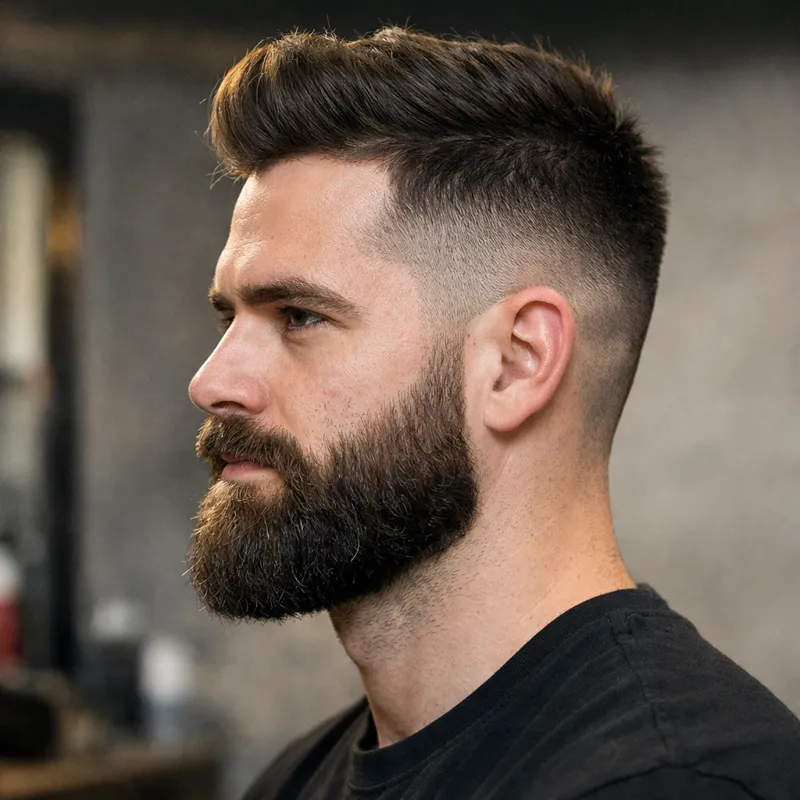
A t blade trimmer (also called an outliner) is the finishing tool that makes a haircut look “barber fresh” for longer: sharper hairlines, crisp temple corners, cleaner beard edges, and a neckline that doesn’t turn messy after a few days.
This page is designed to do what most “best trimmer” listicles don’t: help you choose the right outliner, apply a beginner‑safe outlining method, and maintain your blade so you get clean lines with less irritation.
2‑Minute Outliner Fit Finder (No Form, Instant Result)
If you’ve ever bought a trimmer that looked “pro” but felt harsh on your skin (or couldn’t cut cleanly without multiple passes), this tool fixes that. Tap the options that match you and you’ll get a practical recommendation: what to prioritize, what to avoid, and how to set expectations for sharpness vs comfort.
Your result will appear here
Choose one option from each row. You’ll get a clear “buying priority list” and a short game‑plan for sharper lines without pushing your hairline back.
Tip: “Sharper” isn’t always “better” if your skin reacts. A clean, comfortable line beats a painful ultra‑close edge that bumps up.
What a T‑Blade Trimmer Is (and What It Isn’t)
A T‑blade trimmer is a precision trimmer built for outlining — that last 10% of detail that makes a haircut look intentional. You’ll also hear it called a hair clipper outliner, liner, or edger. The point is the same: crisp borders and clean geometry.
The “T” shape gives you a wider cutting edge and better visibility when you’re working around corners: the temples, the area around the ear, and the curve of the neckline. That wider blade helps you build a straighter line with fewer passes — and fewer passes usually means less irritation.
Think of it like this: clippers do the “construction.” A T‑blade outliner does the “finish work.” If you want sharp line‑ups, you don’t need a stronger clipper — you need a better finishing tool and a safer method.
What it’s not
- Not a replacement for hair clippers: clippers remove bulk faster and are built for fading and cutting length.
- Not automatically “better” when set ultra‑close: chasing maximum closeness can cause nicks, redness, and bumps.
- Not a magic shortcut: technique and blade care matter as much as the model you buy.
T‑Blade Trimmer vs Clippers vs Standard Trimmers
If you’re building a simple grooming setup, this is the cleanest way to understand roles. Most bad home line‑ups come from using the wrong tool for the wrong job — especially trying to force clippers to do precision outlining.
| Tool | Best for | Where it disappoints | Best pairing |
|---|---|---|---|
| Hair clippers | Cutting length, removing bulk fast, fades and blending | Hard to see corners; edges can look soft or uneven | Pair with an outliner for finishing |
| Standard trimmer | General trimming, quick cleanup, lighter detail | Not as crisp for sharp line‑ups and corner work | Good for casual grooming; upgrade to T‑blade for precision |
| T‑blade trimmer (outliner) | Line‑ups, beard edges, neckline cleanup, designs/details | Not efficient for full haircuts; too slow for bulk cutting | Use after clippers for a “barber finish” |
Important: If you only buy one tool and you care about line‑ups, don’t pick a random “all‑in‑one.” Get clippers for cutting and a T‑blade outliner for edges — that’s the simplest setup that consistently looks clean.
When You Should Use a T‑Blade Outliner
A T‑blade trimmer shines when you’re doing edge control — clean lines, sharp borders, and precise touch‑ups. These are the situations where it’s worth it:
1) Hairline line‑ups (front + corners)
The front hairline and temple corners are where people notice the most. The goal isn’t “carved back” — it’s clean and symmetrical. A good outliner helps you tap in the edge with control instead of guessing with clippers.
2) Neckline cleanup between haircuts
If you want your haircut to look fresh longer, this is the highest ROI habit: clean the neckline every few days. It takes 60–90 seconds once you know your natural shape, and it stops the back from looking overgrown even when the top is still fine.
3) Beard line definition
A hair clipper outliner is one of the best tools for beard borders because it’s easy to control and easy to “feather” if you want a natural edge. You can keep the cheek line clean without making it look like a drawn‑on stripe.
4) Designs and fine detail
If you like sharp parts, hard lines, or detailed work, the T‑blade’s shape gives you better visibility and a wider edge to create clean geometry without repeated scraping.
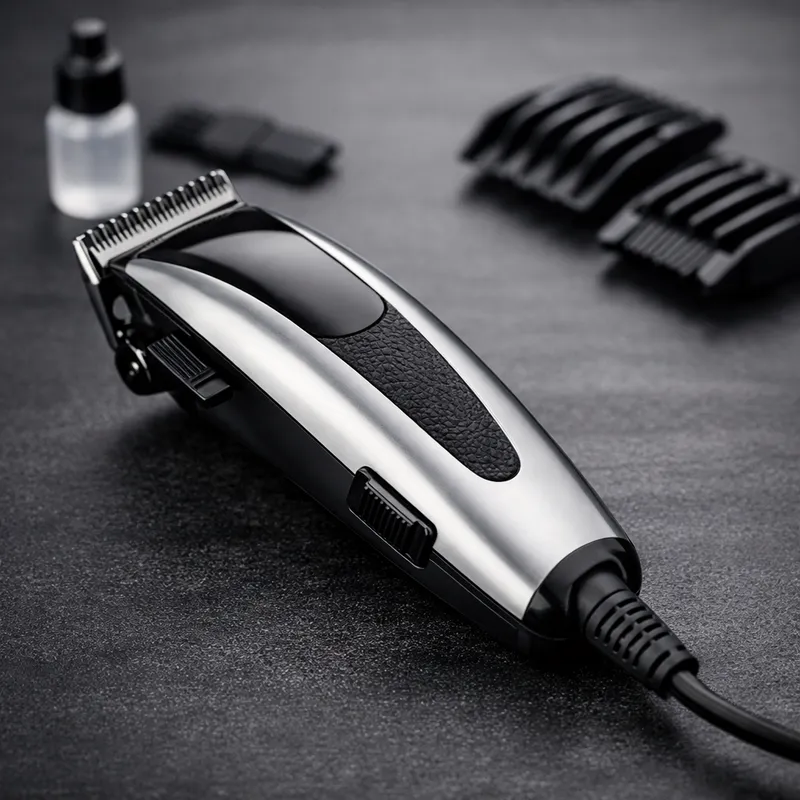
Why it works: clippers handle bulk; the outliner finishes edges cleanly.

Clean lines start before trimming: brush hair down so you cut the right edge.

Finish matters: a light product after cleanup makes edges look intentional, not overworked.
How to Choose the Right T‑Blade Trimmer
Most people buy an outliner based on hype, then wonder why it either (1) doesn’t cut cleanly, or (2) feels harsh on skin. The smartest way to choose is to match the tool to your hair density, skin sensitivity, and how often you’ll use it.
The features that actually matter
- Blade stability and alignment: A clean line comes from a blade that stays aligned. Wobbly or poorly aligned blades force extra passes — and extra passes are where irritation starts.
- Comfort on skin: If you’re sensitive, prioritize a trimmer that feels smooth at light pressure. The “sharpest possible” setup isn’t worth it if you get bumps.
- Power consistency: You don’t need maximum power; you need consistent cutting without tugging. Tugging is a sign the blade is dull, dirty, dry, or underpowered for your hair.
- Heat management: Heat is a hidden reason people hate a trimmer. The longer you outline, the more heat matters. If you do frequent touch‑ups, this becomes non‑negotiable.
- Corded vs cordless: Corded is simple and consistent. Cordless is convenient and portable. Neither is “better” — it’s about your routine.
- Grip and control: A great motor means nothing if the trimmer feels awkward in your hand. Control beats raw speed for line‑ups.
Buyer rule that prevents regret: If you’re outlining your own hairline, pick a trimmer you can control at light pressure. If you have to press down to get a line, you’re training yourself into irritation and uneven edges.
Fast buying checklist (save this)
- If your skin is sensitive: choose “comfortable cutting” over “ultra‑close cutting.”
- If your hair is coarse or dense: prioritize consistent power + sharp, well-maintained blades.
- If you outline often: prioritize heat control + durability + easy cleaning.
- If you travel or move around: cordless convenience beats corded perfection.
- If you’re a beginner: avoid aggressive blade setups until your method is consistent.
Want a “barber‑safe” way to pick without wasting money? Use the Fit Finder above, then read the method below before you buy. The goal is to get the result you want with the least irritation and the fewest mistakes.
How to Use a T‑Blade Trimmer for a Clean Line‑Up (Step‑by‑Step)
The best line‑ups are not the closest possible lines — they’re the cleanest lines with the least damage to skin and hairline. The method below is intentionally designed to prevent the two biggest home mistakes: over‑pushing the line and scraping the skin.
Before you start (60 seconds that makes everything easier)
- Clean + dry: Oil and sweat cause slips and uneven lines.
- Brush hair down at the hairline: You want the true edge, not lifted strands.
- Use strong lighting: Most “uneven” line‑ups are actually visibility problems.
- Commit to light pressure: If you press down, you trade sharpness for irritation.
Hairline line‑up (front edge)
Start in the center and work outward. Use short, controlled taps instead of long drags. The moment you drag, you increase the chance of a crooked line — and then people start “fixing,” which is how hairlines get pushed back.
- Step 1: Tap in the center line first (1–2 inches), then stop and look.
- Step 2: Build the left and right sides outward with small taps.
- Step 3: Only clean stray hairs above the line once the main edge is set.
- Step 4: Do a final symmetry check. If it’s clean, stop.
Temple corners (the “corner control” technique)
Temple corners are where T‑blade trimmers earn their reputation. Instead of carving a corner, you want to “place” it. Use the corner of the blade like a pencil: short taps, light pressure, frequent mirror checks.
- Set the corner point first (one tap).
- Connect the lines into that point with short taps.
- Resist over‑squaring if your natural hairline is slightly rounded — natural wins.
Beard cheek line (sharp but not fake)
A clean cheek line looks best when it follows your face shape and doesn’t cut too deep into the beard. The trick is to remove strays first, then define the final edge last.
- Clear strays below the line before you define the line.
- Define with taps (not one long stroke).
- Blend the edge slightly if you want a natural finish instead of a hard drawn line.
Neckline cleanup (the easiest “fresh cut” habit)
A neckline cleanup is the fastest way to look sharper between haircuts. The safe approach is to respect your natural neckline height: don’t set it too high. Most people regret making the neckline “too clean” because it changes the shape of the haircut.
- Outline lightly first. Don’t commit to the final line immediately.
- Remove below the line with short upward strokes.
- Stop early if your skin is reactive — comfort beats closeness.
Skin note (straight talk): If you get bumps easily, your best line‑up is the cleanest line you can get at light pressure. Aggressive edging and repeated passes are what trigger irritation — not “bad luck.”
Zero‑Gap: What It Means and When You Should Avoid It
“Zero‑gapping” is the practice of adjusting blade alignment to cut closer. The upside: a sharper edge. The downside: a much higher chance of nicks, redness, and bumps if you don’t know what you’re doing.
Practical rule: If your skin is sensitive or you’re new to line‑ups, don’t start by chasing the closest possible cut. Start by getting clean results at light pressure. Once your technique is consistent, you can consider a closer setup.
Zero‑gap decision guide (simple and honest)
- Good idea if you have tough skin, steady technique, and you outline often.
- Bad idea if you get razor bumps, you press hard, or you “fix the line” repeatedly.
- Pointless if your blade is dirty, dry, or dull — fix maintenance first.
If you want the “barber sharp” look without risk, the simplest solution is not a more aggressive blade — it’s getting the initial line‑up done by a pro and maintaining it lightly at home.
Book a Barber for the First Line‑UpMaintenance That Keeps a T‑Blade Trimmer Sharp (and Your Skin Calm)
If your outliner ever feels like it’s “not cutting like it used to,” the cause is usually boring — and fixable: hair packed into the blade, a dry blade, or a blade that’s simply overdue for replacement. Sharp lines come from a clean cutting edge and a method that avoids scraping.
The non‑negotiables
- Brush out hair after every use: packed hair causes tugging and uneven lines.
- Light oil regularly: a dry blade heats up faster and pulls more.
- Wipe/disinfect when needed: especially if multiple people use the tool.
- Replace blades when performance drops: you can’t “technique” your way out of a dull blade.
Your routine will appear here
Pick one usage level above. You’ll get a simple schedule that reduces pulling, overheating, and unnecessary passes.
What “tugging” usually means: hair is stuck under the blade, the blade is dry, or the blade is dull. Don’t solve tugging by pressing harder — that’s how irritation starts.
Smart Picks: The Best T‑Blade Trimmer Type for Your Use Case
Instead of forcing you into one “best” tool, here’s the approach that converts into good results: pick the type that matches your routine. When the category is right, you’ll get cleaner lines with fewer passes.
Prioritize comfort and control. You want clean lines at light pressure, not the closest possible cut. Best for: first‑time line‑ups, sensitive skin, and learning corner control.
No battery anxiety, consistent power, and simple reliability. Best for: weekly maintenance, shared household use, and anyone who wants a plug‑in tool that just works.
Convenience wins if you travel or keep your neckline sharp often. Best for: quick cleanup, mirror work, and anywhere you don’t want to fight a cord.
If you outline often, heat matters. Look for stable performance and a blade that stays comfortable over time. Best for: heavy use and frequent detailing.
Choose a model that gives you visibility and stability for hard parts and detailed work. Best for: designs, precise corners, and clean geometry.
The “best” tool is the one that lets you stop after fewer passes. Pair a comfortable outliner with a method that avoids repeated scraping and over‑sharpening.
Conversion truth: If you want the sharpest result with the lowest risk, get your first line‑up done by a pro, then maintain it at home. That single decision prevents most home hairline disasters.
Common Mistakes That Ruin Line‑Ups (and How to Fix Them)
Mistake #1: Pressing hard to “make it cut”
Pressing hard is a signal the blade is dirty, dry, dull, or the trimmer is wrong for your hair. Hard pressure leads to redness and bumps — and it makes lines less controlled.
Fix: clean the blade, oil lightly, and outline with taps. If you still need pressure, the blade likely needs service or replacement.
Mistake #2: Repeated passes on the same spot
Repeated passes feel like you’re perfecting the line, but you’re usually just irritating the skin and pushing the hairline back.
Fix: limit passes. Set the line, check symmetry, clean strays, stop.
Mistake #3: Carving corners that don’t match your natural hairline
Over‑squaring looks unnatural quickly. The best line‑ups respect your natural shape, then clean it up — not redesign it.
Fix: “place” the corner point and connect lines into it. If you’re unsure, leave a softer corner.
Mistake #4: Ignoring the neckline until it looks messy
People often chase a perfect front hairline but forget the neckline — then the haircut looks grown out from the back.
Fix: neckline cleanup every few days is the easiest way to look sharper between cuts.
Fast self‑check: If your line‑ups look “sharp” for one day and then your skin gets angry, you’re going too close, doing too many passes, or pressing too hard. Adjust the method first — then consider gear changes.
Frequently Asked Questions About T‑Blade Trimmers & Outliners
These answers are written for real users (not manufacturers): what works, what causes irritation, and how to get the result you want without messing up your hairline.
What is a t blade trimmer used for?
A t blade trimmer is used for outlining and detail work: hairline line‑ups, temple corners, beard edges, neckline cleanup, and precise finishing after you’ve done the bulk cutting with clippers.
Is a T‑blade trimmer the same as a hair clipper outliner?
Most of the time, yes. “Outliner” describes the job (outlining). “T‑blade” describes the blade shape. A hair clipper outliner usually uses a T‑shaped blade because it gives better visibility and straighter edges.
Do I need clippers if I already have a T‑blade trimmer?
If you cut hair length or do fades, yes — clippers are built for bulk cutting and blending. A T‑blade outliner is the finishing tool. If your goal is only beard edges and light cleanup, a T‑blade trimmer can be enough.
Why does my outliner pull hair instead of cutting cleanly?
Pulling usually means the blade is dirty, dry, dull, or misaligned. Clean out trapped hair, oil lightly, and avoid pressing harder. If it still pulls, it’s time to service or replace the blade.
Should beginners zero‑gap a T‑blade trimmer?
Usually no. Zero‑gapping can increase closeness, but it also increases the chance of nicks and irritation if your technique isn’t steady. Beginners get better results by mastering light pressure, short taps, and fewer passes.
How often should I oil a T‑blade trimmer?
Light oiling regularly is better than heavy oiling rarely. If you outline frequently, oiling every few uses (and cleaning after each use) helps reduce heat, tugging, and uneven lines.
How do I avoid razor bumps from edging?
The biggest fixes are: use light pressure, reduce passes, don’t chase ultra‑close edges, keep the blade clean/oiled, and avoid carving the same area repeatedly. If your skin is reactive, a slightly softer edge that stays calm is a better “final result” than a painful ultra‑close line.
Corded or cordless: which is better for line‑ups?
Corded is consistent and always ready. Cordless is convenient for touch‑ups and mirror work. Choose based on your routine: if you outline at home in one spot, corded is simple; if you travel or do frequent quick cleanups, cordless is easier.
Want Barber‑Sharp Edges Without Trial‑and‑Error?
If you’re serious about keeping a crisp hairline and clean beard borders, the fastest path is simple: get a great professional line‑up once, then maintain it with light touch‑ups. You’ll look sharper longer — with far fewer mistakes.

Pro line‑up first. Smart maintenance after. That’s the cleanest route to consistent results.