
The induction cut is the most minimalist buzz cut you can get with clippers: short, uniform, and intentionally “no‑styling.” Done right, it looks clean and confident. Done wrong, it can highlight the exact things you were hoping to hide (uneven growth, scalp shine, or a receding hairline).
This guide is built to remove guesswork: exact clipper numbers, who it flatters, realistic retouch schedules, and practical advice for receding hairlines and thinning hair.
What is an induction cut?
An induction cut is a uniform, ultra‑short buzz cut—traditionally associated with military recruit haircuts on day one. It’s typically clipped to one length across the entire head (top, sides, and back), which means:
- No styling time. You don’t “do” your hair—your haircut does the work.
- No hiding. Hairline, scalp visibility, and head shape are more noticeable.
- It reads intentional when it’s even. Uneven patches or rushed edges are obvious at this length.
Induction cut vs other short buzz cuts
People mix up buzz cut names. Here’s the simplest way to think about it:
- Induction cut: ultra‑short and uniform (often “zero,” #0.5, or #1 all over).
- Burr / butch cut: still short but usually a bit longer than induction (often #2–#4 range depending on who’s naming it).
- Crew cut: short, but not uniform; usually longer on top with shape.
Want a barber‑proof plan for your exact hairline?
If you’re deciding between no‑guard vs #0.5 vs #1—especially with a receding hairline—get a personalized recommendation so you don’t learn the hard way.
Induction cut clipper numbers (and the “0” confusion)
The #1 reason induction cuts go wrong is simple: “0” doesn’t mean the same thing everywhere. Some people mean no guard. Others mean a #0 guard. And some barbers translate “zero” as “as short as possible.” Those are three different outcomes.
Two systems get mixed up
1) Guard numbers (attachments)
Guards are the plastic combs that clip onto clippers. They control the cutting length. Common examples: #0.5, #1, #2, #3, #4.
Guard lengths can vary slightly by brand. Treat the numbers as a reliable baseline, not a physics equation.
2) Blade only (no guard)
“No guard” means you’re using the clipper blade directly. Many clippers also have a lever that opens/closes the blade, changing the cut length.
This is usually what people mean by a true “zero” induction cut: very close, very exposed.
Guard size cheat sheet (most common reference)
| What you ask for | Typical length | How it looks | Best use case |
|---|---|---|---|
| No guard (“blade only”) | Very close (varies by clipper + lever) | Maximum scalp visibility, bold, clean if even | Minimalist look, you want “almost shaved” without a razor |
| #0.5 (½ guard) | ~1.5 mm / 1/16″ | Still ultra‑short, slightly softer and more forgiving | First‑time induction cut, uneven growth patterns, less scalp glare |
| #1 guard | ~3 mm / 1/8″ | Short, intentional, less harsh than “zero” | Safer entry length, often great for receding hairlines |
| #2 guard | ~6 mm / 1/4″ | Short buzz with noticeably more coverage | Thinning hair if you want short but hate scalp show |
Lever open vs lever closed (why two “zeros” can look different)
Many clippers have a taper lever that adjusts the blade. A lever‑closed cut is usually shorter than lever‑open. That means two people can both say “no guard,” yet end up with different results.
- If you want the closest possible induction buzz: no guard + lever closed.
- If you want close but slightly softer: no guard + lever open or just use #0.5.
Choose the best induction cut length for you
This is the decision that determines whether the haircut looks sharp or accidental. Use these rules to pick the length that matches your hairline, scalp, and tolerance for “exposure.”
No guard (blade only)
Choose this if:
- You want the most minimalist, military‑style induction cut.
- You’re comfortable with scalp visibility and head shape showing.
- You’re willing to retouch often to keep it looking intentional.
Skip this (for now) if:
- You’re unsure about bumps/scars or scalp texture.
- You have frequent scalp irritation or razor‑bump‑type sensitivity.
#0.5 (½ guard)
Choose this if:
- You want the same “induction” vibe with a little forgiveness.
- You’re worried about patchiness from cowlicks or uneven density.
- You want an ultra‑short buzz that still looks soft up close.
For many men, #0.5 is the sweet spot: extremely short without the “my scalp is the main character” problem.
#1 guard
Choose this if:
- You want a short, confident buzz without the harshest scalp reveal.
- You have a receding hairline and want it to look deliberate.
- You prefer a first‑time buzz that grows out cleanly.
If you’re torn between “zero” and “not too extreme,” #1 is usually the safest bet that still looks like an induction buzz.
#2 guard (short, but more coverage)
Choose this if:
- You’re thinning and want short hair without heavy scalp show.
- You want fewer touch‑ups while still looking tight and neat.
- You’re nervous about going ultra‑short immediately.
#2 isn’t the classic induction cut, but it’s often the best “low‑risk short buzz” that keeps your options open.
Who an induction cut suits (and who should think twice)
The induction cut is a “truth serum” haircut. It magnifies shape and contrast. That’s why it looks powerful on the right person, and brutally honest on the wrong setup.
It usually looks best when you have
- Balanced head shape: fewer visible dents/bumps means the cut reads cleaner from every angle.
- Strong facial structure: jawline, cheekbones, and brow carry the look when the hair is minimal.
- Some facial hair option: stubble or a beard can add structure and balance the “small hair” silhouette.
- Low‑maintenance priorities: if you hate styling, this cut is a lifestyle upgrade.
Face shape notes (practical, not theory)
Oval / square
These shapes are typically the easiest wins. Square faces often look especially strong with a short buzz because the angles stay prominent.
Round / long (rectangular)
Still possible, but you’ll want to control proportions. Round faces often benefit from beard or stubble. Longer faces often look better with #0.5–#1 rather than the closest “zero.”
Think twice (or start longer) if
- You have visible scalp acne, psoriasis, heavy flaking, or irritation that you don’t want on display.
- You have scars or moles you prefer to keep less noticeable.
- You’re extremely unsure about your head shape—start with #2 and move shorter later.
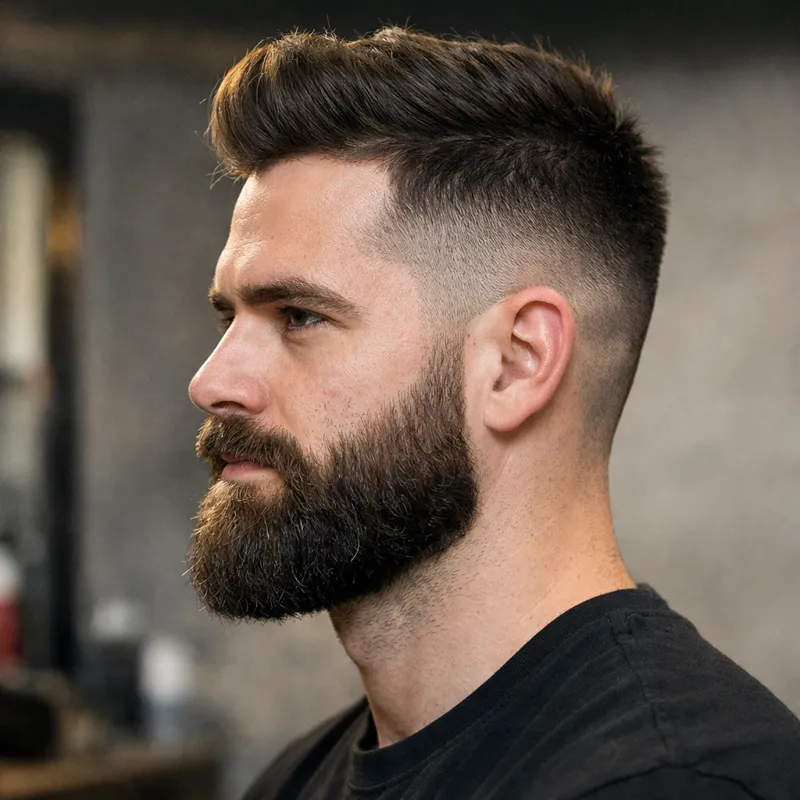
If you want the induction cut to look premium instead of “I just gave up,” aim for one of these combinations:
- Induction cut + stubble: rugged and low effort, still structured.
- Induction cut + short boxed beard: strongest contrast and face framing.
- Induction cut + clean shave: minimalist, but requires confidence and good scalp care.
Induction cut with a receding hairline or thinning hair
A short uniform cut can be one of the best moves for recession and thinning because it reduces the contrast between “thicker” and “thinner” areas. But the wrong length or edging can put a spotlight on exactly what you’re trying to downplay.
The core principle: reduce contrast, avoid fake edges
Do this
- Keep it uniform and short: #0.5–#1 often looks deliberate and balanced.
- Keep the hairline natural: a soft, honest edge reads confident.
- Use a taper (optional): a small taper at sideburns/neck can refine the look without “trying too hard.”
Avoid this
- Hard line‑ups that rebuild the front: they can look artificial and draw attention to recession.
- Longer top + short sides (with thin top): it creates contrast and makes the thin area the focal point.
- Going too close when scalp texture is an issue: if bumps/flakes are active, the “zero” may amplify them.
If you have temple recession
Temple recession is common—and the induction cut can work extremely well because it stops the eye from comparing “front density” to “temple density.” In most cases, #1 (or #0.5 if you like it tighter) keeps the look clean without overexposing the hairline.
If you have diffuse thinning on top
You generally have two strong options:
- Shorter (#0.5–#1): reduces contrast and makes coverage differences less obvious.
- Slightly longer (#2): if you strongly dislike scalp show, #2 is often the best compromise.
Not sure whether #0.5 or #1 will flatter your hairline?
A small length change can shift the whole vibe—from “sharp minimalist” to “why does my scalp look shiny.” Get a recommendation based on your hairline shape and thinning pattern.
Maintenance: how often to retouch an induction cut
The induction cut isn’t “high maintenance” in styling—but it can be high frequency if you want it to look freshly done. The shorter you go, the faster it changes visually.
| Length | “Always fresh” schedule | Normal maintenance | What changes first |
|---|---|---|---|
| No guard (blade only) | Every 3–5 days | Every 7–10 days | Hairline shadow + sides around the ears |
| #0.5 (½ guard) | Every 5–7 days | Every 10–14 days | Overall texture starts to look “grown,” not “buzzed” |
| #1 guard | Every 7–10 days | Every 14 days | Edges and neckline lose sharpness |
| #2 guard | Every 10–14 days | Every 2–3 weeks | Top starts to feel fuller; less “induction,” more “buzz” |
What to ask your barber (copy‑and‑paste scripts)
If you want the result you’re picturing, don’t ask for a vague number. Ask for an outcome. Use one of these scripts depending on whether you want classic military uniform or a more flattering modern finish.
Classic induction cut (uniform, military vibe)
I want an induction cut: same length all over.
Please do no guard (blade only) all over — or #0.5 all over if you think that will look cleaner.
No fade. Keep the hairline natural and make sure it’s even everywhere.
Most flattering version (still induction-short, less harsh)
I want an ultra-short buzz: #0.5 or #1 all over,
with a subtle low taper at the sideburns and neckline (nothing dramatic).
Keep the front hairline natural — no aggressive line-up.
If you have a receding hairline / thinning
Keep it short and uniform so it looks intentional.
Please keep the hairline natural (no sharp rebuilt edge) and recommend #0.5 vs #1 based on what looks best for my hairline.
If you’re bringing a reference photo, pick one that matches the key variables: uniform vs tapered, and no-guard vs #0.5/#1.
How to do an induction cut at home (step‑by‑step)
An induction cut is one of the easiest haircuts to maintain at home—if you do it methodically. The goal is not speed; the goal is an even finish with a clean perimeter.
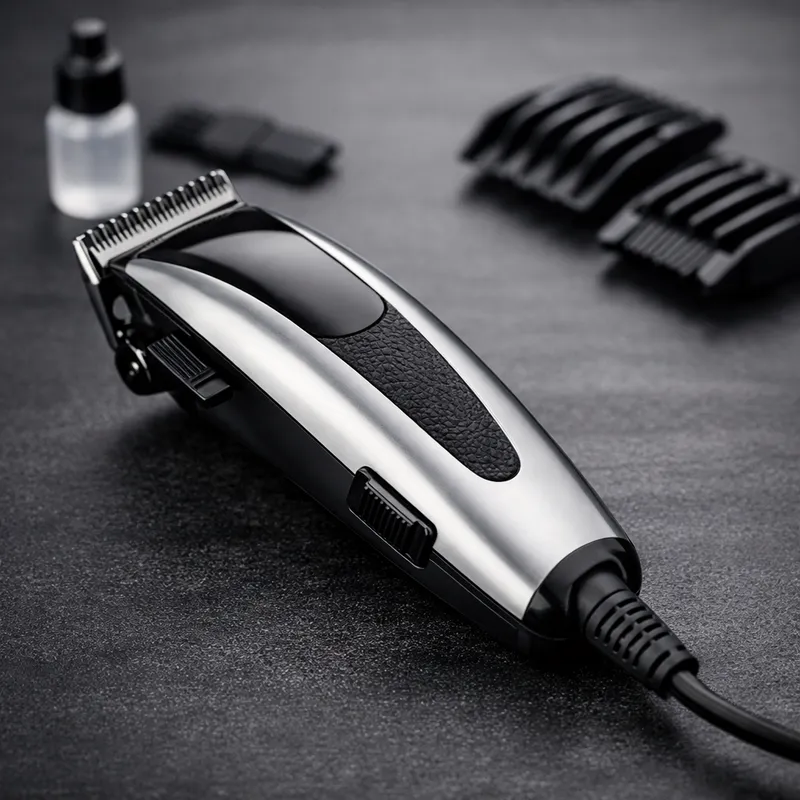
What you need
- Hair clippers (reliable motor)
- Guards: #2 (starter), plus #1 and/or #0.5 (if you want shorter)
- Two mirrors (bathroom mirror + hand mirror) for the back
- Towel or cape, and a brush/towel to clear loose hair
- Optional: a trimmer for cleaning the neckline/around the ears
Step 1: Choose a starting length (don’t guess)
If it’s your first induction cut, start with #2. Do one full pass, look at the result in good lighting, then decide if you want to go down to #1 or #0.5. This prevents the most common regret: going “too close” when you didn’t know how your scalp and hairline would look.
Step 2: Cut clean, dry hair
Wash and dry your hair fully. Wet hair can clump and make it harder to judge evenness. Dry cutting also helps you feel missed areas when you run your hand over your head.
Step 3: Sides and back first
Use slow, steady strokes against the direction of hair growth. Keep the clipper flat to your head. Around the ears, go carefully and don’t tilt the clipper sharply—most accidental “gouges” happen here.
Step 4: Top last, then cross‑check directions
Do the top front‑to‑back, then side‑to‑side. This “cross‑checking” catches the hairs that lay differently and prevents a patchy finish. With very short buzz lengths, missing small areas is obvious in sunlight.
Step 5: Clean the perimeter (what makes it look professional)
Even a perfect buzz looks unfinished if the neckline is messy. You have two clean options:
- Natural neckline: grows out more forgivingly and looks relaxed.
- Sharp neckline: looks freshest today, but needs more frequent touch‑ups.
Step 6: Final check under strong light
Use a bright light and a hand mirror to check the back and crown. Run your hand over the head: if you feel “spikes,” go over that area again from a different direction.
Scalp care for ultra‑short buzz cuts (sun, dryness, bumps)
At induction length, your scalp is part of your style. If your scalp looks dry, irritated, or sunburned, it will be noticeable. A few simple habits keep the cut looking clean instead of “rough.”
Do these three things consistently
- Moisturize: dryness shows instantly when hair is ultra‑short.
- Protect from sun: scalp sunburn is common after a first buzz. Use sunscreen when you’re outside.
- Keep tools clean: dirty blades can irritate skin and cause bumps.
If you get bumps or irritation after buzzing
- Don’t press hard. Let the clipper do the work.
- Start with #1–#2 rather than blade‑only if your scalp is sensitive.
- Avoid aggressive line-ups if you’re prone to irritation.
Best induction cut variations (when “one length” feels too harsh)
You can keep the low-maintenance DNA of an induction cut while adding small upgrades that improve the silhouette. These are the most useful variations because they stay simple but look more intentional.
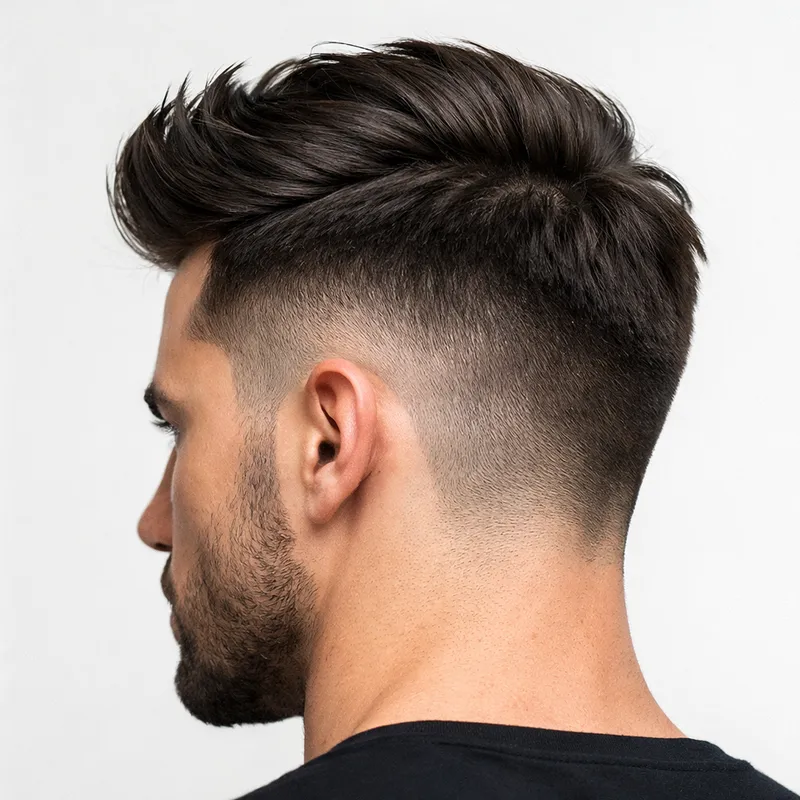
Induction cut + low taper
Same ultra‑short length on top, with a subtle taper at the sideburns and neckline. This keeps the look minimal but refines the edges and grows out better.
If you want “clean” without looking overly styled, this is usually the best upgrade.
Induction cut + low fade
Higher contrast and a sharper outline. It looks modern and crisp, but it requires more frequent maintenance to stay fresh.
Choose this if you like the barbershop-fresh look and don’t mind more touch-ups.
Induction cut + beard pairing
The easiest way to add structure and make the haircut look “designed.” Even light stubble can balance the head shape and anchor the face.
Natural hairline vs line‑up
A natural hairline is usually better for receding hairlines and thinning. A sharp line‑up can work if your hairline is strong—but it can also look artificial if it’s trying to recreate something that isn’t there.
Common mistakes to avoid
- Asking for “zero” without specifying no-guard vs #0.5: you might get the wrong length.
- Skipping the perimeter cleanup: neckline and ears make the difference.
- Going too close with an irritated scalp: sensitivity becomes the headline.
- Hard line‑ups on a receding hairline: they can draw more attention to the temples.
Want the cleanest possible result?
The fastest way to make an induction cut look premium is a clean perimeter and the right guard choice. If you want help dialing it in, reach out and we’ll recommend the best setup for your hairline and goals.

Induction cut FAQs
These answers are written to match what people actually ask right before they commit to an ultra‑short buzz cut. Clear, practical, and focused on results.
Is an induction cut the same as a buzz cut?
What clipper number is a true induction cut?
How often should I retouch an induction cut?
Does an induction cut work with a receding hairline?
Should I go shorter or longer if I’m thinning?
Can I do an induction cut at home without messing it up?
What’s the biggest mistake with induction cuts?
Final takeaway
The induction cut is simple on paper, but precision matters because the cut leaves nothing to hide behind. If you pick the right length, keep the hairline natural, and maintain the perimeter, this is one of the cleanest low‑maintenance looks a man can wear.
Note: Guard lengths can vary slightly by clipper brand and blade adjustment. If you’re unsure, start longer and step down.