
Popular Men’s Hairstyles (2026 Guide)
“Popular” is not the same as “right for you.” This page helps you choose a style that fits your hair type, face shape, and daily routine—then shows you exactly how to ask your barber for it and how to keep it sharp between appointments.
- Fast decisions: quick picks by length & maintenance level.
- Better results: haircut “language” barbers actually understand.
- Less regret: who each style suits (and who should skip it).
- Stay sharp: products + tools that match your finish and routine.

Quick list: the most popular men’s hairstyles right now
If you want a confident choice quickly, start here. These are the styles that consistently rank as “safe wins” because they’re wearable, easy to personalize, and don’t require a perfect hairline or a daily 20-minute routine.
Textured Crop, Taper + Side Part, Short Quiff, Modern Pompadour
Great balance of style + realism. Easy to adapt to work, weekends, and grow-out phases.
Buzz Cut, Crew Cut, French Crop, Caesar
Minimal daily styling. Most of the “look” comes from the cut shape and clean edges.
Ivy League, Side Part + Taper, Modern Comb Over, Clean Slick Back
Controlled silhouette, easy to tidy up, and works well with beard grooming.
Curtains (Middle Part), Two-Block, Soft Mullet, Drop Fade Variations
Still wearable—if you choose the right length and keep the sides clean.
Rule that saves you time: decide your maintenance level first, then pick a hairstyle. A cut that needs daily blow-drying will feel “bad” even if it looks amazing on someone else.
Visual picks: tap a style to jump
Choose the look that matches your goal. Each card jumps to a section with the exact barber request, the right product finish, and common mistakes to avoid.


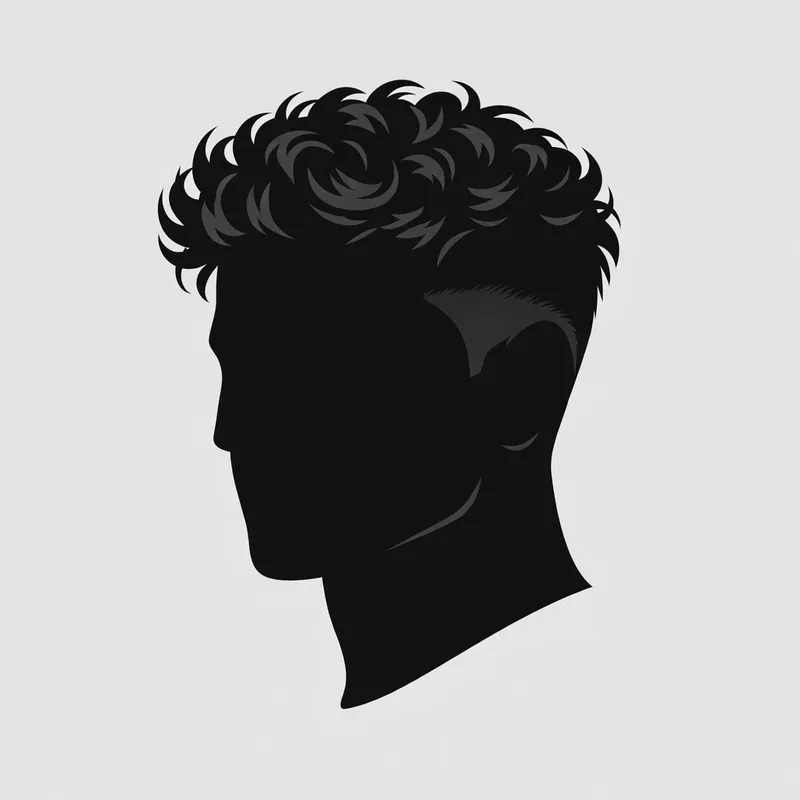
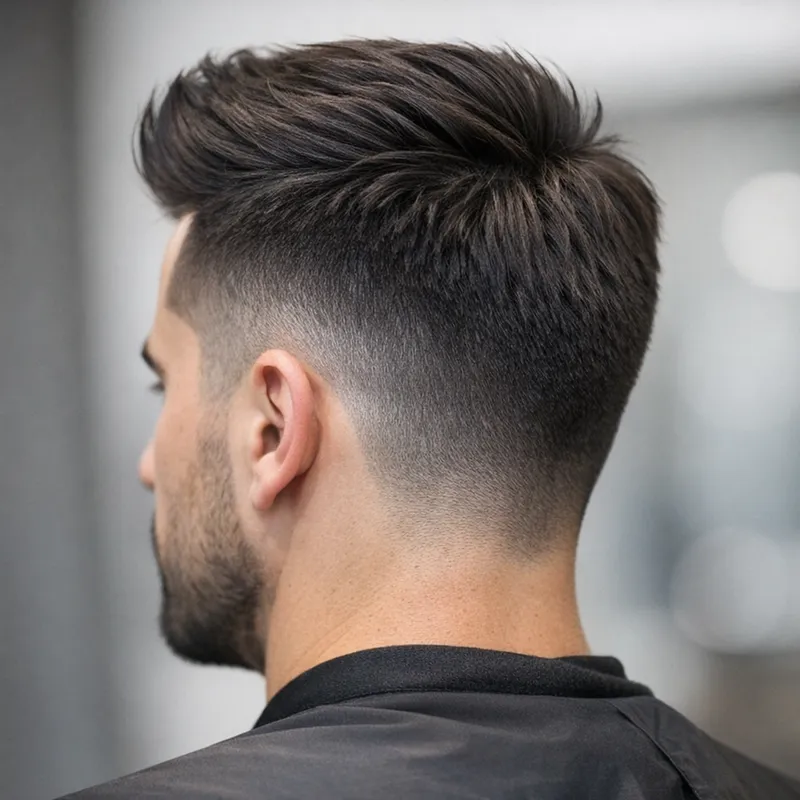
Want a guaranteed upgrade today? Choose one style from above, save 2 reference photos, and use the barber script in this page. Your haircut result improves dramatically when you communicate fade height + top length + finish.
How to choose the right hairstyle (in 60 seconds)
The fastest way to pick a hairstyle is to stop thinking in “names” and start thinking in constraints. A hairstyle becomes easy when you know what you’re willing to maintain, how your hair behaves, and what you want your haircut to do for your face.
Step 1: Choose your maintenance level (this is the real decision)
-
Low (0–3 min/day): buzz cut, crew cut, textured crop, French crop, Caesar.
Best if you want “wake up and go” with minimal product. -
Medium (3–7 min/day): taper + side part, short quiff, curtains, modern comb over, bro flow.
Best if you can blow-dry occasionally and you like a controlled look. -
High (7–15+ min/day): modern pompadour, longer slick back, longer curly definition routines, long flow with styling.
Best if you enjoy styling and want more “shape” daily.
Step 2: Choose your sides (taper vs. fade)
This single choice changes how “bold” your haircut looks and how often you’ll need cleanup.
- Taper: subtle, office-safe, grows out clean. Ideal if you hate frequent touch-ups.
- Low fade: modern but still wearable. Great “first fade” if you’re unsure.
- Mid/high fade: higher contrast, sharper outline, more attention. Needs more frequent maintenance.
- Drop fade: follows the head shape down behind the ear—adds a strong silhouette without always going higher on the sides.
Step 3: Decide what the top should do (forward / up / back / parted)
Forward (fringe/crop): best when you want a modern look with less styling effort. Also useful if you want to reduce attention to the forehead or recession.
Up (quiff/pompadour): best when you want structure, height, and a sharper face silhouette.
Back (slick/flow): best when you have enough length and want a cleaner “grown-up” vibe.
Parted (side part/curtains): best when you want balance and an easy grow-out path.
Simple self-check: if you don’t like styling your hair, don’t pick a style where the “look” depends on blow-drying. Choose a cut where the shape is baked in (crop, crew, buzz, taper + short top).
The haircut request blueprint (what to ask your barber for)
Most bad haircuts happen because the request is vague. “Short on the sides” means ten different things. Use this blueprint so your barber can deliver what you actually want—without guessing.
| What you specify | What it changes | Example (barber-ready) |
|---|---|---|
| Sides: taper or fade (low/mid/high) | Boldness + grow-out speed | “Low taper” or “Mid fade, not too high.” |
| Top length: how much you want to style | Volume + versatility | “Leave 2–3 inches on top with texture.” |
| Transition: blended vs. disconnected | Classic vs. edgy | “Soft blend, no hard disconnect.” |
| Texture: scissors/point cutting | Natural movement | “Texturize the top so it’s not bulky.” |
| Finish: matte vs. shine | Modern vs. slick | “I want a matte finish—no greasy look.” |
| Neckline: natural vs. squared | Grow-out look | “Natural neckline so it grows out clean.” |
Pro move: tell your barber your routine. Say: “I style my hair about ___ minutes a day.” That single line helps them choose the right texture, length, and balance.
Popular short hairstyles for men
Short styles are popular because they make you look sharper with less daily work. The key is choosing a short cut that fits your hair density and getting the sides cleaned up properly (taper or fade). Below are the short haircuts that consistently perform best in real life—not just in photos.
1) Textured Crop
The textured crop is popular because it looks intentional even when you don’t style it perfectly. It’s short enough to be easy, but textured enough to feel modern. The biggest advantage: you can adjust the personality by changing only one thing—your sides. A taper makes it subtle and professional; a fade makes it sharper and more “current.”
Ask your barber: “Textured crop on top—keep it choppy, not bulky. Low taper or low fade on the sides. Natural neckline for a clean grow-out.”
Style it (simple): towel dry → texture spray (optional) → small amount of matte clay/paste → separate with fingers.
Skip it if: you hate any product at all and your hair sticks up aggressively—ask for a tighter, more controlled crop instead.
2) French Crop (with a forward fringe)
The French crop is a structured version of the crop family: the top stays short and controlled, while the fringe is pushed forward. It’s popular because it frames the face, looks clean in photos, and can reduce attention to the forehead. It also survives heat, wind, and hats better than styles that need volume.
Ask your barber: “French crop with a short fringe. Keep the sides tight but blended—no harsh disconnect. Add texture so the top doesn’t look flat.”
Style it: matte paste or clay → push forward lightly → pinch texture at the fringe.
3) Caesar Cut
The Caesar is a timeless short cut with a defined forward fringe. Modern versions keep the silhouette tight and add texture for a natural finish. It’s popular because it works in professional settings and doesn’t require precise styling. If you want a short haircut that looks deliberate without trying too hard, this is a reliable choice.
Ask your barber: “Short Caesar with a neat fringe, lightly textured on top. Low taper or low fade on the sides. Keep it clean around the ears.”
Style it: pea-sized matte paste → smooth forward → lightly break it up with fingertips.
4) Crew Cut
The crew cut is popular because it’s forgiving and always looks “put together.” You can wear it textured, brushed forward, or slightly to the side. If you want one haircut that works for the office, the gym, and weekends without a complex routine, this is it. Add a taper for a clean, classic look, or a fade for a sharper edge.
Ask your barber: “Classic crew cut—tight but blended sides. Leave enough on top to style slightly messy or side-swept. Natural neckline.”
Style it: optional matte clay for texture. Most days, you can just brush it and go.
5) Ivy League (long crew cut)
The Ivy League is popular because it gives you options: neat side part for work, textured and relaxed for weekends. It’s the “clean upgrade” for guys who want something smarter than a basic short cut but still easy to maintain. If you wear glasses, this cut also tends to frame the face nicely without looking heavy.
Ask your barber: “Ivy League with a low taper. Keep the top long enough for a natural side part. Light texture so it doesn’t look stiff.”
Style it: light styling cream or low-shine pomade → comb to the side → soften with fingers.
6) Buzz Cut (classic or with taper/fade)
The buzz cut remains popular because it’s honest and practical. It removes daily decision-making, always looks clean, and pairs well with strong beard grooming. The modern upgrade is adding a low taper or fade—this gives your head shape more definition and prevents the cut from looking “flat.”
Ask your barber: “Buzz cut with a clean line-up and a low taper/fade for shape. Keep the edges crisp.”
Maintain it: frequent cleanups keep it looking sharp. A good trimmer makes a big difference for edges.
Tip: If you’re unsure, start with a longer guard. You can always go shorter.
7) High and Tight
This cut is popular because it creates a strong, masculine outline with almost zero styling effort. The sides are very tight and the top is short but not bald. It’s ideal if you want a sharp look that doesn’t feel trendy—just clean.
Ask your barber: “High and tight—tight sides, clean around ears, blended into a short top. Keep it crisp, no bulky transitions.”
Style it: optional matte paste for light texture. Most guys need none.
8) Short Quiff
The short quiff is popular because it adds height without requiring long hair. That height can make your face look sharper—especially if you have a rounder face shape. Modern quiffs look textured and flexible, not stiff. If you want a style that looks “done” without looking over-styled, this is a strong choice.
Ask your barber: “Short quiff—leave length at the front for lift, taper or fade the sides, add texture on top so it moves.”
Style it: pre-styler (texture spray) → blow-dry up/back → finish with matte paste (small amount).
9) Taper + Side Part
This is one of the most popular “adult” hairstyles because it looks clean immediately and grows out well. The taper keeps the sides professional, while the side part gives structure. If you want a haircut that works in every setting—work, dates, events—this is hard to beat.
Ask your barber: “Low taper at temples and neckline, keep the top long enough for a natural side part. Soft blend, not too tight.”
Style it: light pomade or styling cream → comb a soft part → finish with fingers for a natural look.
10) Skin Fade + Textured Top (modern classic)
This is popular because it’s visually clean and sharp: the fade creates contrast and the textured top keeps it modern. It’s also very adaptable. You can keep the top short for low effort or a bit longer to style into a mini-quiff. The only downside is maintenance—skin fades look best with regular cleanups.
Ask your barber: “Skin fade (low or mid), keep the top textured. Don’t take the fade too high unless I specifically ask.”
Style it: matte clay/paste → quick finger styling for separation.
If you’re torn between two short styles: choose the one with the easiest grow-out. In most cases, that’s a taper or low fade. You can always go tighter next time. Going too tight too soon is the most common regret.
Popular medium hairstyles for men
Medium length is the sweet spot: it’s long enough to move, short enough to control. You can style it clean for work and relaxed for weekends. The most popular medium styles share two traits: they’re layered (so they don’t feel heavy) and the sides are intentionally controlled.
11) Modern Pompadour (texture over shine)
The modern pompadour stays popular because it delivers a strong silhouette. It adds height, it looks intentional, and it pairs well with facial hair. The modern update is avoiding a stiff, shiny “helmet” finish. A softer matte or low-shine finish looks more natural and more current.
Ask your barber: “Modern pompadour: keep length on top for blow-drying volume, taper or fade the sides, and add texture so it moves.”
Style it: pre-styler → blow-dry up/back → finish with matte clay or low-shine pomade (small amount).
12) Modern Slick Back (clean, not greasy)
The slick back is popular because it signals confidence and maturity. The key to making it modern is keeping it lightweight. Heavy gel can make it look wet and dated. A styling cream or low-shine pomade gives control without making your hair look like plastic.
Ask your barber: “Keep the top long enough to slick back, blend the sides (no harsh disconnect), and keep the outline clean.”
Style it: towel dry → styling cream or light pomade → comb back → soften with fingers.
13) Curtains / Middle Part
Curtains are popular because they look effortless and grow out well. This style is a strong choice if you want a softer look that still feels intentional. The main requirement is enough length in front and a cut that’s layered properly—otherwise it becomes heavy and collapses.
Ask your barber: “Medium length with layers and a center part option. Clean taper, not too tight. Keep it light around the sides.”
Style it: lightweight cream or mousse → blow-dry with a middle part → let it fall naturally.
14) Modern Comb Over / Side Sweep
The comb over is popular when it’s done the modern way: soft, textured, and not overly precise. It’s also useful if you want a professional look or you want to minimize the appearance of thinning—matte texture helps create the illusion of density.
Ask your barber: “Modern comb over with texture. Keep the part natural (no hard part unless I ask). Taper or low fade on the sides.”
Style it: blow-dry to the side → matte paste → keep it flexible, not frozen.
15) Two-Block (layered, versatile)
The two-block is popular because it gives a modern shape without forcing a “hard” undercut. It’s flexible: you can wear it parted, pushed back, or messy. The secret is keeping the lower sides tidy while leaving enough length up top and through the upper sides to maintain movement.
Ask your barber: “Two-block shape: keep length on top and upper sides, tidy the lower sides and neckline, and add layers for movement.”
Style it: light cream → quick blow-dry → finish with fingers.
16) Textured Fringe (modern forward style)
A textured fringe is popular because it feels current and photographs well. It gives volume without needing a tall pompadour, and it’s easy to tailor: shorter fringe is cleaner; longer fringe is more fashion-forward. This style also benefits from a taper or fade to keep the outline sharp.
Ask your barber: “Keep the top longer for a textured fringe. Taper or fade the sides. Add layers so it doesn’t look heavy.”
Style it: texture spray → blow-dry forward for lift → matte paste to separate strands.
17) Bro Flow (effortless medium length)
Bro flow is popular because it looks relaxed while still masculine. It’s one of the best “natural” looks—if your barber shapes it correctly. The mistake is letting it grow without structure. Flow needs layers and bulk removal so it moves instead of ballooning at the sides.
Ask your barber: “I’m growing a flow. Keep length but add long layers and remove bulk. Clean up the ends so it moves.”
Style it: light cream or leave-in conditioner → push back with fingers → optional texture spray.
18) Medium Shag (layered texture)
The medium shag is popular because it turns natural texture into the main feature. It’s intentionally imperfect—meaning it looks good even when it’s not styled precisely. If you have wavy or curly hair and you want a style that feels current without looking overly groomed, this is a strong pick.
Ask your barber: “Medium shag with layers and texture. Keep it light—remove bulk so it doesn’t puff out.”
Style it: curl cream or texture spray → scrunch → air dry or diffuse.
19) Soft Mullet (wearable version)
The soft mullet is popular because it adds personality without going extreme. The modern version is controlled: clean sides, textured top, and a subtle length in back. It’s a good option if you want something trend-forward but still wearable in everyday life.
Ask your barber: “Soft mullet: keep the back controlled, taper or fade the sides, texture the top. Make it wearable, not dramatic.”
Style it: texture spray + matte paste. Keep it natural—avoid crunchy product.
20) Curly Top + Taper (the modern curly staple)
For curly hair, this is one of the most popular real-life styles because it makes curls the feature while keeping the outline clean. The taper (or low fade) prevents the sides from looking wide and keeps your haircut looking intentional as it grows.
Ask your barber: “Keep curl length on top, taper the sides and neckline, shape the silhouette so curls fall naturally.”
Style it: leave-in conditioner → curl cream → scrunch → diffuse for definition (or air dry for looser texture).
Medium-length success rule: if your hair feels heavy or “puffy,” you don’t need less hair—you need better layering and bulk removal. Ask for texture and layers, not just “shorter.”
Popular long hairstyles for men
Long hair is popular because it signals confidence and individuality. But long hair only looks “effortless” when it’s shaped and healthy. The key is layers, clean ends, and consistent maintenance so it doesn’t become bulky or uneven.
21) Long Layered Flow
Long flow is popular because it looks natural while still masculine. The biggest difference between “great long hair” and “just grown-out hair” is the cut. Long hair needs layers to move and a shape that avoids the “triangle” effect where the sides get too wide.
Ask your barber/stylist: “Keep the length, add long layers for movement, remove bulk at the sides, and clean up the ends.”
Maintain it: conditioning matters. Healthy long hair looks expensive even without heavy styling.
22) Long Curly Layers (defined, not puffy)
Long curly hair is popular when it’s shaped correctly. Without layers, curls stack and expand outward, creating unwanted width. With the right layering, you get controlled volume and a strong silhouette.
Ask your barber/stylist: “Long curls with layers to prevent a triangle shape. Shape the silhouette and remove bulk where needed.”
Style it: leave-in conditioner → curl cream → optional gel for hold → diffuse for definition.
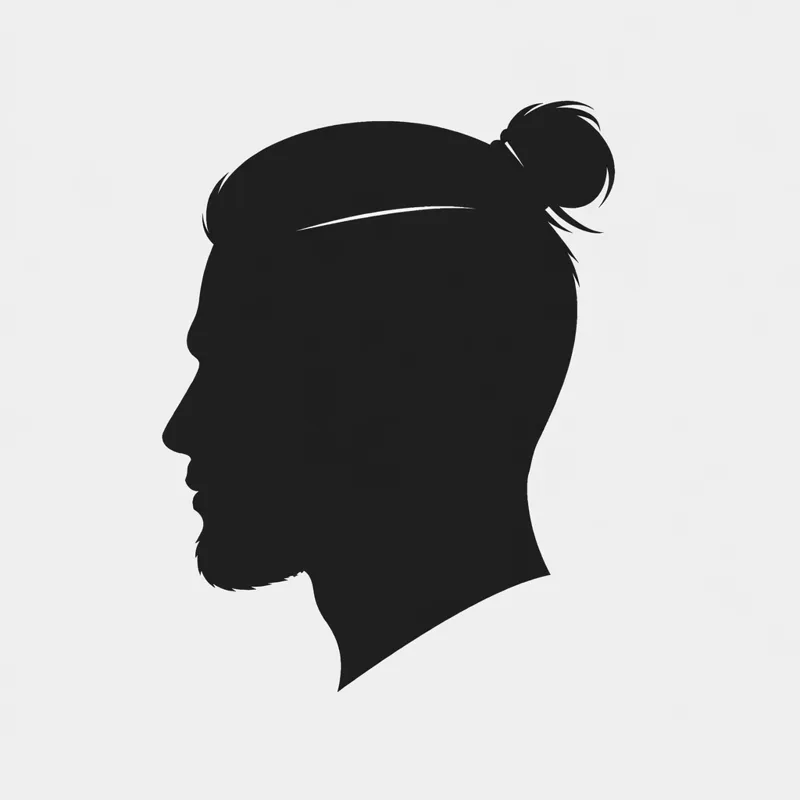
23) Man Bun / Top Knot (clean version)
The man bun and top knot are popular because they give you control: you can wear hair down for style and tie it up for convenience. The “clean version” is about two things: keeping the outline tidy (especially neckline and around the ears) and avoiding constant tight tension that stresses the hairline.
Ask your barber/stylist: “Keep length for a bun, shape the layers, and keep the neckline and around the ears clean so it looks intentional.”
Tip: Tie it gently. Rotate placement. Your hairline will thank you.
24) Braids / Cornrows (protective styles)
Braids and cornrows are popular because they’re practical and high-impact. They reduce daily styling and protect hair—especially for active routines. The key is clean parting, consistent tension (not too tight), and a maintenance plan for the scalp.
Ask your stylist: “Clean parts, even braid size, and a neat hairline finish. Help me choose a pattern that fits my head shape and lifestyle.”
Maintain it: keep the scalp clean, moisturize lightly, protect at night.
25) Locs (short to long)
Locs remain popular because they’re distinctive and lower-effort day-to-day once established. The real decision is sizing and parting: small locs offer more movement, larger locs offer a bolder look and potentially less time to maintain.
Ask your specialist: “Help me choose loc size and parting based on my density and how often I want maintenance.”
Maintain it: keep the scalp healthy, avoid heavy product buildup, protect at night.
Long hair reality check: long hair is not “no maintenance.” It’s just different maintenance. If your hair feels dry, frizzy, or shapeless, the fix is usually better conditioning + better layers, not “more product.”
Pick a hairstyle by hair type (so it actually works)
Hair type decides how your haircut behaves on day 7—not just day 1. Use these recommendations to avoid the most common mismatch: choosing a style that looks amazing on someone else’s hair but fights yours every morning.
Straight hair
Best picks: textured crop, side part + taper, quiff, pompadour, curtains, modern comb over.
Make it easier: straight hair can fall flat. A texture spray or mousse before blow-drying adds volume without heaviness.
Wavy hair
Best picks: bro flow, curtains, textured crop, medium shag, soft mullet, curly-texture styles.
Make it easier: ask for layers and bulk removal. Wavy hair gets wide at the sides if it’s cut too blunt.
Curly hair
Best picks: curly top + taper, curly fringe, burst-fade-adjacent silhouettes, long curly layers.
Make it easier: curls need moisture to look defined. Start with a leave-in conditioner, then add curl cream.
Coily / kinky hair
Best picks: tapered afro, twists, braids, locs, shaped high-top variants.
Make it easier: moisture + scalp care are the foundation. Keep lineups and tapers fresh for a sharper outline.
Thinning hair
Best picks: textured crop, French crop, Caesar, crew cut, buzz cut, subtle side part + taper.
Make it easier: matte products create the illusion of density. Avoid heavy shine that separates strands and reveals scalp. Also: shorter sides + controlled texture on top usually looks cleaner than trying to “hide it” with long, thin hair.
Pick a hairstyle by face shape (fast guide)
Face shape guidance is about balance, not rules. Use it to avoid obvious mistakes (like adding too much height on an already long face), then let your hair type and maintenance level make the final decision.
Oval
Good news: most styles work.
Try: crop, quiff, side part, curtains, flow.
Round
Goal: add height and tighten the sides.
Try: quiff, pompadour, textured crop + fade, side part + taper.
Square
Goal: keep it clean; add texture to soften angles.
Try: crop, crew, side part, short quiff.
Oblong / Rectangle
Goal: avoid too much height; keep balance.
Try: crop, curtains, Caesar, medium flow.
Heart
Goal: reduce forehead emphasis with softness.
Try: curtains, textured fringe, crop, soft mullet.
Diamond
Goal: moderate volume and texture work well.
Try: quiff, curtains, textured crop, side sweep.
Triangle / Pear
Goal: add volume on top and avoid extra width at the sides.
Try: quiff, pompadour, textured top + taper.
One line that fixes most face-shape issues: choose the sides first. Tight sides (taper/low fade) create definition. Wider sides soften. Your barber can balance your face more effectively when you decide that.
Products & tools that keep your haircut looking fresh
A great haircut can look average with the wrong product—and a “decent” haircut can look premium with the right finish. Use this section to match hold and finish to your hairstyle and routine.
Fast product picker (by finish)
Matte (modern, textured): clays & pastes for crops, fringes, quiffs, and messy styles.
Low shine (clean, controlled): light pomades & creams for side parts and slick backs.
Volume helpers: mousse or texture spray before blow-drying, especially for fine/straight hair.
Useful guides: Sea Salt Spray · Hair Pomade · Mousse for Men
Tools that pay off (especially between cuts)
Trimmer: edges, neckline, beard lines—makes your haircut look fresher longer.
Clippers: buzz cuts, bulk reduction, quick cleanups.
Comb + blow-dryer: fastest way to level up side parts, quiffs, and slick styles.
Browse: Trimmers · Hair Clippers · Electric Shavers
Featured essentials (visual)
These are the most common “starter kit” items for popular men’s hairstyles: one product for your finish + one tool for clean edges.


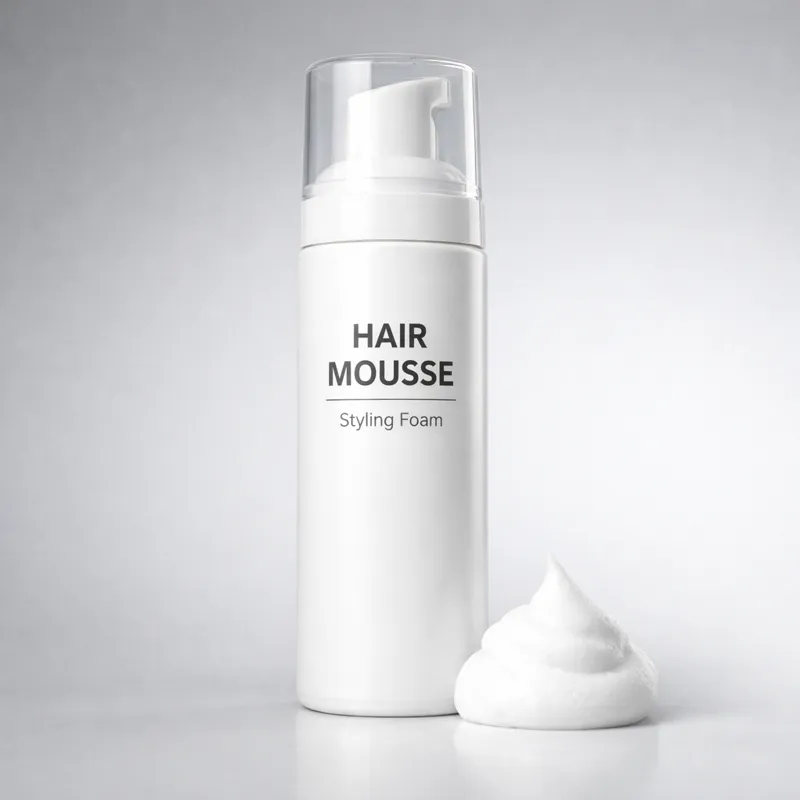

Minimal kit recommendation: if you want your haircut to look fresh longer, start with a trimmer and one product: matte paste/clay for textured looks or light pomade/cream for clean looks.
Copy/paste barber scripts (so you don’t leave disappointed)
Save time. Pick the script that matches your goal. Then add one detail: how many minutes you style your hair per day. That single number helps the barber choose realistic length, texture, and balance.
Script A: “Clean and professional”
“Low taper at the temples and neckline. Keep the top long enough to part and style naturally. Soft blend, natural neckline, and light texture. I style my hair about ___ minutes a day.”
Script B: “Modern but low maintenance”
“Textured crop on top. Low or mid taper/fade on the sides. Make it easy to style with a matte finish and a natural neckline. I want something that still looks good when I don’t style it perfectly.”
Script C: “More volume and shape”
“Quiff/pompadour shape. Keep length in the front for lift, taper or fade the sides, and add texture so it moves. I style my hair about ___ minutes a day, so keep it realistic.”
Script D: “I’m growing it out”
“I’m growing my hair longer—please shape it with layers, remove bulk, and clean up the ends. Keep movement, not puffiness, and maintain a clean outline around the neck.”
Script E: “I want a safer fade” (no regrets)
“Let’s start with a low fade (or low taper) so it’s wearable. Keep the fade below the temples, not too high. Leave enough length on top to style matte and textured.”
Best practice: bring 2–3 reference photos. One should match your hair type (straight/wavy/curly/coily). Photos + a clear script beat haircut names every time.

FAQs about popular men’s hairstyles
These are the questions that matter when you’re choosing a haircut you can actually maintain.
What’s the difference between a haircut and a hairstyle?
A haircut is how your hair is cut (length, layers, taper/fade, blend, neckline). A hairstyle is how you wear it day to day (textured, parted, slicked back, messy, forward fringe). Most people use the terms interchangeably, but the best results come from choosing both: the cut shape and a realistic routine.
How often should men get a haircut?
For skin fades and sharp outlines, most guys look best with a cleanup every 2–4 weeks. For tapers and longer styles, 4–8 weeks is common. If your cut relies on tight sides, book sooner. If you’re growing it out, ask for maintenance trims to keep shape without losing length.
Is a taper or a fade better for a professional look?
A taper is usually the safest professional choice because it’s subtle and grows out clean. A low fade can also be professional if it’s blended well and the top is kept tidy. High fades are more attention-grabbing and typically require more frequent maintenance.
What’s the easiest popular hairstyle to maintain?
The easiest options are usually buzz cuts, crew cuts, and textured crops. They don’t rely on perfect styling. Most days, you can use minimal product (or none) and still look sharp.
How do I tell my barber what I want?
Use three things: (1) 2–3 reference photos, (2) your sides choice (taper or fade + low/mid/high), and (3) your daily styling time. Then say whether you want a matte or shiny finish. If you do those four things, your barber won’t have to guess.
Which styles work best for thinning hair?
Shorter, textured styles usually look best: textured crop, French crop, Caesar, crew cut, or buzz cut. Matte products help create the illusion of density. Avoid heavy shine that separates strands and reveals scalp.
Should I use gel, pomade, or clay?
Choose based on finish and control. Clay/paste is best for modern textured looks (matte, separated). Pomade/cream is best for cleaner looks (controlled, low shine). Gel is strong hold, but it can look wet and stiff—use lightly or choose a modern formula if you want shine.
How do I avoid a “bad grow-out” phase?
Choose a taper or low fade, ask for a natural neckline, and get light trims every 4–6 weeks to keep shape. Most grow-out problems come from bulk at the sides—layers and bulk removal solve it without cutting everything short again.
Ready to upgrade your look? Pick one style from this page, save your reference photos, and take a barber script with you. The result is almost always better—and it removes the stress of explaining what you want.