
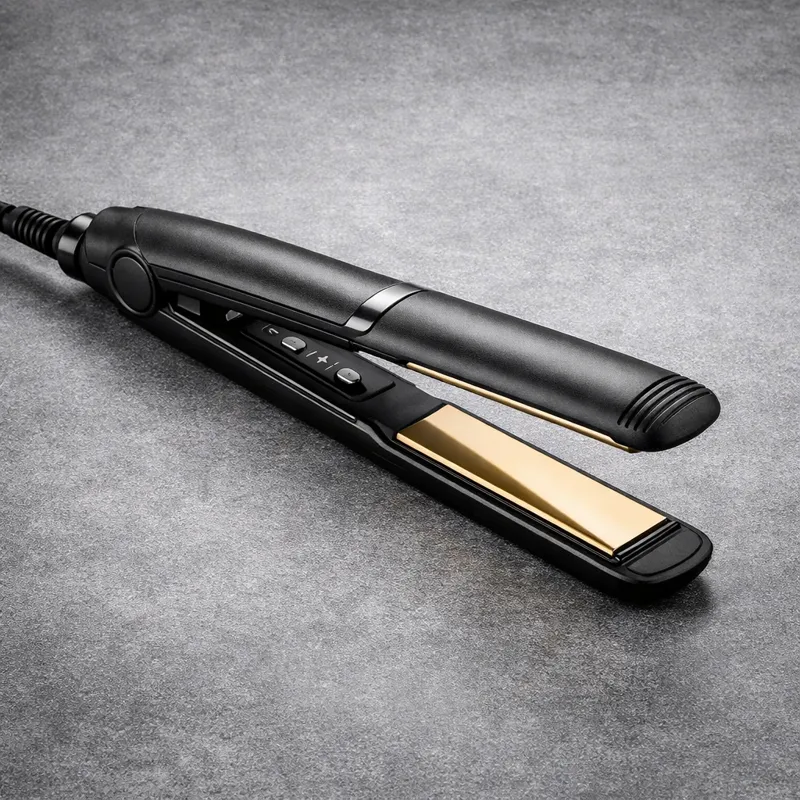
You want smoother, shinier hair and you don’t want to destroy it getting there. A good hair straightener can make that easy; the wrong one can burn, break and dry your hair in months. Let’s make sure you land on the right side.
In this guide I’ll walk you through how hair straighteners actually work, the main types on the market, what features matter and which ones are mostly marketing. By the end you’ll know exactly what to look for for your hair type, budget and styling habits.
Key idea: the “best” hair straightener is the one that matches your hair type, temperature needs and how often you style. One universal model for everyone simply does not exist.
How Hair Straighteners Work (and Why That Matters)
A hair straightener uses heat and pressure to temporarily break hydrogen bonds inside the hair shaft. When you clamp the hair between hot plates and glide down, the hair cools in a new, straighter shape. Add humidity, and those bonds shift again – that’s why hair can re-wave in damp weather.
Understanding this helps you choose smarter settings and tools:
- Higher heat = faster reshaping but more risk of damage.
- More passes = more cumulative heat exposure.
- Plate material and temperature control influence how evenly that heat is delivered.
Main Types of Hair Straighteners
When you search for the best hair straightener, you’re really choosing between a few core technologies and shapes. Each one has pros, cons and ideal use cases.
By Plate Material
Ceramic Straighteners
Ceramic plates are the default for most people, and for good reason. They heat evenly and glide smoothly when well made.
- Best for: fine to medium hair, light waves, everyday styling.
- Pros: even heat, relatively gentle, budget to premium options.
- Cons: cheaper models may use ceramic coating over metal; when that wears, you get uneven heat and more damage.
Titanium Straighteners
Titanium is a metal that heats up quickly and maintains a very stable temperature, even when you move fast through thick sections.
- Best for: thick, coarse, very curly or coily hair; professional or frequent use.
- Pros: fast heat-up, powerful and consistent heat, durable plates.
- Cons: easier to overdo it on fine or damaged hair; usually more expensive.
Tourmaline and “Ionic” Straighteners
Tourmaline is a mineral that can be added to ceramic or titanium. Many brands combine it with “ionic technology” claims.
- Best for: frizzy, dry, color-treated hair that needs extra smoothness.
- Pros: can help reduce static and frizz, giving a shinier finish.
- Cons: the benefit is subtle; don’t pay a huge premium for the word “tourmaline” alone.
By Shape and Construction
Classic Flat Irons
These are your standard straighteners: two flat plates with a hinge.
- Best for: straightening, simple curls and waves.
- Look for: floating plates (slightly flexible to adjust to hair), ergonomic handle, responsive temperature control.
Rounded-Edge Straighteners
Some straighteners have slightly rounded plate edges and a curved outer body. That detail makes curling and waving much easier.
- Best for: people who want one tool for straight and curled styles.
- Pros: more versatile; less likely to leave sharp kinks when you bend the hair.
- Cons: slightly less surface area on the plates compared with completely flat, wide models.
Wide Plate Straighteners
Wide plates (around 1.5–2 inches / 38–50 mm) cover more hair in one pass.
- Best for: long, thick hair; people who want to style quickly.
- Pros: faster results on big sections, helpful for very long hair.
- Cons: less precise around the roots, fringe and short layers.
Mini and Travel Straighteners
These are slim, smaller models designed for short hair, fringes or travel.
- Best for: short styles, touch-ups, travel, men’s styles.
- Pros: lightweight, easy to maneuver, good for detailed work.
- Cons: slower on long hair; often fewer features.
Brush Straighteners and Hot Combs
Brush straighteners look like a paddle brush with heated teeth, while hot combs look like a fine-tooth comb with heat.
- Best for: reducing frizz, loosening waves, maintaining natural texture rather than pin-straight.
- Pros: more natural finish, easier for beginners, less risk of clamp marks.
- Cons: usually cannot achieve ultra-sleek catwalk straightness, especially on very curly hair.
How to Match a Straightener to Your Hair Type
Choosing the best hair straightener starts with one simple question: what does your hair actually need? Use these practical guidelines.
Fine or Fragile Hair
- Plate material: ceramic or tourmaline-ceramic.
- Plate size: standard 1 inch (25 mm) or narrower.
- Temperature range: 120–180 °C (250–355 °F), with precise control.
- Features that help: low-heat settings in small increments, fast recovery so you don’t need to go over sections repeatedly.
Keep passes slow and controlled with plenty of heat protectant. Your goal is to straighten in one or two passes at moderate heat, not “blast” the hair straight in seconds.
Medium, Wavy Hair
- Plate material: ceramic or tourmaline.
- Plate size: 1–1.25 inch (25–32 mm).
- Temperature range: 150–200 °C (300–390 °F).
- Features that help: rounded edges if you like to curl with the straightener, adjustable heat for different sections.
This hair type is usually flexible. You rarely need the highest settings; focus on a consistent temperature and good sectioning.
Thick, Coarse or Very Curly Hair
- Plate material: titanium or titanium-tourmaline.
- Plate size: 1–1.5 inch (25–38 mm) or wide plate if hair is very long.
- Temperature range: 180–230 °C (355–450 °F), used carefully.
- Features that help: fast heat-up, high maximum temperature, strong clamp tension, long plates.
Here the balance is power versus protection. Start lower than you think, test one section and increase only if you truly need it. Thicker hair often needs higher heat, but it also hides damage longer, so be honest with how your ends look over time.
Color-Treated or Chemically Processed Hair
- Plate material: high-quality ceramic or tourmaline.
- Temperature range: stay on the lower end of what works for your texture (usually below 190 °C / 375 °F).
- Must-have: good heat protectant and fewer heat days per week.
Bleach, relaxers and perms already weaken the hair structure. A gentle, well-controlled straightener plus strict heat limits is non‑negotiable.
Key Features to Look For
Not all features are created equal. Some protect your hair or make daily styling easier; others are mostly marketing copy printed on the box.
Temperature Control
- Adjustable settings: avoid straighteners with only one fixed temperature. You want a range that at least runs from 140–220 °C (285–430 °F).
- Digital vs dial: digital controls give you exact numbers, which is better when you experiment and find your “sweet spot”.
- Heat recovery: higher-end models sense a drop in heat and recover quickly so every pass is consistent.
Plate Size and Shape
- 1″ (25 mm): most versatile; good for straightening, waves and curls on short to medium hair.
- 1.25–1.5″ (32–38 mm): better for long, thick hair if you mostly straighten.
- Mini plates: good for fringes, edges and travel.
- Rounded edges: useful if you curl with your iron often.
Plate Construction and Alignment
- Floating plates: these move slightly to stay flat on the hair even if you twist or curl, reducing snagging and uneven pressure.
- Bevelled edges: softer lines that reduce sharp creases when you bend the hair.
- Gap-free alignment: plates should meet evenly along the full length when closed.
Cord, Weight and Ergonomics
- Swivel cord: stops the cord twisting while you move.
- Cord length: around 2.5–3 m is comfortable for most bathrooms.
- Weight: lighter tools reduce wrist fatigue if you have a lot of hair or style daily.
Safety Features
- Auto shut-off: most modern tools power down after 30–60 minutes. Useful peace of mind.
- Locking mechanism: keeps plates closed for storage and protects them.
- Dual voltage: if you travel between regions, look for 110–240 V compatibility.
Straightener Features That Are Mostly Marketing
Some terms sound technical but don’t automatically mean a better tool. Use them as tie-breakers, not main criteria.
- “Nano” technology: usually just means smaller particles in coatings. Real-world difference is minor compared with plate quality and temperature control.
- Extremely high maximum temperatures: anything above 230 °C (450 °F) is unnecessary for home use and increases risk of damage.
- LED light shows: pretty, but don’t confuse them with actual performance improvements.
How to Use a Hair Straightener Without Ruining Your Hair
The best hair straightener will still cause damage if you use it wrong. A simple routine protects your hair and usually gives a better finish too.
1. Prepare Your Hair Properly
- Start with clean hair. Oils and product buildup can cook on the hair surface and reduce slip.
- Dry completely. Never use a standard straightener on wet hair unless it’s explicitly designed for that. Damp hair + high heat = bubbling and breakage.
- Apply heat protectant. Spray or cream, mid‑lengths to ends. Comb through for even coverage.
2. Section for Control
- Divide hair horizontally: bottom, middle, top layers.
- Clip away what you’re not working on.
- Take sections about as wide as the plates and not too thick; if the section is too thick, the inside never straightens properly.
3. Set the Right Temperature
- Start about 10–20 °C lower than you think you need.
- Test one section. If you need more than two passes, increase slightly.
- Once you find the lowest temperature that works in one or two passes, stick to it.
4. Technique: Slow, Smooth Passes
- Clamp near the roots (not touching the scalp) and glide down in one fluid motion.
- Don’t stop in the middle of a section; that’s how you get dents.
- Comb or brush each section just before straightening for a smoother result.
- Avoid going over the same strand more than twice.
5. Finish and Protect
- Let hair cool fully before tucking behind ears or adding accessories.
- Use a tiny amount of serum or light oil on the ends if needed.
- Limit full straightening sessions to 2–3 times per week if possible.
Comparison: Which Straightener Style Is Best for You?
| Type | Best for | Main advantage | Main risk/limit |
|---|---|---|---|
| Ceramic flat iron | Fine–medium, wavy hair | Even, gentle heat | Cheap coatings can wear and create hotspots |
| Titanium flat iron | Thick, coarse, very curly hair | Strong, stable heat for fast results | Can easily over‑heat fragile hair |
| Tourmaline/ionic | Frizzy or dry hair | Slightly smoother, shinier finish | Benefit is subtle; not a miracle cure |
| Wide plate | Long, thick hair | Covers more hair per pass | Less precise at roots and short layers |
| Mini/travel | Short styles, fringes, travel | High control in small areas | Slow on long or very thick hair |
| Brush straightener | Mild waves, frizz control | Natural finish, easy to use | Won’t give ultra‑sleek, glassy straight hair |
Signs Your Current Straightener Is Damaging Your Hair
Sometimes the real question isn’t “what should I buy?” but “should I replace what I’m using now?”. Watch for these signals.
- Smell of burning hair even at lower temperatures.
- Visible steam or smoke when hair isn’t freshly washed or wet.
- Hair feels rough and squeaky instead of smooth after straightening.
- Ends breaking off faster than they can grow out.
- Snagging or pulling as you glide the plates through the hair.
- Plates look scratched, chipped or uneven.
If several of these sound familiar, it’s time to review your technique, your heat settings – and probably your tool.
Care and Maintenance of Your Straightener
A good straightener can last for years if you look after it. A neglected one can start burning your hair long before it dies completely.
- Clean plates regularly. When the iron is unplugged and cool, wipe plates with a slightly damp cloth to remove product buildup.
- Avoid harsh chemicals. Alcohol-heavy cleaners can damage coatings over time.
- Store safely. Let it cool on a heatproof surface, then close and lock if your model allows. Don’t wrap the hot plates in fabric.
- Protect the cord. Avoid sharp bends or wrapping it too tightly around the tool.
- Watch for damage. If plates crack or coating peels, retire the tool; exposed metal can create hotspots.
Quick Checklist: How to Choose the Best Hair Straightener
When you’re in front of a shelf or scrolling an online shop, use this simple checklist to narrow things down in minutes.
- 1. Hair type: fine, medium, thick, curly, coily, color-treated?
- 2. Frequency: daily, a few times a week, occasional?
- 3. Main goal: ultra‑sleek, frizz control, or versatile styling (straight + curls)?
- 4. Plate material: ceramic for most, titanium for very thick/coarse, tourmaline if frizz is your main enemy.
- 5. Plate width: 1″ for versatility, wider for long/thick hair, narrow/mini for short styles and detail work.
- 6. Temperature range: can you set it low enough for your hair and high enough for your most stubborn sections?
- 7. Build quality: smooth, aligned plates, solid hinge, comfortable handle, swivel cord.
- 8. Safety and extras: auto shut‑off, dual voltage if you travel, heat‑resistant pouch if you style on the go.
Answer those eight points and you’ll see quickly whether a particular model really fits, or if it just has good marketing.
FAQ: Best Hair Straightener and How to Use It
What is the safest temperature to straighten hair?
For most hair types, keeping your straightener between 150–185 °C (300–365 °F) is a safe starting point. Fine or damaged hair usually needs less, while thick, coarse hair may need slightly more, but you should always start low and increase gradually.
Can I use a hair straightener every day?
You can, but your hair will likely show damage over time. If you straighten daily, keep the temperature as low as possible, always use a heat protectant and schedule regular trims. Many people find 2–3 straightening sessions per week is a better balance.
Is ceramic or titanium better for hair?
Neither is automatically “better”; it depends on your hair. Ceramic is usually kinder to fine or medium hair and everyday use, while titanium suits thick, coarse or very curly hair that needs stronger, faster heat. The build quality of the tool matters as much as the material.
Can a straightener damage my hair permanently?
Heat damage is cumulative and can’t be fully reversed once the hair shaft is burned or broken. You can improve the feel of damaged hair with treatments and trims, but prevention is key: right temperature, fewer passes and a good heat protectant.
Do I need a separate straightener for travel?
Not always. If your main straightener has dual voltage (110–240 V) and you pair it with a plug adapter when needed, you can usually travel with it. A smaller travel straightener is useful if luggage space is limited or you only need quick touch-ups.
Are wet-to-dry straighteners safe?
Wet-to-dry straighteners are designed to handle some moisture, but they still operate at high heat and can be harsh if misused. If you use one, remove excess water with a towel first and follow the manufacturer’s instructions strictly. For most people, fully drying the hair before straightening is a safer routine.