
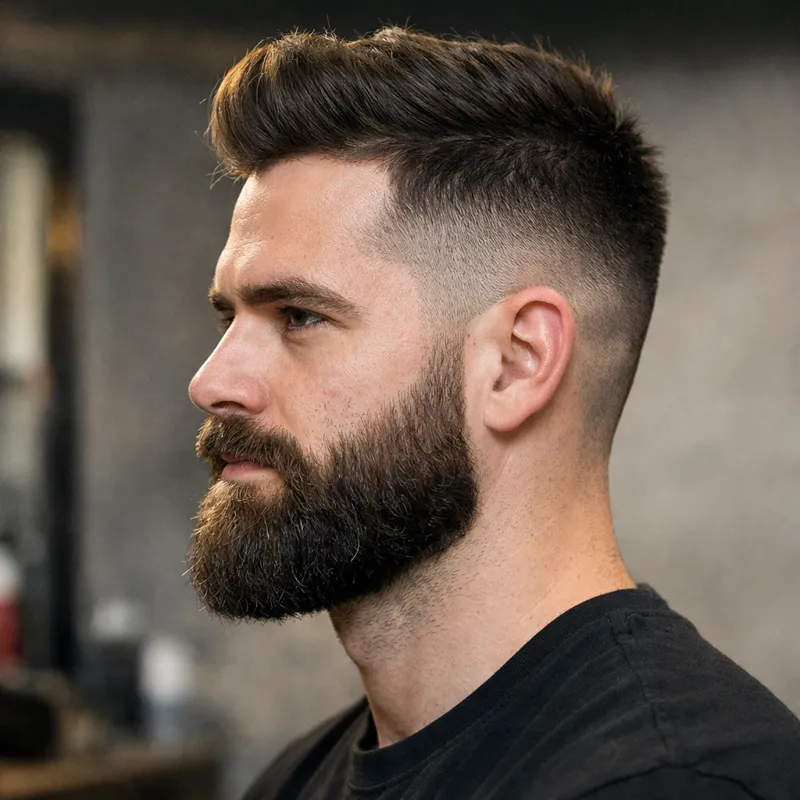
You can have the best haircut in the room, but if your facial hair looks uneven or messy, your overall look drops a level. A good facial hair trimmer is the tool that lets you keep your beard, stubble or mustache sharp in just a few minutes at home.
In this guide, you will see what really matters in a facial hair trimmer, how to choose the right one for your style and budget, and which features actually make a difference when you are standing in front of the mirror.
Trimmer vs. Clipper vs. Razor: Know Your Tool First
Before you compare models, you need to be clear on the difference between a trimmer, a clipper and a razor. Each one has a specific job.
- Facial hair trimmer: Designed for detail work and short lengths. It works best for stubble, short beards, mustache lines and edging the neckline and cheeks.
- Hair clipper: Built for cutting longer hair on the head. Guards usually start at higher lengths, and the body is larger and heavier.
- Razor (manual or electric shaver): Used to remove hair down to the skin for a clean‑shaven look. It does not shape a beard, it removes it.
If your main goal is to shape and maintain facial hair, you need a trimmer first. You can always combine it with a clipper for head hair or a razor to clean the neck and cheeks completely.
Step One: Define Your Facial Hair Style
The “best” facial hair trimmer depends on what you are trying to do with it. Start by deciding the styles you actually wear most weeks.
For Designer Stubble and 1–3 Day Beard
If you like that light growth look, you should focus on:
- Fine length control at short settings: You need many small steps between 0.4 mm and 3 mm.
- Even cutting performance: Cheeks and neck should look uniform, not patchy.
- Gentle on sensitive skin: Short stubble styles mean frequent trimming, so comfort matters.
For Short to Medium Beard (3–10 mm)
This covers most modern beard styles. Look for:
- Guard or dial up to at least 10–12 mm: So you can adjust from tight to fuller beards.
- Reliable motor: Medium beards need more power to avoid pulling.
- Edge control: A narrow blade or extra detail trimmer for cheek and neckline.
For Long Beards and Full Shapes
When your beard goes beyond 10–12 mm, control and power become more important.
- High maximum length (15–20 mm or more): To shape bulk without switching tools.
- Strong torque: The trimmer should cut through dense hair in one pass.
- Beard combs that do not flex: Cheap plastic guards bend and create uneven patches.
For Mustache and Precise Lines
Clean mustache edges or sharp cheek lines need more precision than power.
- Small, narrow blade head: Easier access under the nose and around lips.
- Detail attachment or mini foil: Useful for crisp edges.
- Cordless control: You want full freedom of movement near your nose and mouth.
Spend a moment deciding which of these styles is your main one. That choice will guide every other decision about your trimmer.
Key Features That Make a Trimmer Worth Your Money
Now that you know your style, you can look at the features that really matter when you are choosing a facial hair trimmer.
1. Blade Type and Quality
The blades are the heart of the trimmer. They decide how smooth, accurate and comfortable your trim will be.
- Stainless steel blades: Durable, easy to maintain and usually affordable. A good all‑round choice for most men.
- Titanium‑coated blades: More resistant to wear and stay sharp longer. Great if you trim thick or coarse hair often.
- Ceramic blades: Stay cool and sharp, but can be more fragile and expensive.
- Self‑sharpening design: Some blades are designed to lightly touch and sharpen each other during use, keeping performance consistent over time.
For most at‑home users, high‑quality stainless steel or titanium‑coated blades strike the best balance between performance, price and durability.
2. Length Settings and Adjustability
You want a trimmer that covers your current style and gives you room to change your look later.
- Range: Check the minimum and maximum length in millimeters. A good facial hair trimmer usually covers from about 0.4 mm up to at least 10 mm, and sometimes higher.
- Steps: More steps mean more control. For stubble, you want small increments (0.2–0.5 mm) between lower settings.
- System: Some trimmers use a scroll wheel (built‑in adjustable comb), others rely on separate guards. Wheels are more convenient; separate guards can be sturdier.
3. Corded vs. Cordless
This decision affects comfort and reliability.
- Cordless trimmers: Give you full freedom of movement and are easier to use for edging and traveling. Battery life and charging time become key.
- Corded trimmers: Offer consistent power with no battery anxiety, but you are tied to a socket.
- Hybrid models: Some can run both corded and cordless, which is ideal if you do not want to stop a trim because you forgot to charge.
4. Battery Life and Charging
If you go cordless, pay close attention to the numbers, not just marketing terms.
- Runtime: Aim for at least 60 minutes of use per full charge. Heavy users and long beards benefit from 90 minutes or more.
- Charging time: Fast‑charge options (for example, 5–10 minutes for one trim) are very practical if you often forget to plug in the trimmer.
- Battery type: Lithium‑ion batteries hold charge better and last longer than older nickel‑based ones.
- Charging method: Some trimmers use a simple cable, others come with a stand that keeps your bathroom more organized.
5. Waterproofing and Cleaning
Cleaning is not exciting, but it decides how long your trimmer stays sharp and hygienic.
- Fully washable: You can rinse the entire trimmer under the tap. This is convenient and quick.
- Washable head only: The blade and guard detach and can be rinsed, but the body must stay dry.
- Dry‑only: You will need a cleaning brush and more patience.
If you prefer trimming in the shower or working with wet hair, look for models marked as waterproof. Otherwise, a washable head is usually enough and often cheaper.
6. Ergonomics and Grip
As a barber with many hours behind the chair, Jake Thompson often highlights something people forget: how a tool feels in your hand. According to his experience, a trimmer with a comfortable grip, good balance and simple controls will give you cleaner lines, because your hand can move naturally without fighting the shape or weight of the device.
- Weight: Too light can feel cheap and unstable; too heavy can tire your hand. Aim for a solid but comfortable middle ground.
- Grip texture: Rubberized or textured areas reduce the risk of slipping, especially if you trim in the bathroom with wet hands.
- Button placement: Power and length controls should be easy to reach without constantly changing your hand position.
7. Attachments and Extra Functions
More accessories are not always better, but some add real value.
- Multiple beard combs: Useful if you switch between short and medium lengths often.
- Detail trimmer head: Perfect for mustaches, under the lip and around the mouth.
- Nose and ear trimmer: Handy to keep everything tidy with one device.
- Precision dial: Integrated system that lets you change length without swapping guards.
How to Match a Facial Hair Trimmer to Your Beard Type
Not all facial hair behaves the same way. Your beard density, hair thickness and skin sensitivity all influence what “best trimmer” means for you.
If You Have Thick or Coarse Facial Hair
- Choose a trimmer with a strong motor that can handle dense hair without pulling.
- Prefer titanium‑coated or high‑quality steel blades for longer‑lasting sharpness.
- Use slightly slower, controlled strokes and let the trimmer do the work, instead of forcing it.
If Your Beard Is Patchy or Fine
- Focus on precision at shorter lengths (0.5–5 mm) to create intentional styles like even stubble.
- Look for a narrow head that lets you define lines that visually strengthen your jaw and cheeks.
- A trimmer with many small length steps helps blend areas where growth is weaker.
If You Have Sensitive Skin
- Pick a model marketed as skin‑friendly, with rounded blade tips and smooth guards.
- Use slightly higher lengths at first to reduce friction until your skin gets used to trimming.
- Clean and oil the blades regularly to avoid irritation from built‑up debris.
How to Use a Facial Hair Trimmer for the Best Results
Once you have the right tool, technique is the next step. Here is a simple routine you can follow at home.
Preparation
- Wash your face and beard: Use a gentle cleanser or beard shampoo to remove oil and dirt. Dry thoroughly unless your trimmer is designed for wet use.
- Comb your beard: Use a small comb to detangle hair and make it lie in its natural direction.
- Choose your length setting: Start longer than you think you need. You can always go shorter, but you cannot add hair back.
Trimming the Main Beard Area
- Work with the grain first: Trim in the direction your hair grows to reduce tugging and check how the length looks.
- Then go against the grain if needed: This helps even out density and catch stubborn hairs.
- Use short strokes: Especially on the cheeks and chin, keep the trimmer moving steadily without pressing too hard.
- Check both sides in the mirror: Turn your head slightly left and right to spot uneven areas.
Defining the Neckline
A sharp neckline can instantly make your beard look intentional and clean.
- Find your reference point: A common guideline is just above your Adam’s apple.
- Draw a gentle curve: Imagine a line from behind one ear, passing just above the Adam’s apple, to behind the other ear.
- Trim below the line: Use a shorter length or the bare blade to remove hair under that curve.
Cleaning Cheek Lines and Mustache
- Cheeks: Decide if you prefer a natural or sharp line. For a sharper look, use the trimmer without a guard and carefully follow your desired edge.
- Mustache: Comb it down over your lip. Use a low guard or the bare blade to trim any hairs crossing the lip line.
- Detailing: Switch to a detail head if your trimmer has one for tight spaces and small adjustments.
Aftercare
- Rinse or brush your trimmer: Remove hair from the blades and guard after each use.
- Apply beard oil or moisturizer: This softens hair, calms the skin and gives your beard a healthy finish.
- Store your trimmer safely: Keep it dry and protected, ideally in a case or on its charging stand.
Maintenance Tips to Keep Your Trimmer Performing Like New
A good facial hair trimmer can last years if you take basic care of it. Here are simple habits that make a big difference.
- Clean after every use: Remove loose hairs with the included brush and rinse the head if it is washable.
- Oil the blades regularly: A drop of light oil on the blades every few uses reduces friction, noise and wear.
- Charge the battery smartly: Do not leave the trimmer permanently plugged in. Follow the manufacturer’s guidance for charging cycles.
- Replace worn parts: If you notice pulling or uneven cutting, it might be time to replace the blade set or guards.
- Protect from falls and moisture: Dropping your trimmer or storing it in a wet environment can damage the motor or rust the blades.
These small actions keep the cutting performance smooth and protect your investment over the long term.
FAQ: Best Facial Hair Trimmers and How to Choose Them
What is the best type of trimmer for a short beard?
For a short beard, a dedicated beard trimmer with a wide range of short length settings (around 0.4–10 mm), a reliable motor and good stainless steel or titanium‑coated blades works best. Look for small length increments for precise control.
Can I use a hair clipper instead of a facial hair trimmer?
You can use a hair clipper on your beard, but it is not ideal for short, detailed work. Clippers are bulkier and designed for higher lengths, so they are harder to maneuver around the jaw, mustache and neckline compared to a facial hair trimmer.
How often should I trim my beard?
Most men get the best results trimming every 2–4 days for stubble, once a week for short beards and every 1–2 weeks for longer beards. The right frequency depends on how fast your hair grows and how sharp you want your lines to look.
Are waterproof facial hair trimmers better?
Waterproof trimmers are more convenient if you like to trim in the shower or clean the whole device quickly under the tap. However, for many users a trimmer with only a washable head is enough and often more affordable.
How do I avoid skin irritation when trimming?
To reduce irritation, trim on clean, dry skin, use a trimmer with rounded blade tips, avoid pressing too hard and finish with a light beard oil or moisturizer. Keeping the blades clean and lightly oiled also helps them glide more smoothly.
When should I replace my facial hair trimmer?
If you maintain it well, a good trimmer can last several years. Consider replacement when the motor weakens, the battery no longer holds a charge or new blades do not restore smooth cutting performance.