
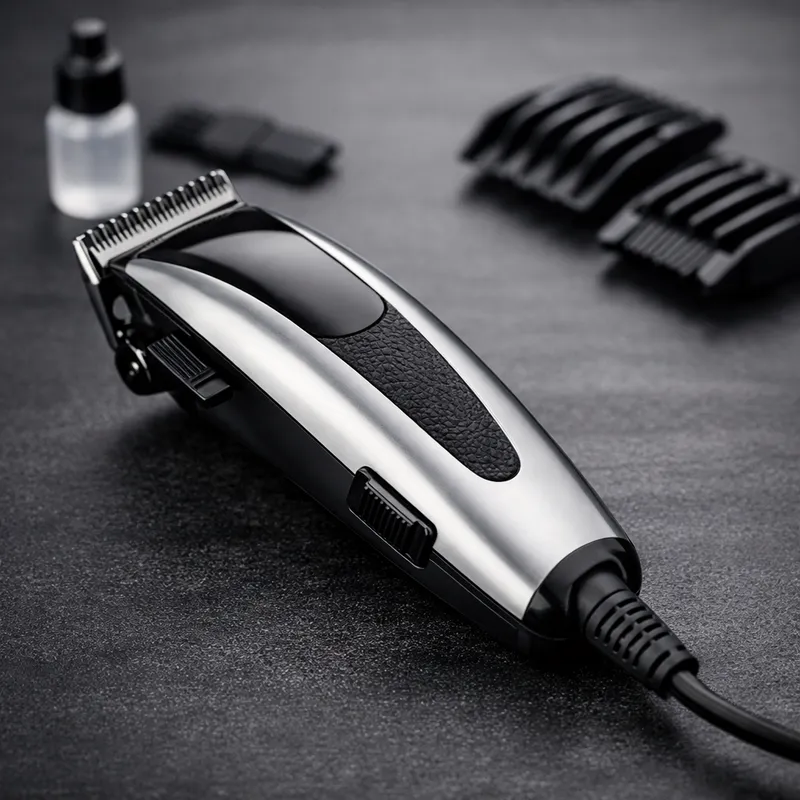
If you want consistently sharp haircuts at home, the tool that matters most is your hair cutter. The right clipper can give you clean fades, even buzz cuts, tidy necklines and precise beard lines. The wrong one will snag, leave uneven patches and make you dread every trim.
In this guide, you’ll see which types of hair cutters work best for different styles, what features actually matter, and how to choose a machine that fits your hair type, grooming habits and budget.
Types of Hair Cutters for Men (and What Each One Does Best)
Before looking at features, you need to understand the main categories of tools. Each one is designed for a specific job, and using the right tool makes cutting faster, cleaner and more comfortable.
1. Hair clippers: your main workhorse
Hair clippers are the primary tool for most men’s haircuts. They’re built to remove bulk and create overall shape.
- Best for: buzz cuts, crew cuts, high and low fades, undercuts, taper cuts, short back and sides.
- Typical cutting lengths: from about 0.5 mm (with a close guard or lever fully closed) up to 25–30 mm with longer guards.
- Key strengths: powerful motors, full set of guards, designed for cutting large areas quickly.
If you want to do full haircuts at home, a quality clipper is non‑negotiable.
2. Trimmers: detail and finishing tool
Trimmers are smaller, lighter and designed for precision work rather than removing heavy bulk.
- Best for: necklines, around the ears, sideburns, edges of beards and mustaches, cleaning up hairlines between barber visits.
- Typical cutting length: around 0.2–0.4 mm, usually without guards.
- Key strengths: slim blade shape, great visibility, comfortable for detail work.
Trimmers won’t replace clippers for full haircuts, but they make any cut look more professional by cleaning the edges.
3. Beard trimmers: facial‑hair specialists
Beard trimmers sit between clippers and detail trimmers. They’re made for controlling the length of facial hair with lots of small increments.
- Best for: stubble, short beards, medium beards, mustaches and neckline shaping.
- Typical cutting range: from about 0.5 mm up to 10–20 mm depending on the model.
- Key strengths: fine adjustment steps (like 0.5 mm), combs that follow the curves of your face.
You can cut hair with some beard trimmers, but for thick or long hair you’ll usually get better results with a proper clipper.
4. Multi‑groomers and all‑in‑one kits
Multi‑groomers promise to do everything: head, beard, body and sometimes even nose and ear hair.
- Best for: men who want one compact tool for basic maintenance, not barbershop‑level fades.
- Typical features: interchangeable heads, lightweight body, moderate motor power.
If you mainly want to keep a short buzz cut and a tidy beard, a good multi‑groomer can be enough. If you want clean fades or you have very thick hair, you’ll be happier with a dedicated clipper plus a separate beard trimmer.
Key Features That Make a Hair Clipper Actually Good
Many clippers look similar on the outside, but performance comes from a few specific details. Focus on these features when you compare models.
1. Motor power and type
The motor is the heart of any hair cutter. A weak motor leads to pulling, uneven cutting and frustration.
- For thick or curly hair: prioritize higher‑torque motors (often in corded or “heavy‑duty” cordless models).
- For fine or normal hair: most mid‑range cordless clippers with brushless or rotary motors will be strong enough.
- Noise and vibration: powerful motors are sometimes louder, but better builds keep vibration and rattling low.
As a rule, if a clipper struggles or stalls when moving slowly through your hair, the motor is underpowered for your hair type.
2. Blades: material and shape
Sharp, well‑designed blades are essential for a clean cut.
- Stainless steel blades: standard, durable, easy to maintain with regular oiling.
- Ceramic blades: stay cooler and sharper for longer but can be more fragile if dropped.
- T‑blades: have a wider, T‑shaped design that’s excellent for edging and shaping hairlines and beards.
Look for self‑sharpening or precision‑ground blades if you plan to cut hair frequently.
3. Guards and adjustment range
Guards control hair length. The more consistent and secure they are, the more predictable your haircuts will be.
- Full guard set: ideally from 1.5 mm (or #0.5) up to 25 mm or more.
- Lever adjustment: a taper lever on the side lets you fine‑tune length without changing guards, perfect for blending fades.
- Guard quality: rigid guards that snap on firmly are better than flimsy combs that flex or pop off.
If you want smooth fades and tapers, a clipper with a taper lever and at least 6–8 guard sizes gives you a lot more control.
4. Corded vs cordless
Both options can be excellent; it depends on your priorities.
- Corded clippers: consistent power, no battery to worry about, often preferred for thick hair or longer sessions.
- Cordless clippers: more freedom of movement, easier for self‑cuts, rely on battery life and charging time.
For home use, a cordless clipper with at least 60–90 minutes of runtime and the option to use it while plugged in gives you the best of both worlds.
5. Battery life and charging
If you go cordless, check the numbers, not just the marketing.
- Runtime: aim for 60 minutes minimum; 90–120 minutes is ideal if you cut multiple heads or travel often.
- Charging time: fast charge (10–15 minutes for one quick cut) is useful if you forget to plug in.
- Battery type: lithium‑ion batteries hold charge better over time than older technologies like Ni‑MH.
6. Ergonomics and weight
A clipper can be powerful and sharp but still annoying to use if it’s uncomfortable in your hand.
- Weight balance: too heavy in the head will tire your wrist quickly.
- Grip: textured or rubberized grips help when your hands are slightly damp.
- Size: larger, barbershop‑style bodies are stable but can be harder for self‑cuts around the back.
7. Maintenance and durability
Good clippers are an investment. With simple maintenance they can last many years.
- Easy blade removal: makes cleaning and oiling faster.
- Included oil and brush: small details that show the brand expects you to maintain the tool properly.
- Spare parts: availability of replacement blades and guards extends the life of the machine.
Matching the Hair Cutter to Your Hair Type and Style
The “best” hair cutter changes depending on your hair type, texture and the haircut you want. Use the combinations below to narrow down what you really need.
For very short styles: buzz cut and crew cut
If you like a buzz cut, induction cut or classic crew cut, simplicity is your friend.
- Tool: mid‑range clipper, corded or cordless.
- Key features: reliable motor, sharp steel blades, guards from 3 mm to 12 mm.
- Nice extras: taper lever for minor blending between the top and sides.
You can set one guard length for the whole head or use one length on top and a shorter one on the sides for a subtle shape.
For fades and tapers
Fades and tapers need more precision and control over length transitions.
- Tool: quality clipper with taper lever, plus a trimmer for edges.
- Key features: strong motor, full guard set including half sizes if possible, lever that moves smoothly.
- Ideal for: skin fades, low fades, mid fades, high fades and classic taper cuts.
A good setup is to use the clipper with the lever and guards for blending, then finish the neckline, around the ears and the front hairline with the trimmer.
For longer styles: quiff, pompadour, textured crop
For styles with more length on top, like a quiff or pompadour, the clipper still handles the sides and back, but scissors and styling tools matter too.
- Tool: mid‑to‑high‑end clipper for sides and back, plus a good comb and scissors for top shaping.
- Key features: guards from 3 mm up to at least 18–25 mm, smooth cutting to avoid lines.
- Styling support: blow‑dryer and a product like matte paste, clay or pomade.
In these cuts, the clipper defines the fade or taper, and the rest of the style comes from how you dry and style the top.
For thick, coarse or curly hair
Thick or tightly curled hair puts more load on the motor and blades.
- Tool: powerful clipper, often corded or a high‑torque cordless model.
- Key features: high‑quality blades, guards that don’t flex under pressure, good cooling so the blades don’t overheat.
- Technique tip: work in smaller sections, moving slowly against the grain of the hair.
For men with beards
If you wear facial hair, it’s worth pairing your clipper with a dedicated beard trimmer.
- Clipper: for head hair, bulk removal and rough beard length if needed.
- Beard trimmer: for daily or weekly beard shape, cheek and neck lines, and mustache definition.
This two‑tool combo gives you much more control over your overall look than trying to do everything with a single machine.
How to Choose the Right Hair Cutter Step by Step
Use this simple process to pick the right clipper or trimmer without getting overwhelmed by marketing claims.
Step 1: Define your main use case
Start with one clear priority. Ask yourself:
- Do you want full haircuts at home, or mainly touch‑ups between barbershop visits?
- Is your focus your head hair, your beard, or both?
- Will you also cut hair for family or friends?
If your main goal is full haircuts, your first purchase should be a solid hair clipper. If you mostly maintain a beard and just do small cleanups on your neckline and sideburns, a good beard trimmer with a fine detail head can be enough.
Step 2: Be honest about your skill level
Your experience with cutting hair matters as much as the tool.
- Beginner: look for clippers with clear guard numbers, safety rounded blades and simple controls.
- Intermediate: you’ll appreciate a taper lever, half‑size guards and more powerful motors.
- Advanced / very confident: consider professional‑grade clippers with more weight and precise blade adjustments.
If you’re just starting, prioritise forgiving tools over ultra‑sharp, zero‑gapped blades that can easily create harsh lines or nicks.
Step 3: Match your hair type
Next, factor in your hair type.
- Fine / thin hair: you can use lighter, quieter clippers without heavy‑duty motors.
- Normal hair: most mid‑range clippers work well; focus on comfort and guard selection.
- Thick / coarse / curly hair: invest in more powerful motors and high‑quality blades; corded models are often more reliable here.
Step 4: Decide on corded vs cordless
Think about where and how you’ll actually cut your hair.
- Small bathroom, limited outlets: cordless may be more practical.
- Long sessions or multiple people: corded or hybrid (corded/cordless) avoids battery anxiety.
- Frequent travel: a compact cordless kit with USB or universal charging is convenient.
Step 5: Set a realistic budget
You don’t need a professional‑shop budget, but it helps to know what different price ranges tend to offer.
- Entry level: basic clippers suitable for simple buzz cuts and occasional trims.
- Mid‑range: better motors, more guards, improved ergonomics and longer‑lasting batteries.
- Pro / high‑end: top‑tier motors, premium blades, robust metal constructions and serviceable parts.
If you cut your own hair regularly, a reliable mid‑range clipper often pays for itself after a few skipped barbershop visits.
Step 6: Check maintenance needs
Finally, consider how much time you’re really willing to spend on care.
- Are you okay with oiling blades after each use?
- Do you prefer washable models where you can rinse the head under water?
- Will you remember to charge cordless tools regularly?
Choose a model that matches your habits so maintenance becomes automatic, not a chore you keep skipping.
Essential Accessories That Make Your Hair Cutter Perform Better
The machine is only part of the equation. A few simple accessories dramatically improve your results and protect your investment.
1. Clipper oil
A few drops of clipper oil along the blade while it’s running reduce friction, heat and wear. This keeps cuts smooth and extends blade life.
2. Cleaning brush
A small brush removes loose hair from the blade and guards. Cleaning after every use prevents buildup that can dull blades and strain the motor.
3. Comb and sectioning clips
Even if you mostly use guards, a basic comb helps lift the hair so the clipper can cut more evenly. Clips help when you’re leaving longer sections on top.
4. Mirror setup
For self‑cuts, a three‑way mirror or at least a handheld mirror plus a bathroom mirror lets you see the back of your head and avoid missed spots.
5. Cape or old towel
Protect your clothes and reduce cleanup time by using a haircutting cape or a dedicated towel around your shoulders.
How to Use a Hair Clipper for a Clean, Even Cut
Once you have the right tool, technique is what turns it into a great haircut. Here’s a simple process you can adapt to most short styles.
1. Prepare your hair and workspace
- Wash your hair and dry it completely so it doesn’t clog the blades.
- Comb your hair in its natural direction to remove tangles.
- Set up your mirrors and cover your shoulders with a towel or cape.
2. Start longer than you think
Attach a longer guard than your target length and do a first pass. It’s always safer to remove hair in stages.
- Work against the grain of your hair growth for a more even cut.
- Use smooth, overlapping strokes and don’t rush.
3. Shape the sides and back
Decide where you want your fade or taper to sit: high, mid or low.
- Use a shorter guard on the lower sides and back.
- Blend upward by moving to the next longer guard or using the taper lever.
- Keep checking both sides in the mirror to stay even.
4. Cut and blend the top
For very short styles, you can use the clipper with a longer guard on top. For more length, switch to scissors and a comb.
- Always cut a little at a time; hair shrinks slightly when dry.
- Blend the top into the sides by gradually shortening the length toward the edges.
5. Clean up the edges
Use a trimmer or your clipper without a guard to refine details.
- Outline the neckline: decide between a squared, rounded or natural finish.
- Clean around the ears and sideburns.
- Check your beard and mustache lines for balance.
6. Final check and styling
Rinse or brush off loose hair, then style as usual with your preferred product.
- Run your hands through your hair to feel for uneven patches.
- Use a small amount of gel, paste or pomade and see how the shape looks.
Frequently Asked Questions About Hair Cutters for Men
What is the best type of hair cutter for a simple buzz cut?
For a straightforward buzz cut, a mid‑range clipper with a reliable motor and a few basic guards is usually enough. Choose a cordless or corded model based on your preference, and make sure it includes the guard length you like most.
Can I use the same hair clipper for my beard?
You can use a hair clipper on your beard to keep the overall length short, but for detailed shaping, a dedicated beard trimmer works better. Beard trimmers offer smaller length increments and usually feel more comfortable on the contours of your face.
How often should I oil my hair clipper blades?
If you cut hair regularly, oil the blades after every use. Apply two to three drops along the moving blade while the clipper is running, then let it run for a few seconds. Wipe away any excess oil before storage to avoid buildup.
Are corded clippers better than cordless ones?
Corded clippers usually provide more consistent power and never run out of battery, which is useful for thick hair or long sessions. Cordless clippers offer more freedom of movement and are more convenient for self‑cuts. For most men at home, a good cordless model with at least 60–90 minutes of runtime is a practical choice.
How long should a good hair clipper last?
With proper cleaning, oiling and storage, a quality hair clipper can easily last several years of regular home use. Choosing a model with replaceable blades and guards helps extend its life even further, because you can refresh worn parts instead of buying a whole new machine.