
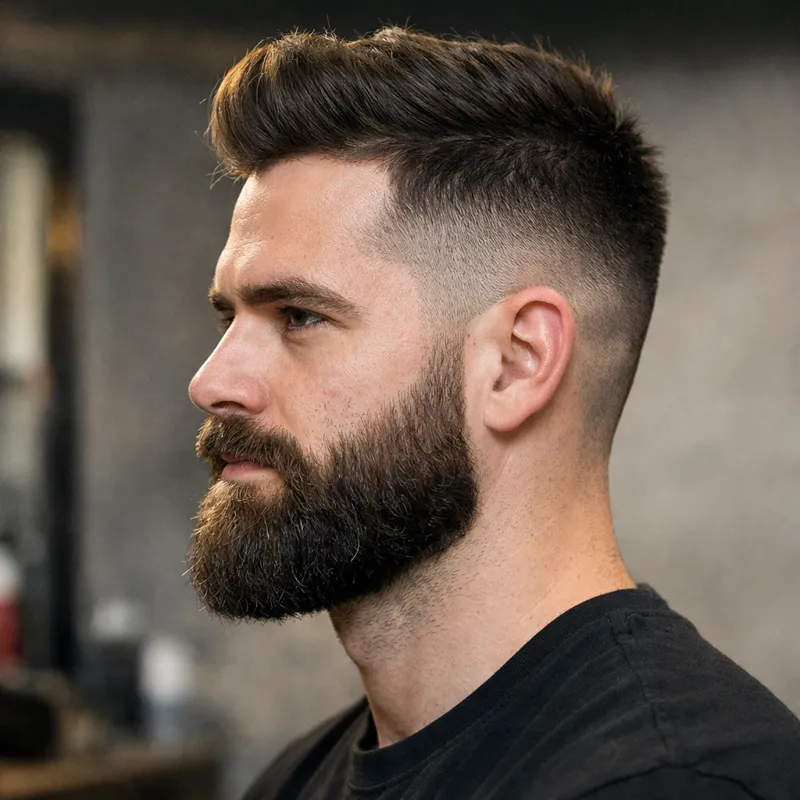
If you’ve ever tried to clean up your neckline with a cheap clipper and ended up rushing to the barber the next day, you already know this: the right hair and beard trimmer is not a gadget, it’s a grooming essential. With the right tool in your hand, you can keep your fade fresh, your beard lines sharp and your neck clean between barbershop visits.
In this guide, I’ll walk you through how barbers think about trimmers, what separates a good machine from an annoying one, and how to choose the best hair and beard trimmer for your style, your routine and your budget.
Hair Trimmer vs Beard Trimmer vs Clipper: Know Your Tools
Before you spend a dollar, you need to be clear about what you’re actually buying. People mix up trimmers and clippers all the time, and then blame the tool when it’s really the wrong type for the job.
- Hair clippers: bulk-cutting machines designed to remove a lot of hair fast. They usually come with longer guards (#1 to #8 and up) and are perfect for buzz cuts, fades and shortening longer hair.
- Hair trimmers: detail tools with slimmer blades. You use them to clean necklines, edges, sideburns and small areas around the ears.
- Beard trimmers: built for facial hair, with adjustable length settings for stubble, short beards and medium-length beards.
Most people at home don’t want three different machines. That’s why “2‑in‑1” or even “all‑in‑one” hair and beard trimmers exist. These are versatile tools that cover head and facial hair with adjustable guards and attachments.
As barber and grooming expert Jake Thompson often reminds clients in his chair, the right tool is the one that matches the job you’re actually doing most of the time, not the one with the longest spec sheet.
Start With Your Style: What Look Do You Want to Maintain?
The best hair and beard trimmer for you depends first on your look, not on the logo on the box. Think about what you need to maintain week after week.
If you wear a buzz cut or very short hair
If you keep your hair between #0 and #3 all over, you want a machine that:
- Has strong enough power to go through dense hair without pulling.
- Includes fixed guards from about 0.5 mm to 10 mm.
- Feels solid in the hand for straight, even passes over the scalp.
You can either go for a compact clipper or a powerful hybrid trimmer with good short guards.
If you like fades and tapered sides
To keep a fade sharp at home (even just between barber visits), you’ll need:
- A trimmer or clipper with a taper lever or micro‑adjustment for half steps between guard sizes.
- Reliable guards up to at least 12 mm for blending.
- Good edge performance for cleaning up the lineup, sideburns and neckline.
You won’t recreate a full professional skin fade immediately, but you can stretch your barbershop cut a week or two by softening the grow‑out and sharpening outlines.
If your beard is your main focus
For a short boxed beard, stubble or a medium beard, a dedicated or very good beard trimmer should give you:
- Fine length control from about 0.4 mm up to 10–15 mm.
- Rounded teeth or skin‑friendly blade design to reduce irritation on the neck.
- A detail head or narrow blade for moustache and lip line work.
If you’re maintaining a long beard or a very sculpted shape, the trimmer becomes one part of the routine along with scissors and a comb.
If you just want to look clean between barber visits
In this case, you need a simple, reliable tool to:
- Clean the back of your neck.
- Keep cheek lines and neckline of your beard under control.
- Trim rogue hairs around the ears and sideburns.
A compact cordless hair and beard trimmer with a couple of key guards (like 3 mm, 6 mm, 9 mm) is more than enough.
Main Features That Make a Trimmer Worth Buying
Once you know your style and routine, you can look at the features that actually matter. Ignore marketing names and focus on how the trimmer will feel and perform in real‑life use.
1. Blade material and design
The blade is the business end of your trimmer. That’s where comfort, precision and longevity all start.
- Stainless steel blades: the standard option. Good quality steel is sharp, durable and rust‑resistant with basic care.
- Titanium‑coated blades: add extra durability and usually stay sharp longer. Helpful if you trim thick or coarse hair.
- Ceramic blades: stay cool and sharp but can be more fragile if dropped.
Also pay attention to blade shape:
- T‑blades give you more reach and are excellent for edging beards, hairlines and around the ears.
- Narrow blades are perfect for detail work like moustaches and intricate beard lines.
- Rounded tooth design is kinder on sensitive skin, especially on the neck.
2. Cutting length and guards
Look at the actual length range and how you adjust it.
- Built‑in dial (for example 0.4–10 mm): great for beards because you can quickly tweak the length without changing guards.
- Clip‑on guards: better for head hair when you need longer lengths or want classic guard numbers (#1, #2, #3…).
- Taper lever on the side: allows micro‑adjustments between guard sizes, helpful for blending fades.
Think about the lengths you actually use. If you always trim your beard at 3 mm, 6 mm and 10 mm, make sure those settings are easy to hit and repeat.
3. Motor power and performance
A weak motor is the main reason you feel pulling and snagging. You don’t need pro‑shop power for home use, but you do want a motor that can handle your hair type.
- If your hair is thick or very coarse, look for models advertised with high strokes‑per‑minute (SPM) or designed for “dense hair”.
- If your hair is fine to normal, a mid‑range motor is usually more than enough.
Noise also comes from the motor. A bit of vibration is normal, but if a trimmer sounds like a chainsaw, you probably won’t enjoy using it every week.
4. Corded vs cordless (or both)
This choice affects how flexible your routine feels.
- Cordless trimmers are easier to manoeuvre, especially for self‑cuts. Great for trimming the back of your neck or cleaning your beard in the bathroom mirror.
- Corded models give you constant power and never die mid‑trim, but the cable can get in the way.
- Hybrid (corded/cordless) trimmers offer the best of both worlds. You can use them on battery and plug in if you forget to charge.
Check the advertised runtime. For most people, 60–90 minutes of cordless use per charge is ideal and gives you several sessions before you have to plug in.
5. Battery type and charging
Lithium‑ion batteries are the standard you want. They charge faster, hold power better and usually last longer over the life of the trimmer compared to older battery types.
- Look for quick‑charge features (for example, 5–10 minutes of charge for one trim).
- Check if the trimmer uses a standard cable (like USB‑C) or a proprietary charger that’s harder to replace.
6. Waterproofing and cleaning
Cleaning is what keeps the trimmer cutting well and your skin happier.
- Fully washable models can go under the tap, which makes maintenance very easy.
- Washable heads only are also fine; you remove the blade and rinse it separately.
- If you shave in the shower, you’ll need at least a water‑resistant body and good grip.
Always check the manual to see how the manufacturer expects you to clean and oil the blades.
7. Ergonomics: how it feels in your hand
You should be able to trim calmly with one hand and good control. Pay attention to:
- Weight: too heavy and your wrist will get tired; too light and it can feel cheap or unstable.
- Grip: rubberized or textured surfaces help when hands are slightly damp.
- Shape: a slimmer body is easier for precision work on beards and necklines.
Attachments and Extras That Are Actually Useful
Many trimmers come with a whole bag of plastic you never use. Focus on attachments that match your routine.
- Beard combs with several fixed or adjustable lengths for everyday trimming.
- Precision or detail head for moustache edges, soul patches and tight corners around the lips and nose.
- Nose and ear trimmer if you want one device for all facial grooming.
- Body hair guard with rounded tips if you plan to trim chest, underarms or groin hair.
Travel pouches, charging stands and cleaning brushes are nice to have, but don’t choose a weak trimmer just because the box is full.
How to Match a Trimmer to Your Hair and Beard Type
Your hair type and skin sensitivity matter just as much as your hairstyle. A trimmer that’s perfect for light stubble on easy skin might be a nightmare on coarser hair and a reactive neck.
For thick, coarse or curly hair
- Prioritize motor power and sharp blades to avoid tugging.
- Choose guards that lock firmly so they don’t pop off mid‑pass.
- Look for slightly wider blades if you do more head hair than beard.
For fine or straight hair
- You can go with a lighter, quieter trimmer.
- Focus on precision of length if small changes affect how full your beard looks.
- Rounded blade tips help if your skin gets red easily.
If you have sensitive or easily irritated skin
- Choose a trimmer with skin‑friendly blades and rounded teeth.
- Consider models designed for wet and dry use, so you can trim with a bit of foam or in the shower.
- Keep blades clean and lightly oiled to reduce friction and heat.
Simple Routine: How to Use a Hair and Beard Trimmer Like a Barber
The best trimmer is only half the story. The other half is how you use it. Here’s a straightforward routine you can apply at home.
1. Prepare your hair and beard
- Wash your hair and beard with a gentle shampoo and let them dry completely.
- Comb your beard in the direction of growth to remove tangles.
- If your hair is very long, use scissors to reduce bulk before trimming.
2. Define your lengths
- Decide your target lengths for the top, sides and beard (for example, #3 on the sides, #5 on top, 5 mm on the beard).
- Always start longer than you think and work down gradually. You can always take more off, but you can’t put it back.
3. Trim your hair
- Attach the guard for your longest area (usually the top) and move the trimmer against the direction of growth.
- Switch to a shorter guard for the sides and back, blending where the two lengths meet with short, upward flicking motions.
- If your trimmer has a taper lever, use it to soften the transition between guards.
4. Shape your beard
- Start with a longer length across the entire beard to even it out.
- Shorten the cheeks and neck slightly if you like a more structured shape.
- Use a shorter setting on the moustache if you hate hair on your upper lip.
5. Clean the lines
- Remove the guard and use the bare blade or a T‑blade to define your cheek lines.
- Trim a clean neckline: imagine a soft curve from behind one ear to the other, passing just above your Adam’s apple.
- Clean sideburns and the back of your neck, working slowly and using a hand mirror if you’re alone.
6. Finish and check symmetry
- Brush off loose hairs and look from different angles in the mirror.
- Make micro‑adjustments but avoid “chasing perfection” until everything ends up too short.
Maintenance: How to Make Your Trimmer Last (and Keep Cutting Well)
A lot of people think their trimmer is “dying” when it’s just dirty, dry or clogged. Basic maintenance can double the life of a good machine.
After each use
- Brush hair out of the blades and guards.
- If the trimmer is washable, rinse the head under warm water, then dry it thoroughly.
- Add a drop or two of clipper oil to the blades, then run the trimmer for a few seconds.
Every few weeks
- Remove the blade (if the design allows) and clean underneath.
- Check screws and attachments so nothing is loose.
- Inspect the cable or charging port for damage.
When to replace blades or the whole trimmer
- If the trimmer pulls even after cleaning and oiling, the blades may be dull.
- If replacement blades are available and cost‑effective, swap them out.
- If the motor is inconsistent, the body is cracked or the battery no longer holds charge, it’s time for a new machine.
Checklist: How to Choose the Best Hair and Beard Trimmer for You
To make this practical, use this checklist before you buy:
- Your routine: How often will you trim (every 2–3 days, weekly, only for touch‑ups)?
- Your main look: Buzz cut, short fade, medium hair, heavy beard, stubble?
- Hair/skin type: Thick or fine hair? Sensitive skin or normal?
- Power: Is the motor strong enough for your hair type?
- Lengths: Does it cover the exact lengths you need for both hair and beard?
- Battery: At least 60 minutes runtime and quick charge if you’re often in a hurry.
- Cleaning: Fully washable or at least easy to open and rinse.
- Comfort: Does it feel good in your hand, not too heavy or too light?
- Noise: Acceptable for the environment you’ll be using it in.
If a trimmer ticks these boxes for your specific needs, you’re on the right track, even if it’s not the most hyped model on social media.
FAQ: Best Hair and Beard Trimmers
Can one trimmer be used for both hair and beard?
Yes, as long as the trimmer has enough power for your hair type and offers the right length settings. Many modern models are designed for both hair and beard with a mix of short guards and adjustable combs.
What length should I use to trim my beard?
It depends on your style. Light stubble is usually around 1–2 mm, heavy stubble 3–5 mm, and a short boxed beard often sits between 5–10 mm. Start longer than you think and step down slowly until it looks right on your face.
How often should I oil my trimmer blades?
If you trim regularly, oil the blades lightly after every use or at least every few uses. A couple of drops on the moving parts keeps friction, heat and wear down and helps maintain a smooth, clean cut.
Is a cordless trimmer powerful enough for thick hair?
Many cordless trimmers today are strong enough for thick hair, especially models with modern lithium‑ion batteries and high‑efficiency motors. If your hair is very dense, check user reviews and specifications that mention performance on coarse hair.
Can I use a hair trimmer to shave my head completely?
You can use a hair trimmer to get very close, but it won’t be as smooth as a razor. For a completely shaved head, many people trim down with a clipper first and then finish with either a foil shaver or a manual razor.
How long should a good trimmer last?
With regular cleaning, proper oiling and careful storage, a quality hair and beard trimmer should last several years of home use. Replace blades when they dull and watch for signs of battery fatigue or motor problems as the device ages.