
Choose the right Wahl trimmer, get cleaner lines, and stop guessing
“Wahl trimmers” can mean very different tools: a detail trimmer for sharp lineups, a cordless beard trimmer set for daily maintenance, a foil shaver for ultra-close finishing, or a corded workhorse for nonstop power. This page turns that confusion into a simple decision based on your goal—then shows you how to use your trimmer like a barber, without irritation or uneven edges.
- Pick faster: a goal-based selector that matches you to the right trimmer type (not random “top 10” fluff).
- Trim better: a practical technique guide for beard lines, neck cleanups, and finishing.
- Maintain smarter: a maintenance plan that prevents pulling, snagging, and dull blades.
- Understand guards: a guard/length converter + a chart you can rely on.
Note: This is an independent grooming guide. Product availability and names can vary by country and retailer.
Wahl Trimmer Picker: match the tool to your goal (interactive)
The biggest reason men get disappointing results is not “skill”—it’s buying the wrong category of tool. Use this selector to match your goal to the right trimmer type, blade style, and workflow. Then scroll to the matching section for deeper guidance.
What are you trying to achieve?
Pick one. You can run it again any time.
Choose a goal above to see what to buy, what to avoid, and the fastest routine that gets clean results.
- Pro tip: The “best” trimmer is the one that matches your job. Detail tools are not built for bulk removal, and bulk tools won’t give clean edges.
No forms, no tracking: this tool runs in your browser only.
A great Wahl trimmer setup makes grooming predictable: consistent length, predictable lines, and fewer passes on the skin. That means less redness, fewer bumps, and a cleaner finish that lasts longer.
How to choose the right Wahl trimmer (what actually matters)
If you’re searching for a Wahl trimmer cordless, a Wahl shaving trimmer, or a complete Wahl trimmer set, you’re usually trying to solve one of three problems: (1) your edges aren’t sharp, (2) your length isn’t consistent, or (3) the tool is annoying to use (battery, cleanup, pulling hair, guards slipping). Choosing the right trimmer is about matching blade style, power, and attachments to the job.
1) Define the job: detailing vs bulk trimming
A detail trimmer is built for visibility and precision. It’s the tool you use to draw the final line: beard edges, neckline, sideburn shape, and finishing touches. A bulk trimmer (or clipper) is built to remove more hair faster: bringing down a thick beard, reducing length before shaping, or cleaning up large areas. When men buy a “detail tool” for bulk work, they press harder, go over the same area repeatedly, and end up with irritation and uneven patches. When they buy a bulk tool for detail work, lines look fuzzy because the tool is not designed to carve sharp corners.
2) Decide your power preference: cordless convenience vs corded consistency
Cordless is convenience: better freedom of movement, easier mirror angles, and quicker daily grooming. Corded is consistency: stable power, no charging anxiety, and often a “just works” feel for home setups. If you shave your neckline and edge your beard every few days, cordless is great. If you cut hair frequently or share tools in a household, corded can be the least stressful option.
3) Don’t ignore guards: they’re the difference between “tidy” and “professional”
Most men think guards are only for haircuts. In reality, Wahl trimmer guards and attachments make beard grooming dramatically easier because they remove guesswork: you get consistent length, smoother transitions, and fewer accidental “oops” moments. The key is compatibility—guards are not universal across every trimmer—and technique: you need a simple blending approach (longer first, then step down).
The closer you cut, the more technique matters. If you get bumps or irritation, your goal is not “press harder.” Your goal is fewer passes, lighter pressure, and the right finishing tool (sometimes that means finishing with a foil shaver instead of grinding a trimmer into the skin).
Trimmer vs clipper vs foil shaver: the simplest way to think about it
This matters because the phrase “Wahl clippers trimmer” is often used when people are unsure what they really need. Here’s the clean breakdown:
Best for removing lots of hair fast
Use clippers for haircuts, fades, and bulk cutting. If you want a buzz cut, fade maintenance, or you cut your hair at home, this is usually the right starting tool.
Best for edges, outlines, and controlled shaping
Use trimmers for beard lines, neck cleanups, sideburn shape, and detail work. A good trimmer is a precision tool: it should feel stable, easy to see, and predictable.
Best for ultra-close finishing
Use a foil shaver after trimming if you want the cleanest possible finish on the neck or for a bald fade look. It’s not a “first tool” for long hair—it’s a finishing tool.
A strong grooming workflow is often: bulk (clipper/guard) → shape (trimmer) → finish (foil shaver if needed). That sequence gives cleaner results with fewer passes and less irritation.
Best Wahl trimmer types by goal (what to buy and why)
Instead of pretending one tool is “best for everyone,” this section maps real goals to the right Wahl trimmer category. The goal is to help you buy once and use it for years—without the common frustration cycle: buy → disappoint → buy again.
For crisp beard edges & sharp hairline work
Choose a detail trimmer (often with a T‑style blade) that prioritizes visibility and precise control. This is the best tool category for carving clean corners, outlining a beard, and creating a sharp neckline.
For stubble, short beards, and consistent maintenance
Choose a cordless beard trimmer kit with reliable guards and a predictable length system. If you want a “set it and forget it” routine, this is the most realistic category.
For fast touchups with minimal setup
Choose a compact cordless trimmer that travels well and starts fast. The best travel trimmers are the ones you actually use: quick cleanup, easy charging, and enough power for beard + neckline.
For dependable power every single time
Choose a corded trimmer if you value consistency over convenience. It’s the “no excuses” option: plug in, line up, and you’re done. Great for home grooming stations.
For cleaner bathroom sinks and easier cleanup
If sink cleanup is your pain point, look for a vacuum-style beard/stubble trimmer option or a setup that makes cleanup easy: a removable head, simple brush-out, and a habit of trimming over a towel.
For the closest neckline and “fresh fade” polish
A foil shaver is not a substitute for a trimmer. It’s the final step when you want the smoothest finish after trimming. If you chase that “barber-fresh” look, foil finishing is often the missing piece.
If you want sharp edges: buy a detail trimmer. If you want consistent beard length: buy a guarded beard kit. If you want the cleanest neck: add a foil shaver as a finishing tool. Most frustration disappears when you stop forcing one tool to do three different jobs.
Wahl trimmer guards & attachments: the “consistent length” advantage
Guards are not just accessories—they’re a system. When you use guards well, your grooming becomes repeatable: your beard length stays stable, your transitions look smoother, and you avoid accidental over-trimming. The most common mistake is picking a guard once and never revisiting it. Your best length depends on your face shape, beard density, and how sharp you keep your edges.
Guard Length Converter (interactive)
Use this converter to translate a target length into a familiar “guard number” reference. This is especially useful if you move between a clipper guard chart and beard trimmer attachments. (Lengths can vary by brand and guard design—treat this as a practical estimate, not a lab measurement.)
Tip: 6–10mm often reads as “short beard,” while 1–3mm reads as “stubble.”
Use this as a reference point. Guard compatibility varies by model, so always confirm fit for your specific Wahl trimmer attachments.
- Best use: short beard maintenance and blending from beard into sideburns.
- Technique tip: trim with the grain first, then lightly against the grain only if your skin tolerates it.
Quick clipper guard chart (common reference)
This chart is a common baseline for clipper guide combs. Your beard trimmer set may label attachments differently, but the lengths help you compare.
| Guard | Inches | Millimeters | Typical use |
|---|---|---|---|
| #0.5 (1/16″) | 1/16″ | ~1.5 mm | Very short stubble, tight blends |
| #1 (1/8″) | 1/8″ | ~3 mm | Stubble, beard shaping base |
| #1.5 (3/16″) | 3/16″ | ~4.5 mm | Short beard, soft transitions |
| #2 (1/4″) | 1/4″ | ~6 mm | Short beard maintenance |
| #3 (3/8″) | 3/8″ | ~10 mm | Medium beard, fuller look |
| #4 (1/2″) | 1/2″ | ~13 mm | Medium-to-long beard shaping |
| #5–#8 | 5/8″–1″ | ~16–25 mm | Longer beard uniform length / bulk control |
Start one step longer than you think you need. Trim your full beard to set a safe baseline. Then step down one guard for the area under the jaw and sideburn transition. Finish by outlining with your detail trimmer. This prevents accidental bald patches and makes your lines look intentional rather than over-corrected.

Prep matters: detangling and brushing hair into its natural direction makes guard lengths more consistent and reduces “random” uneven spots.
Barber method: how to line up your beard with a trimmer (clean, symmetrical, low irritation)
Most lineup problems come from two habits: pressing too hard and chasing symmetry by eye. Pressing too hard creates redness and bumps. Chasing symmetry turns into “one more pass,” then another, until the line shifts too far back. The fix is a method: map your line, cut in short taps, and refine with corners—not long drags across the skin.
Start dry, brush outward, and check your natural line
Dry hair shows your real density. Brush the beard outward so you trim what exists—not what was flattened by water or product. Decide whether you want a natural cheek line (more modern and forgiving) or a sharper line (more dramatic but less forgiving).
Map before you cut (the “no regret” move)
Lightly sketch your intended cheek and neck line with a washable white pencil (or even a tiny amount of soap). This stops the common error of “freehanding” and drifting upward.
Set the baseline with light pressure
Hold the trimmer like a pen. Use light contact—just enough for the blade to work. If you feel dragging, stop and clean/oil the blade. Never compensate with pressure.
Detail with short taps (not long drags)
Think of “dotting” the line into existence. Short taps give you control and reduce irritation. Long drags are where uneven corners and accidental overcutting happen.
Refine with corners and step back often
Use the corner of the blade to refine. Step back from the mirror every 10–15 seconds to re-check symmetry. The goal is “clean and even,” not “as thin as possible.”
Foil finish for a cleaner neckline
If your skin tolerates it and you want the cleanest possible finish, use a foil shaver after trimming (especially on the neck). This gives a polished look without grinding the trimmer into your skin.
Mini tool: Barber checklist you can copy or download
Use this when you trim so you don’t slip into “one more pass” mode.
- Trim bulk first (guard or clipper) so the trimmer isn’t fighting long hair.
- Brush outward; don’t line up flattened hair.
- Map the line (pencil/soap), then commit to the map.
- Light pressure; short taps; refine corners.
- Step back often; symmetry is easier from distance.
- Finish: rinse/brush blade, oil lightly, store dry.
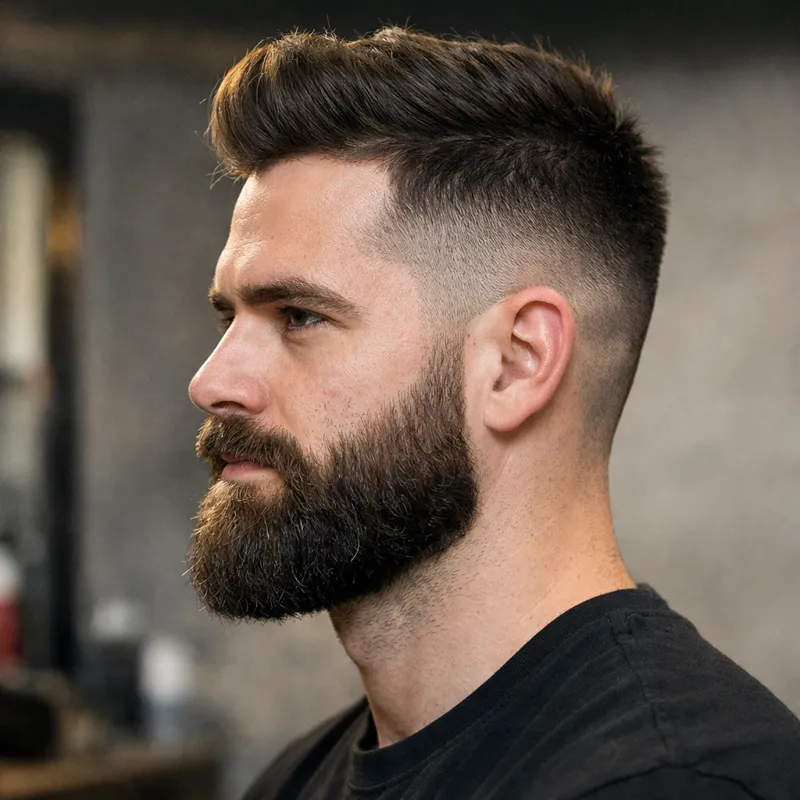
Clean lines read as “well-groomed” even when the haircut is simple. The goal isn’t ultra-thin edges—it’s consistent, intentional shape.
Maintenance & troubleshooting: keep your Wahl trimmer cutting clean
A trimmer that used to feel sharp but now feels rough is rarely “mysteriously broken.” Most of the time it’s one of four issues: hair buildup, a dry blade, misalignment, or worn cutters. Maintenance is not about perfection—it’s about preventing the two things that ruin results: pulling hair and forcing extra passes.
The simplest routine that works (and takes minutes)
Brush out hair + quick wipe
Hair packed near the blade changes the cutting angle and causes snagging. A quick brush-out is the fastest “performance upgrade” you can do.
One drop of oil (if your model allows)
A dry blade increases friction. More friction means more pressure, which means more irritation. Oil prevents the chain reaction.
Deeper clean + check guards
Inspect guards for cracks and looseness. A cracked guard is a silent cause of uneven length because it doesn’t sit evenly.
Mini tool: build a maintenance plan (copyable)
Choose how often you trim. This generates a simple plan you can follow without thinking.
The plan will appear here with a simple checklist and “what to do when performance drops.”
Quick troubleshooting (most common problems)
Clean the blade area, brush out hair, and oil lightly (if your model allows). Then trim in shorter passes. If the beard is long, reduce bulk with a longer guard first—detail trimmers hate long, dense hair.
Stop “fixing by eye.” Map your line first, then cut to the map. Step back from the mirror often. Use the trimmer’s corner to refine instead of re-cutting the entire line.
Reduce pressure and reduce passes. If you want a cleaner neck, finish with a foil shaver instead of pressing harder with a trimmer. If irritation persists, consider leaving a fraction more length on sensitive areas.
FAQs: Wahl trimmers (answers that actually help)
These FAQs are written to match real search intent: buying, using, maintaining, and understanding Wahl trimmers. Each answer is practical—no filler.
Are Wahl trimmers good for men’s grooming?
Wahl is a long-running brand in the clipper and trimmer space, and many men choose Wahl trimmers because they want dependable cutting, familiar guard options, and a wide range of models—from detail tools to beard trimmer sets and foil shavers. “Good” still depends on matching the tool to the job: a detail trimmer is great for lineups, while a guarded kit is better for consistent beard length.
What’s the best Wahl trimmer cordless for lineups?
For lineups, focus less on marketing labels and more on function: visibility, blade stability, and precise control. A lineup-focused trimmer should feel easy to aim, especially at cheek corners and neckline edges. If you mainly want crisp edges, prioritize a detail trimmer category rather than a multi-guard beard kit.
What’s the difference between Wahl clippers and trimmers?
Clippers are built for bulk removal (haircuts, fades, cutting larger areas). Trimmers are built for edges and controlled shaping (beard lines, neck cleanups, sideburns, finishing touches). If you try to do bulk work with a trimmer, you usually end up pressing harder and irritating skin. If you try to do sharp edges with a clipper, the line often looks less crisp.
What is a Wahl foil trimmer (foil shaver) used for?
A foil shaver is for finishing: smoothing the neckline, polishing a fade, and getting a closer-than-trimmer result on short stubble. It is not designed to cut long hair. The best time to use a foil shaver is after trimming, when the remaining hair is very short and you want an extra-clean look.
Do Wahl trimmer guards fit all Wahl trimmers?
Not always. Guard and attachment compatibility depends on the specific model and head design. Some trimmers use T‑blades and accept only specific guide combs. Others are beard trimmer kits with their own guard system. If guards matter to you (they should), confirm compatibility for your exact model before buying extras.
How do I clean and oil a Wahl trimmer?
The basic approach is: brush out hair after use, wipe the head clean, and apply a small amount of clipper oil if your model is designed for oiling. Avoid over-oiling (it attracts debris). If your model allows rinsing certain parts, dry completely before storage. Clean tools cut cleaner, require fewer passes, and reduce irritation.
Why is my trimmer pulling hair instead of cutting clean?
Pulling usually means hair buildup, a dry blade, or worn cutters. Start with cleaning and a light oil (if allowed). Then reduce bulk with a longer guard first, especially on thick beards. If performance doesn’t return, the cutter/foil may be worn and need replacement.
Is “zero-gapping” safe, and do I need it?
Zero-gapping can make edging closer, but it also increases the risk of irritation and accidental nicks if done incorrectly. Most men don’t need it to get clean lines—technique matters more. If you have sensitive skin, focus on lighter pressure, fewer passes, and finishing tools rather than chasing the closest possible trimmer setting.
What’s the best routine for a clean neckline at home?
Set a consistent neckline shape, use light pressure, and trim in short passes. Keep the head neutral (don’t tilt down too far), and step back to check symmetry. For the cleanest finish, you can finish with a foil shaver after trimming if your skin tolerates it. The goal is a clean boundary that looks intentional—not a harsh line pushed too high.
What’s the easiest way to avoid a “too sharp / fake” beard line?
Keep your cheek line closer to natural, and use the trimmer to tidy rather than redraw your face. Sharp lines look best when the beard density supports them. If your cheeks are lighter, a softer line looks more natural and still reads as well-groomed.