
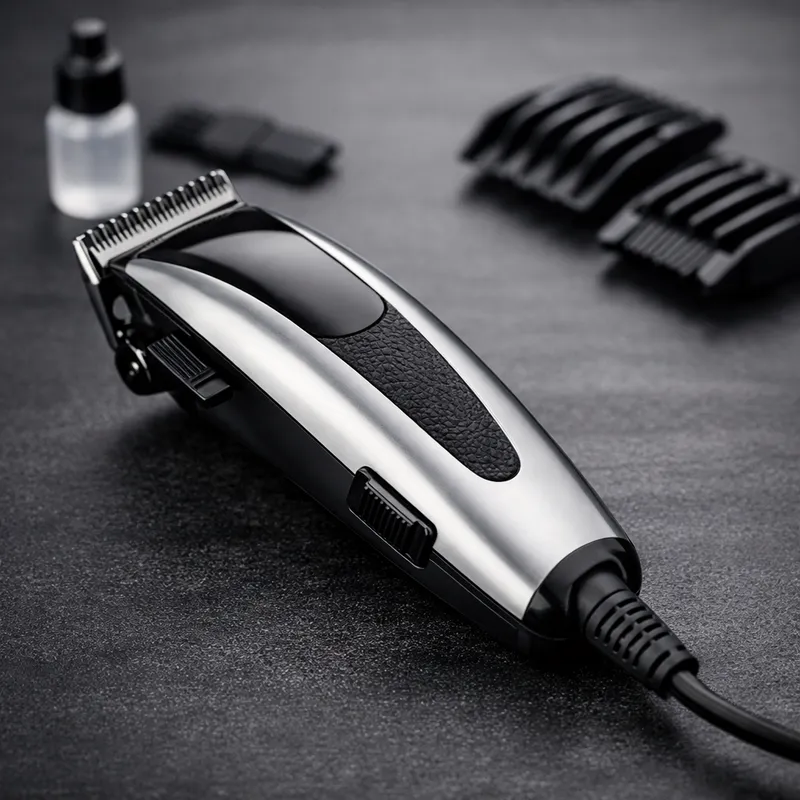
If you want clean fades, sharp necklines and fewer emergency trips to the barbershop, you need the right hair clippers and a clear plan for how to use them. The good news: it’s easier than you think when you understand a few basics.
In this guide, you’ll learn how to choose clippers that match your hair type and lifestyle, how to read clipper guard sizes properly, and how to actually cut your own hair (or someone else’s) without patchy spots or random lines.
1. Know Your Goal Before You Buy Hair Clippers
Before you even look at brands or prices, get clear on what you want your clippers to do. Different goals demand different features.
- Buzz cuts and simple trims: you can get away with a basic, affordable clipper.
- Fades, tapers and detailed work: you need better blades, adjustable levers and more guards.
- Cutting your own hair regularly: comfort, weight and cordless battery life matter a lot.
- Cutting the whole family’s hair: you want versatility, quiet motors and multiple guard sizes.
Once you know your main use, it becomes much easier to filter out options that look good on paper but won’t really fit your routine.
2. Key Features to Look For in Hair Clippers
Instead of chasing marketing buzzwords, focus on a few core features that actually change how your cuts turn out.
2.1 Corded vs. Cordless Clippers
This is one of the first decisions you’ll face. Both options can work well; the best choice depends on how and where you plan to cut.
- Corded clippers
Steady power as long as they are plugged in. Great for long cutting sessions and thicker hair. The trade‑off is dealing with the cable, which can be annoying if you’re cutting your own hair in a small bathroom. - Cordless clippers
Much easier to move around your head or someone else’s, especially for fades and detailing. The downside is battery life; look for at least 60–90 minutes of runtime so you’re not rushing halfway through a haircut.
If you’re a beginner or mostly cutting your own hair, a cordless model with decent runtime is usually the most comfortable choice.
2.2 Motor Power and Noise
The motor is what stops your clippers from snagging or pulling your hair. For coarse, thick or very curly hair, you want a stronger motor so the blades glide instead of fight.
- Stronger motors: smoother cutting, better for bulk removal and fades on dense hair.
- Quieter motors: more comfortable for kids or anyone sensitive to noise.
Don’t obsess over technical motor names. Focus on reviews and descriptions that mention smooth cutting through thick hair without tugging.
2.3 Blade Material and Quality
Blades are where your haircut is made or destroyed. Good blades stay sharp, cut cleanly and are easier to maintain.
- Stainless steel blades: the standard option; durable and affordable.
- Ceramic blades: stay cooler and sharper longer but can be more fragile if dropped.
- Self‑sharpening blades: designed so the blades lightly grind against each other to maintain sharpness over time.
Whatever the material, sharp blades are safer than dull ones. Dull blades pull hair, create uneven lines and tempt you to push too hard against your scalp.
2.4 Guard System and Adjustment Lever
Guards control how much hair you leave on your head. The more precise your guard system, the easier it is to get clean results.
- Full set of guards: ideally from #0.5 or #1 up to #8 (or at least from #1 to #6) so you can try different lengths.
- Clearly marked lengths: guards should show both the number (like #2) and the millimeters.
- Adjustable taper lever: a small lever on the side that moves the blades closer or farther apart, giving you half‑steps between guards and smoother fades.
If you want fades, tapers or blended sides, the taper lever is your best friend. It lets you “connect” lengths without jumping harshly from one guard to another.
2.5 Weight, Grip and Ergonomics
You will hold your clippers at awkward angles, especially when you cut the back of your head. A heavy or slippery clipper makes that harder.
- Look for a balanced weight that doesn’t strain your wrist.
- Check for a non‑slip grip or textured body so it feels secure in your hand.
- If you have small hands, avoid very bulky designs.
Comfort sounds minor, but it’s what turns a stressful DIY haircut into a routine you can actually stick with.
3. Match Your Clippers to Your Hair Type and Style
Your hair type and your favorite haircut should guide your choice more than any generic “best clipper” list.
3.1 Straight or Fine Hair
Fine hair shows every mistake, so you need clean cutting and good blending.
- Choose clippers with precise guards and a taper lever for smooth transitions.
- Use lighter pressure to avoid pressing lines into the hair.
- Ideal for styles like crew cuts, classic side parts and short textured crops.
3.2 Thick or Coarse Hair
Thick and coarse hair demands more power so the clippers don’t stall.
- Prioritize a strong motor and high‑quality blades.
- Go for corded or high‑power cordless clippers.
- Great for fades, tapers and undercuts where you remove a lot of bulk on the sides.
3.3 Curly, Coily or Afro‑Textured Hair
With curls and coils, the goal is control without destroying your natural pattern where you want to keep length.
- Choose clippers known to glide through dense, textured hair without snagging.
- Use guards consistently to keep your shape even all around.
- Ideal for line‑ups, shadow fades, high‑top fades and tight tapers around a natural shape.
3.4 Longer Hairstyles with Clipper Work on the Sides
If you wear a quiff, pompadour, slick back or man bun, you’ll usually use clippers only on the sides and back.
- Look for a versatile guard range from #1.5 to #6 or #8.
- Use the taper lever to softly blend into the longer hair on top.
- Combine clipper work on the sides with scissors or a trimmer for detail around the ears and neckline.
4. How to Understand Clipper Guard Sizes (Without Guessing)
Guard numbers can be confusing at first, but once you learn them, you can ask for or recreate any cut consistently.
Here is a simple reference for the most common clipper guards and what they mean in length:
- #0 or no guard: almost bald, just stubble.
- #1 (around 3 mm): very short, tight stubble look.
- #2 (around 6 mm): short, classic buzz cut length; scalp slightly visible.
- #3 (around 10 mm): short but fuller; good “safe” buzz length for many head shapes.
- #4 (around 13 mm): about half an inch; a soft, even crop.
- #5–#6 (16–19 mm): medium length; you see more texture and movement.
- #7–#8 (22–25 mm): longer, more flexible; usually used on the top rather than the sides.
Remember: the higher the guard number, the more hair you leave on the head. When in doubt, start longer. You can always go shorter, but you can’t glue hair back on.
5. Step‑by‑Step: How to Use Hair Clippers for a Basic Cut
Now let’s turn theory into action. This step‑by‑step routine works for a simple, clean cut you can adapt into a buzz cut, crew cut or basic taper.
5.1 Prep Your Hair and Workspace
- Wash your hair and let it dry completely. Clean, dry hair is easier for clippers to handle.
- Comb your hair in the direction it naturally falls to remove tangles.
- Set up in a well‑lit area, ideally with a mirror in front and a handheld mirror for checking the back.
- Place a towel or cape around your shoulders and cover the floor with an old sheet or newspaper for easy cleanup.
5.2 Start with the Longest Guard
Decide how short you want your hair overall, then attach a guard that’s one step longer than that.
- Begin at the sides and back, moving the clippers against the direction of hair growth.
- Use smooth, steady strokes from the bottom up, stopping roughly at your temples on the sides and just above the occipital bone (the bump at the back of your head).
- Don’t rush; overlap each pass slightly so you don’t leave darker patches.
5.3 Create a Shorter Length on the Sides
To avoid a helmet look, shorten the sides with a smaller guard.
- Switch to a shorter guard (for example, from #4 on top to #2 or #3 on the sides).
- Run the clippers from the bottom of the sides up to your chosen weight line (where you want the fade or taper to start).
- Keep your wrist loose and follow the shape of your head, curving out slightly as you approach the weight line.
5.4 Blend the Transition (Fading Basics)
This is where the taper lever becomes essential.
- Take the guard used on the sides (say #2) and open the lever fully. This makes it slightly longer than a standard #2.
- Make short, controlled strokes just below the weight line to soften the contrast.
- Close the lever gradually, working your way down the head to erase any clear steps.
- If you see a harsh line, go to the guard between the two lengths (for example, #1.5) or use the lever at a halfway position to blend.
5.5 Clean Up the Neckline and Around the Ears
Detail work takes your haircut from “DIY” to “barbershop” level.
- Remove the guard or switch to a dedicated trimmer for sharper lines.
- Clean the neckline by cutting upwards into the hairline, instead of dragging the clippers down your neck, which can create uneven edges.
- Carefully trace around the ears, holding them down slightly with your free hand for better access.
- If you’re unsure, leave the neckline slightly higher rather than trying to carve a low, complicated shape.
5.6 Final Check and Adjustments
- Use a handheld mirror to inspect the back and sides under good light.
- Look for dark patches or harsh lines and gently clean them up with the appropriate guard and lever setting.
- Shower, dry and style your hair. Sometimes lines or uneven spots only show clearly once the loose hair is gone.
6. How to Use Clippers for Popular Men’s Haircuts
Once you understand the basics, you can adapt your technique to match different styles. Here’s how clippers fit into some of the most popular haircuts.
6.1 Buzz Cut
- Choose your guard (many people like #2 or #3 for a first buzz).
- Use the same guard all over the head, moving against the grain.
- Go slowly over the crown area; hair grows in different directions there.
- Clean the neckline and around the ears with no guard or a trimmer.
6.2 Classic Fade
- Decide where the fade will sit (low, mid, or high).
- Start with a longer guard on top (such as #4) for your main length.
- Work down the sides with shorter guards (#2 then #1) as you move toward the neckline.
- Use the taper lever to blend every step between guards until the fade looks smooth.
6.3 Crew Cut
- Keep the top slightly longer than the sides (for example, #4 on top, #2 on the sides).
- Clip the sides and back first, then move to the top.
- Blend the ridge between top and sides with the lever halfway open.
- Style the front with a small amount of product for a subtle lift.
6.4 Tapered Sides for Longer Styles
- Leave the top long (scissors or previous growth) and focus clippers on the sides and back.
- Use a longer guard like #4 at the upper sides and #2 or #3 closer to the bottom.
- Blend with the lever so you don’t see a hard line where short meets long.
- Pair with styles like quiffs, pompadours, slick backs or man buns.
7. Maintenance: How to Keep Your Clippers Sharp and Safe
Good maintenance is what keeps your clippers cutting like new and extends their life. It also makes every cut safer for your scalp.
7.1 Clean After Every Use
- Unplug or turn off the clippers before cleaning.
- Use the included brush (or a small clean brush) to remove hair from the blades and guards.
- If your clipper allows, remove the blade to clean underneath where hair tends to build up.
7.2 Oil the Blades Regularly
Oiling takes less than a minute but makes a big difference.
- Place 2–3 drops of clipper oil along the blade teeth.
- Turn the clippers on for 20–30 seconds so the oil spreads evenly.
- Wipe off the excess with a soft cloth so it doesn’t drip during your next haircut.
Well‑oiled blades run cooler, cut more smoothly and last longer.
7.3 Disinfect the Blades
If you’re cutting hair for more than one person, hygiene matters.
- Use a clipper disinfectant spray between users.
- Let the product sit for the recommended time and then wipe dry.
- Never soak electric clippers in water or harsh chemicals.
7.4 Check Guards and Cords
- Inspect plastic guards for cracks or loose clips so they don’t pop off mid‑cut.
- If you use corded clippers, check the cord for damage and avoid wrapping it too tightly.
- Store everything in a dry place, ideally in a case or box.
8. Common Clipper Mistakes and How to Avoid Them
Most DIY haircut disasters come from the same small set of mistakes. If you avoid these, you’re already ahead.
- Starting too short: always begin with a higher guard and work your way down.
- Moving too fast: rushing leads to uneven patches; slow, overlapping strokes work best.
- Skipping the taper lever: if you don’t use it, your fade will look boxy and stepped.
- Cutting with dirty or dry blades: this can pull hair and cause irritation.
- Ignoring the crown: hair changes direction there; go over it from multiple angles.
- Chasing perfection when you’re tired: once you’ve been cutting for a while, stop, rest and check the result later instead of endlessly “fixing” tiny details.
9. Final Thoughts: Build a Simple Clipper Routine
The best hair clippers are the ones you feel comfortable using regularly. Focus on a solid motor, good blades, a reliable guard set and a taper lever, then build a simple routine you can repeat every few weeks.
Start with basic cuts like a buzz or crew cut. Once you’re confident, experiment with fades, tapers and longer styles on top. With practice and the right clippers, keeping your hairline sharp at home becomes just another part of your grooming routine.
Frequently Asked Questions About Hair Clippers
What type of hair clippers are best for beginners?
For beginners, a cordless clipper with a full set of guards, a taper lever and at least 60 minutes of battery life works best. It gives you enough control and flexibility to learn fades, buzz cuts and simple tapers at home.
How often should I oil my clipper blades?
If you cut hair regularly, oil the blades after every use. Place a few drops along the teeth, run the clippers briefly and wipe off the excess. This keeps the blades sharp, reduces heat and helps prevent pulling or snagging.
Can I use hair clippers on my beard?
Yes, many hair clippers can trim beards, especially for short or medium lengths. However, beard‑specific trimmers usually offer more precise shorter settings and smaller guards that follow the contours of your face more easily.
Why do my clippers pull my hair instead of cutting it?
Clippers usually pull hair when the blades are dull, dirty or dry, or when the motor is too weak for your hair type. Clean and oil the blades, check that the guards are attached properly, and consider a more powerful clipper for thick or coarse hair.
What guard length should I use for a basic buzz cut?
A #2 or #3 guard is a good starting point for a basic buzz cut because it leaves enough length to adjust if you decide you want it shorter. If you are unsure, start with #4 and step down gradually until you like the result.