
Remington Clippers: choose the right model for your cut (and avoid beginner mistakes)
Most “Remington clipper” pages either dump you into a product grid or focus on one model. This page does the useful part: it matches your haircut goal to the clipper style that makes it easiest, then gives you a repeatable method to get a cleaner result at home.
Quick reality check: the “best” clipper is the one that matches your weekly routine. A fade-obsessed toolkit isn’t the best choice if you mostly do fast maintenance trims—and the simplest buzz-cut tool won’t magically produce a crisp barber fade without technique.
On this page
- Remington clipper types (quick comparison)
- Interactive chooser: pick your best match
- What matters when buying Remington clippers
- Best Remington clipper picks by haircut goal
- Guard-length planner (interactive)
- DIY haircut method: buzz cut, taper, beginner fade
- Cleaning, maintenance & troubleshooting
- Remington clippers FAQs
Remington clipper types at a glance
“Remington clippers” isn’t one thing. Remington makes different clipper styles aimed at different problems: fast self-haircuts, more durable all-round clippers, fade-focused kits, and mess-reducing setups. If you start with the wrong style, you’ll compensate with effort (and the result usually looks less clean).
| Clipper style | Best for | Why it works | Not ideal if… |
|---|---|---|---|
| Self-cut / ergonomic | Fast buzz cuts, weekly maintenance trims, cutting your own hair | Designed to be easier to control on your own head and cover areas faster with consistent passes | You want crisp, barber-sharp fades without putting in technique time |
| Durable / high-power | Thick hair, family use, “I want this to last” buyers | Feels more like a tool: steadier cutting, less hesitation on dense growth, more robust build | You want the lightest possible clipper for delicate detailing |
| All-rounder length system | General home cuts, simple short styles, tidy sides + manageable top | Easy length selection and repeatable results when you stick to a routine | You need a fade-specific kit with taper-focused combs |
| Fade kit | Beginner fades, tapers, blended sides | Guard progression and levers/comb shapes are geared to smoothing transition lines | You only ever do one-length buzz cuts (you’re buying complexity you won’t use) |
| Mess-reducing (vacuum-style) | Bathroom-friendly trims, quick cuts with less cleanup | Helps capture hair as you cut, reducing the “snowstorm” effect | You expect zero cleanup or you only cut in a barbershop setting |
If you cut your hair weekly, prioritize speed and control. If you cut monthly, prioritize power and consistent length selection. If you want fades, prioritize blend tools and patience.
Most DIY regret comes from choosing a short guard “to be safe” and discovering it’s not safe at all. Start longer, take one pass, then step down.
Clean results come from repeatability: same light setup, same pass direction, same guard steps, same edge check, then clean the clipper.
Interactive chooser: which Remington clipper style fits you?
Answer three quick questions. This doesn’t force you into a single model; it tells you the right Remington clipper category to shop within so you don’t fight the tool.
1) What’s your main haircut goal?
2) What best describes your hair density?
3) What matters more to you?
Tip: If you’re unsure, pick the option you’ll repeat most weeks. Consistency beats complexity.
What matters when buying Remington hair clippers (and what doesn’t)
If you want better results, don’t obsess over marketing terms first. Focus on the handful of factors that actually show up in your mirror: how predictable the length is, how stable the clipper feels on your head, how easy it is to blend, and whether you’ll maintain the blades.
A buzz cut is about consistency. A fade is about transitions. Maintenance trims are about repeatability. When you match the tool to the job, you stop “fighting” the cut and your lines look cleaner with less effort.
- Buzz cut: prioritize control and even coverage.
- Fade/taper: prioritize a taper lever and a clear guard progression.
- Thick hair: prioritize steady cutting and durable build quality.
Cordless is convenient for self-cuts, but only if you don’t rush to beat the battery. If you’re slow and careful (good), choose a setup that supports longer sessions or provides corded backup. If you do quick weekly trims, cordless convenience becomes a big win.
Practical rule: if you need mirrors, setup time, and blending, you’re not doing a “5-minute cut.” Buy for a calm session, not a race.
More guards isn’t automatically better. What matters is whether the guard system makes it easy to repeat your cut. The best setup is the one where you can say: “I used these steps, in this order, and it looked good.”
- Start longer. Step down in small jumps.
- Do one clean pass per guard before changing again.
- For fades, spend time on the transition line—don’t chase perfection everywhere.
A clipper that pulls hair usually isn’t “bad” — it’s often clogged, dry, or used too aggressively against dense growth. Clean blades cut smoother, feel more comfortable, and produce a more even finish.
If you do one thing: brush out hair after every cut and keep the blade teeth clean. Your clipper will last longer and cut better.
Best Remington clippers by haircut goal
Below are the Remington clipper categories that typically match each goal. When you shop, look for these keywords and design cues. You’ll make faster progress (and fewer mistakes) than trying to pick “the best” model without context.
Self-cut / ergonomic Remington clippers
Best if you’re cutting your own hair and you care about speed, reach, and control. This category is made for practical, repeatable home sessions.
- Ideal for even short cuts and frequent maintenance.
- Great “first clipper” for DIY buzz cuts.
- Expect a short learning curve around ears and edges.
Shopping cue: look for ergonomic grip design and “self-cut” positioning.
Durable / high-power Remington clippers
Best if your hair is dense or you want a clipper that feels sturdier and keeps cutting steadily over time. This style is usually heavier and more tool-like, which many people prefer for thick growth.
- More forgiving on coarse hair when you move slowly.
- Good for multi-person household use.
- Pair it with a simple guard progression for cleaner results.
Shopping cue: look for durability language and steady cutting claims.
Fade kits (beginner-friendly)
Best if the look you want is a taper, low fade, or blended side—especially if you’re learning. The goal is not “one magical guard,” it’s a controlled transition.
- Expect to spend time on the transition line.
- Use mirrors and good lighting—fades punish shadows.
- Start conservative; shorten slowly.
Shopping cue: taper lever + fade-comb language.
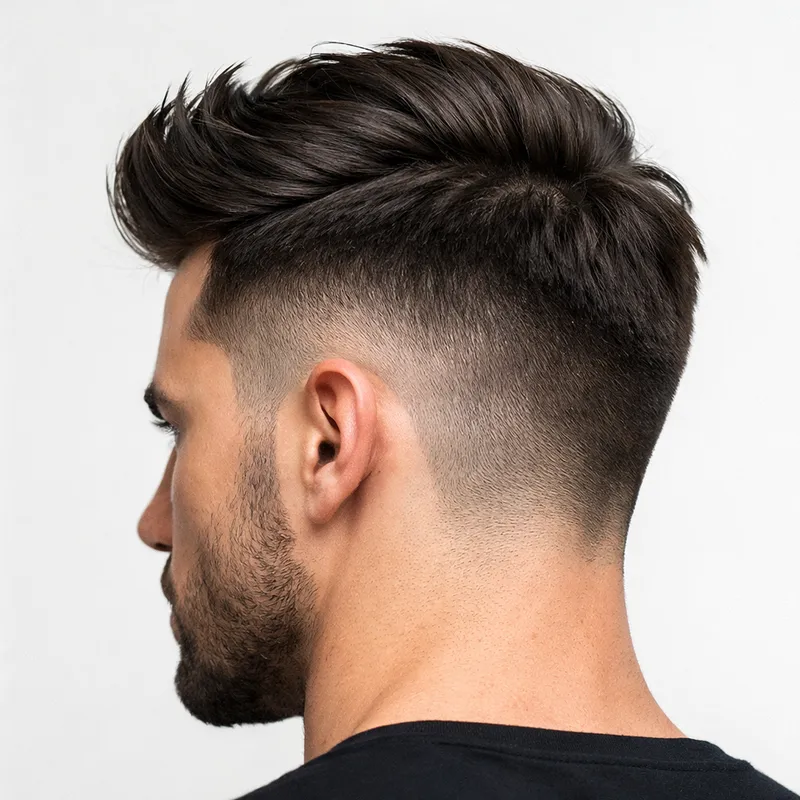
Clean results come from repeatable steps: one guard at a time, one clean pass at a time.
How to avoid the #1 DIY mistake: chasing symmetry
When you cut your own hair, you’ll notice one side first. That’s normal. The trap is “fixing” that side repeatedly until it’s too short—then trying to match the other side, and losing the shape.
A better strategy is to cut in full rounds: do both sides with the same guard, then reassess in good light. This prevents you from overcorrecting.
Guard-length planner (interactive): pick a safer starting length
Guard numbers and millimeters can vary by kit. This tool gives you a practical, conservative starting plan that works with most clipper sets: start longer, confirm the look, then step down in controlled jumps.
Set your goal and comfort level
This is a planning tool, not a promise. The cleanest results come from slow passes, good light, and checking the back with a second mirror.
Guard translation tip: if your kit uses millimeters instead of numbered guards, use the closest length available and keep the progression steps the same. The order matters more than the exact label.
DIY haircut method (Remington clippers): the routine that stays clean
If you want a better DIY result, you need a better process. The method below is designed for real people: one mirror, real lighting, and the common urge to “just fix that one spot.” Follow the order and you’ll get a more even cut with fewer accidental bald patches.
Setup: light beats skill
Use bright lighting (overhead + front if possible), a towel or cape, and a second mirror or phone camera for the back. Most “bad DIY haircuts” are really “bad lighting + rushed passes.”
Start longer than you think
Choose a longer guard, do one complete pass around your head, and stop. Now you’re making a real decision based on what you see—not on fear.
Cut in full rounds (don’t “fix” one side)
Do the back, then the sides, then the top (or top last if you’re only clipping the sides). Use the same guard for both sides before changing anything.
Blend the transition line (where haircuts look “cheap”)
For taper/fade styles, the transition line is the whole haircut. Use short, controlled motions and soften the line gradually instead of trying to erase it in one aggressive pass.
Edges: go slow, use small movements
Around ears and the neckline, move slowly. This is where people rush and regret it. If you’re unsure, leave it slightly longer—cleaner than accidentally carving it too high.
Finish strong: clean the clipper
Brush out hair from the blade area and keep it clean. A maintained clipper cuts smoother next time and reduces pulling and patchiness.
Beginner fade mindset (so you don’t rage-quit)
A fade is not “a haircut,” it’s a series of controlled transitions. You’re creating a gradient. That means the work is concentrated in a narrow band where two lengths meet.
- Keep the top plan simple. Learn fades on easier shapes first.
- Make one change at a time (one guard step, one lever adjustment).
- Stop, check in good light, then continue. Don’t cut on autopilot.
Shortcut that helps: if your transition line looks harsh, your next move is usually “softer, smaller motions,” not “shorter guard everywhere.”

Fades are gradients. The clean look comes from careful blending—not from cutting more hair everywhere.
If you want a crisp fade or you’re short on time, a barber is still the fastest path to a high-confidence result. Use our location pages to find options near you:
(Edit these links if your site uses different URLs.)
Cleaning, maintenance & troubleshooting (so your clippers keep cutting clean)
The easiest way to make a clipper feel “bad” is to ignore buildup. A clogged blade pulls and leaves uneven patches. The easiest way to make a clipper feel “better” is to clean it consistently.
- Remove the guard and brush out hair from the blade area.
- Wipe down the body; keep vents clear.
- Let everything dry before storing.
Result: smoother cutting next time and less pulling on dense growth.
If you cut weekly, do a slightly deeper clean weekly too. Hair dust builds up gradually and changes how the clipper behaves.
- Brush thoroughly around the teeth.
- Check for stuck hair near the edges (common culprit).
- Oil blades only if your specific clipper manual recommends it.
Usually one of these: blade area clogged, moving too fast, or going against dense growth with heavy pressure.
- Clean the blade area fully.
- Use lighter pressure and slower passes.
- Work in smaller sections on thick spots (often crown/sides).
Patchiness usually comes from inconsistent pass direction, changing guards mid-side, or skipping full rounds.
- Redo one complete round with the same guard on both sides.
- Check lighting and mirror angle before “fixing.”
- On longer guards, make sure hair is lifted consistently and not flattened.

Some cuts are faster (and cleaner) when you outsource them. No shame—just strategy.
When you should stop DIY and go barber
DIY clippers are perfect for many men—but not every situation. If you need a high-stakes look for an event, if your hair has tricky growth patterns, or if you’re learning fades and keep overcorrecting, a barber saves time and stress.
- You want a sharp fade in one attempt, not “practice.”
- You’ve got uneven growth or cowlicks you can’t see well.
- You’re changing style (long-to-short) and want the shape done right.
Trademark note: “Remington” is a trademark of its respective owner. This site is not affiliated with the brand.
Remington clippers FAQs
These answers are written for real at-home users: what to buy, how to avoid common mistakes, and how to get a cleaner finish.
Are Remington clippers good for home haircuts?
Yes—especially if your goal is an even buzz cut, regular maintenance trims, or a beginner fade with a clear guard progression. The key is choosing the right clipper style for your routine: self-cut ergonomics for fast DIY cuts, durable/high-power tools for thick hair, and fade kits for blending work.
Which Remington clipper type is easiest for cutting your own hair?
For most beginners, an ergonomic self-cut style is easiest because it prioritizes control and reach on your own head. If you mostly do quick buzz cuts, this is often the most confidence-building starting point.
Can I do a fade with Remington clippers?
You can—but fades require technique. A fade-focused kit helps because it encourages a structured progression and blending approach. Your biggest wins come from: good lighting, small guard steps, and spending time only where lengths meet (the transition line).
How do I avoid making my cut too short?
Start longer, do one full round, then decide if you want shorter. Changing your mind after you go too short is the one DIY problem you can’t fix. Use the guard planner on this page to get a conservative first pass.
My clippers pull hair—what should I do first?
First, clean the blade area thoroughly. Hair packed near the teeth is the most common cause of pulling. Second, slow down and use lighter pressure—especially on thicker spots like the crown.
How often should I clean my clippers?
Brush out hair after every cut. If you cut weekly, do a deeper clean weekly too. Consistent cleaning keeps cutting smoother and makes the next session faster.
Do guard numbers mean the same thing on every kit?
Not always. Some kits use numbered guards, others use millimeters, and ranges can differ. That’s why it’s smarter to follow a progression method (start long → step down) instead of relying on one exact number.
When should I stop DIY and go to a barber?
If you need a sharp fade quickly, you have an important event, or you keep overcorrecting your sides, go barber. It’s not a failure—it’s choosing the tool (a pro) that gets the job done with less time and stress.