
Clippers & Trimmers
BaBylissPRO FX Trimmers: pick the right model, blade, and setup
Searching for a BaBylissPRO FX trimmer usually means one goal: crispy edges—hairline, beard, neckline, and detail work that looks clean from arm’s length.
The truth is simple: most people choose the wrong FX trimmer because they focus on color or hype instead of the only two things that change your results fast: (1) body style and (2) blade style. This page gives you a practical, no-fluff way to decide, plus technique and maintenance so your lines stay sharp week after week.
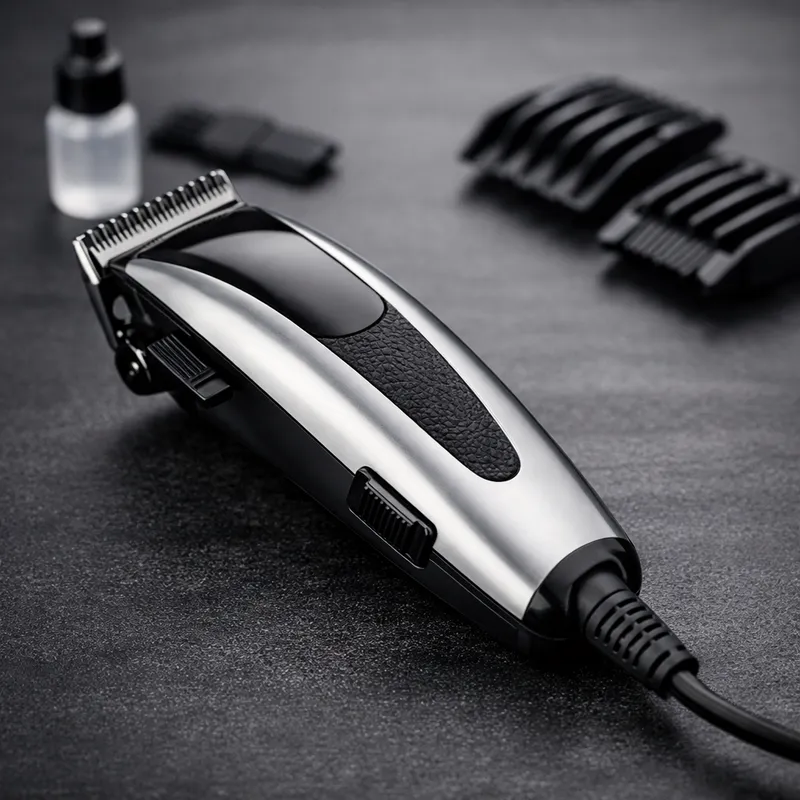
Get the right FX setup the first time
If you’re choosing between Skeleton vs Lo‑ProFX vs FXONE, the fastest way to avoid regret is matching the tool to your hair density, your skin sensitivity, and what you trim most often (hairline, beard, or both).
Use the Match Tool below and then save the checklist—so you know exactly what to buy, how to set it up safely, and how to keep it cutting sharp.
Quick actions
No forms here. Use these as simple CTA links and point them to your preferred pages (checklist, contact, shop, or barber finder).
Tip: your results usually improve more from the right blade + lighter pressure than from buying a “stronger” motor.
Interactive tool
FX Match Tool: find your best BaBylissPRO FX trimmer + blade style
Tap answers below. This tool recommends an FX family and a blade direction based on what actually affects your outcome: visibility vs ergonomics, hair density, and how easily your skin gets irritated.
1) What do you trim most?
Hairline work benefits from visibility. Neckline and long sessions benefit from comfort and grip.
2) Your hair density?
Dense hair often likes a more “grabby” tooth profile; fine hair tends to like control and softer contact.
3) How sensitive is your skin?
If you get bumps easily, blade choice + pressure control matter more than chasing an extreme zero-gap.
Your recommendation will appear here
Answer all 3 questions to get a clear pick.
Best picks
The best BaBylissPRO FX trimmer depends on your use case (not the hype)
“Best” is a trap word. The right FX trimmer is the one that makes it easier for you to keep lines straight and corners sharp without overcutting your hairline. Use these picks to decide quickly:
Maximum lineup visibility
Pick: Skeleton-style FX (FX787 family)
The exposed blade area helps you see exactly where the corner lands. If you edge yourself, that extra visibility is often the difference between a confident outline and a wobbly line you keep “fixing” until the hairline creeps back.
Best for: front lineups, corners, sideburns, crisp beard lines. Tradeoff: a more exposed blade can feel less forgiving if you press too hard.
Comfort + control (daily use)
Pick: Lo‑ProFX style (FX726 family)
If you spend time on neckline cleanup, ear work, or detailed beard shaping, ergonomics matters. A low-profile body tends to feel steadier, especially during longer sessions where hand fatigue makes your lines drift.
Best for: neck, around ears, steady detail work. Tradeoff: slightly less “open” visibility than skeleton bodies (still precise—just different).
Modular workflow (swap batteries)
Pick: FXONE system (FX799 / FX729 families)
FXONE is about workflow: interchangeable batteries and consistent pro-grade feel. If you hate downtime, or you’re building a tool set over time, a modular system can be a smarter long-term move than buying separate tools that each charge differently.
Best for: frequent users, barbers, anyone optimizing routine. Tradeoff: higher initial cost is common—but the benefit is speed and consistency.
High-impact tip: If your lines aren’t sharp, don’t assume the trimmer is “weak.” In most cases, blade choice, pressure, and maintenance are the real bottlenecks.
Comparison
Skeleton vs Lo‑ProFX vs FXONE: what’s actually different
These families overlap in performance. The difference is mostly how the tool behaves in your hand, how clearly you can see corners, and whether you want a modular battery workflow. Use this table as a practical decision aid:
| FX family | Best for | Why people choose it | If you should avoid it |
|---|---|---|---|
| Skeleton (FX787) | Hairline corners, lineups, “barber outline” look | Exposed blade visibility helps you place corners and keep straight lines under control | If your skin is very sensitive and you tend to press hard, you may prefer a less aggressive setup (or a safer blade choice) |
| Lo‑ProFX (FX726) | Neckline cleanup, ear work, steady detailing | Ergonomic, low-profile feel reduces hand fatigue and improves stability | If you specifically want maximum blade visibility for corners, skeleton bodies can feel easier for self lineups |
| FXONE (FX729/FX799) | Frequent users, battery swapping, consistent workflow | Modular battery system + pro feel; great if you build a tool set over time | If you only use a trimmer occasionally, the modular ecosystem can be more than you need |
Note: model names and editions change frequently. Focus on the family (FX787 vs FX726 vs FXONE) and the blade style you plan to use.
Blade guide
Blade guide: the fastest way to upgrade your edges
Here’s the uncomfortable truth: two people can buy the “same” FX trimmer and get completely different results because they run different blade styles and different setups. Think of the blade like tires on a car—motor power matters, but traction and contact are what you feel.
Deep-tooth blades
Deep-tooth designs tend to grab dense hair more aggressively. That can make lines feel sharper and faster on coarse growth, especially around beard edges or when you want your outlines to “pop” with fewer passes.
Best for: coarse/very dense hair, fast outlining, strong “bite.” Watch out for: irritation if you press hard or run an extreme zero-gap.
Fine-tooth blades
Fine-tooth options tend to feel more controlled and can be friendlier for sensitive skin and finer hair. If you get bumps, razor burn, or nicks, a fine-tooth direction plus better technique often fixes the problem faster than buying a new trimmer.
Best for: fine hair, sensitive skin, controlled crisp lines. Watch out for: may feel slower on very dense hair (more passes).
A simple blade decision rule
If your goal is maximum sharpness and your skin tolerates it, you’ll usually prefer a more aggressive tooth profile (and careful pressure). If your goal is sharp lines with minimal irritation, go safer: a friendlier blade style, moderate setup, and clean tapping technique.
Your line quality is a triangle: blade choice + setup (gap) + technique. Change one, test, then change the next.

Compatibility matters (don’t guess)
FX blades are often marketed broadly, but compatibility can vary by family and generation. Before you buy a replacement blade, match it to your exact trimmer line (Skeleton/FX787, Lo‑ProFX/FX726, FXONE/FX729–FX799). This prevents wasted money and annoying fit issues.
If you want, we can help you match the correct blade type and fit—use the Match Tool above and follow the recommendation notes.
Technique
Zero-gap: sharper lines, higher risk (here’s how to do it safely)
Zero-gapping can make an FX trimmer cut closer. It can also increase the chance of nicks, irritation, and “bite” marks—especially on sensitive skin or if you press too hard. The best approach is not “as close as possible.” It’s as close as you can handle comfortably.
The pressure problem (why people overcut their hairline)
Most self-lineup mistakes come from pressure and overcorrection. You see a tiny uneven spot, you press harder to “fix it,” and the line becomes wider, lower, or pushed back. A sharp result comes from light taps and a patient outline-first method.
Outline first, sharpen second
- Outline lightly using short taps. Avoid dragging long lines.
- Step back and check symmetry before you “improve” anything.
- Sharpen only where needed with tiny passes and minimal pressure.
- Stop early. Hairlines look best when they’re crisp, not carved.
Fast safety checklist (before you commit)
- Test on a small area first (neckline is usually safer than the front hairline).
- If you feel scraping, heat, or immediate irritation: reduce closeness and pressure.
- Use a blade direction that matches your hair + skin (see Blade Guide).
- Clean + oil correctly—dull blades force you to press harder.
If you have chronic bumps/ingrowns, chasing an aggressive zero-gap usually makes it worse. Your best upgrade is often safer blade choice + lighter technique.
Care
Maintenance: why your FX trimmer “falls off” after a few weeks
Most “this trimmer got worse” complaints are not about the motor. They’re about hair packed into the blade channel, dry cutting, and heat buildup. The fix is a simple routine that takes less time than fixing a crooked lineup.
The 90-second routine
After each use
- Brush hair out of the blade and housing.
- Add a tiny amount of blade oil if your blade type needs it.
- Run the trimmer for a few seconds to distribute oil evenly.
Weekly
- Do a deeper clean: remove the blade if you know how and clear trapped hair.
- Disinfect correctly if the tool is shared.
- Inspect screws and alignment to avoid vibration and uneven cutting.
Maintenance Schedule Tool
Tap your usage frequency and get a realistic schedule for cleaning and blade checks. No forms, no emails—just a practical plan.
Your schedule will appear here
Choose a frequency above.

When to replace a blade: if you feel tugging, excess heat, or uneven lines even after cleaning and oiling, the blade is often the fix—not a whole new trimmer.
Buyer safety
Avoid counterfeits: protect your skin, your wallet, and your results
Popular FX models are commonly copied. Counterfeits aren’t just “lower quality”—they can be a safety issue because fit, blade alignment, and materials can be inconsistent. If a tool is cutting your skin or performing wildly differently than expected, treat it as a red flag.
Practical buying rules
- Buy from trusted sellers and reputable stores.
- Be skeptical of unusually low prices on popular editions.
- Keep packaging and receipts until you confirm performance and authenticity.
- If something feels off (noise, heat, harsh biting), stop using it and verify the source.
If you already bought one and it feels wrong
Don’t force it. Harshness can come from a bad setup—but it can also come from poor manufacturing. The safest move is to pause, check your blade alignment, confirm the seller, and compare with official product details.
FAQs
BaBylissPRO FX trimmers: FAQs that actually solve problems
These are the questions people ask right before they buy—or right after they realize their setup isn’t delivering. Use them to avoid the common mistakes.
Are BaBylissPRO FX trimmers good for beard edging?
Yes. FX trimmers are ideal for outlining: cheek lines, neckline, mustache borders, and sharp edgework. For bulk beard trimming, it’s usually faster to use a beard trimmer with guards first, then finish the edges with an FX outliner for a clean, professional look.
Skeleton FX vs Lo‑ProFX: which should I choose?
Choose Skeleton FX if you want maximum blade visibility for corners and lineups—especially if you edge your own front hairline. Choose Lo‑ProFX if you care most about comfort, grip, and steady control around the ears and neckline, or if you do longer sessions.
What blade style is best for sensitive skin?
Most sensitive-skin issues improve when you reduce harsh contact and stop pressing. A friendlier (often fine-tooth) blade direction, a moderate setup (not an extreme zero-gap), and a light tapping technique usually helps more than chasing the closest possible cut.
Should I zero-gap my FX trimmer?
Only if you understand the tradeoff: sharper lines versus higher risk of irritation and nicks. If you’re new, start conservative, test on a small area, and adjust gradually. Many people get cleaner results simply by improving technique and maintenance.
Can I do a full haircut with an FX trimmer?
Not realistically. FX trimmers are for detail work. Use clippers for bulk cutting and fading, then use the FX trimmer to finish edges, corners, and crisp outlines.
How do I keep my FX trimmer sharp for longer?
Clean it after each use, oil when appropriate, and do a weekly deeper clean. If your trimmer is tugging or running hot, check the blade first. A sharp blade and a clean cutting channel matter more than most people realize.
Ready to pick your FX trimmer with confidence?
If you want a clean lineup that looks intentional (not overcut), the winning combination is simple: the right FX family, the right blade direction, and light technique. Use the Match Tool again if you want to confirm your choice.
Want to convert this page harder? Point these CTAs to your strongest lead pages (consultation, store, or “best trimmers” category).