
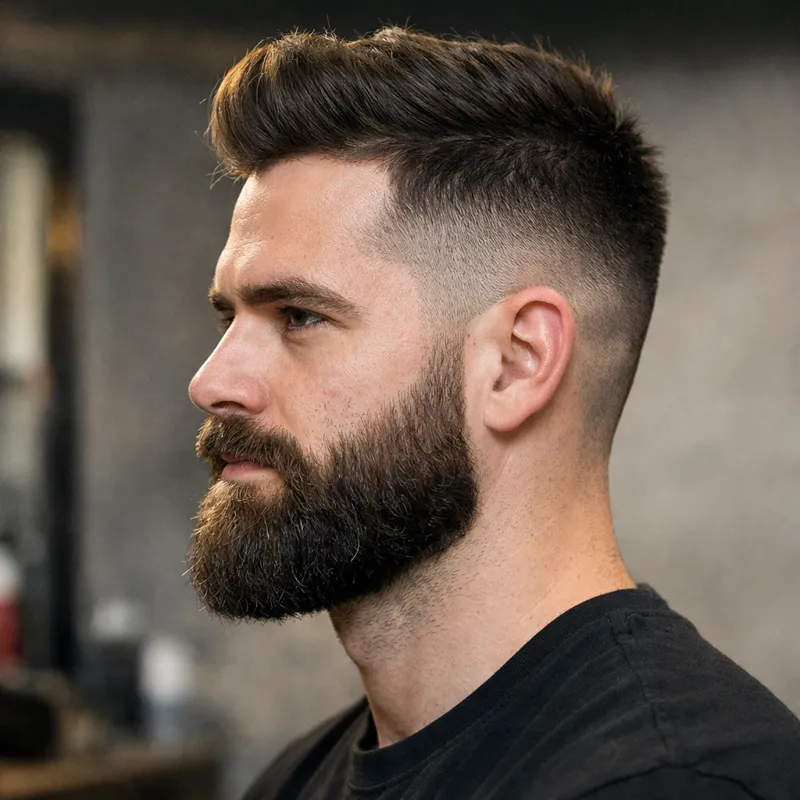
If you care about your beard, choosing the right trimmer is one of the most important grooming decisions you can make. The right tool makes your morning routine faster, your beard lines sharper, and your overall look much more intentional.
In this guide, you will learn how beard trimmers actually differ, which features matter, and how to match a trimmer to your beard length, skin type, and lifestyle. By the end, you will be able to look at any model and see instantly if it is right for you or not.
Why Your Beard Trimmer Choice Matters
A beard trimmer is not just a mini hair clipper. Good models are designed to deal with thicker facial hair, sensitive skin, and precise detailing around the cheeks, lips, and neckline. A poor trimmer will pull hair, create uneven patches, and make your beard harder to style.
On the other hand, when you pick a trimmer that actually fits your beard type and routine, you get three clear benefits:
- Consistency: your beard keeps the same length and shape between barbershop visits.
- Comfort: fewer nicks and less irritation, especially on the neck and under the jaw.
- Control: you can define cheek lines, mustache edges, and neckline exactly how you like them.
According to experienced barbers, most problems men have with uneven or patchy beards start with using the wrong tools or wrong guards, not with the beard itself. When you fix the tool, your beard usually starts looking better within a week or two.
Main Types of Beard Trimmers
Before comparing brands and specs, you need to be clear on the main types of beard trimmers. Each one is better for a specific use.
1. Basic Cordless Beard Trimmers
These are compact, rechargeable trimmers with several clip-on guards. They are designed for short to medium beards and stubble.
- Best for: daily stubble, short boxed beards, light maintenance between barber visits.
- Pros: light, easy to handle, good for travel, usually budget-friendly.
- Cons: not ideal for very long or very dense beards; batteries on cheap models can fade quickly.
2. Adjustable-Dial Trimmers
These models use a built-in wheel or dial to control length without changing guards for every small step.
- Best for: precision on short beards and stubble, men who like to tweak length often.
- Pros: quick length changes, less clutter, very convenient for everyday trimming.
- Cons: the plastic guide can clog with very long or very curly beards.
3. Multi-Grooming Kits
These sets include one main handle plus multiple heads for beard, hair, nose, ears, and sometimes body grooming.
- Best for: men who want one tool for beard, sideburns, neckline, and body hair.
- Pros: versatile, good value if you actually use the attachments.
- Cons: not always as strong or precise as a dedicated beard trimmer for heavy beards.
4. Professional-Grade Beard Trimmers
These are the types barbers keep on their stations: strong motors, metal bodies, and very sharp blades.
- Best for: thick beards, daily use, very defined beard shapes and crisp lines.
- Pros: excellent cutting power, durable, smooth even on dense hair.
- Cons: heavier, more expensive, and they may require a bit of maintenance knowledge.
5. Detail Trimmers and Edgers
These are smaller, narrower trimmers designed specifically for precision work.
- Best for: shaping cheek lines, mustache edges, and tight goatees.
- Pros: very accurate in tight spaces, ideal for final finishing.
- Cons: not meant to trim the entire beard length; they are more of a secondary tool.
Key Features That Make a Beard Trimmer “The Best” for You
Instead of chasing the most expensive or the most popular model, focus on how these features align with your beard and habits. This is where you separate marketing from real-world performance.
Blade Material and Design
The blade is the heart of any trimmer. Pay attention to:
- Stainless steel blades: standard for most trimmers, durable and easy to maintain.
- Titanium-coated blades: stay sharp longer, good for thick beards.
- Ceramic blades: run cooler and stay sharp, but can chip if dropped.
For most men, high-quality stainless steel or titanium-coated blades are ideal. If you have sensitive skin, look for rounded blade tips and guards designed to glide smoothly without scratching.
Motor Power and Performance
A strong motor cuts through dense hair without pulling. A weak one forces you to go over the same area again and again, which irritates the skin.
- If your beard is fine or light, almost any modern cordless trimmer will be enough.
- If your beard is coarse or very dense, choose a professional-grade or “high-torque” model.
When you read product descriptions, phrases like “high performance motor” mean little by themselves. Instead, check real feedback about pulling or snagging, and verify whether the trimmer is marketed specifically for beards rather than just hair.
Length Settings and Guard System
Length control is where the real customization happens. Think about:
- Minimum length: for designer stubble, you want options between 0.4 mm and 1 mm.
- Maximum length: for long beards, look for guards that reach 20–25 mm or more.
- Increments: small steps (0.5 mm to 1 mm) allow fine-tuning instead of big jumps.
If you hate swapping plastic guards every time, an adjustable dial trimmer can simplify your routine. If you wear a long beard, individual combs are usually more stable and less likely to flex or jam.
Corded vs. Cordless and Battery Life
Both options have pros and cons, and some trimmers offer both modes.
- Cordless-only: very flexible and ideal for travel. Aim for at least 60–90 minutes of runtime.
- Corded-only: unlimited power but less freedom of movement; better for home use near a mirror.
- Corded/cordless: the best of both worlds if you trim often and never want to worry about charge.
Also look at charging time. Fast-charge options (for example, a quick 5–10 minute charge for one trim) are extremely useful if you forget to plug in your trimmer regularly.
Water Resistance and Cleaning
Cleaning your trimmer properly will extend its life and keep it performing well.
- Fully waterproof: can be used in the shower and rinsed under the tap.
- Washable head only: the blade and guard can be rinsed, but not the whole body.
- Dry-use only: must be cleaned with a small brush and oil.
If you trim over the sink and like to rinse everything quickly, choose at least a model with a washable head. Brush out trapped hair after each use and oil the blades as recommended by the manufacturer.
Weight, Grip and Ergonomics
You want a trimmer that feels balanced in your hand and gives you control around your jaw, chin, and upper lip.
- Check that the handle shape allows your fingers to wrap comfortably.
- Look for rubberized or textured grips to avoid slipping when your hands are slightly wet.
- Heavier models offer stability, while lighter ones are better for precise maneuvers.
How to Match a Beard Trimmer to Your Beard Style
Instead of asking “what is the best trimmer overall?”, ask “what is the best trimmer for my style?”. Here is how to think about it by beard type.
For Light Stubble and 3-Day Beards
If you prefer a clean, rugged stubble look, you need fine control on very short lengths.
- Choose a trimmer with several settings between 0.4 mm and 3 mm.
- Prioritize smooth guards and gentle tips to avoid neck irritation.
- Adjustable-dial models are especially convenient here.
Trim every 2–3 days, moving against the grain with slow, even strokes. Use the shorter settings on the cheeks and slightly longer on the jaw for natural definition.
For Short Boxed or Corporate Beards
Short, clean beards that look sharp in an office environment need both length control and accurate edging.
- Pick a trimmer that covers 1–10 mm in small increments.
- Make sure it includes a detail or edging head, or buy a narrow secondary trimmer.
- Cordless use makes it easy to see every angle in the mirror.
Keep the beard slightly shorter on the cheeks and fuller along the jawline. Define the neckline about two fingers above the Adam’s apple, following a gentle curve.
For Medium and Long Beards
Longer beards need stability and power more than tiny length increments.
- Look for guards that go up to 20–25 mm or more.
- Choose a strong motor to avoid snagging and pulling.
- Consider a professional-grade model if your beard is very dense or curly.
Comb your beard thoroughly before trimming to line up the hairs. Move the trimmer in the direction of growth for a more natural finish, and always check the sides and under the chin in good light.
For Goatees, Mustaches, and Detailed Styles
If you wear a goatee, a sculpted mustache, or sharp cheek lines, detail work becomes your priority.
- Choose a trimmer with a narrow blade or include a separate detail trimmer.
- Opt for cordless use so you can rotate around your face easily.
- Combine it with a quality razor for ultra-clean edges if you like strong contrast.
Use the trimmer without a guard to outline the shape first, then switch to your preferred guard length to blend the edges into the rest of your beard.
How to Use a Beard Trimmer Step by Step
Owning a good trimmer is only half of the equation. Using it correctly makes the difference between a rough cut and a clean, professional finish.
1. Prepare Your Beard and Skin
- Wash your face and beard with a mild cleanser to remove oil and dirt.
- Pat dry thoroughly; most trimmers work best on dry hair unless they are “wet & dry” models.
- Comb your beard in the direction of growth to detangle and expose the natural shape.
2. Choose the Right Guard and Starting Length
Always start slightly longer than you think you need. You can go shorter, but you cannot put hair back.
- Attach a guard that is 1–2 mm longer than your target length.
- Trim one small area first to test the result.
- Adjust the length in small steps until it matches what you want.
3. Trim With the Grain and Against It
For most beards, using both directions gives the cleanest result.
- First, move with the grain (in the direction your hair grows) for a natural look.
- Then, make a second pass against the grain to catch stubborn hairs.
- Use slow, overlapping strokes and avoid pressing too hard on the skin.
4. Define Cheek Lines and Neckline
These lines control how “sharp” or “soft” your beard looks.
- Remove the guard and use the bare blade for outlining.
- For cheeks, follow a natural line from sideburn to mustache, adjusting slightly to flatter your face shape.
- For the neck, aim for a soft U-shape roughly two fingers above the Adam’s apple.
Make small adjustments, stepping back from the mirror to check symmetry.
5. Clean Up and Moisturize
- Brush or rinse hair from the trimmer according to the manual.
- Apply a beard oil or light moisturizer to calm the skin and soften the hair.
- Comb your beard into place and check the result under natural light if possible.
Maintenance Tips to Keep Your Beard Trimmer in Top Shape
A well-maintained trimmer cuts better, lasts longer, and is more comfortable to use. You do not need complicated routines; just a few consistent habits.
- Clean after every use: remove the guard, tap out loose hairs, and use the included brush.
- Rinse if possible: if your trimmer is washable, rinse the blade under warm water and dry it fully.
- Oil the blades: add a drop or two of oil along the blade, turn the trimmer on for a few seconds, then wipe excess.
- Charge correctly: avoid leaving the trimmer permanently on the charger if the brand recommends against it.
- Store safely: keep it in a dry place, ideally in a case, to avoid knocks and moisture.
Replace blades or heads as suggested by the manufacturer, especially if you notice pulling or a drop in cutting performance.
Simple Checklist: How to Choose the Right Beard Trimmer
To make your decision easier, run through this short checklist before buying:
- My beard type: Is it light, medium, or dense? Short, medium, or long?
- My style: Stubble, short corporate beard, long beard, or detailed style?
- Length range: Does the trimmer cover the lengths I actually wear, with small enough steps?
- Power: Is the motor strong enough for my beard density?
- Usage: Will I use it mostly at home, traveling, or both? Corded, cordless, or both?
- Cleaning: Do I want a fully washable model or is brushing enough?
- Comfort: Does the weight, grip, and noise level seem comfortable for me?
- Budget: Am I paying for features I will actually use, or for extras I do not need?
When you can answer these points clearly, the “best” beard trimmer becomes the one that fits your daily life, not just the one with the longest spec sheet.
FAQ: Best Male Beard Trimmer and How to Choose the Right One
What is the best beard trimmer for beginners?
For beginners, a simple cordless trimmer with an adjustable dial from about 0.5 mm to 10 mm is ideal. It keeps the controls easy, covers stubble and short beards, and usually includes guards for basic shaping.
How often should I replace my beard trimmer?
A quality beard trimmer can last several years with proper cleaning and occasional oiling. Replace it when you notice consistent pulling, uneven cutting, visible blade damage, or battery life that no longer covers a full trim.
Is a waterproof beard trimmer worth it?
A waterproof trimmer is useful if you like to trim in the shower or rinse everything quickly under the tap. If you usually trim in front of the mirror and do not mind brushing, a washable head is often enough.
What length should I set my beard trimmer to?
For light stubble, 0.5–1 mm works well. For a short corporate beard, 3–6 mm is common. Medium to long beards often sit between 10 and 20 mm. Always start longer and step down slowly until you like the result.
Can I use a hair clipper instead of a beard trimmer?
Hair clippers can manage longer beard lengths, but they are usually bulkier and less precise around the cheeks, lips, and neckline. For regular beard maintenance and detailing, a dedicated beard trimmer is more comfortable and accurate.
How can I avoid skin irritation when trimming my beard?
Use sharp, clean blades, trim on dry skin, and avoid pressing too hard. Move the trimmer in slow, controlled strokes, then rinse your face and apply a soothing beard oil or moisturizer, especially on the neck area.