
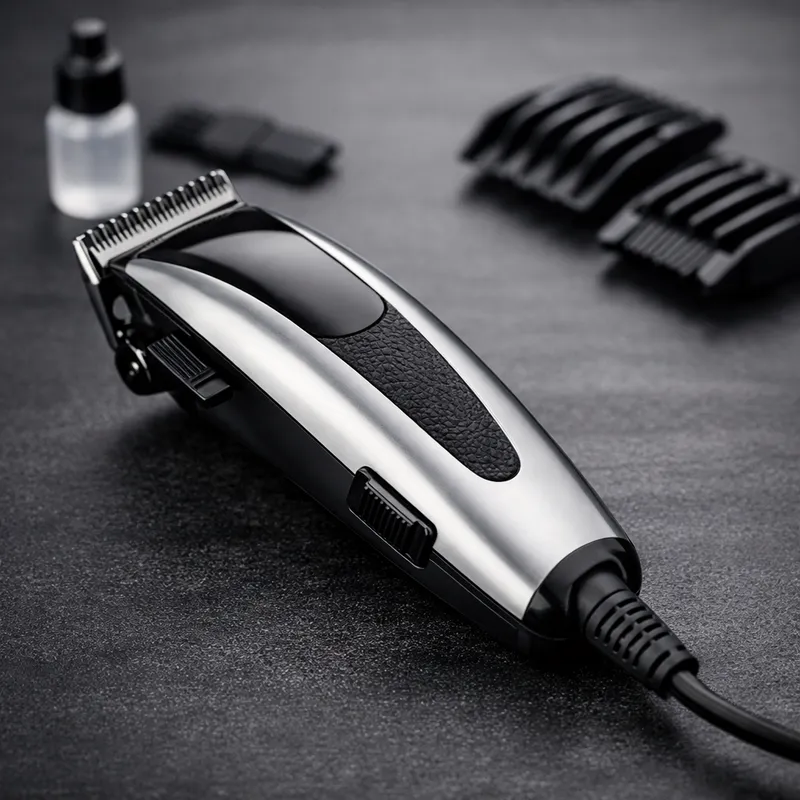
If you want clean fades, sharp necklines and a neat beard at home, the right hair clippers make all the difference. The problem is simple: there are dozens of models with similar promises, but they do not perform the same in real life. In this guide, you will see what actually matters, which types of clippers fit different needs, and how to choose a machine that keeps your hair looking fresh for years instead of months.
Types of Hair Clippers for Men (and What They Are Best For)
Before you compare brands or prices, you need to be clear on what you want your clippers to do. Some are designed for full buzz cuts, others shine at fading, and some are better as detail trimmers or beard tools.
1. Corded hair clippers
Corded clippers plug into the wall and deliver constant power. You never have to worry about a dying battery halfway through a cut, and you usually get a stronger motor and longer blade life.
- Best for: Thick hair, regular home haircuts, full buzz cuts, family use.
- Pros: Stable power, usually cheaper for the performance, no charging time.
- Cons: The cable can get in the way, less portable, you need a plug nearby.
2. Cordless hair clippers
Cordless models run on a built-in battery and feel lighter and more flexible in your hand. They are ideal if you cut your own hair or move around your head a lot for fades and blends.
- Best for: Self haircuts, fades, travel, quick touch-ups.
- Pros: Freedom of movement, easier to handle, no cable tangling.
- Cons: Limited battery life, you must remember to charge, power can drop as the battery runs low on some models.
3. Hybrid corded/cordless clippers
Many of the best modern clippers let you cut cordless but also plug in and keep going when the battery is low. This gives you flexibility without the stress of running out of power.
- Best for: Anyone who wants one main clipper for all tasks.
- Pros: Versatile, you are never stuck mid-cut, great for home users who cut regularly.
- Cons: Usually a bit more expensive, you still need to respect battery life if you prefer cordless.
4. Professional barbershop clippers
Professional clippers are built to handle hours of use every day. They usually have stronger motors, higher-quality steel blades and more precise adjustment levers for tight fades.
- Best for: Very frequent home cuts, learning barber skills, cutting multiple people, side gigs.
- Pros: Durable, powerful, smoother cutting feel, better control for skin fades and blends.
- Cons: Higher price, sometimes heavier, a steeper learning curve with open/close blade levers.
5. Detail trimmers and beard clippers
Detail trimmers are smaller machines made for edges, necklines, around the ears and facial hair. You can use a full-size clipper on a beard, but a dedicated trimmer gives you more precision on tight areas.
- Best for: Beards, moustaches, precise lines, detailing fades.
- Pros: Light, easy to control, gentle on sensitive areas.
- Cons: Not ideal for full head shaves or very thick hair.
Key Features to Look For in Men’s Hair Clippers
Once you know the type of clipper you need, it is time to focus on the features that actually change your experience. These are the elements that separate a solid tool from a frustrating one.
Blade material and quality
The blades are the heart of any clipper. Good blades cut cleanly without pulling or scratching your scalp.
- Stainless steel blades: Common, affordable and good enough for most home users. They resist rust but still need oiling.
- High-carbon steel blades: Stay sharp longer and cut thicker hair more easily. They are common in pro clippers.
- Ceramic blades: Run cooler and keep an edge for a long time, but can be more fragile if dropped.
- T-blades: Shaped like a “T” and used on trimmers for sharp lines and edging around the ears and beard.
Motor power and performance
A weak motor struggles with dense or curly hair and can cause tugging. You want a motor that keeps a steady speed even when the clipper meets resistance.
- Magnetic motors: Fast and light, good for detail work and lighter cuts.
- Pivot motors: Slower stroke speed but higher cutting power, great for thick or wet hair.
- Rotary motors: Balanced speed and torque, often used in higher-end and cordless models.
For home use, you do not need the most powerful motor on the market, but you should avoid ultra-cheap clippers that sound weak or slow. A constant, steady buzz is a good sign.
Guard combs and length settings
Guards control how much hair you leave on your head. They are essential for fades, tapers and different haircut styles.
- Standard guards are usually numbered from #1 (about 3 mm) up to #8 (about 25 mm).
- Some kits include half sizes like #1.5 or #2.5, which make blending much easier.
- Adjustable taper levers on the side of the clipper let you fine-tune the length without changing the guard.
If you plan to experiment with fades, textured crops or blended cuts, look for a clipper that has both a taper lever and a good range of guards.
Battery life and charging options
For cordless clippers, battery life determines how relaxed your haircut will feel. You do not want to race the clock.
- Runtime: Aim for at least 60–90 minutes of cordless use per charge for home haircuts.
- Charging time: Fast charging (around 1–2 hours) is convenient if you cut often.
- Corded use: If possible, choose a model that can keep cutting while plugged in.
- Battery type: Lithium-ion batteries usually hold charge better and last longer than older NiMH batteries.
Weight, grip and ergonomics
You will hold your clippers above your head, around your ears and at different angles. A comfortable grip and balanced weight make a huge difference, especially if you cut your own hair.
- Check for a textured or rubberized handle that does not slip.
- Medium weight is usually best: too light can feel cheap, too heavy can tire your wrist.
- Curved bodies and thumb rests give you better control when doing detailed work.
Noise and heat
All clippers make noise, but some are much louder than others. Professional-grade models with strong motors can be a bit noisier, yet they should not vibrate excessively or become uncomfortably hot.
- If you cut kids’ hair, lower noise can help them feel calmer.
- Excessive heat on the blades or body is a sign of poor design or lack of lubrication.
Cleaning, maintenance and waterproofing
Hair clippers last much longer when you keep them clean and oiled. Look for models that make this easy.
- Removable blade sets help you brush out trapped hair.
- Some clippers let you rinse the blades under water (always check the manual first).
- A small bottle of clipper oil in the box is a good sign the brand takes maintenance seriously.
How to Match Hair Clippers to Your Hair Type and Style
Now that you know the main features, you need to connect them to your reality: your hair type, your go-to haircut, and how often you plan to cut at home.
Clippers for buzz cuts and crew cuts
If you like a simple buzz cut or a classic crew cut, you need reliability more than anything. A solid corded or hybrid clipper with standard guards will do the job.
- Choose sturdy guards that clip on firmly so they do not pop off mid-cut.
- A taper lever is useful for softening lines between the sides and the top.
- Use shorter guards (#1–#3) for the sides and longer (#4–#6) for the top if you want a crew cut shape.
Clippers for fades and modern styles
Fades, tapers, textured crops and undercuts need more control and more guard options. You will move between different lengths and work a lot around the temple and neckline areas.
- Look for half-size guards (#0.5, #1.5, #2.5) to blend levels without harsh lines.
- A precise taper lever helps you “open” or “close” the blade in small steps.
- Light to medium weight clippers are easier to maneuver around the head.
Styles like the textured crop, quiff or pompadour usually combine short faded sides with longer hair on top. In these cases, your clipper handles the sides and back while scissors take care of the length and texture above.
Clippers for curly, coily and thick hair
Curly and coily hair often needs more motor power and sharp blades that slide through without snagging. If you have very dense hair, avoid ultra-budget kits that feel weak.
- Prefer high-carbon steel blades or quality stainless steel made for professional use.
- Choose rotary or strong pivot motors that do not slow down easily.
- Use guards that leave enough length to respect your curl pattern if you are not going for a full buzz.
Clippers for beards and multi-purpose use
If you want one machine for your hair, beard and body hair, focus on versatility and comfort.
- Rounded blade tips reduce irritation on the neck and face.
- Included beard guards or adjustable-length combs are useful if you change beard length often.
- A cordless model makes it easier to trim in front of the mirror or in tight bathroom spaces.
Best Practices to Use Hair Clippers at Home
Even the best clipper will give poor results if you rush or use it incorrectly. A few simple habits will immediately improve your home haircuts.
Prepare your hair first
- Wash your hair and dry it completely. Clean, dry hair is easier for the blades to grip.
- Comb or brush to remove tangles and see your natural growth pattern.
- If your hair is very long, consider trimming some length with scissors before using guards.
Start longer, then go shorter
Always begin with a longer guard than you think you need. You can remove more hair, but you cannot put it back.
- Do a first pass with a higher number guard to set the general shape.
- Step down one guard size at a time to fade and refine.
- Use the taper lever to soften transitions between guards.
Move against the grain
Hair grows in specific directions (the “grain”). For an even cut, move the clipper against that direction.
- On the sides, move the clipper upward against the growth.
- At the back, move upward and slightly out to follow your head shape.
- On the top, front-to-back passes usually work best, but adjust to your hair’s swirl or cowlicks.
Blend your fade and neckline
Harsh lines will make a haircut look amateur even if the length is correct. Spend time on blending.
- Use shorter guards only on the lower part of the sides and back.
- With a bare blade or a very short guard, clean the neckline and around the ears gently.
- Use a mirror (or a friend) to double-check the back for uneven spots.
Take your time
Home haircuts speed up once you know your routine, but rushing your first attempts usually ends in mistakes. Set aside enough time, and cut under good lighting so you can see the details clearly.
How to Maintain Your Hair Clippers So They Last Longer
Good clippers can last many years if you take care of them. Maintenance only takes a few minutes but protects the blades, the motor and your hairline.
Clean after every use
- Turn off and unplug the clipper (or switch it off if cordless).
- Use the small brush from the kit to remove hair from the blade and guards.
- If the blade is removable, take it off carefully and brush underneath.
Oil the blades regularly
Blade oil keeps the metal moving smoothly, reduces heat and helps prevent rust.
- Place 2–3 small drops of oil along the blade teeth and on each side.
- Turn the clipper on for a few seconds to distribute the oil evenly.
- Wipe any excess oil with a soft cloth so it does not attract dust.
Check alignment and screws
Over time, vibrations can loosen screws or shift the blades slightly. Misaligned blades may cause nicks or uneven cuts.
- Visually check that the moving blade never sticks out beyond the stationary blade.
- Tighten screws gently if anything feels loose.
- If you are unsure, many manufacturers share alignment diagrams in the manual.
Store your clippers properly
- Keep your clipper and guards in a dry place, away from steam and humidity.
- Use the storage case or pouch if one is included.
- Avoid wrapping the cord tightly around the body; this can damage the cable over time.
Budget vs Premium Hair Clippers: What Really Changes
Price does not always predict performance, but there are real differences between cheap, mid-range and professional clippers. If you understand what you get at each level, you can spend wisely.
Entry-level clippers
These are the affordable kits often sold with many plastic guards and accessories. They can work for occasional trims but show their limits with thick hair or frequent use.
- Pros: Low cost, good to test if you like cutting at home.
- Cons: Weaker motors, guards that flex, shorter lifespan, more risk of pulling hair.
Mid-range clippers
This is where you find the best value for most men. Mid-range models usually combine stronger motors, better blades and more solid guards without reaching pro prices.
- Pros: Reliable performance, good for regular use, better ergonomics, often hybrid corded/cordless.
- Cons: You still need basic maintenance to get full life from them.
Professional clippers
Barbers invest in premium clippers because they cut all day, every day. At home, you may not need that level, but there are cases where it makes sense.
- Pros: Power, durability, smoother cutting, precise levers and often metal bodies.
- Cons: Higher cost, sometimes heavier, more noticeable noise and vibration.
If you cut your hair weekly, do fades, or cut for friends or family, a mid-range to professional clipper usually pays off over time compared with repeated barbershop visits.
Quick Checklist: How to Choose the Right Hair Clippers for You
To make your decision easier, run through this checklist before you buy:
- How often will you use them? Occasional trims call for a solid mid-range model. Weekly cuts and multiple users benefit from pro-level durability.
- Do you cut your own hair? If yes, prioritize cordless or hybrid clippers with good ergonomics and lighter weight.
- What is your hair type? Thick, coarse or curly hair needs a stronger motor and higher-quality blades.
- What styles do you wear? Fades and tapers demand half guards and a taper lever; simple buzz cuts need fewer options.
- Do you also trim your beard? Consider a kit with beard guards or a matching trimmer with rounded tips.
- How much maintenance will you do? If you prefer low effort, choose clippers with easy blade removal and clear cleaning instructions.
- Noise and comfort: If someone at home is sensitive to noise, look for quieter models and read user opinions on vibration and heat.
When you match these points with the features described earlier, you will quickly narrow down to a few models that actually fit your life instead of just looking good on the box.
FAQ: Best Male Hair Clippers and How to Choose Them
What are the best hair clippers for men at home?
The best hair clippers for most men at home are mid-range corded or hybrid models with stainless or high-carbon steel blades, a taper lever, and a full set of guards from #1 to at least #8. They offer reliable power, enough length options for buzz cuts and fades, and solid build quality without the high cost of professional-only machines.
Should I buy corded or cordless hair clippers?
If you value constant power and do not mind the cable, corded clippers are simple and dependable. If you cut your own hair or move a lot while cutting, cordless or hybrid clippers are usually more comfortable. Hybrid models that can work both plugged in and on battery combine the best of both worlds and are ideal if you cut regularly.
How many guards do I really need?
For simple buzz cuts, guards from #1 to #4 are usually enough. If you want crew cuts, fades or tapers, it is better to have a full range up to #8 plus half sizes like #1.5 and #2.5. These smaller steps make blending easier and help you avoid visible lines between lengths.
How often should I oil my clipper blades?
For regular home use, oiling the blades after each haircut is a good habit. A few drops of clipper oil keep the blades moving smoothly, reduce heat, and protect against rust. If the clipper starts to sound louder or feel rough while cutting, it is a sign you should clean and oil it again.
Can I use the same clippers for my hair and beard?
Yes, you can use one clipper for both hair and beard if it has comfortable blades and suitable guards. For sensitive skin and precise lines, a dedicated beard trimmer or detail trimmer is often more comfortable, but a multi-guard clipper works fine if you keep the blades clean and well-oiled and use lighter pressure on the face and neck.
How long should a good pair of hair clippers last?
With normal home use and basic care, a quality clipper can easily last several years. Cleaning off hair after every cut, oiling the blades regularly, and storing the machine in a dry place have more impact on lifespan than the brand on the box. Very cheap models tend to wear out faster, especially if used on thick hair.