
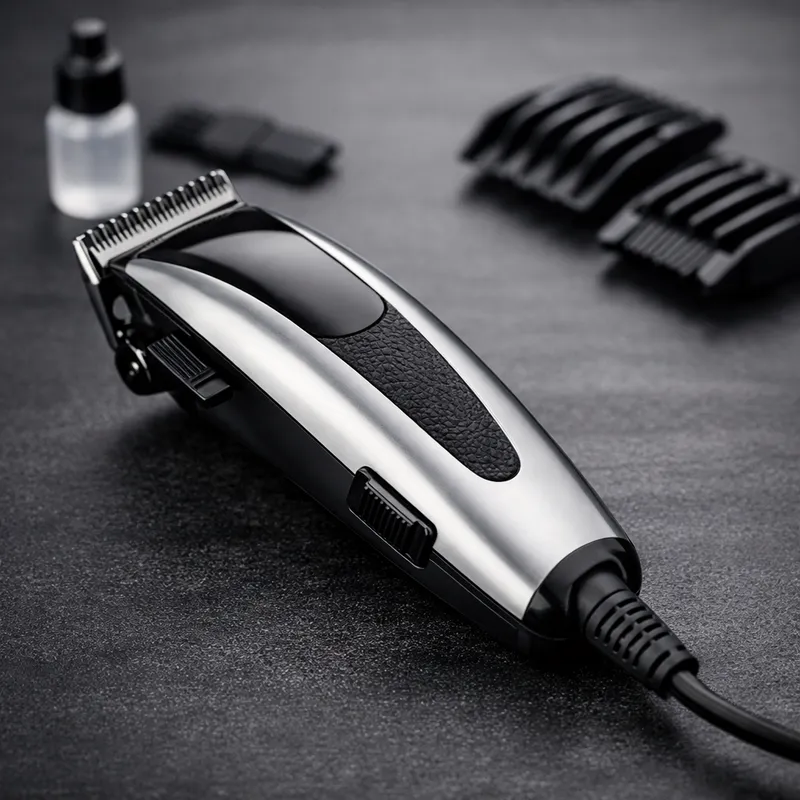
You want clean, sharp haircuts at home without gambling on your look every time you pick up the clippers. The problem is simple: there are too many options, too many guards, and not enough clear guidance.
In this guide, I’ll walk you through how to choose the right hair clipper, what all the numbers actually mean, and exactly how to use it so you can get consistent results—whether you’re going for a buzz cut, a tight fade or just a quick clean‑up between barber visits.
Key Types of Hair Clippers (and When to Use Each)
Before you worry about guards or techniques, you need the right tool in your hand. Not every hair cutter is built for the same job.
1. Corded vs. Cordless Clippers
- Corded clippers
These plug into the wall and give you consistent power from start to finish. They’re great if you cut thick, coarse or dense hair, or if you do several haircuts in a row. - Cordless clippers
These run on a battery. They’re easier to handle, better for travel and ideal if you want to move around freely while cutting. The trade‑off is battery life and, sometimes, a little less power.
If your hair is very thick or curly and you only want to own one machine, go with a powerful corded clipper or a professional‑grade cordless model with a strong motor.
2. Clippers vs. Trimmers vs. Shavers
People often call everything a “hair cutter”, but there are three different tools with specific roles:
- Hair clippers: The main tool for reducing length on the sides, back and top. Designed to cut longer hair using guards.
- Trimmers: Narrower blades for detail work—cleaning the neckline, around the ears, edging sideburns and shaping beards.
- Foil or rotary shavers: Used on very short hair or bare skin to get an ultra‑smooth finish, for bald styles or ultra‑tight fades.
You don’t need all three from day one. For most home users, a good clipper with a decent guard set plus a basic trimmer for edging is enough.
3. Blade Materials and Why They Matter
- Stainless steel blades: Standard on most clippers. Durable and easy to maintain if you oil them.
- Ceramic blades: Stay cooler and sharper for longer but are more fragile and often more expensive.
- Coated blades (titanium, carbon): Designed for extra durability and smoother cutting, especially on thick hair.
If you have thick, coarse or very curly hair, look for a clipper that specifically mentions a strong motor and quality blades. That combination matters more than any marketing buzzwords.
How to Choose the Right Hair Clipper for You
Choosing a clipper is easier when you match it to your real habits and hair type instead of the product description.
1. Start with Your Hair Type and Style
- Straight or fine hair: Most mid‑range clippers handle this well. Focus on comfort, guard range and battery life.
- Thick or coarse hair: Prioritize motor power and blade quality. Weak clippers will pull and snag.
- Curly or coily hair: Look for strong clippers that don’t choke on bulk. Wider blades and quality guards help avoid patchy spots.
Then, match the clipper to your main goal:
- Full buzz cut all over: Almost any decent clipper works. You mainly need the right guard length.
- Simple short back and sides: You want a clipper with guards from #1 to around #4, plus a taper lever for blending.
- Fades and more detailed work: Look for a taper lever, plenty of guard sizes and a design that feels stable in your hand.
2. Key Specs You Should Actually Check
- Motor power: Not always listed as a number, but reviews and product descriptions will mention if it’s designed for thick hair or professional use.
- Battery life (for cordless): Aim for at least 60–90 minutes of runtime if you cut your own hair regularly.
- Charging time: Fast‑charge or quick‑charge is helpful if you forget to plug it in.
- Weight and ergonomics: If your hand gets tired, your cuts get sloppy. A slightly lighter clipper is easier for DIY cuts, especially on the back.
- Noise and heat: Strong motors will make some noise, but a clipper that overheats fast is uncomfortable, especially on sensitive scalps.
3. Accessories That Make a Real Difference
Most kits throw in a lot of extras, but a few matter more than the rest:
- Guard range: At minimum you want #1 (3 mm) through #4 (13 mm). If you like longer tops, look for guards up to #6 or #8.
- Blend or half guards: Sizes like 1.5 or 2.5 help you get smoother fades and transitions.
- Blade guard: A simple plastic cover that protects your blades when stored or travelling.
- Cleaning brush and oil: Essential for maintenance. You can buy clipper oil separately, but it’s nice when it’s included.
As master barbers like Jake Thompson often point out from years behind the chair, the “best” clipper is the one you can control confidently, that cuts your hair type without tugging and that you’re actually willing to maintain after each cut.
Understanding Clipper Guard Numbers and Lengths
Guard numbers are one of the most confusing parts of cutting hair at home. Once you understand them, your haircuts get more predictable overnight.
Common Guard Numbers
Most brands follow a similar pattern. Here are the standard sizes:
- #0 (no guard or very short guard): 0.5–1 mm (almost skin)
- #1: around 3 mm
- #1.5: around 4.5 mm
- #2: around 6 mm
- #3: around 10 mm
- #4: around 13 mm
- #5: around 16 mm
- #6: around 19 mm
- #7: around 22 mm
- #8: around 25 mm
Always double‑check the chart that comes with your clipper. Some brands vary slightly, but this gives you a solid reference.
The Taper Lever: Micro‑Adjusting Your Length
Many clippers have a small lever on the side, called a taper lever. It lets you make the blade slightly closer (shorter) or further (longer) without changing guards.
- Lever closed (up): Shorter cut.
- Lever open (down): Slightly longer cut.
Think of it as “half a guard size” built into the clipper. It’s especially useful when blending between two guard lengths, like going from a #1 to a #2 on a fade.
How to Prepare Your Hair and Tools Before Cutting
A clean, prepared canvas will always give you a neater result. Skipping prep is a common mistake that leads to uneven, patchy cuts.
1. Wash and Dry Correctly
- Wash your hair with shampoo to remove oil, product and sweat. Greasy hair clumps and makes guards clog quickly.
- Dry it completely before using clippers. Damp hair sticks to the scalp and hides its true length, so you can easily go shorter than planned.
- Comb or brush your hair in the direction you normally wear it so you can see the natural shape.
2. Set Up Your Space
- Use good lighting, ideally from more than one angle so you can see the back and sides clearly.
- Stand in front of a mirror and, if possible, use a second hand mirror to see the back of your head.
- Place a towel or cape around your shoulders to catch hair and keep your clothes clean.
- Lay out your clippers, guards, comb, scissors and brush where you can reach them comfortably.
3. Prepare the Clippers
- Brush away any old hair from the blades and guards.
- Put 1–2 drops of clipper oil along the moving blade, turn the clipper on for a few seconds, then wipe off the excess.
- Check that the blade alignment is straight. Misaligned blades can cause cuts or uneven lines.
Step‑by‑Step: How to Cut Your Hair with Clippers
Now let’s make it practical. This routine works for a classic short back and sides with more length on top. You can adjust guard numbers depending on how short you want to go.
1. Start Longer Than You Think
Always begin with a guard that’s a bit longer than your target length. You can always go shorter—but you can’t put hair back.
- Pick a guard like #4 or #3 for the sides if you’re unsure.
- Run the clipper against the grain (opposite the direction the hair grows) to get an even cut.
2. Cut the Sides and Back First
- Start at the bottom of the sides, near the sideburns.
- Move the clipper upward in smooth, steady motions, slightly rocking out as you reach the top of the sides to avoid harsh lines.
- Repeat around the entire head, including the back, using the same guard.
You’re building the “foundation” here. Don’t worry about perfect blending yet.
3. Create Your Basic Shape
Decide where you want the sides to meet the longer hair on top. Imagine a horizontal line around your head—a little above the temples for shorter looks, higher if you like more length on top.
- Use your starting guard (for example, #3) up to that imaginary line.
- Above that line, you’ll either use a longer guard or scissors later.
4. Blend Between Two Guard Lengths
This is where many DIY haircuts succeed or fail. To blend smoothly:
- Choose your shorter guard (for example, #2) for the very bottom of the sides and back.
- Cut from the bottom up, but stop about a finger’s width below your previous line.
- Open the taper lever or switch to a half‑size guard (like 1.5 or 2.5) and work in that middle area with short, upward flicking motions.
- Use a clipper‑over‑comb technique where needed: hold a comb at a slight angle, let hair poke through and lightly run the clipper along the comb to soften any dark patches or lines.
5. Cut and Shape the Top
You can use a longer guard on top or scissors, depending on the style.
- For an even, short top: Use a guard like #4, #5 or #6 and run the clipper against the grain, front to back, then side to side for even coverage.
- For more styled looks (quiff, textured crop, slick back): Use scissors on top and clippers only for the sides and back so you keep enough length to style.
Comb the hair into its natural direction and check the silhouette from the side. Adjust where necessary.
6. Clean the Neckline, Ears and Sideburns
Switch to a trimmer or use the clipper with no guard:
- Neckline: Decide if you want a straight, rounded or natural neckline. For DIY, a natural edge (following your hair’s natural growth with subtle cleaning) is easier to maintain.
- Around the ears: Gently pull the ear down and work in short, careful strokes. Don’t chase perfection; focus on a clean outline.
- Sideburns: Trim them to line up with the middle or top of your ear, depending on your beard style.
7. Final Check and Touch‑Ups
- Use a hand mirror to inspect the back and sides in good light.
- Look for visible lines or darker bands of hair and gently work them out with the taper lever or clipper‑over‑comb.
- Rinse off loose hair and style as usual to see how the cut behaves with product.
Using a Hair Clipper for Popular Men’s Styles
Once you’re comfortable with the basics, you can adapt your technique for specific cuts. Below are simple guard guidelines—not rigid rules—for a few classic looks.
1. Buzz Cut
- Choose one guard size for the whole head: for example, #1, #2 or #3 depending on how short you want it.
- Cut against the grain in all directions until everything feels and looks even.
- Clean the neckline and around the ears with no guard or a trimmer.
This is the easiest self‑cut and ideal if you want low maintenance.
2. Crew Cut
- Use a short guard (#1 or #2) on the sides and back.
- Use a longer guard (#3 or #4) on the top.
- Blend the transition between the sides and top using the taper lever or an in‑between guard.
You’ll end up with slightly more length at the front that can stand up a bit with a light product.
3. Simple Fade (Beginner‑Friendly)
- Start with a #2 at the bottom of the sides and back.
- Move up to a #3 in the middle section.
- Use a #4 or scissors on top.
- Go back with the taper lever and half guards to soften the lines between 2 and 3, and between 3 and 4.
Take your time; fades are all about patience and small adjustments rather than big jumps.
How to Maintain Your Hair Clippers (So They Last Years)
Even the best clipper will start pulling and cutting badly if you don’t maintain it. Good maintenance gives you cleaner cuts and extends the life of the blades and motor.
1. Clean After Every Use
- Unplug or switch off the clipper and remove the guard.
- Brush away loose hair from the blades, guard and body.
- If the manufacturer allows, use a quick burst of clipper spray or disinfectant formulated for blades.
2. Oil the Blades Regularly
- Place 1–2 drops of oil along the moving blade and one drop on each end.
- Turn the clipper on for 10–15 seconds to distribute the oil.
- Wipe any excess with a soft cloth so it doesn’t drip while cutting.
Most home users should oil their clippers every 1–3 haircuts, or more often if cutting many heads in one session.
3. Store Them Safely
- Use the blade guard when storing or travelling.
- Keep the clipper in a dry place away from humidity to avoid rust.
- Don’t wrap the cord tightly around the body; this can damage the wiring over time.
4. When to Replace Blades
Signs you may need new blades or a professional sharpening:
- The clipper pulls or snags hair, even after cleaning and oiling.
- You notice visible chips or damage to the blade teeth.
- The cut looks uneven or rough despite using the same technique as before.
Safety Tips When Using Hair Clippers at Home
Hair clippers are generally safe, but a few habits will protect your skin and your equipment.
- Always use guards correctly and make sure they click firmly into place before turning the clipper on.
- Never press the blades too hard against the scalp; let the clipper do the work.
- Keep clippers and cords away from water. Don’t use them near a sink filled with water or in the shower unless they are specifically designed for wet use.
- Disinfect blades if you share your clipper with others to reduce the risk of skin irritation or infection.
- If you feel unusual heat on the blades, stop, turn the clipper off and let it cool before continuing.
FAQs About Choosing and Using Hair Clippers
What guard number should I use for a simple short back and sides?
A good starting point is a #2 or #3 guard on the sides and back, with a #4 or scissors on top. Blend between the guards using the taper lever or in‑between guards to avoid harsh lines.
Are corded clippers better than cordless for home use?
Corded clippers usually offer more consistent power, which helps on thick or coarse hair. Cordless clippers are more convenient and easier to handle. If you have very thick hair or cut several heads, a powerful corded or pro‑grade cordless clipper is ideal.
How often should I oil my hair clipper blades?
Most people should oil their clipper blades every one to three haircuts. Place a few drops of clipper oil on the moving blade, run the clipper for a few seconds, then wipe away any excess before cutting.
Can I use the same clippers for my hair and beard?
Yes, you can use the same machine if it has suitable guards and is cleaned and disinfected between uses. However, many people prefer a dedicated beard trimmer for more precise control on the face and neckline.
Why does my clipper pull hair instead of cutting smoothly?
Pulling usually means the blades are dull, dirty or dry. Clean out trapped hair, oil the blades and check alignment. If it still pulls, you may need new blades or a stronger clipper for your hair type.