
Mullet Haircut: Modern Styles, Barber Language, and a Maintenance Plan That Works
A mullet looks “cool” for one simple reason: it’s controlled contrast. Clean sides, texture on top, and intentional length in the back. Done right, it reads modern and sharp. Done wrong, it reads messy and accidental.
- Pick the right mullet variation (modern, burst-fade mullet, curly mullet, mini mullet, short mullet and more) based on your hair type and lifestyle.
- Use barber-ready scripts so you don’t rely on a haircut name that can mean 20 different things.
- Keep it looking intentional with a simple refresh schedule and low-risk at-home upkeep tips.
This page is intentionally detailed. If you only do one thing: choose your “sides” (taper vs fade vs burst fade) and show your barber a side + back reference photo.

What is a mullet haircut (and what makes it look modern)?
A mullet is defined by contrast: shorter (or at least cleaner) on the sides and front, longer in the back. The “modern” part is not the length—it’s the shape control: layering through the crown, a clean perimeter around the ears, and the right amount of weight removed so the top and the back look connected.
Modern mullet vs classic mullet
Classic mullets are usually harder-edged: heavier top, sharper contrast, less blending. That’s why they can look dated fast. A modern mullet keeps the identity (length in back) while using modern barbering techniques (texture, tapers, fades, and cleaner transitions).
Rule #1: Balance the top and the tail
The most common “bad mullet” problem is a mismatch: the top is too short and the back is too long. That creates a disconnected look. A better approach is to keep the top long enough to style (usually 7–13 cm / 3–5 in) and decide how much length you really want in the back.
Rule #2: Your “sides” choice decides everything
When someone says “I want a mullet,” what they usually mean is: taper mullet (subtle + professional), mullet fade (sharp + bold), or burst fade mullet (the modern statement). Pick one—don’t leave it open to interpretation.
Quick definition (so you can explain it clearly)
A mullet is not “just longer in the back.” It’s a planned combination of:
- Perimeter control (how clean it is around ears + neckline)
- Crown shaping (how the top blends into the back without a shelf)
- Back length target (mini, short, medium, full)
- Texture strategy (matte + messy vs polished + controlled)
Quick decision guide: choose your best mullet (in 60 seconds)
This is the fastest way to pick a mullet that fits your hair, your vibe, and your willingness to maintain it. Think of it as choosing your “mullet intensity.”
If you want a subtle, office-friendly mullet
Choose a mini mullet or taper mullet. You keep the identity, but the outline stays neat. This is the best entry point if you’ve never had a mullet before.
- Sides: low taper (not skin)
- Back: short tail, controlled outline
- Styling: 2–3 minutes, matte paste
If you want the most modern, “fresh-cut” look
Choose a modern mullet with a low fade or a clean taper. It looks intentional from every angle and photographs well.
- Sides: low fade or low taper
- Top: textured and slightly longer
- Back: medium length with layers (no stringy tail)
If you want the statement mullet
Choose a burst fade mullet. It pushes attention to the flow in the back and the texture on top. It’s high contrast and high impact.
- Sides: burst fade around the ear
- Back: longer + shaped
- Maintenance: more frequent cleanups
If your hair is curly or wavy
Your texture is an advantage. A curly mullet often looks better than a straight one because curl pattern creates natural movement. The key is reducing side bulk and shaping the crown.
- Sides: taper or burst fade (your choice)
- Top: keep curls, remove weight at the crown
- Styling: curl cream or mousse + air-dry/diffuse
Safe default (if you’re undecided)
If you want a mullet that works in real life, start with a modern mullet + low taper. You can always push it bolder later by tightening the sides (fade) or switching to a burst fade.
Mullet haircut styles (modern, burst fade, curly, mini, short, and more)
Below are the most searched and most wearable mullet variations right now. Each one includes what it looks like, who it suits, and the exact barber language that prevents misunderstandings. If you only remember one thing: names are vague—details get results.
1) Modern mullet (the all-rounder)
The modern mullet keeps texture on top, a clean outline on the sides, and a controlled tail in the back. It reads current because the blend is smooth and the crown is shaped—no harsh shelf.
Ask your barber: “Modern mullet, blended crown, textured top, clean low taper or low fade, and a back length that looks intentional—not stringy.”
2) Burst fade mullet (modern statement)
A burst fade creates a circular fade around the ear, which makes the mullet flow behind it look sharper. It’s bold, modern, and looks best when the area around the ear stays crisp.
Ask your barber: “Burst fade around the ear into a mullet. Keep the burst not too high, blend the crown into the back, and keep the top textured.”
3) Curly mullet (texture does the work)
Curly mullets look natural and “effortless” because curls create shape automatically. The goal is to keep curls on top and in back, while controlling the sides so they don’t balloon.
Ask your barber: “Curly mullet with a taper (or burst fade). Remove bulk at the crown, keep curl definition, and keep the neckline clean but natural.”
4) Mini mullet (soft/baby mullet)
This is the “I want a mullet, but I don’t want it to take over my life” version. Short tail, soft layers, neat outline—still clearly a mullet, but subtle.
Ask your barber: “Mini mullet. Keep the back only slightly longer, taper the sides, and keep it clean and wearable.”
5) Short mullet (low commitment)
A short mullet is more obvious than a mini mullet, but still controlled. It’s a great option if you like the look but want faster drying, less product, and lower daily effort.
Ask your barber: “Short mullet with texture. Keep the back longer than the sides, but don’t let it hang too far down the neck.”
6) Taper mullet (cleanest “grown-up” mullet)
A taper mullet keeps hair visible around the temples and neckline. That means less “skin exposure,” smoother grow-out, and a look that still reads sharp.
Ask your barber: “Taper mullet. Taper at the temples and nape, keep the crown blended, and shape the back so it sits clean.”
7) Mullet fade (low / mid / high fade)
A mullet fade takes a classic fade and pairs it with length in the back. The higher the fade, the stronger the contrast—and the more often it needs a refresh.
Ask your barber: “Mullet with a low/mid/high fade (choose one). Keep the top textured and blend the crown into the back.”
8) Shaggy mullet (wolf-cut vibe)
This is the messier, layered version that looks good even when it grows out. It’s less about crisp edges and more about movement and texture throughout.
Ask your barber: “Shaggy mullet with layers throughout. Keep it lived-in, not a hard disconnect. Add movement around the face.”
9) Mohawk mullet (faux-hawk mullet)
More height through the middle, tighter sides, and a longer back. It’s the most “edgy” silhouette, so it works best if you like strong contrast and styling.
Ask your barber: “Faux-hawk mullet. Keep the center longer, sides tighter, blend the crown into the back, and keep the outline clean.”
10) Straight-hair mullet (needs smart texture)
Straight hair can look flat or “helmet-like” if the crown is too heavy. A good straight-hair mullet uses layering and texture to create movement without frizz.
Ask your barber: “Mullet for straight hair. Add texture and layers, remove bulk at the crown, and keep the back shaped—not thin and stringy.”
How long should a mullet be?
There’s no “correct” length. There’s only what suits your face, hair density, and comfort level. Use these ranges as a practical guide you can communicate clearly:
- Mini mullet: tail is subtle, often 2–5 cm / 1–2 in longer than the sides.
- Short mullet: tail is obvious but controlled, typically 5–10 cm / 2–4 in at the back.
- Medium/modern mullet: tail has flow, usually 10–18 cm / 4–7 in depending on curl and shrinkage.
- Full mullet: long back that changes your silhouette; plan for more daily control.
If you’re unsure, choose a length you can commit to for at least 4–6 weeks. Mullets improve when they’re shaped through growth.

How to ask your barber for a mullet (the exact words that prevent a bad cut)
“Mullet” is a broad category, not a single haircut. Some barbers hear “mullet” and think classic 80s. Others think burst fade. Others think shaggy layers. Your goal is to communicate shape, not a name.
The 3-photo rule (your best insurance)
Bring two or three reference photos. Not ten. Not one blurry screenshot. The best set is:
- Side profile (shows taper/fade choice and ear area)
- Back view (shows tail length you actually want)
- Front view (shows fringe/texture vibe)
If you don’t have a back photo, you’re basically guessing. The back is what makes it a mullet.
Decide these 4 things before you sit down
- Sides: taper vs low fade vs burst fade (pick one)
- Top: textured and messy vs polished and controlled
- Back length: mini / short / medium / full
- Neckline finish: natural vs tapered vs squared
If you don’t choose, your barber has to choose for you—and that’s where “not what I meant” happens.
Copy-paste barber script (universal modern mullet)
This script is designed for clarity. It avoids buzzwords you might misuse, but still communicates the technical essentials. Adjust only the bracketed options.
What to say if you want a specific mullet variation
Use the universal script above, then add one modifier sentence:
- Modern mullet: “Keep it blended and textured—wearable, not costume.”
- Burst fade mullet: “I want the burst around the ear; show me the height before you commit.”
- Curly mullet: “Keep curl definition and remove weight at the crown; taper the edges so it doesn’t get bulky.”
- Mini mullet: “Back only slightly longer; keep it neat and subtle.”
- Short mullet: “Short and controlled—no long tail down the neck.”
If your barber asks “how short on the sides?”, answer with your style goal (“subtle taper” vs “skin fade” vs “burst fade”) rather than random clipper numbers. Numbers vary by barber and tool.
How to style a mullet (fast routines for straight, wavy, and curly hair)
A mullet doesn’t need a 20-minute routine. It needs the right finish. Your goal is to control the crown and keep the back looking shaped—not puffy, not stringy. Use the routine that matches how you actually live.
Fast routine (2–3 minutes, works for most guys)
- Start with towel-damp hair (not dripping wet).
- Apply a light texturizer (sea salt spray or mousse) to the top and crown.
- Dry with your fingers: lift the front slightly, and push the crown back so it connects into the back.
- Finish with a pea-sized amount of matte paste/clay—focus on the top, then lightly control the back.
Curly routine (definition without frizz)
- Apply mousse or curl cream on damp hair (don’t overload).
- Scrunch upward; avoid aggressive raking that breaks curl clumps.
- Air-dry or diffuse on low heat.
- If the back flips out, use a tiny amount of cream to guide it into place.
Polished routine (cleaner, more “groomed”)
- Blow-dry for shape (especially the front and crown).
- Use a light pomade for control and a smoother finish.
- Keep the back controlled—more “flow” than “fluff.”

Quick product guidance (choose by result, not hype)
You don’t need a shelf of products. You need one product that matches your hair type and the finish you want:
- Fine/straight hair: lightweight mousse or texture spray + matte paste (avoid heavy wax that separates hair).
- Thick hair: matte clay/paste to control volume + a quick blow-dry for shape.
- Curly hair: mousse/curl cream for definition + minimal finishing product.
- High-contrast fades/burst fades: keep the top structured so the haircut looks intentional all day.
Styling essentials (simple, effective, and realistic)
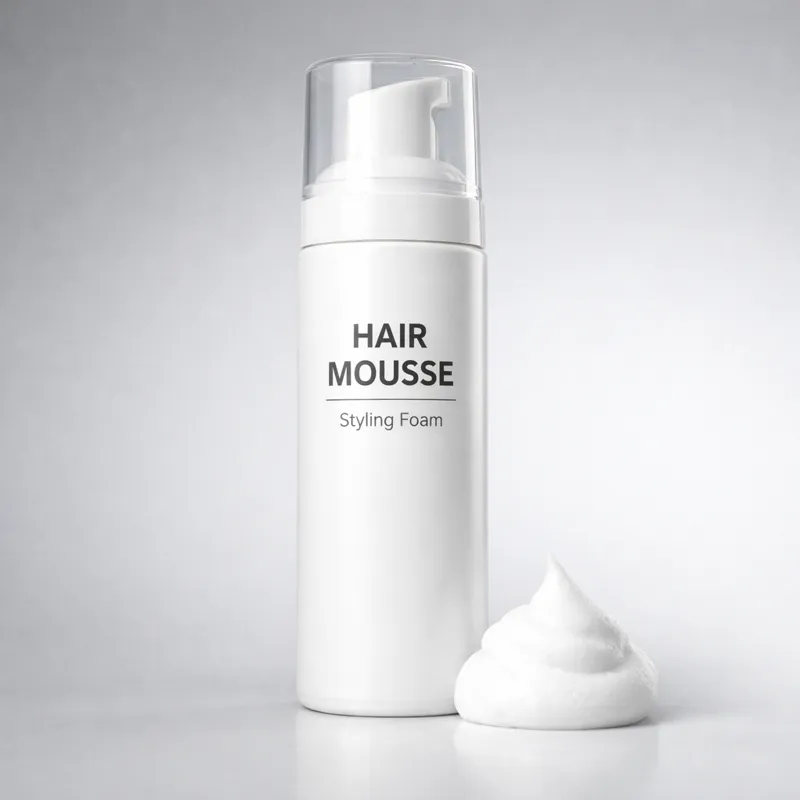
Mousse (volume + control)
Ideal for fine hair, wavy hair, and curls when you want shape without heaviness. Great for keeping the crown from collapsing.
Pomade (polished finish)
Best if you want a cleaner, more groomed look. Use lightly so the mullet doesn’t look greasy or flat.

Gel (only if you need strong hold)
Use gel only if your hair fights shape. Most mullets look better with matte or natural finishes.
No forms, no gimmicks. The point is to help you walk into the chair with a plan—and walk out with a mullet that fits your face and your routine.
Mullet maintenance plan: how to keep it looking intentional (not overgrown)
A mullet is judged from the side profile. When the sides lose structure and the neckline gets fuzzy, it stops looking like a haircut and starts looking like “grown hair.” The fix is simple: maintain the perimeter and protect the crown shape.
Refresh schedule (realistic and effective)
Your refresh cadence depends mainly on your sides choice: fades and burst fades need more frequent edge work, while tapers grow out smoother.
| Mullet type | What matters most | Typical refresh cadence |
|---|---|---|
| Burst fade mullet | Ear area stays crisp + crown blends cleanly | Every 2–4 weeks |
| Mullet with skin fade | Fade contrast + outline precision | Every 2–4 weeks |
| Low fade mullet | Clean sides + controlled bulk | Every 3–5 weeks |
| Taper mullet / mini mullet | Neckline shape + general silhouette | Every 4–8 weeks |
| Shaggy mullet | Layer balance (not sharp edges) | Every 6–10 weeks |
At-home upkeep (safe, low-risk)
- Do: lightly clean stray hairs around the neckline and ears if you’re confident.
- Don’t: “trim the back a little.” That’s how most mullets lose their shape.
- Do: keep the crown controlled with light product (especially after washing).
- Don’t: flatten the top completely—mullets need some texture to look modern.
If you want the safest path, book quick edge cleanups and let a pro maintain the shape.


How to grow a mullet without an awkward phase
The awkward phase happens when the back grows but the sides and crown aren’t shaped. The solution is not “wait longer.” The solution is shape while you grow.
- Keep the sides clean with a taper (or low fade) while the back gains length.
- Ask for bulk removal at the crown so the top connects into the back (no shelf).
- Set a clear target length for the back (mini/short/medium) to avoid “random tail” growth.
- Use light product after washing so the back doesn’t flip out and look unplanned.
If you’re currently wearing a fade and want to grow a mullet: keep the fade low, stop going too high on the sides, and start building length through the crown and back.
Match your mullet to your hair type and face shape
The most flattering mullet is not the boldest one. It’s the one that balances your proportions. Use these guidelines to avoid a mullet that exaggerates the wrong feature.
Straight hair
Straight hair needs texture and layering so it doesn’t sit flat. Ask for weight removal at the crown and a slightly longer top so you can style movement.
- Best picks: modern mullet, mini mullet, taper mullet
- Avoid: super thin tail (can look stringy fast)
- Styling tip: texture spray or mousse + quick blow-dry
Wavy hair
Wavy hair is the easiest mullet texture because it naturally creates “flow.” Focus on clean edges and a crown blend that keeps the silhouette sharp.
- Best picks: modern mullet, low fade mullet, shaggy mullet
- Avoid: heavy crown that puffs up
- Styling tip: sea salt spray + air-dry for natural grit
Curly hair
Curly mullets shine when the sides are controlled. Keep curl definition on top and in back, but taper the perimeter. If your curls are very tight, factor in shrinkage when choosing back length.
- Best picks: curly mullet, curly burst fade mullet
- Avoid: bulky sides that widen the head
- Styling tip: mousse + diffuse or air-dry
Face shape quick guidance
These are not rigid rules—just ways to keep the mullet balanced:
- Round face: add height on top, keep sides tighter (low fade or burst fade).
- Long face: avoid extreme height; keep the top textured but not tall; choose a taper mullet.
- Square face: most mullets work; focus on clean perimeter and crown blend.
- Receding hairline: consider a soft fringe/texture forward (modern mullet) and avoid overly slick finishes.
Common mullet mistakes (and how to avoid them)
Most mullet “fails” are predictable. They come from unclear communication, uncontrolled crown weight, or a back length that isn’t shaped. Fix these and your mullet instantly looks more modern.
1) Asking for “a mullet” with no details
That’s like ordering “a sandwich.” Be specific about sides (taper/fade/burst), back length (mini/short/medium), and finish (matte vs polished).
2) Crown bulk (the hidden problem)
If the crown is too heavy, the top looks puffy and the back looks disconnected. Ask for bulk removal and blending through the crown so the silhouette flows.
3) The “stringy tail”
A thin, wispy tail can look accidental. Ask your barber to shape the back and keep it intentional. Layers and controlled thickness look better than random length.
4) Going too high on the sides
High fades can make the mullet look extreme fast. If you want a wearable mullet, keep the fade low or choose a taper.
5) Ignoring neckline shape
Necklines can change the entire vibe. Natural and tapered necklines grow out cleaner. Squared necklines look sharp but can feel harsh if they don’t suit your neck.
6) Overusing heavy products
Heavy wax and too much pomade can make the top separate and the back collapse. Most modern mullets look best with matte or natural finishes and lighter application.
The “one sentence” fix that improves almost any mullet
Tell your barber: “Blend the crown into the back so it flows—no shelf.” That single sentence solves the most common mullet shape problem.
Want your mullet to look right on the first try?
The fastest path to a great mullet is simple: pick your variation, bring 2–3 reference photos, and use the script above. If you prefer to skip the trial-and-error, go to a barber who regularly cuts textured, modern styles.
FAQs: Mullet haircuts
These answers are written to help you decide faster and communicate better with your barber. They also cover the long-tail questions people actually search (variants, maintenance, and “how to ask your barber”).
Is a mullet haircut still in style right now?
What’s the difference between a modern mullet and a classic 80s mullet?
What is a burst fade mullet?
What’s the best mullet for a first-timer?
How do I ask my barber for a mullet without getting something too extreme?
How long does my hair need to be for a mullet?
Does a mullet work with curly hair?
How often do I need to maintain a mullet?
Can a mullet look professional?
What’s the difference between a mullet and a wolf cut?
Will a mullet work if my hair is thinning?
How do I stop the back from flipping out?
Related guides (internal linking)
If you have these pages, link them here. Internal links improve topical authority and help users solve the next problem:
- Fade vs taper: how to ask for the right “sides”
- Pomade for men: finishes and holds
- Mousse for guys: volume without heaviness
- Hair trimmers: keeping neckline and edges clean
- Popular men’s haircuts: save better reference photos
Choosing the right barber for a mullet
Mullets are not hard, but they are specific. A good mullet barber understands blending through the crown, shaping the back, and keeping the outline clean. If you want the safest outcome, look for someone who regularly cuts:
- Textured crops and modern layered cuts
- Low fades and tapers (especially around the ear)
- Curly cuts (if your hair is wavy/curly)
Use the script on this page and you’ll instantly communicate at a higher level than “give me a mullet.”
