
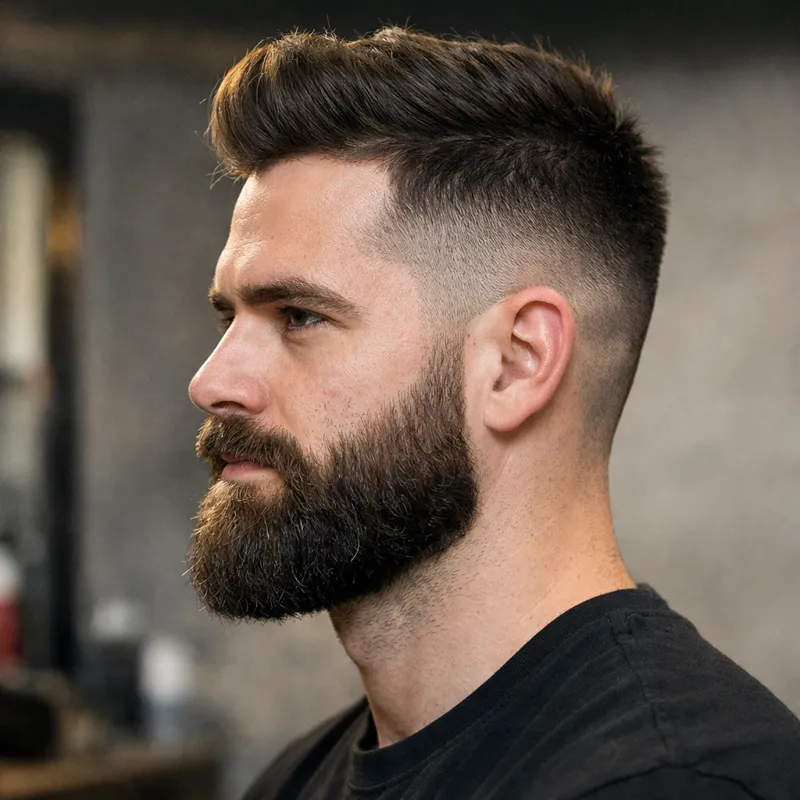
You already know a beard can transform your face. The real question is: which beard design actually suits you, and how do you get that barbershop look at home without guessing?
In this guide, I’ll walk you through beard design for men step by step: from reading your face shape, to choosing a style, to shaping lines and caring for the beard so it always looks clean and intentional, never messy.
- How to match beard styles to your face shape and features.
- Essential tools and products every well-groomed beard needs.
- Step-by-step beard design: cheeks, neckline, mustache and fade.
- How to maintain your beard style day to day and week to week.
- FAQs on patchy beards, growth time, barbers vs DIY and more.
What “Beard Design” Really Means
Beard design is more than just growing facial hair. It’s the combination of shape, length, lines and fade that frames your face and connects with your hairstyle. Think of it as tailoring for your jawline: custom, clean and built around you.
When I talk about beard design for men in the barbershop, I’m looking at three things:
- Contours: Your cheek lines, neckline and how the beard connects to sideburns and hair.
- Volume: How dense or light the beard is on the chin, cheeks and mustache.
- Texture and finish: Natural, brushed-out, or sleek and defined with product.
Once you understand those elements, you can stop copying random Instagram beards and start building a beard that actually works for you.
How to Choose the Best Beard Style for Your Face Shape
The right beard design for men always starts with face shape. Your beard should balance and enhance your features, not fight against them.
1. Oval face
If your face is slightly longer than it is wide with soft angles, you have a lot of freedom. Most beard designs look good here.
- Best options: Short boxed beard, full beard with natural cheeks, stubble, faded beard.
- Avoid: Extremely long pointy beards unless you want to make the face look longer.
2. Round face
With a round face, the goal is to create more definition and length.
- Best options: Beard longer at the chin, shorter on the sides, a goatee variation, or a sculpted short boxed beard with sharp angles on the cheeks.
- Avoid: Very wide, bushy side beards that add more roundness.
3. Square face
A square face has a strong jaw and wide cheekbones. You usually want to soften the corners just a touch.
- Best options: Short sides with slightly more length on the chin, rounded edges on the jaw, low to mid fade into the beard.
- Avoid: Very boxy beard lines that make the jaw look heavier than it is.
4. Rectangular or oblong face
Here the face is longer, often with a more prominent forehead and chin.
- Best options: Fuller cheeks, medium length overall, beard that doesn’t extend too far below the chin.
- Avoid: Extra-long chin beards that make the face look even longer.
5. Triangle or diamond face
With a wider jaw and narrower forehead (triangle) or strong cheekbones (diamond), the beard should balance the bottom half of the face.
- Best options: Shorter beard on the jaw, balanced mustache, clean cheek lines, maybe a slightly fuller goatee.
- Avoid: Very heavy jawline volume with no mustache, which exaggerates the triangle effect.
According to master barbers with experience designing beards for different face shapes, the most consistent rule is simple: let the beard correct what you don’t love about your face shape instead of copying a style that works on a completely different bone structure.
Main Types of Beard Designs for Men
Now that you have face shape in mind, let’s look at the main beard designs you’ll see in the chair and online, and what sets each one apart.
Designer stubble
This is the “effortless” look that actually takes some effort. Hair length sits between a one- and three-day growth, but with sharp lines and a clean neckline.
- Best for: Most face shapes, especially if your beard is patchy when it gets longer.
- Key features: Even length all over, crisp cheek lines, neckline just above the Adam’s apple.
Short boxed beard
A short full beard with defined edges, usually between 5–15 mm in length.
- Best for: Oval, square and round faces.
- Key features: Clear cheek line, sculpted corners near the mouth, neat mustache connected or slightly separated.
Full beard
The classic full beard covers cheeks, jaw and chin, often with more weight around the front.
- Best for: Men with good density and patience for growth.
- Key features: Softly rounded or squared bottom, blended sideburns, natural cheeks or lightly shaped lines.
Goatee and variations
Chin and mustache are the focus here, with cheeks usually shaved or kept as light stubble.
- Best for: Round faces or men with patchy cheeks.
- Key features: Defined goatee circle, precise connection between mustache and chin, clean cheeks.
Faded beard
The faded beard connects smoothly to your haircut, going from skin or very short stubble up to full beard length.
- Best for: Modern cuts like fades, tapers and undercuts.
- Key features: Gradual change in length from temple to jaw, clean edges around the cheek and neckline.
Mustache-focused looks
From a thick chevron to a handlebar, the mustache becomes the star, with the beard kept shorter or shaved.
- Best for: Men who like a bold statement or have strong upper-lip growth.
- Key features: Neatly trimmed or styled mustache, minimal or no hair on the cheeks and jaw.
Essential Tools and Products for Beard Design
To get a barbershop-level beard design at home, you don’t need a full studio, but you do need the right tools.
Core tools
- Beard trimmer with guards: For overall length and basic shaping.
- Cordless clipper: Useful if you also cut your hair or want a proper fade into your hairstyle.
- Detail trimmer or edger: For sharp cheek lines, mustache edges and neckline.
- Beard scissors: To snip flyaways and adjust the mustache precisely.
- Comb and brush: A wide-tooth comb for detangling and a boar-bristle brush for smoothing.
Products that make a real difference
Good products don’t replace technique, but they do upgrade the final result and comfort.
- Beard wash: Gentler than normal shampoo, it keeps hair clean without drying the skin.
- Beard oil: Softens hair, reduces itch and gives a subtle, healthy shine.
- Beard balm or cream: Adds light hold and helps control volume or frizz.
- Shaving gel or clear cream: Transparent products help you see your lines as you shave.
- Aftershave lotion: Soothes the skin around the neck and cheeks after edging.
Use beard oil daily on medium to long beards. On shorter beard designs for men, every other day is usually enough, especially if your skin is on the oily side.
How to Design Your Beard Step by Step
Let’s break the actual beard design process into clear, repeatable steps you can follow at home.
Step 1: Let the beard grow
- Give yourself 3–4 weeks of growth without heavy shaping.
- Trim only obvious stray hairs on the cheeks or around the lips so you stay presentable.
- During this time, start using beard wash and a few drops of beard oil daily.
Step 2: Decide the length and outline
- Look in the mirror straight on and from the side.
- Decide if you want stubble, short beard, or a fuller look based on your density and face shape.
- Pick your trimmer guard: lower numbers (1–2) for stubble, mid (3–4) for short beards, higher for fuller.
Step 3: Set the neckline
The neckline is where most home beard designs go wrong. Too high and it looks like a chin strap, too low and it looks sloppy.
- Imagine a curve from just behind one ear, under your jaw, to just behind the other ear.
- Front view: usually, the line sits about one to two finger-widths above the Adam’s apple.
- Use a trimmer without guard to define this line, then shave everything below completely.
Step 4: Shape the cheek lines
Cheek lines define how clean or rugged your beard looks.
- For a sharp, clean look, draw a line from the top of the sideburn to the corner of the mouth, then soften it slightly so it doesn’t look drawn on.
- For a natural look, only clean the highest stray hairs and follow your natural growth pattern.
- Always step back and check both sides; symmetry is key.
Step 5: Trim the mustache
- Comb the mustache hair straight down.
- Use scissors to trim along the lip line, keeping the shape you like (straight, slightly curved, or fuller).
- If you want a more defined mustache, shorten the hair right above the lip just a bit more than the rest.
Step 6: Balance the volume
Now you refine the beard design so it suits your face.
- For round faces, leave a bit more length at the chin and go a guard shorter on the sides.
- For long faces, keep the chin shorter and allow a bit more fullness on the cheeks.
- Comb through, identify any bulky spots and lightly tap over them with a higher guard to blend.
Step 7: Connect to your haircut
If you wear a fade, taper or undercut, the transition between hair and beard makes a big difference.
- Start at the temple with a short guard and move down to a slightly longer one at the jaw.
- Use small, upward flicking motions to avoid harsh lines.
- If you’re unsure, leave this part to your barber at first and watch how they blend it so you can maintain it between visits.
Daily and Weekly Beard Maintenance
Even the best beard design for men falls apart without basic maintenance. The good news is, once the shape is set, it’s mostly about small, consistent habits.
Daily routine
- Rinse beard with lukewarm water; use beard wash every 2–3 days or daily if you sweat a lot.
- Apply a few drops of beard oil, focusing on the skin underneath as well as the hair.
- Brush the beard down and then out to train the hair to sit in the designed shape.
- Check and trim any obvious wild hairs on the mustache or near the lips.
Weekly routine
- Refresh the overall length with your trimmer, using the same guard setup you chose before.
- Redefine the neckline and cheek lines so they stay sharp.
- Use balm or cream when you style for extra control and shape.
- Once every couple of weeks, let your barber fine-tune the shape, especially if you wear a faded beard.
How to Match Beard Design with Popular Men’s Haircuts
Your beard doesn’t exist in isolation. The best beard design for men always considers the haircut it’s paired with.
Fade haircut + faded beard
With a skin fade or high fade, a faded beard keeps everything looking intentional.
- Use the shortest guard at the top of the sideburn and increase guard length as you move down.
- Keep cheek and neckline crisp so the fade stands out.
Classic side part or slick back + short boxed beard
Clean, structured hair pairs perfectly with a medium-length, defined beard.
- Match the neatness: sharp lines, consistent length, well-trimmed mustache.
- Avoid letting the beard get too wild; it should echo the control of the hairstyle.
Textured crop or modern messy styles + natural beard
Here a slightly softer beard design works well.
- Keep edges tidy but allow a more natural cheek line.
- Use balm for light structure rather than a super defined, sharp look.
Buzz cut or crew cut + strong beard
Short hair puts attention on your face, so the beard becomes a main feature.
- Short to medium beards with clear lines look especially strong here.
- Consider a slightly fuller mustache or goatee area to add character.
Beard Design Tips for Different Beard Types
Not every beard grows the same way. You might have patchy sides, curly texture or ultra-thick growth. Your beard design should work with that reality, not against it.
Patchy beard
- Keep length shorter so gaps are less visible.
- Try designer stubble or goatee styles that focus on your stronger growth areas.
- Brush and oil the beard regularly to keep the hair healthy and encourage fuller appearance.
Very curly or coarse beard
- Use beard conditioner or a richer oil to soften and reduce frizz.
- Shape the beard slightly longer than you think, then trim back gradually.
- Brush every day in the direction you want the hair to sit; consistency matters.
Very thick and fast-growing beard
- Book more frequent trims or plan weekly home maintenance so it doesn’t lose shape.
- Use stronger balms or a light styling wax to control volume, especially at the sides.
- Consider slightly shorter sides and tidy cheek lines to keep the look sharp.
FAQ: Beard Design for Men
How long does it take to grow a good beard for styling?
Most men need around three to four weeks of growth before serious beard design makes sense. Some areas may fill in slower, but that base length lets you see your natural pattern and choose a style confidently.
How often should I trim my beard to keep the shape?
For short beards and stubble, a light trim every three to seven days keeps the design sharp. For medium and full beards, weekly touch-ups plus a more detailed trim every two to three weeks works well for most men.
What is the best neckline for most men?
A neckline that curves from just behind one ear to just behind the other, sitting around one to two finger-widths above the Adam’s apple, is the most flattering for most face shapes. Avoid trimming the neckline too high.
Can I design a beard if my cheeks are patchy?
Yes. Focus on styles that use your stronger growth, like goatee variations, heavier chin beards or designer stubble. Keep length moderate so gaps are less obvious, and use clean cheek lines to make the style look intentional.
Should I use beard oil every day?
If your beard is medium to long, daily beard oil usually works best to keep hair soft and skin comfortable. On short beards or oily skin, applying oil every other day is often enough to maintain a healthy look and feel.
When should I see a barber instead of trimming at home?
Visit a barber when you’re starting a completely new beard style, when you want a detailed faded beard, or when your at-home trims start drifting off-balance. A professional shape-up gives you a clean base you can maintain at home.
Can beard design make my face look slimmer?
Yes. Beard design can visually slim the face by keeping sides shorter and leaving slightly more length at the chin, especially on round faces. Sharp cheek lines and a well-kept neckline also add definition and structure.
How do I avoid irritation when shaping my beard?
Use sharp blades, shave or trim after a warm shower, and apply a clear gel so you can see your lines. Always finish with a gentle, alcohol-free aftershave to calm the skin, especially on the neck and cheek areas.