
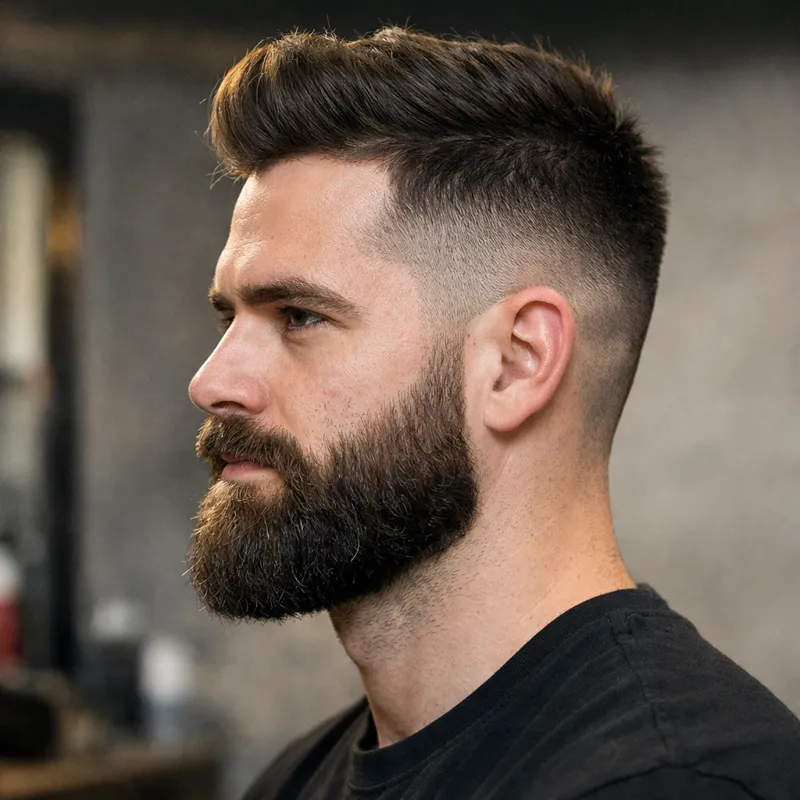
If you are thinking about changing your look, your beard and goatee are as powerful as your haircut. The right facial hair style can sharpen your jawline, balance your features and even change how old you look. In this guide, you will learn how to choose and shape the beard or goatee that actually fits your face, not just what looks good on someone else on social media.
Beards vs. Goatees: What’s the Real Difference?
Before you grab the trimmer, it helps to be clear about the basics. A beard and a goatee are not the same thing, and each sends a different style message.
- Full beard: Hair on cheeks, jaw, chin and usually connecting to the mustache.
- Short boxed beard: A tidier, trimmed version of a full beard with defined cheek and neck lines.
- Goatee: Hair focused around the chin, sometimes with a mustache, often with shaved or very short cheeks.
- Van Dyke: A goatee and mustache that do not connect, with shaved cheeks.
- Stubble: Very short facial hair (usually 0.5–3 mm) that can be shaped into beard or goatee outlines.
In simple terms, a beard frames your entire lower face, while a goatee puts attention on the mouth and chin area. That is why they create such different vibes, even if the hair length is similar.
How to Choose Between a Beard and a Goatee for Your Face Shape
The same beard that looks sharp on your friend can look off on you if your face shape is different. Use these guidelines to pick the style that works with your bone structure.
Round Face
If your face is roughly as wide as it is long, with soft angles, your main goal is to add definition and a bit of length.
- Best choices: Goatee, extended goatee, short boxed beard with tighter cheeks.
- Avoid: Very wide, bushy side areas that add even more width to your face.
Square Face
A square face has a strong jaw and a broad forehead. You already have angles, so you want to soften them slightly without losing that masculine shape.
- Best choices: Full beard with rounded corners, short boxed beard, light stubble with soft edges.
- Avoid: Very sharp, hard corners on the beard that exaggerate the blocky look.
Oval Face
An oval face is slightly longer than it is wide, with balanced proportions. This is the most flexible face shape and suits almost any beard or goatee.
- Best choices: Almost everything: from heavy stubble to full beards and all types of goatees.
- Avoid: Extremely long beards that stretch the face even more and throw off the balance.
Heart or Triangle Face
If you have a wider forehead and a narrower chin, or a strong jaw with a smaller chin, your goal is to add weight to the lower part of your face.
- Best choices: Full beard, medium length beard, goatee with fuller chin area.
- Avoid: Very narrow goatees that make the chin look even smaller.
Essential Tools and Products for Beards and Goatees
To get a sharp beard or goatee at home, you do not need a full barbershop, but you do need the right basics.
- Beard trimmer: With multiple guards (from 0.5 mm up to at least 10 mm) for different lengths.
- Razor or shavette: For clean lines on cheeks and neck.
- Detail trimmer or precision head: Very useful for outlining goatees and mustache edges.
- Beard comb and small brush: To detangle hair and check for uneven spots.
- Beard scissors: For final touch‑ups, corners and mustache hairs over the lip.
- Beard shampoo: Gentle cleanser, better than regular hair shampoo or body wash.
- Beard oil: To soften hair, reduce itch and keep skin underneath hydrated.
- Beard balm or styling cream: For control and light hold, especially in longer beards.
- Aftershave or soothing lotion: To calm the skin in shaved areas.
How to Grow the Right Base for Any Beard or Goatee
Everything starts with a good base. If you try to shape too early, the lines will be patchy and uneven. Give your face hair time and treat it well during the growth phase.
Step 1: Let It Grow for 2–4 Weeks
- Stop shaving everything and use only a trimmer on the neckline if you need to look neat for work.
- Aim for at least 2 weeks of growth for goatees and 3–4 weeks for a full beard, depending on how fast your hair grows.
- Accept the awkward phase. Itching and uneven patches are normal at this point.
Step 2: Start a Simple Care Routine
- Wash your beard 2–3 times a week with beard shampoo, not every day.
- Apply a few drops of beard oil daily, especially after showering when hair is slightly damp.
- Comb the hair downward and then into your natural growth direction to train it.
Step 3: Decide on Beard vs. Goatee
Stand in front of a mirror in good light and look at how your facial hair actually grows.
- If your cheeks are patchy but your chin and mustache are dense, a goatee or extended goatee will work better.
- If growth is solid along the jaw and cheeks, you have the freedom to choose almost any beard style.
How to Shape a Classic Goatee (Step by Step)
The classic goatee puts focus on your chin. It works well for most face shapes and especially helps if you want to make your jaw look sharper or longer.
Tools You Will Need
- Beard trimmer with adjustable guard
- Razor or detail trimmer
- Small comb
- Beard oil and aftershave
Step 1: Trim Everything to an Even Length
- Choose a guard between 3–6 mm depending on how short you want the goatee.
- Trim your entire beard area (cheeks, jaw, chin, mustache) to the same length first.
- This makes it much easier to see your natural lines before you define the shape.
Step 2: Outline the Goatee Shape
- Decide how wide you want the goatee. A safe starting point is to align the outside edge with the center of each eye.
- Use the trimmer without guard or the detail trimmer to mark vertical lines from the corners of your mouth down towards your jawline.
- Connect those lines under the chin in a soft curve, not a sharp angle, unless you want a very graphic style.
Step 3: Clean the Cheeks and Sides
- Shave or trim down to zero everything outside the goatee outline, including the cheeks and the jaw behind the chin area.
- Check symmetry in the mirror. Look straight ahead, then tilt your head slightly up and down to make sure both sides match.
Step 4: Define the Mustache Connection
- Decide if you want the goatee and mustache to connect.
- For a classic look, keep a thin connection at the corners of the mouth.
- For a bolder style (similar to a Van Dyke), shave the connection and keep the mustache separate.
Step 5: Finish and Maintain
- Rinse, apply aftershave on shaved areas and a few drops of beard oil on the goatee.
- Trim every 3–5 days to maintain the shape and length.
- Use scissors for small adjustments rather than over‑trimming with the machine.
How to Shape a Short Boxed Beard
A short boxed beard is one of the most versatile “haircuts” for your face. It keeps strong lines and a clean neck while staying office‑friendly and low maintenance.
Step 1: Set Your Length
- Pick a guard between 4–10 mm, depending on how full your beard is and how formal your environment is.
- Trim the entire beard area evenly, following the direction of hair growth.
Step 2: Create a Clean Neckline
- Find your natural neckline by placing two fingers above your Adam’s apple. The top finger is roughly where your beard should end.
- Imagine a smooth curve from behind one ear, under the jaw, to the other ear, passing through that point.
- Use a trimmer without guard or a razor to remove hair below this line. Avoid a beard that goes too high up under the chin; it makes the neck look shorter and heavier.
Step 3: Define the Cheek Line
- For a natural look, follow your natural hair growth and just clean random stray hairs.
- For a sharper style, draw a soft diagonal line from the sideburn towards the corner of the mouth and trim above it.
- Repeat on the other side and compare in the mirror to keep symmetry.
Step 4: Adjust the Mustache
- Comb the mustache down over the lip.
- Use scissors or a trimmer guard to trim any hairs that cover the upper lip line.
- You can keep the mustache slightly shorter than the beard to keep your expression more open.
Step 5: Maintenance Routine
- Trim the length once a week.
- Clean the neck and cheek lines every 3–4 days if you want a constantly sharp outline.
- Use beard oil daily, and beard balm if your hair is coarse or curly.
Popular Goatee Variations and How to Get Them
Once you are comfortable with the basic goatee, it is easy to switch to other variations without starting from zero. Here are some of the most popular options and how to shape them.
Extended Goatee (Hollywoodian)
This variation connects the goatee with a narrower strip of beard along the jaw, while keeping cheeks mostly clean.
- Start from a classic goatee with a mustache.
- Let the hair grow along the jawline from the corners of the goatee back towards the ears.
- Keep the jaw hair shorter on the sides (for example 3–4 mm) and the chin area slightly longer (5–6 mm) to highlight the center.
- Shave or trim the cheeks above the jawline to keep that “lifted” look.
Anchor Beard
The anchor beard outlines the jawline and chin in a shape that resembles an anchor, paired with a separate mustache.
- Trim your whole beard to a short length (3–4 mm) first.
- Shape a narrow goatee on the chin that extends along the jawline towards both sides, but not all the way to the ears.
- Keep the mustache disconnected from the chin by shaving the area between them.
- Use a detail trimmer to refine the anchor shape and keep lines slim and sharp.
Soul Patch with Goatee or Stubble
A small patch of hair just below the lower lip, combined with a goatee or stubble, can add character without a full beard.
- Trim your facial hair down to stubble (1–2 mm).
- Leave a small rectangular or triangular patch of hair under your lower lip.
- Either connect it to a narrow goatee or keep the rest as uniform stubble for a more subtle effect.
How to Match Your Beard or Goatee with Your Haircut
Your beard is basically the bottom half of your haircut. When both work together, you look intentional and put‑together instead of random. Here are combinations that usually work well.
Short Haircuts and Stubble
If you wear a crew cut, buzz cut or short textured crop, stubble is a natural partner.
- Keep the stubble short (0.5–2 mm) and clean the edges around the cheeks and neck.
- Ask your barber to blend the sideburns into your stubble so there is no harsh step between hair and beard.
Fade Haircuts and Sharp Goatees
Modern fades and drop fades look great with defined goatees or short boxed beards.
- Keep the lines of your goatee crisp to match the clean fade.
- Avoid very bushy or untrimmed beards that fight against the sharp haircut.
Longer Hair and Full Beards
Shoulder‑length or longer hair pairs well with medium to full beards, as long as the beard is groomed.
- Use beard balm to give the beard structure so it does not look wild next to longer hair.
- Keep the shape neat around the sides to avoid looking wider than you are.
Office‑Friendly Combinations
For more formal environments, short hairstyles and tidy facial hair work best.
- Try a side part or short textured cut with a short boxed beard or neat goatee.
- Avoid very long or experimental styles unless you know your workplace culture allows it.
Daily and Weekly Beard Care Routine
Even the best shaped beard or goatee will look tired if you do not maintain it. A simple routine is usually enough.
Daily Routine (5 Minutes)
- Rinse your beard with lukewarm water in the shower.
- Apply beard shampoo 2–3 times a week instead of every day.
- Pat dry with a towel, do not rub aggressively.
- Apply 2–5 drops of beard oil, depending on length and thickness.
- Comb through to distribute the oil and check for uneven spots.
Weekly Routine
- Trim overall length to keep your chosen style consistent.
- Clean up the neckline and cheek lines.
- Check for split ends or very dry areas; use a bit of beard balm if needed.
- Clean your trimmer and razor properly so blades stay sharp and hygienic.
Common Mistakes to Avoid
- Shaving the neckline too high: It can make your chin look weak. Keep the beard under the jaw, not on it.
- Ignoring the mustache: A messy mustache can ruin a clean beard or goatee. Keep the lip line tidy.
- Over‑trimming when fixing mistakes: If you cut one side too short, resist matching it by going shorter and shorter. Stop, let it grow a few days, then correct.
- Using harsh soap: Body wash and cheap soap dry out the skin and cause flaking under the beard.
Adapting Your Beard or Goatee to Different Occasions
You do not always need a completely different style. Often, small adjustments are enough to move from casual to formal or from everyday to a more creative look.
Workdays
- Keep cheek and neck lines clean.
- Use a light amount of beard oil so the hair looks healthy but not overly shiny.
- Stick to short to medium lengths for a more polished impression.
Weekends and Casual Days
- Let the length grow a bit more if you want a relaxed vibe.
- Experiment with softer cheek lines or slightly longer mustache styles.
Special Events
- Book a barber visit 2–3 days before a big event so the lines look natural, not freshly shaved.
- Ask for a sharper outline on the goatee or beard to match a suit or formal outfit.
- Use a small amount of balm for control and definition in photos.
When to See a Barber Instead of Doing It Yourself
You can absolutely maintain your beard and goatee at home, but there are moments when a professional cut makes a big difference.
- If you are growing a beard or goatee for the first time and feel lost about the shape.
- If your hair growth pattern is uneven and you struggle to create symmetry.
- Before important events such as weddings, new job starts or photo sessions.
- When you want to switch from one style to another (for example, from a full beard to a sharp goatee) and need a precise base shape.
Use that visit as a live tutorial: pay attention to how your barber sets the lines, which guards they use and how they blend your beard into your haircut. At home, you can then copy the same logic to maintain the look.
Key Takeaways: How to Get the Look You Want
- Start with your face shape and hair growth pattern, not with a random photo.
- Give your beard or goatee at least 2–4 weeks to grow before heavy shaping.
- Use the right tools: a decent trimmer, razor, scissors and basic beard care products.
- Keep lines clean on the cheeks and neck; small adjustments often matter more than total length.
- Match your facial hair style with your haircut so both look intentional together.
- Stick to a simple daily and weekly routine so your beard or goatee always looks fresh, not accidental.
Once you understand how beards and goatees work with your features, you can treat them like any other haircut: something you adjust as your style, job or taste changes over time.
Frequently Asked Questions About Beards and Goatees
How long does it take to grow a good beard or goatee?
Most men need about 2 weeks to see a basic goatee shape and 3–4 weeks for a decent short beard. Full, dense growth can take 2–3 months depending on your genetics and how fast your hair grows.
How often should I trim my beard or goatee?
For short beards and goatees, trimming every 3–7 days keeps the shape clean. Longer beards can be trimmed every 1–2 weeks, but cheek and neck lines usually need a quick touch‑up twice a week.
Can I pull off a goatee if my cheeks are patchy?
Yes. A goatee is one of the best options if your cheeks do not grow dense hair. Focus on the chin and mustache area, keep the cheeks clean‑shaven or in light stubble, and define the outline clearly.
Do I really need beard oil?
You do not have to use it, but beard oil makes your beard softer, reduces itch and helps prevent dry, flaky skin underneath. It is especially useful once your facial hair is longer than short stubble.
How do I fix a beard neckline that is too high?
If you shaved the neckline too high, stop trimming that area and let the hair grow for 1–2 weeks. Then, redraw the line lower, roughly two fingers above the Adam’s apple, and carefully trim below it only.
Should my beard match the color of my hair?
Not necessarily. It is very common for beards to be slightly darker, lighter or even redder than the hair on your head. Focus on shape and grooming first; natural color variation usually looks interesting and unique.