
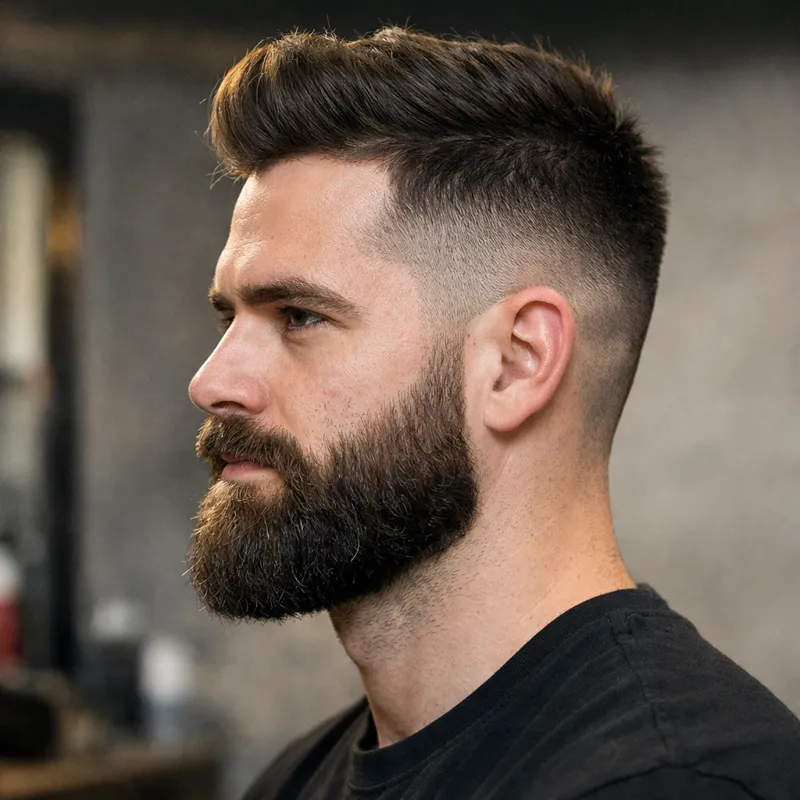
If you want your beard to look intentional and sharp, beard color is just as important as the shape of your beard or your haircut. The right tone can make your jawline stronger, your skin look healthier and your whole style more polished. The wrong one can age you, clash with your hair or simply look fake.
In this guide, you’ll see how to choose the best beard color for your face, your hair and your lifestyle, plus exactly how to get the look at home or with your barber.
Why Beard Color Matters More Than You Think
Your beard is one of the first things people see. Color changes how thick it looks, how clean your neckline appears and even how tired or fresh your face seems.
Think about these effects:
- Darker beards can make the beard look fuller and the jaw more defined, but also highlight patchy areas if you go too dark.
- Lighter beards soften the face and can look effortless, but sometimes disappear against lighter skin tones.
- Warm tones (golden, copper, auburn) give energy and brightness to the face.
- Cool tones (ash brown, cool black) look sharp and modern but can make the face look a bit harder.
Types of Beard Color for Men
Before you decide on a look, it helps to know the main beard color families and what they do to your appearance.
1. Natural Black Beard
A black beard looks bold, defined and very structured. It works especially well if you already have dark hair or strong eyebrows.
Best for: medium to dark skin tones, naturally dark hair, men who want clear jaw definition.
- Choose soft black or dark brown-black over jet black if your skin is light, so the contrast is not too harsh.
- Keep edges clean: black makes every line visible, including mistakes.
2. Brown Beard Shades
Brown is the most versatile beard color. It can be cool, ash‑toned or warm and chestnut, and it looks natural on many skin tones.
Best for: most men, especially if you want a natural, low‑maintenance look.
- Light brown: soft and casual, great for fair skin and light hair.
- Medium brown: classic, matches many medium skin tones and dark blond to brown hair.
- Dark brown: strong and masculine without the intensity of black.
3. Blond Beard
A blond beard can look effortless, especially with sun‑lightened hair, but it’s easy for it to look patchy if the color is too light for your skin tone.
Best for: naturally blond or light brown hair, lighter skin, or men who like a more relaxed, surfer‑inspired look.
- Go for dark blond or light brown if your beard is sparse; very pale blond shows every gap.
- If your beard grows in multiple colors, a neutral blond‑brown mix can even things out.
4. Red and Auburn Beard
Red and auburn beards stand out. Even a slight copper tone can make the beard look richer and more textured.
Best for: naturally red or warm brown hair, freckles, warm or neutral skin tones.
- Choose auburn (brown with red) if full red feels too intense.
- Control brassiness with a color‑safe shampoo made for red tones.
5. Salt and Pepper Beard
Salt and pepper is the natural mix of dark and gray hair. When it’s groomed, it looks confident and sophisticated.
Best for: men in their 30s and up who are comfortable with some gray and want to look mature but not “old”.
- Ask your barber for blending instead of full coverage color to keep a natural mix.
- Use a blue or purple anti‑yellow shampoo if the gray picks up yellow tones.
6. Full Gray or White Beard
A full gray or white beard can be incredibly striking if it’s trimmed well and kept bright instead of yellow.
Best for: men who want to embrace aging or have very high contrast between dark dye and white roots.
- Regularly use a silver shampoo to fight yellowing.
- Keep the shape sharp; lighter beards can look messy faster.
How to Choose the Best Beard Color for You
You don’t need to guess. Use a simple three‑step method: match your hair, respect your skin and think about maintenance.
1. Match (or Complement) Your Hair Color
For most men, the easiest and safest option is to keep hair and beard in the same color family.
- If your hair is dark brown, choose a beard color from medium brown to soft black.
- If your hair is light brown or blond, stick to light to medium brown, dark blond or a blond‑brown mix.
- If your hair is gray, lean into salt and pepper or full gray rather than very dark dyes.
If you shave your head or keep a very close buzz cut, you have more freedom: the beard becomes the main feature, so choose a color that supports your skin tone first.
2. Look at Your Skin Undertone
Your skin undertone doesn’t change with seasons and it affects how colors look on you.
- Warm undertone (you look better in gold, your veins look more green): warm browns, chestnut, auburn, golden blond.
- Cool undertone (you look better in silver, veins look blue): ash brown, soft black, cool dark brown.
- Neutral undertone (both gold and silver work): you can wear most beard colors as long as you don’t go to extremes.
3. Decide How Much Maintenance You Want
Some beard color choices require more work than others.
- Low maintenance: subtle brown shades, salt and pepper, natural gray, color that is close to your natural beard.
- Medium maintenance: one‑step dyes to darken the beard slightly, glosses to warm or cool the tone.
- High maintenance: big color changes, full black on light hair, blonding a naturally dark beard.
Options: From Temporary to Permanent Beard Color
You can change your beard color for a night out or for months. The right option depends on how committed you are and how sensitive your skin is.
1. Temporary Beard Color (1–3 washes)
Temporary beard colors sit on the surface of the hair and wash out quickly.
- Types: tinted beard gels, colored mascara‑style wands, sprays, fiber fillers.
- Good for: testing a new shade, special events, filling small patches, intensifying salt and pepper.
- Pros: zero commitment, no visible regrowth, low risk of allergy.
- Cons: can rub off on clothes or pillows; limited shade range.
2. Semi‑Permanent Beard Color (2–4 weeks)
Semi‑permanent formulas stain the outer layers of the hair. They gradually fade instead of growing out with a sharp line.
- Types: ammonia‑free beard dyes, color‑depositing conditioners, toners.
- Good for: softening gray, darkening the beard one or two levels, adjusting warm/cool tone.
- Pros: gentler on skin, softer result, easy to maintain at home.
- Cons: frequent touch‑ups, especially if you shampoo daily.
3. Permanent Beard Color (4–6 weeks or more)
Permanent color changes the pigment inside the hair. It lasts until the hair grows out or is cut off.
- Types: classic permanent beard dyes, professional color at the barbershop.
- Good for: full gray coverage, strong color changes, very defined black or dark brown beards.
- Pros: long‑lasting, strong coverage.
- Cons: higher risk of irritation, visible roots, harder to correct if you don’t like it.
How to Dye Your Beard at Home: Step‑by‑Step
You can get a clean beard color at home if you take your time and follow the process. Here’s a simple routine to guide you.
Tools and Products You’ll Need
- Beard dye in your chosen shade (preferably one shade lighter than you think you need).
- Developer, if it’s a two‑part color.
- Small mixing bowl and applicator brush or small toothbrush.
- Petroleum jelly or thick cream to protect skin.
- Gloves.
- Fine‑tooth comb.
- Mild beard shampoo and conditioner.
- Old towel you don’t mind staining.
Step 1: Patch Test
Always test the product 24–48 hours before your first application. Apply a small amount behind your ear or in the crook of your elbow according to the instructions. If you notice burning, redness or itching, do not use it on your face.
Step 2: Prepare Your Beard
- Wash your beard with a gentle beard shampoo to remove oil and product, then dry it completely.
- Trim and shape the beard first; it’s easier to color when the lines and length are already set.
- Comb the beard in the direction of growth so you can see thin areas clearly.
Step 3: Protect Your Skin
- Apply a thin line of petroleum jelly or thick cream around your beard edges, on the neck and cheeks, to prevent staining.
- Put on gloves and place an old towel over your shoulders.
Step 4: Mix the Color
- Follow the product instructions exactly. Usually, you mix equal parts of color and developer until the texture is smooth.
- Only mix the amount you need for one application; most formulas cannot be stored once mixed.
Step 5: Apply the Beard Color
- Start where your beard is the densest (usually the chin and mustache) because these areas can handle slightly more depth.
- Use short strokes with the brush, working the color from the roots to the tips.
- Comb through gently to distribute the product and avoid patches.
- Leave a thin layer of product; piling on more dye won’t make the color darker, the processing time does.
Step 6: Watch the Time and Rinse
- Check the mirror every 2–3 minutes. Many men prefer to rinse earlier the first time for a softer result.
- When the time is up, rinse with lukewarm water until it runs clear.
- Shampoo gently if the instructions allow it, then apply a beard conditioner or oil to soften the hair.
Step 7: Adjust if Needed
If your beard is still too light after it’s completely dry, you can repeat the process for a few more minutes the next day. If it’s too dark, regular washing and a clarifying shampoo (not every day) can help fade the color.
Covering Gray in Your Beard Without Looking Fake
Gray in the beard can look great. The goal is usually to control it, not erase every single gray hair.
Choose the Right Coverage Level
- Blending dyes: soften gray by 50–70% so some silver still shows. This looks the most natural.
- Full coverage dyes: aim to cover almost all gray. Use these if you have a lot of gray and prefer a very even beard.
Go One Shade Lighter
Gray hair doesn’t absorb color like pigmented hair. If you choose a shade that is too dark, the non‑gray hairs will go almost black while gray hairs stay lighter, creating a striped effect. Going one shade lighter helps everything blend.
Blend with a Brush, Not with a Block
Instead of pressing a lot of dye into one spot, use the very tip of your brush to tap color just where you want coverage. This lets some natural variation remain and keeps the beard from looking like a solid block of color.
Matching Your Beard Color to Your Haircut and Style
Beard color never lives alone. It has to work with your haircut, eyebrows and overall style.
Short Hair and Fades
With short sides or a fade, the beard becomes more visible because there’s less hair on top to balance it. A slightly darker beard can sharpen the jaw, but avoid choosing a beard that is several shades darker than your hair unless you want high contrast on purpose.
Medium to Long Hair
With longer hair, you can play with a more natural, lived‑in beard color. Browns, auburn and salt and pepper all work well, especially if there is some variation in the hair too.
Clean Neckline, Clean Color
Whatever color you choose, a clean neckline, cheek lines and mustache edges make it look intentional, not accidental. Ask your barber to shape your beard first, then adjust the color to match the new outline.
Daily Beard Care to Maintain Color
Color makes your beard look good for one day. Care keeps it looking good for weeks.
Use Color‑Safe Cleansers
- Choose a beard shampoo that is sulfate‑free so it doesn’t strip color.
- Avoid very hot water, which opens the cuticle and lets pigment escape faster.
Hydrate the Hair and the Skin
- Apply a few drops of beard oil daily to soften the hair and prevent dryness.
- Use a light beard balm if you want extra control and conditioning.
Protect Your Beard from Sun and Chlorine
- UV rays fade color, especially reds and browns. A leave‑in conditioner or beard balm helps create a barrier.
- After swimming in a pool, rinse your beard with clean water as soon as you can to remove chlorine.
Schedule Touch‑Ups Smartly
Instead of fully recoloring every week, alternate:
- One full color session for coverage.
- One lighter “refresh” to blend roots and restore tone without over‑processing.
When to See a Barber for Beard Color
Dyeing your beard at home is possible, but sometimes bringing in a professional is worth it.
Go to a Barber When:
- You’re trying beard color for the first time and want guidance on the right shade.
- You have very sensitive skin or have reacted to dye in the past.
- You want a complex result such as salt‑and‑pepper blending, ombré or lightening a dark beard.
- Your beard shape is changing (for example, growing from stubble to a full beard) and you want everything to match.
A good barber will look at your hair, skin and beard pattern, then suggest a color that enhances your natural features instead of fighting them.
Key Takeaways: Beard Color for Men
- Keep beard color close to your natural hair and skin tone for the most natural result.
- Start lighter and softer; you can always darken on the next session.
- Respect your skin: always patch test and avoid products that cause irritation.
- Shape first, color second. A clean outline makes any shade look better.
- Maintain color with gentle cleansers, hydration and smart touch‑ups.
Once you understand how beard color works with your hair and skin, you can treat it like another grooming tool: adjust it when your style changes, keep it clean and let it support the look you want.
FAQs About Beard Color for Men
What color should my beard be?
For most men, the best beard color is one or two shades within your natural hair color and in the same warm or cool family as your skin tone. This keeps the result natural and easy to maintain.
Can I dye my beard a different color than my hair?
Yes, you can choose a different beard color, especially if you shave your head or keep your hair very short. Just make sure the beard still matches your skin undertone so it doesn’t look disconnected from the rest of your face.
How long does beard dye last?
Temporary beard dyes last one to three washes, semi‑permanent options last about two to four weeks, and permanent formulas usually hold four to six weeks depending on how fast your beard grows and how often you wash it.
Is it safe to dye your beard?
Beard dye is generally safe if you follow the instructions, avoid contact with your eyes and always do a patch test 24–48 hours before use. If you have sensitive skin or a history of allergies, ask a barber or dermatologist first.
How do I cover gray in my beard naturally?
Use a gray‑blending beard dye that softens, rather than fully covers, the silver hairs. Choose a shade one level lighter than your natural color and apply with a light hand so some gray remains for a natural salt‑and‑pepper effect.
How often should I re‑dye my beard?
Most men touch up their beard color every three to four weeks. If your beard grows quickly or you wash it daily, you may need more frequent refreshes, but avoid coloring more often than every two weeks to prevent irritation and dryness.