
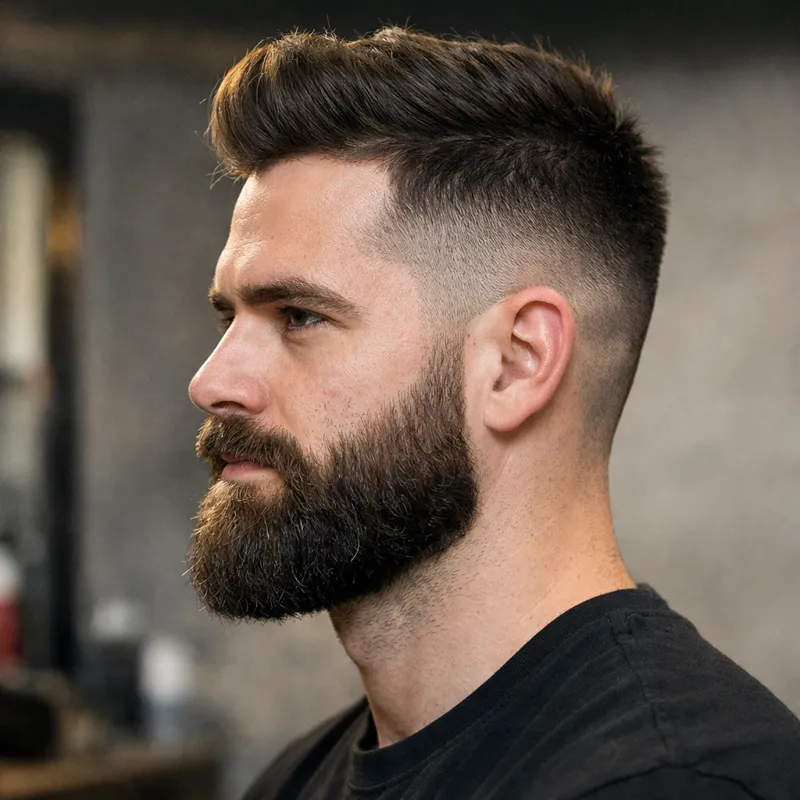
If you want your beard to look sharp instead of random, you need more than just “let it grow.” The right beard style can define your jawline, balance your features and change how your whole face reads in the mirror.
In this guide, you will see which beard styles suit different face shapes, what tools you actually need, and how to shape, trim and maintain your beard step by step so you can get the look you have in mind, not a guess.
How to Choose the Best Beard Style for Your Face
Before you touch a trimmer, you need a clear idea of what you are aiming for. Your face shape, hair density and lifestyle will decide which beard style looks intentional on you and which one will always fight back.
Step 1: Identify Your Face Shape
Stand in front of a mirror with good light, pull your hair back and look at the outline of your face:
- Oval: forehead slightly wider than chin, rounded jaw, no sharp angles.
- Square: strong, wide jaw and forehead, angles near the jaw corners.
- Round: width and length similar, soft jawline, cheeks look full.
- Rectangle / Oblong: face clearly longer than it is wide, straight sides.
- Triangle / Diamond: narrow forehead, wider jaw or cheekbones, pointed chin.
Take ten seconds to be honest about which one is closest. That decision will guide the shape of your beard lines.
Step 2: Match Face Shape to Beard Style
- Oval face: you can wear almost any beard style. Focus on keeping proportions balanced: short sides, slightly fuller chin, and a clean neckline.
- Square face: aim to soften the jaw angles. Go for more length at the chin and slightly shorter sides. A rounded or tapered chin beard works well.
- Round face: you want vertical lines. Keep the cheeks tighter and grow a fuller, longer goatee or pointed beard to create the illusion of length.
- Rectangle / Oblong face: avoid adding too much length at the bottom. Keep the chin shorter and let the sides stay a bit fuller to balance the length of the face.
- Triangle / Diamond face: your jaw is strong already. A fuller beard on the cheeks with a softer, rounded chin helps widen the upper part of the face and reduce sharpness at the chin.
According to barber and grooming expert Jake Thompson, a beard cut should always start with the bone structure, not the trending photo on your phone; the more you respect your natural lines, the less work you will have every morning.
Essential Tools and Products for a Clean Beard Style
You do not need a full barbershop at home, but you do need a basic kit. Working with the right tools makes your lines sharper and your routine faster.
Core Tools
- Beard trimmer with guards: for setting length on cheeks, jaw and neck. Adjustable guards let you fade the beard instead of having one flat length.
- Detail trimmer or edging blade: for outlining the cheeks, lip line and neckline.
- Quality razor (manual or electric): to clean the skin above and below the beard shape.
- Beard scissors: to snip stray hairs and refine the moustache where a trimmer is too clumsy.
- Beard comb or small brush: for detangling, training growth direction and checking symmetry while you trim.
Beard Care Products
- Beard wash: a gentle cleanser designed for facial hair. Regular shampoo is usually too harsh and dries the skin under your beard.
- Beard oil: keeps the hair soft, reduces itch and nourishes the skin underneath.
- Beard balm or cream: offers light hold and helps you control flyaways and shape the overall silhouette.
- Aftershave or soothing lotion: reduces irritation on shaved areas and helps keep edges clean.
Lay these tools out before you start trimming. That small preparation step will stop you from rushing or making “just this quick fix” that turns into a mistake.
Popular Beard Styles and How to Get Each Look
Now that you know your face shape and tools, it is time to match that with a style. Below you will find the most requested beard styles, who they suit and how to shape them at home.
1. Light Stubble: the 3-Day Beard
Best for: almost every face shape, especially if your beard is patchy or your job prefers a neat appearance.
What it is: short, even growth over the jaw, cheeks and upper lip, usually around 1–3 mm length. It creates definition without looking like a full beard.
How to Get the Look
- Let your beard grow for 3–5 days without shaving, depending on how fast your hair grows.
- Attach a short guard (1–3 mm) to your trimmer.
- Trim the entire beard area in the same direction, including moustache and neck.
- Use a bare trimmer or razor to clean the neckline: follow a gentle curve from behind each ear to about two fingers above your Adam’s apple.
- Define the cheek line by shaving stray hairs above your natural growth pattern.
Maintenance: trim every 2–3 days to keep the length consistent. Moisturize daily to avoid irritation.
2. Heavy Stubble: the 10-Day Beard
Best for: men who want a stronger jawline without committing to a full beard.
What it is: thicker than light stubble, usually 4–6 mm, with clearly defined edges. It looks deliberate, not like you forgot to shave.
How to Get the Look
- Grow your beard for 7–14 days.
- Set your trimmer to 4–6 mm, depending on how dense your hair is.
- Trim the whole beard evenly, then remove the guard and lightly taper just above the neckline so the transition to bare skin is smooth.
- Clean the upper cheeks and around the lips with a detail trimmer or razor.
Maintenance: trim every 3–4 days. Use beard oil if the hair feels rough or itchy.
3. Short Boxed Beard
Best for: oval, square and triangle faces. Great choice if you work in a professional setting but still want a full beard.
What it is: a neat, full-coverage beard kept short (usually under 1 cm) with sharp lines along the cheeks and a clean, curved neckline.
How to Get the Look
- Grow your beard for 3–5 weeks to get enough length everywhere.
- Choose a guard between 7–10 mm for the cheeks and sides.
- Trim the entire beard to one even length first.
- Switch to a shorter guard (for example, 5–6 mm) and lightly go over the neck area to create a subtle fade into the neckline.
- With a detail trimmer, draw a clean line from the sideburn down to the corner of the mouth, following your natural cheek growth.
- Shave above the cheek line and below the neckline for a crisp frame.
Maintenance: trim once a week. Line up cheeks and neck every 3–4 days.
4. Full Beard with Natural Shape
Best for: oval, rectangle and diamond faces with good, even growth. If your beard is dense and you like a more rugged look, this one works.
What it is: a longer beard that follows your natural growth while still being controlled at the edges and moustache. Length usually ranges from 1–3 cm.
How to Get the Look
- Grow your beard for 2–3 months without heavy trimming. Only clean up stray hairs on the neck and cheeks.
- Once you have length, comb your beard downward.
- Use scissors to trim any obvious long hairs that stick out from the main shape.
- With a longer guard (12–15 mm), lightly even out the sides so they match the density of the chin.
- Shape your moustache so it does not cover your upper lip; trim horizontally with scissors while combing the hairs down.
Maintenance: trim every 2–3 weeks; shape the moustache weekly. Use beard oil daily and beard balm when styling.
5. Goatee and Circle Beard
Best for: round and oval faces, and men whose cheeks grow patchy but chin and moustache are strong.
What it is: facial hair focused around the mouth and chin. A goatee is chin hair only; a circle beard connects moustache and chin into one continuous shape.
How to Get the Look
- Shave the cheeks clean, leaving hair only around the mouth, chin and a little along the jaw if you want a circle.
- Define a rough shape following your smile lines and chin curve.
- Attach a 5–8 mm guard and trim inside that shape.
- Remove the guard and sharpen the edges so the lines along your cheeks and under the chin are clear.
- Refine the moustache to the width you prefer; you can leave it full or narrow it slightly for more definition.
Maintenance: edge the lines every 2–3 days, trim length weekly.
6. Faded Beard with Short Hair
Best for: modern, clean looks where the beard blends into a fade haircut instead of starting suddenly at the sideburn.
What it is: the sideburn, cheek and jaw area gradually change from very short hair on the head into longer beard hair, with no harsh lines between them.
How to Get the Look
- Start with a fresh fade or tapered haircut so you know the length transitions on the sides.
- Use your trimmer with the same guards used on the lower part of your fade to connect sideburn to beard.
- Create a small gradient: for example, 1.5 mm near the ear, 3 mm just below, 6 mm at jawline, and your full beard length under the jaw.
- Comb through and check both sides in the mirror to keep symmetry.
- Clean the neckline and cheeks so only the fade area is soft; the rest should still have defined borders.
Maintenance: touch up every 3–5 days, ideally when you freshen your haircut.
How to Shape a Clean Neckline and Cheek Line
Your neckline and cheek line are the difference between “I am growing a beard” and “I have a beard style.” Take time to set them up properly once, then maintain them in small steps.
Setting the Perfect Neckline
Use this simple rule: your neckline should sit where your head meets your neck, not halfway down your throat.
- Look straight ahead and place two fingers above your Adam’s apple. The top finger is your guideline.
- Imagine a soft U-shape from that point, curving up towards behind each ear.
- With a trimmer (no guard), shave everything below that U-shape.
- Rinse and check the line from the side. It should look natural when your head is neutral, not only when you tilt it up.
Defining a Natural Cheek Line
A common mistake is cutting the cheek line too low, which makes the beard look smaller and less full. Follow your natural growth instead.
- Let your cheek hair grow naturally for at least a week.
- Identify where the densest part ends and the sparse hairs start.
- Use a razor or detail trimmer to remove only the thin, higher hairs.
- If you prefer a sharper style, draw a line from the top of your sideburn to the corner of your mouth and clean above it, but do not push it too low.
Revisit both lines every few days. Small corrections are easier than fixing a neckline that has crept up too far.
Daily Beard Care: Routine That Keeps Your Style in Shape
Beard style is not just about how you trim; it is also about how you care for the hair and the skin underneath. A simple daily routine keeps everything softer, cleaner and easier to shape.
Morning Routine (5 Minutes)
- Rinse or wash: use lukewarm water daily and beard wash 2–3 times per week to remove sweat, oil and product buildup.
- Dry gently: pat your beard with a towel. Do not rub aggressively; that causes frizz and breakage.
- Apply beard oil: put a few drops in your hands, rub them together and work the oil into the skin first, then the hair.
- Comb or brush: go in the direction you want the beard to sit. This trains growth and shows any areas that need a quick trim.
- Style with balm (optional): use a small amount to set the shape, especially on longer beards or windy days.
Weekly Maintenance (15–20 Minutes)
- Check length and symmetry in natural light or a well-lit bathroom.
- Use your trimmer with the usual guards to refresh the length on cheeks, jaw and neck.
- Edge the neckline and cheek line with a detail trimmer or razor.
- Trim the moustache so it stays off the lip and matches the rest of the beard.
- Rinse, apply oil and style again to see the final result.
Common Beard Problems and How to Fix Them
If your beard does not look like the photos you save, you are not alone. Most issues come from the same few problems, and each has a simple, practical fix.
Patchy Beard Growth
Many men have areas with weaker growth, often on the cheeks.
- Grow it longer: give your beard at least 6–8 weeks; short stubble highlights patches more than a fuller beard.
- Choose the right style: goatees, circle beards and styles with tighter cheeks work better with patchy growth.
- Blend smart: keep the patchy areas shorter and the stronger areas slightly longer to create the illusion of even coverage.
Itch and Irritated Skin
Itch usually peaks in the first weeks of growth.
- Wash the beard regularly but avoid harsh shampoo.
- Use beard oil daily to hydrate the skin.
- Avoid scratching with nails; massage gently with fingertips if it feels itchy.
- Rinse thoroughly after washing to remove any product residue.
Beard Dandruff (Flakes)
Flakes in the beard come from dry skin, not dirt.
- Use a moisturizing beard wash instead of standard shampoo.
- Increase beard oil and focus it on the skin, not just the hair.
- Comb daily to distribute natural oils and lift loose skin.
Uneven Lines and Asymmetry
- Always trim in good light and use a second, smaller mirror to check both sides.
- Work slowly and take equal passes on each side instead of completing one side fully first.
- If you cut one side too high, resist the urge to chase it up on the other side; sometimes the best fix is letting it grow out for a week.
When to See a Barber Instead of Trimming at Home
You can do a lot yourself, but there are moments when a professional touch will save you time and frustration.
- First big shape: when you are growing a full beard for the first time, book one session to set the base shape and lines.
- Complex fades: if you want a fade from haircut to beard, a barber can map that gradient so you only need to maintain it.
- Major style change: from long beard to short boxed, or from full beard to goatee. A pro can remove bulk cleanly and keep your face balanced.
- Special events: weddings, important meetings or photography sessions. A tight line-up makes a visible difference.
Use the barber visit as a lesson: watch how they line up your beard, which guards they use and how they move the trimmer. You can copy that at home later.
Frequently Asked Questions About Beard Styles
How long should I let my beard grow before choosing a style?
Give your beard at least 4–6 weeks before locking in a style. That time lets you see your natural growth pattern, density and weak spots, so you can choose a beard shape that works with what you actually have.
Which beard style is easiest to maintain?
Light or medium stubble is the easiest for most men. You trim every few days with one guard length, clean the neckline and cheeks quickly, and you do not need complex shaping, fading or long-term growth plans.
How do I know if a full beard will suit me?
Check your growth after 8–10 weeks. If your cheeks fill in reasonably well and your chin and moustache are strong, a full beard can work. Match the final shape to your face: more length for round faces, more width for long faces.
How often should I wash my beard?
Use beard wash two or three times per week and rinse with lukewarm water on the other days. Over-washing with strong shampoo can dry out the hair and skin, causing itch and flakes, especially in colder or drier climates.
Can I fix a neckline that is too high?
Yes, but it takes some patience. Stop shaving the neckline for 1–2 weeks and let the hair grow back to its natural position. During that time, only tidy the rest of the beard. Once there is enough growth, redraw the neckline lower and trim carefully.
Do beard oils really make a difference?
Beard oil does not change your genetics, but it clearly improves comfort and appearance. It hydrates the skin, softens the hair, reduces itch and helps prevent split ends, which all make your chosen beard style look cleaner and more defined.