
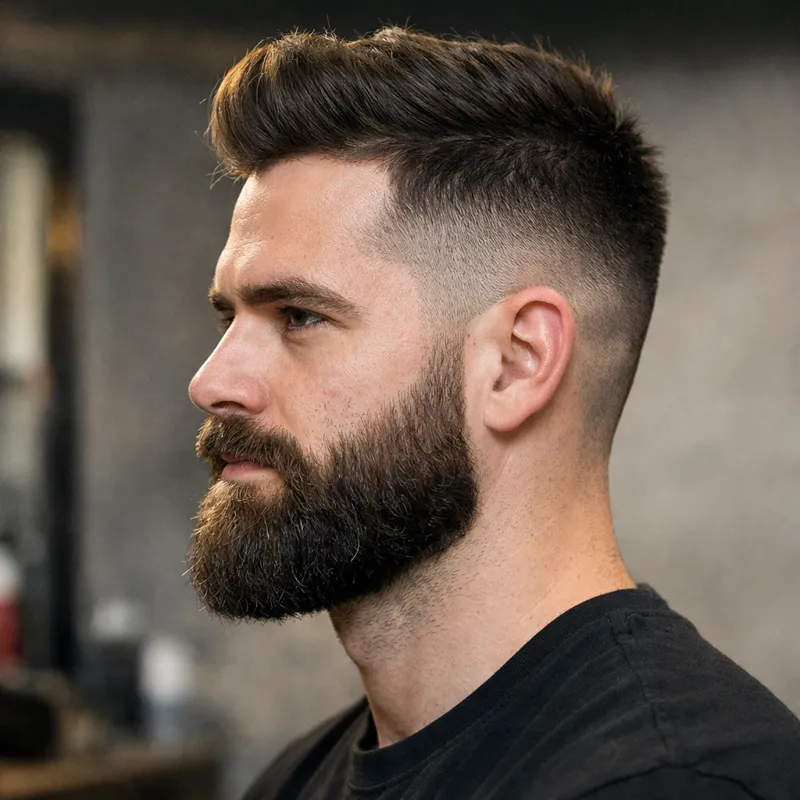
If you cut your own hair or shape your beard at home, your clippers are your most important tool. The right machine makes clean fades, sharp lines and even trims easy. The wrong one snags, overheats and leaves you patchy. This guide walks you through the best types of hair and beard clippers and how to choose the model that fits your style, budget and skill level.
Hair Clippers vs Beard Trimmers: Know the Difference
Before you spend money, you need to be clear on what you actually want the tool to do. Many people try to use a beard trimmer as a full hair clipper or vice versa and get frustrated by bad results.
Hair clippers: built for bulk cutting
Hair clippers are designed to remove a lot of hair quickly. They usually have:
- More powerful motors for thick or dense hair
- Wider blades to cover more surface area
- Guard combs that go from very short to longer lengths (for example 0.5–25 mm)
- Sturdier builds to run for longer sessions without overheating
Use clippers when you want to do full haircuts, fades, buzz cuts, crew cuts, tapers or to take long hair down before detailing.
Beard trimmers: built for detail and short lengths
Beard trimmers are more precise and usually lighter. They normally have:
- Narrower blades for defining lines and working in tight areas
- Shorter length settings (for example 0.5–10 mm) ideal for stubble and short beards
- Smaller motors, because facial hair usually needs less power
- Compact bodies that are easier to maneuver around the jawline and neck
Use a trimmer to shape cheek lines, clean the neck, maintain stubble, and detail around the moustache and lips.
Hybrid hair & beard machines
Many modern clippers are sold as “hair and beard” kits. Some do a good job at both, others feel like a compromise. When you see “2-in-1”, check the blade width, power and included guards to be sure they can handle both your haircut and your beard length.
Key Features to Look For in Hair and Beard Clippers
To choose the right clipper, focus on the features that affect your daily use, not just the marketing claims on the box. Here are the factors that matter most.
1. Motor power and type
The motor is the engine of your clipper. If it is weak, you will feel pulling and snagging, especially on dense or curly hair.
- Rotary motors: Good balance of power and speed, common in quality home and professional clippers.
- Magnetic/pivot motors: Often faster and lighter; some pro-grade models use these for sharp, clean cuts.
- Low-power motors: Typical in cheap trimmers; fine for light beards but not for thick hair or long sessions.
If you have thick, coarse or very curly hair, or you cut hair for several people, look for higher power and reviews mentioning “no pulling” and “smooth through dense hair”.
2. Blade quality and material
Good blades stay sharp, glide well and are easier on your skin. Common options include:
- Stainless steel blades: Standard choice, durable and affordable when maintained with oil.
- Ceramic blades: Stay cooler and sharper for longer but can be more fragile if dropped.
- Titanium-coated blades: More resistant to wear and corrosion, useful if you cut hair often.
For most people, high-quality stainless steel is enough. If you have sensitive skin or cut hair for longer sessions, ceramic or titanium coatings can add comfort and longevity.
3. Cutting lengths and guard system
Length control is where many home users struggle. You want a range that matches how you actually wear your hair and beard.
- For buzz cuts and very short fades: guards from 0.5–6 mm are essential.
- For classic short styles: add mid-range guards up to 12–15 mm.
- For longer textured styles or longer beards: guards up to 18–25 mm are helpful.
Check whether the clipper uses fixed guards you swap, or an adjustable lever or dial that moves the blade in micro-steps. A taper lever on the side, common on barber clippers, makes blending and fades easier once you learn it.
4. Corded vs cordless
Both options can work well, but they feel different in daily use.
Corded clippers
- Constant power with no risk of the battery dying mid-cut
- Often stronger motors, especially in pro models
- You are limited by cable length and need a power outlet nearby
Cordless clippers
- More freedom of movement and easier angles, especially on your own head
- Great for travel and quick beard checks
- Battery life and charging time become critical; look for at least 60–90 minutes of runtime
Many modern clippers are corded/cordless, so you can plug in if the battery is low. That flexibility is very practical if you cut hair for more than one person.
5. Battery type and runtime (for cordless)
If you go cordless, focus on how long it runs and how fast it charges.
- Li-ion batteries (lithium-ion) are the current standard: lighter, no memory effect, hold charge well.
- Look for at least 60 minutes of runtime; 90–120 minutes is ideal for regular haircuts and beard trims.
- Quick-charge options (for example 10–15 minutes for one trim) are helpful for last-minute fixes.
Always check whether the clipper can be used while charging. Some battery-only models block use when plugged in.
6. Weight, ergonomics and noise
You will feel the shape and weight of your clipper every time you cut your hair or beard. An uncomfortable design leads to rushed, uneven work.
- Choose a clipper that feels balanced in your hand, not too front-heavy.
- If you have small hands, avoid very bulky pro bodies.
- Check noise level: extremely loud clippers can be tiring, especially when cutting kids’ hair.
In practice, a slightly heavier but well-balanced machine often feels more stable than a very light, plastic model.
7. Maintenance and cleaning
Clean blades cut better and last longer. Look for features that simplify maintenance:
- Detachable blades you can rinse or brush easily
- Waterproof bodies if you want to clean under the tap (always check the manual)
- Included oil and brush, plus a clear basic maintenance guide
Even with “self-sharpening” blades, a drop of oil before or after each use will extend the life of the clipper and keep it running cooler.
How to Match Your Clipper to Your Hair, Beard and Style
Once you know the main features, you can match them to what you actually do in front of the mirror. Think in terms of hair type, beard type and the styles you wear most often.
By hair type
- Fine, straight hair: Most mid-range clippers can handle this. Focus on guard variety and precision rather than extreme power.
- Thick or coarse hair: You need a stronger motor and quality blades to avoid snagging. Avoid cheap, light trimmers marketed mainly for stubble.
- Curly or coily hair: Look for strong clippers with sharp blades and enough power to go through dense curls without forcing the pass.
By beard type
- Light or patchy beard: A precise trimmer with shorter guards will help you define edges and maintain even stubble.
- Full medium beard: You need a trimmer with guards up to 12–18 mm for shaping and a reliable bare-blade setting for lines.
- Long beard: Consider using both tools: clippers for bulk removal and a trimmer or scissors for final shape and detailing.
By preferred hairstyle
Different looks ask for different clipper strengths.
- Buzz cut or uniform short length: You can use a simple, robust clipper with a few key guards.
- Fades and tapers: A clipper with a taper lever and short guards is practically essential for smooth blends.
- Long on top, short sides: You mainly need clean sides and back, so clippers with mid-length guards and good control are ideal.
Recommended Types of Hair and Beard Clippers
Instead of listing random brand names, it is more useful to understand categories. From there, you can compare specific models that fit your budget.
1. Starter combo kit for basic haircuts and beards
Best for: people who want to do simple buzz cuts, short back and sides and keep a short beard without advanced fades.
- Includes a corded clipper plus a small trimmer or detailer
- Full set of guards up to at least 18 mm
- Enough power for most straight and wavy hair types
- Affordable price, good entry point for beginners
Look for kits with solid, click-on guards and a metal blade rather than ultra-light plastic bodies.
2. Cordless pro-style clipper for fades and home barbers
Best for: people who cut their own hair regularly, attempt skin fades or cut hair for family and friends.
- High-torque motor with smooth performance through dense hair
- Long runtime (90–120 minutes) and fast charging
- Taper lever on the side for blending and half-steps between guards
- Stronger housing, often with metal or rubberized grip
This category often costs more, but the control and durability pay off if you use the clipper every week.
3. Precision beard trimmer for stubble and short beards
Best for: people who go to the barber for haircuts but maintain stubble or a short beard at home.
- Compact head for working around the lips and nose
- Fine length control from 0.5 to 10 mm
- Cordless design with enough runtime for several trims
- Often includes a detail attachment for lines and edges
Pay attention to the minimum and maximum lengths to be sure you can get both very short stubble and the slightly fuller days comfortably.
4. All-in-one grooming kits
Best for: people who want one device for hairline cleanup, beard, body hair and sometimes nose/ear hair.
- One body with multiple heads or attachments
- Lightweight and convenient for travel
- Often weaker on thick head hair compared with dedicated clippers
- Good as a second device, not always ideal as your only clipper
If you choose an all-in-one, check that at least one attachment is strong and wide enough for basic haircuts, not just fine body hair.
Step-by-Step: How to Choose the Right Hair and Beard Clipper
To avoid getting lost in endless product pages, use a simple decision path. Take 5 minutes to answer these questions before you buy.
- Define your main use. Will you mainly cut your own hair, maintain your beard, or both?
- Note your hair and beard type. Fine, medium, thick, straight, wavy, curly or coily.
- List your usual styles. Buzz cut, fade, undercut, longer textured top, heavy stubble, short beard, long beard.
- Decide on corded, cordless or both. Think about where you usually trim and whether you have an outlet handy.
- Set a realistic budget. Decide what you are comfortable spending now rather than chasing “perfect” and overspending.
- Match to a category. Starter kit, pro-style clipper, precision beard trimmer or all-in-one.
- Check blade and guard options. Make sure you have the lengths you actually need.
- Review maintenance needs. Are you okay with oiling and cleaning after each use?
Once you have these answers, you can quickly filter models and focus only on those that fit your real needs instead of getting distracted by features you will never use.
Basic Maintenance to Keep Your Clippers Sharp and Safe
A good clipper can last years if you take care of it. Skipping maintenance leads to dull blades, more pulling and even skin irritation.
After every use
- Brush away loose hair from the blades and guards.
- Apply 1–2 drops of clipper oil along the moving blade while it is running.
- Wipe the body with a dry or slightly damp cloth (if the manual allows).
Once a week (or after several cuts)
- Remove the blade or head if it is detachable and clean underneath.
- Check screws and attachments to be sure nothing is loose.
- Disinfect blades with a spray designed for grooming tools if you share the clipper.
Blade replacement and storage
Most blades eventually dull, even with good care. If you notice more pulling, uneven cutting or you have to go over the same spot many times, it might be time to replace the blade. Store your clipper in a dry place, away from humidity, and avoid wrapping the cord too tightly to prevent internal damage.
Common Mistakes When Buying Hair and Beard Clippers
A lot of frustration comes from the same avoidable errors. Keep these in mind when you compare models.
- Choosing only by price. The cheapest option often lacks power, guard quality or durability.
- Ignoring length range. Buying a great clipper that simply does not have the guards you need for your style.
- Overlooking maintenance. “Maintenance-free” usually does not mean you never have to clean or oil.
- Buying a beard-only trimmer for full haircuts. It may work once or twice, then overheat or burn out.
- Not considering ergonomics. A heavy, awkward clipper is hard to use on your own head, no matter how good the specs are.
If you avoid these traps and focus on matching the clipper to your real use, you will get cleaner results and a more comfortable grooming routine.
FAQ: Best Hair and Beard Clippers
What is the best clipper length for a buzz cut?
For a classic buzz cut, most people use guards between 3 and 6 mm. If you want a very close, almost shaved look, go for 1–2 mm. It is a good idea to start longer and work your way shorter.
Can I use the same clippers for my hair and beard?
Yes, many modern clippers handle both hair and beard well, especially if they include short and medium guards. For precise lines and work around the lips, a dedicated beard trimmer or a detail attachment can still be helpful.
How often should I oil my clipper blades?
For regular home use, adding a couple of drops of oil before or after each session is ideal. This keeps friction low, helps prevent overheating and extends blade life. Always use clipper oil rather than random household oils.
Are cordless clippers powerful enough for thick hair?
Good cordless clippers with modern lithium-ion batteries are strong enough for thick hair, especially pro-style models. Check user reviews for comments about cutting through coarse or curly hair without pulling rather than relying only on marketing terms.
When should I replace my clipper blades?
Replace blades when you notice more pulling, uneven lengths or the need to go over the same area repeatedly, even after cleaning and oiling. For frequent home use, this might be every 12–24 months, depending on hair type and maintenance.