
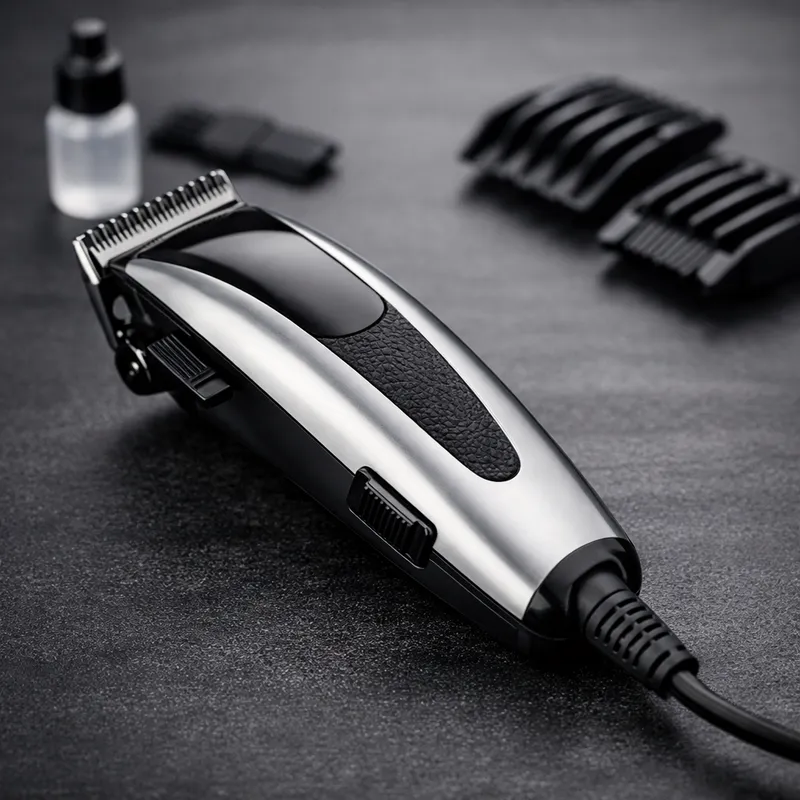
If you want sharp, clean haircuts at home, choosing the right BaByliss hair cutter makes the difference between an amateur result and a barbershop finish. The good news: you do not need pro skills, just the right tool and a clear routine.
BaByliss offers several types of clippers and trimmers, each aimed at a different kind of user and haircut. In this guide, you will learn how to pick the model that actually fits your hair, your budget and your skill level, and how to use it step by step without ruining your style.
Why BaByliss Hair Cutters Are Popular for Home Haircuts
BaByliss clippers are popular because they balance power, precision and price. You get solid motors, sharp blades and a range of cutting guards that let you copy most modern men’s haircuts at home: fades, buzz cuts, tapers and simple trims.
Jake Thompson, a master barber with over fifteen years of experience cutting fades and modern men’s hairstyles, often points out that consistency in blade quality and guard sizes is what really helps non-professionals get repeatable results at home.
Main advantages
- Good motors for the price: enough power to cut dense or thick hair without pulling if you use the right guard.
- Reliable blades: stainless steel or titanium options that stay sharp with basic maintenance.
- Versatile guard systems: you can move from a close buzz to a longer textured cut using the same machine.
- Corded and cordless options: you can choose between maximum power or maximum freedom of movement.
- Wide range of models: from entry-level kits to pro-inspired designs that mimic barbershop tools.
Before you buy, it helps to understand the types of BaByliss hair cutters and which hair and style they suit best.
Types of BaByliss Hair Cutters and What They Are Best For
Not every BaByliss hair cutter is built for the same job. Some are “all-round” hair clippers, others are detail trimmers. Matching the tool to the task is the first step toward a clean result.
1. Full-size hair clippers
These are the classic barbershop-style machines. They are designed for cutting the bulk of the hair on the sides and back, creating fades, tapers and even complete buzz cuts.
- Best for: buzz cuts, crew cuts, fades, undercuts, high and tight cuts.
- Hair types: straight, wavy, curly and very thick hair.
- Key features to look for: strong motor, full set of guards, adjustable taper lever, comfortable grip.
2. Cordless clippers
Cordless BaByliss clippers give you freedom of movement. They are ideal if you cut your own hair in front of a mirror and do not want a cable getting in the way.
- Best for: self haircuts, quick maintenance trims, travel.
- Hair types: most hair types, as long as the motor is strong and the battery holds enough charge.
- Key features: battery life (in minutes), fast-charging option, battery indicator, weight balance.
3. Beard and detail trimmers
These are smaller BaByliss tools designed for edging, shaping necklines and maintaining beards, sideburns and small details around the ears.
- Best for: cleaning necklines, shaping beards, refining hairlines.
- Hair types: facial hair, fine detailing on the temples or nape.
- Key features: narrow blade, close-cut capability, multiple precision guards.
4. Multi-grooming kits
Multi-grooming BaByliss kits combine hair clipper heads, beard trimmer heads and sometimes body grooming attachments in one device.
- Best for: people who want one tool for head, face and body.
- Hair types: light to medium density; not always ideal for extremely thick head hair.
- Key features: number of attachments, ease of switching heads, cleaning and storage options.
How to Choose the Right BaByliss Hair Cutter for Your Needs
To choose the right BaByliss hair cutter, think the same way a barber does: start from the haircut you want and the hair you have, then look at the technical details.
1. Define your main haircut goal
Ask yourself what you really plan to do most of the time. That will narrow your options fast.
- Buzz cut or uniform short cut: pick a simple, sturdy full-size BaByliss clipper with easy guard changes.
- Fades and modern styles (skin fade, drop fade, undercut, textured crop, quiff, pompadour): choose a model with a taper lever and guards from 0.5 to at least 6.
- Basic trims between barber visits: a mid-range cordless BaByliss clipper is usually enough.
- Head + beard management: consider a multi-grooming kit if your hair is not extremely dense.
2. Match the clipper to your hair type
Your hair thickness and texture decide how much power you need.
- Fine or thin hair: most BaByliss clippers can handle this easily; focus on guard range and comfort.
- Thick or coarse hair: choose a model advertised for powerful cutting or professional use, often heavier with a stronger motor.
- Curly, coily or very dense hair: look for sharp blades, high torque and quality guards that do not flex or snag.
3. Decide between corded and cordless
Both options have trade-offs. Think about your bathroom setup and how you plan to move while cutting.
- Corded BaByliss clippers: unlimited runtime, consistent power, usually a bit heavier and tied to a socket.
- Cordless BaByliss clippers: more freedom of movement; battery life typically ranges from 45 to 120 minutes depending on the model.
If you cut multiple heads or take your time for detailed fades, longer battery life or the ability to use the clipper plugged in can be important.
4. Check the blades and guards
Blades and guards are where precision actually happens. Pay attention to:
- Blade material: stainless steel is standard; titanium coatings add durability and smoother glide.
- Adjustability: a taper lever lets you fine-tune the cutting length without changing guards.
- Guard quality: rigid guards with clear length markings are easier to use and more accurate.
5. Comfort, noise and weight
If you are cutting your own hair, comfort matters more than you think.
- Grip shape: choose a design you can hold steadily without straining your wrist.
- Weight balance: heavier clippers can feel stable but may tire your hand; lighter models are easier for self-cuts.
- Noise and vibration: quieter, smoother clippers are nicer to use, especially with kids.
Essential Accessories for Your BaByliss Hair Cutter
A good BaByliss hair cutter becomes much more effective with a few simple accessories around it. Think of them as your mini home barbershop kit.
- Cutting guards/combs in different sizes (often from 1 mm up to 25 mm or more).
- Clipper oil to keep blades running smoothly and avoid overheating.
- Cleaning brush or small soft brush to remove hair from the blades.
- Barber comb for guiding the hair during scissor-over-comb or clipper-over-comb techniques.
- Hand mirror to see the back of your head when cutting solo.
- Cape or old towel to keep hair off your clothes.
How to Prepare Your Hair and Space Before Cutting
Preparation is the quiet secret behind clean results. If you rush into using your BaByliss clipper without setting up, you are more likely to make mistakes.
1. Wash and dry your hair
Wash your hair with a mild shampoo and dry it completely. Clippers work best on clean, dry hair because oil and moisture can make the hair stick to the blades and clog the guards.
2. Detangle and comb into place
Comb your hair in the direction it naturally grows. Remove knots and tangles so the clipper glides smoothly. This is especially important for curly or longer hair on top.
3. Set up your cutting space
- Stand in front of a well-lit mirror, ideally with natural light or bright white light.
- Place a towel or cape around your shoulders.
- Lay out your BaByliss hair cutter, guards, comb, brush and oil within easy reach.
- If possible, have a second mirror to check the back of your head as you work.
Step-by-Step: How to Use a BaByliss Hair Cutter for a Simple Fade
Once you have chosen your BaByliss clipper and prepared correctly, you can start with a simple, clean style. A basic low fade with more length on top suits most face shapes and works with straight, wavy or curly hair.
Step 1: Choose your guard lengths
Decide how short you want the sides and how much length you want to keep on top.
- For the sides and back, many people like a #1 (about 3 mm) or #2 (about 6 mm) at the bottom.
- For the middle section of the fade, use one or two guard sizes higher (for example #3 or #4).
- For the top, you can cut with a higher guard (like #5 or #6) or leave it for scissors.
Step 2: Start with the longest guard
Attach the longest guard you plan to use on the sides. Turn on your BaByliss clipper and start cutting from the sides and back, moving the clipper against the grain (against the direction of hair growth).
- Use smooth, upward strokes and keep the guard flat against your head.
- Stop roughly where you want the fade to start blending into the longer top.
Step 3: Create the fade line with a shorter guard
Switch to a shorter guard for the lower part of the sides and back. This will be the tightest area of your fade.
- Work from the bottom of your hairline up to just below the previous section.
- Use a gentle flicking motion at the top of each pass to start blending.
Step 4: Blend the two sections
To remove the visible line between lengths, you can use an in-between guard or the taper lever if your BaByliss model has one.
- Set the lever halfway open or use a guard size between the two you already used.
- Work only on the line area with short, light strokes until it softens.
Step 5: Clean the neckline and around the ears
Remove the guard or use a very short guard for detailing. Carefully outline the back of your neck and around the ears.
- Hold the clipper upside down for more control when edging.
- Use a hand mirror or ask someone to help with the back.
Step 6: Trim the top
Depending on your style, you can use a higher guard on your BaByliss clipper or scissors on top.
- For a short textured crop, cut the top with a guard between #4 and #6, then dry and add matte product for texture.
- For longer looks like a quiff or pompadour, use scissors: lift sections with a comb and cut small amounts at a time.
Step 7: Final check and minor corrections
Brush off loose hair, check your head from multiple angles and correct any uneven areas with the appropriate guard or lever setting. Take your time; small changes are safer than big corrections.
How to Maintain and Clean Your BaByliss Hair Cutter
Good maintenance keeps your BaByliss clipper cutting smoothly and extends its life. It also protects your skin from irritation caused by hot, dirty blades.
After every haircut
- Turn off and unplug the clipper if it is corded.
- Remove the guard and brush out hair from the blade and inside the guard.
- Add a few drops of clipper oil along the moving blade.
- Turn the clipper on for a few seconds to distribute the oil evenly.
Weekly or regular deep clean
- If the model allows, detach the blade and clean underneath with the brush.
- Wipe the exterior with a slightly damp cloth and dry it completely.
- Check that guards are not cracked or loose, and replace worn parts.
Battery care for cordless models
- Recharge before the battery is completely dead to keep performance stable.
- Avoid leaving the clipper permanently on the charger if the manual advises against it.
- Store in a dry place, away from moisture and direct heat.
Common Mistakes When Using a BaByliss Hair Cutter
Even with a quality BaByliss clipper, a few typical mistakes can ruin an otherwise good haircut. Avoid these and your results will improve quickly.
- Starting with a guard that is too short: always begin longer; you can go shorter later but you cannot add length back.
- Cutting wet or greasy hair: this clogs guards and makes the clipper pull.
- Rushing the fade: not spending enough time on blending leaves visible lines.
- Ignoring the direction of growth: cutting only with the grain can leave uneven patches; combine with and against the grain as needed.
- Skipping oil and cleaning: dirty blades overheat, drag and dull faster.
- Using the wrong tool for detail work: for sharp edges, consider a smaller BaByliss trimmer or be extra careful with the corner of the clipper blade.
Which BaByliss Hair Cutter Is Right for You? Quick Scenarios
If you are still unsure, match yourself to one of these quick scenarios and choose the type of BaByliss hair cutter that fits best.
1. The low-maintenance buzz cut fan
You like a buzz cut or crew cut and do not care about complex fades. You just want an even, clean result every couple of weeks.
- Choose a simple full-size BaByliss clipper with sturdy guards and a corded motor.
- Use one or two guard lengths and keep your routine basic.
2. The modern fade and textured top
You want a style with short faded sides and more length or volume on top, such as a quiff, textured crop or pompadour.
- Pick a BaByliss clipper with taper lever and a full guard set.
- Combine clipper work on the sides with scissors and product on top.
3. The beard and hair manager
You wear a short haircut plus a beard or stubble that needs regular shaping.
- Use a full-size BaByliss hair cutter for the head.
- Add a dedicated BaByliss beard trimmer or multi-grooming kit for detailed control.
4. The family haircut station
You plan to cut hair for multiple people at home: maybe kids, partner and yourself.
- Look for a quiet, reliable BaByliss clipper with long cord or strong battery.
- Make sure the kit includes a wide range of guard sizes to suit different styles.
Styling Tips After Using Your BaByliss Hair Cutter
Once the cut is done, styling products help show the shape and texture you just created. With the right finish, even a basic home cut can look professional.
- For buzz cuts and very short styles: use a light hair tonic or matte finish lotion to keep the scalp comfortable and reduce shine.
- For textured crops: a matte clay or paste worked through dry hair will define layers without making hair look greasy.
- For quiffs and pompadours: a medium to strong hold pomade applied at the roots and blow-dried into shape keeps height and control.
- For curly or wavy hair: use a curl cream or mousse to define curls on top while keeping the faded sides clean.
Apply products sparingly at first. You can always add more if needed, but too much product can weigh the hair down and hide the clean lines you created with your BaByliss hair cutter.
FAQs About BaByliss Hair Cutters
Which BaByliss hair cutter is best for beginners?
For beginners, a simple full-size BaByliss clipper with a complete guard set and an adjustable taper lever is usually best. It covers basic buzz cuts and simple fades without overwhelming you with attachments or complex controls.
Can I use a BaByliss hair cutter for my beard as well?
You can use a BaByliss hair cutter on your beard for basic length control, especially if you prefer a short, even stubble. For detailed shaping, sharp lines and mustache work, a dedicated BaByliss beard trimmer usually offers better precision.
How often should I oil my BaByliss hair clipper?
A good rule is to oil your BaByliss clipper after every use. A few drops along the moving blade, followed by a few seconds of running time, help reduce heat, prevent rust and keep the cutting performance smooth.
Is a cordless BaByliss hair cutter powerful enough for thick hair?
Many cordless BaByliss hair cutters are powerful enough for thick hair, but you should choose models that highlight strong motors and longer battery life. Always cut clean, dry hair and use slower, controlled strokes to avoid snagging.
Can I give myself a fade with a BaByliss hair cutter?
You can give yourself a basic fade with a BaByliss hair cutter if you have time and patience. Use several guard sizes, work slowly, blend between lengths with short strokes and always check your progress with mirrors from different angles.
How long does a BaByliss hair cutter last?
With basic care—regular cleaning, oiling and proper storage—a BaByliss hair cutter can last several years for home use. Blade sharpness and battery performance will slowly decline over time, but gentle maintenance extends their useful life.