
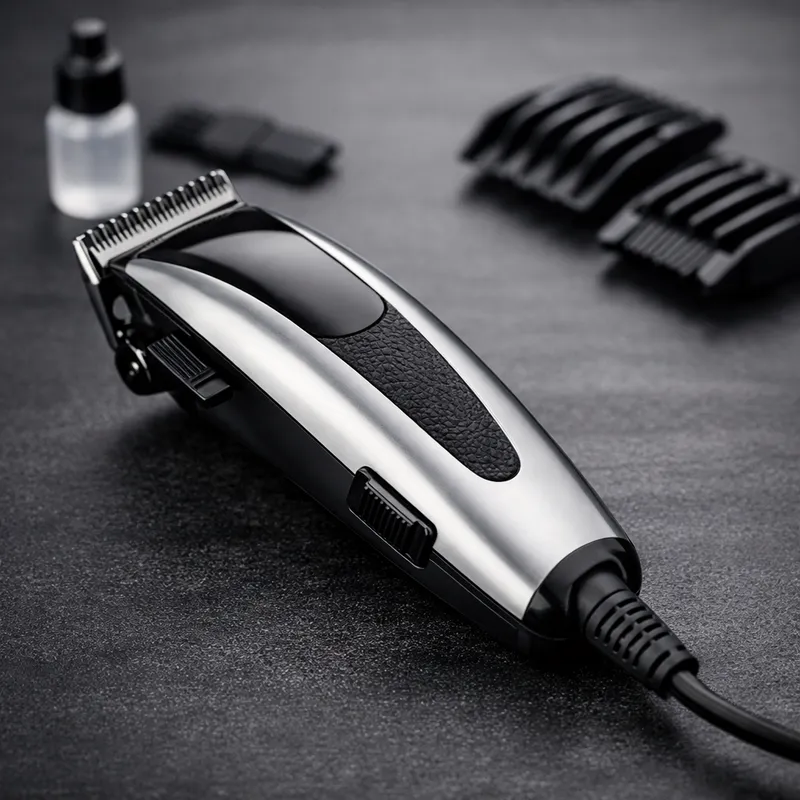
If you want clean fades, sharp buzz cuts or just to stretch the time between barber visits, the right hair clippers make all the difference. The wrong ones will snag, overheat and die mid‑cut. The right ones glide through your hair, hold a charge, and let you shape your style with confidence.
In this guide, you will see what really matters when choosing clippers, how to match a model to your hair type and routine, and which features are worth paying for. Think of it as sitting in a barber chair and asking, “Which clippers should I actually buy?”—and getting a straight, practical answer.
Hair Clippers vs Trimmers vs Shavers: Know Your Tool First
Before you compare specs, you need to know which tool does what. Many men mix up clippers, trimmers and shavers, then blame the machine when it is actually the wrong type.
- Hair clippers: designed to bulk cut and shape head hair. They come with guard combs (numbers #1, #2, #3, etc.) to control length. Perfect for buzz cuts, fades, tapers and undercuts.
- Trimmers: built for detailing. Narrower blades, closer cut, ideal for necklines, sideburns and beard edges. Not efficient for taking off a lot of length.
- Foil or rotary shavers: finish the job down to skin. Good for bald looks or cleaning the neck after you have used clippers.
For most home haircuts, your main workhorse is the clipper. You can add a simple trimmer later for sharp lines if you need extra precision.
Key Factors When Choosing the Best Clippers for Men
You will see dozens of models with flashy names, but there are only a few criteria that really decide how the clipper will perform in your hand. Focus on these and you avoid 90% of disappointments.
1. Motor Power and Type
The motor is the heart of your clippers. Weak motors pull and snag, especially on thick or curly hair.
- Rotary motors: balanced power and speed, great for most home users. They handle thick hair well without being too heavy.
- Magnetic / pivot motors: common in professional barbershop clippers. Strong torque, consistent performance all day. Often a bit heavier and louder.
If you have coarse, dense or very curly hair, choose a model known for high torque, not just a big RPM number. Torque is what keeps the blade moving under load.
2. Corded vs Cordless
This decision shapes your daily experience more than any single spec.
- Corded clippers: unlimited run time and consistent power. You never think about charging, but you are tied to the outlet.
- Cordless clippers: more freedom of movement and easier angles, especially for self‑cuts. You must manage battery life and charging time.
For most men cutting their own hair, a cordless model with at least 60–90 minutes of battery life is the sweet spot. If you cut hair for several people back‑to‑back, consider a corded or a cordless model that can also run while plugged in.
3. Blade Material and Adjustability
Blades decide how clean the cut feels and how long the tool stays sharp.
- Stainless steel blades: standard and reliable if you clean and oil them. Good for most users.
- Carbon steel blades: harder and can stay sharp longer, but they need more care to avoid rust.
- Ceramic blades: stay cooler and resist wear, but can chip if dropped.
Look for blades that are removable for cleaning and, ideally, adjustable. A taper lever on the side lets you open and close the blades for micro‑length changes between guard sizes—essential for smooth fades.
4. Guard Combs and Length Range
Guards are what translate “I want a short back and sides” into an actual length.
- Make sure the kit includes at least #1 (3 mm) to #4 (13 mm). More guards give you smoother transitions.
- Check how the guards attach. Clip‑on guards that lock firmly are safer than flimsy slide‑on pieces.
- If you like longer top styles, look for guards up to #6–#8 so you can maintain length without scissors.
5. Weight, Shape and Grip
Even a powerful clipper is useless if it is uncomfortable to hold for 20 minutes.
- Pick a model with a balanced weight. Too light can feel cheap and vibrate; too heavy will tire your wrist.
- Look for textured or rubberized grips if you plan to cut your own hair—especially around the back of your head.
- A slightly tapered body fits easier in the hand than a wide, blocky design.
6. Noise and Heat
All clippers make noise, but volume and vibration vary a lot. Strong professional motors can buzz loudly and warm up with long use. If you are sensitive to noise or cutting children’s hair, consider a model known for quiet operation. Also, check user feedback about overheating, especially on cordless units.
7. Cleaning, Maintenance and Durability
Clippers that are simple to clean will last longer and cut better.
- Prefer models where you can remove the blade without tools for deep cleaning.
- Some clippers are washable under running water; others are “wipe only”. Always follow the manufacturer’s instructions.
- A basic kit should include blade oil and a small brush. If it does not, plan to buy clipper oil separately.
As master barbers like Jake Thompson often point out from daily experience, consistent cleaning and oiling is what separates a smooth, professional‑feeling cut from a tugging, uneven one—even when using the exact same machine.
Match Your Clippers to Your Hair Type and Style
Not every clipper suits every head. Your hair type and preferred hairstyle decide how much power, precision and accessory support you need.
Fine or Thinning Hair
If your hair is fine or starting to thin, you do not need a huge motor. Focus on:
- Sharp blades that do not push the hair flat.
- Closer guards for neat, short cuts that make thinning less obvious.
- Lightweight body so you can comfortably tidy up every week.
Styles like a buzz cut, crew cut or a simple short back and sides are easy to maintain at home with a mid‑range clipper and guards from #1 to #4.
Thick, Straight Hair
Thick, straight hair quickly exposes weak tools. You should look for:
- High‑torque motor to avoid pulling and uneven lines.
- Full set of guards and a taper lever so you can blend weight lines.
- Sturdy metal or reinforced plastic housing that handles longer cutting sessions.
This setup is perfect if you like fades, undercuts or high and tight cuts where clean transitions show clearly.
Curly, Coily or Afro‑Textured Hair
Curly and coily hair needs power and control. Prioritize:
- A strong motor famous for cutting coarse hair.
- Wide blade to capture more hair per pass without snagging.
- Reliable guards that do not pop off when they meet dense curls.
For shape‑ups, temple fades and keeping waves or a short Afro sharp, a combination of clipper + trimmer works best: clippers for bulk and overall shape, trimmer for lines and detailing.
Long Hair With Short Sides
If you wear styles like a modern quiff, slick back, undercut or textured crop with length on top, your clipper only needs to manage the sides and back. You still want:
- Guards up to at least #4–#6 so you can choose how short the sides go.
- A taper lever to soften any hard step between guard sizes.
- A design comfortable for self‑cutting around the back of your head.
You can leave the top to your barber, while using clippers every 10–14 days to refresh the sides, neckline and around the ears.
Facial Hair and Multi‑Use Clipper Kits
Many men want one tool for both hair and beard. Some clippers come as multi‑grooming kits with extra heads and smaller trimmer blades. These are handy, but usually weaker than dedicated barbershop clippers.
- If you have a short beard or stubble, a multi‑groomer can be enough.
- For dense or long beards, consider a stronger clipper plus a separate precision trimmer.
Best Types of Clippers for Men by Use Case
Instead of chasing brand names, start with your real‑life scenario. Here are common situations and what kind of clipper works best in each one.
1. For Simple Buzz Cuts and Crew Cuts
If your goal is a classic buzz cut or short crew cut at home, you do not need a professional machine.
- Motor: mid‑range rotary is enough.
- Battery: 60 minutes of cordless runtime covers a full cut and touch‑ups.
- Guards: #1–#4 included, plus half sizes if possible.
This setup keeps your haircut low‑maintenance and flexible: you can change between #1 in summer and #3 in winter without visiting the barbershop.
2. For Fades, Tapers and Precise Blends
Fades look simple, but they ask more from both your technique and your tools.
- Motor: stronger, with good speed and torque.
- Blade: adjustable with taper lever, ideally zero‑gap capable (blades set very close for ultra‑short cutting).
- Guards: full set including half‑sizes (0.5, 1.5, 2.5) to avoid harsh steps.
Combine your main clipper with a small trimmer for the lineup around the forehead, temples and beard. This tool pairing is what barbers rely on every day for clean fades.
3. For Travel and Quick Touch‑Ups
If you travel often or just want to keep your neckline and sides neat between barber visits, portability matters.
- Compact cordless body that fits easily in a dopp kit.
- USB‑C or universal charging so you are not stuck without the original charger.
- A few key guards (for example #1, #2, #3) instead of a bulky full set.
These lightweight models will not feel as powerful as heavy barbershop clippers, but they are perfect for small maintenance jobs.
4. For Professional or Semi‑Professional Use
If you cut hair for friends, family or clients, durability and comfort matter more than price.
- High‑torque motor built for continuous use.
- Metal or heavy‑duty casing with good heat management.
- Detachable blades so you can switch between different sizes and keep hygiene under control.
In this category, investing in a reliable pro‑grade clipper pays off in smoother cuts, less frustration and fewer replacements over time.
How to Use Hair Clippers at Home (Step‑by‑Step)
Good clippers will not save a bad technique, but a clear routine makes the process much easier. Here is a simple step‑by‑step that works for most short styles.
Step 1: Prepare Your Hair and Workspace
- Wash or at least clean and dry your hair. Product build‑up makes clippers struggle.
- Brush or comb the hair in its natural direction so it sits evenly.
- Set up in good light with a mirror in front and, if possible, a handheld mirror for the back.
- Lay a towel or cape over your shoulders and clear the sink or floor area.
Step 2: Choose Your Starting Guard
If you are unsure, always start longer. You can go shorter, but you cannot put hair back.
- For a full buzz, a common first try is #3 (10 mm).
- For faded sides with length on top, many men start with #2 or #3 on the sides.
Step 3: Cut the Sides and Back
- Start with the sides, clipper guard flat against your head.
- Move the clippers against the direction of hair growth using slow, controlled strokes.
- Use a gentle flicking motion at the point where you want more length to start. This helps create a natural blend.
- Repeat around the head, checking both sides for symmetry.
Step 4: Blend the Transition Areas
This is where fades and tapers take shape.
- Drop to a shorter guard for the lowest part of the sides and back.
- Use your taper lever to micro‑adjust between guards and soften any visible steps.
- Work in small sections and check often with a mirror instead of rushing.
Step 5: Clean the Neckline and Around the Ears
- Remove the guard and close the taper lever (shortest length).
- Very gently outline the neckline and around the ears using the corner of the blade.
- If you own a trimmer, use it for this step for extra precision.
Step 6: Final Checks and Styling
- Rinse off loose hair and dry your skin.
- Use a handheld mirror to inspect the back and sides from different angles.
- Snip any stray hairs with scissors if needed.
- Finish with your usual styling product to see how the cut looks in daily life.
Maintenance: How to Make Your Clippers Last
Even the best clippers need basic care. A few simple habits will keep your blades sharp and your motor running smoothly for years.
After Every Use
- Turn the clippers off and brush hair from the blades and guards.
- Add a drop or two of clipper oil to the blade while it is running, then wipe excess.
- Detach the blade (if possible) once in a while to remove trapped hair underneath.
Weekly or Monthly (Depending on Use)
- Disinfect blades using an appropriate spray or wipe recommended for clippers.
- Check screws and guards to make sure nothing has loosened.
- Inspect the charging port and cable on cordless models for wear.
Battery Care for Cordless Clippers
- Avoid running the battery completely flat every time.
- Give the clipper a full charge before a big cutting session.
- If you store it for a long period, keep the battery around 40–60% rather than totally empty.
Common Mistakes Men Make When Buying Clippers
You can skip a lot of trial and error by avoiding a few classic traps.
- Buying only on price: the cheapest kit often struggles with anything beyond light trimming and dies early.
- Ignoring hair type: fine hair and dense curls do not place the same demands on the motor and blade.
- Overcomplicating: huge “all‑in‑one” kits look attractive but end up half‑used. Focus on what you will actually use weekly.
- Skipping maintenance: dull, dry blades are the main reason people give up on otherwise good clippers.
- Expecting barbershop results on day one: there is always a learning curve. Good tools help, but practice matters.
Quick Checklist: How to Choose the Right Clippers for You
Use this simple checklist before you hit the buy button.
- What is your main goal? (Buzz cuts, fades, just clean up between barbershop visits?)
- What is your hair type? (Fine, thick, curly, coily, mixed?)
- Do you prefer corded or cordless? (More power vs more freedom.)
- Does the clipper have a taper lever if you want fades or blends?
- Are the guards solid and do they cover the lengths you need?
- Is the weight and grip comfortable enough for you to use on yourself?
- How easy is it to clean and oil the blades?
- For cordless, does the battery life match how many haircuts you plan to do per week?
Once you have clear answers to these questions, comparing models becomes much easier. You stop guessing and start matching features to your real routine.
FAQ: Best Clippers for Men
What should I look for in good hair clippers?
Focus on a strong motor, sharp adjustable blades, a useful range of guards, comfortable grip and enough battery life if cordless. Easy cleaning and reliable build quality are also important so the clippers last more than a season.
Are corded or cordless clippers better for home use?
For most home users, cordless clippers are more comfortable because you can move freely and reach awkward angles. If you cut several heads in a row or hate charging, a corded model offers unlimited runtime and consistent power.
Can I use the same clippers for my hair and beard?
Yes, many men use one clipper for both hair and beard, especially for short beards. For detailed edging, mustaches or long dense beards, combining a main clipper with a smaller trimmer gives better control and cleaner lines.
How often should I oil my clipper blades?
A light oiling after every use is ideal. Put one or two drops of clipper oil on the moving blades while they run, let it distribute for a few seconds, then wipe off the excess with a clean cloth.
Do I need professional clippers if I only cut my own hair?
No. A mid‑range, well‑built home clipper with a decent motor and solid guards is enough for most self‑cuts. Professional models make more sense if you cut hair very frequently or for several people and need higher durability.