
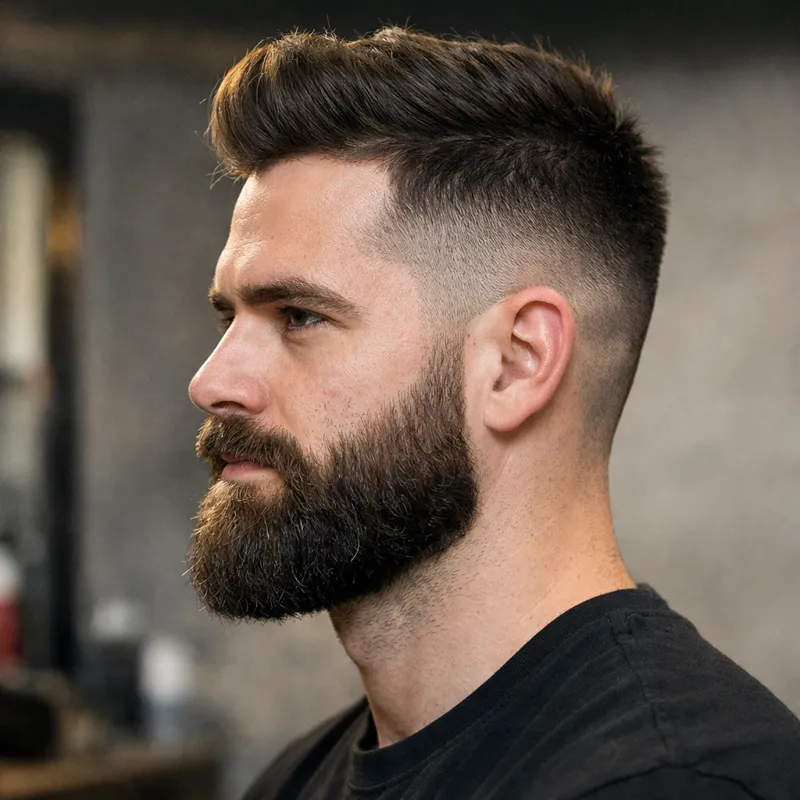
Why your beard cutting machine matters more than you think
You can have the best beard shape in mind, the sharpest jawline and the right products, but if your beard cutting machine is bad, the result will still look messy. A good trimmer is the difference between a crisp, professional finish and a patchy, uneven beard.
Think of your beard machine as the main tool in your grooming kit. It controls how precise your lines are, how even your stubble looks and how easy your daily routine feels. With the right choice, you spend less time fixing mistakes and more time just maintaining your style.
Trimmer vs clipper vs shaver: know your tools
Before you look at models, it helps to understand the three main types of beard cutting machines. Many men buy the wrong category and then blame the product when it is really a mismatch of tool and job.
Beard trimmer
A beard trimmer is designed for facial hair only. It usually has smaller blades, more precise guards and shorter length settings.
- Best for: shaping, maintaining stubble, short and medium beards
- Typical length range: 0.4–20 mm depending on the model
- Strength: control and precision around the lips, neckline and cheeks
Hair clipper
A clipper is made for head hair first. It has wider blades and stronger motors, and it is excellent at removing bulk.
- Best for: long beards, heavy growth, and cutting head hair
- Typical length range: 1–35 mm with guards
- Strength: power and speed on thick hair
Electric shaver
An electric shaver removes hair down to skin level. It does not shape the beard; it cleans the parts you want to keep completely smooth.
- Best for: bald fades on the head, clean cheeks, smooth neck under the beard
- Types: foil shavers (straighter lines) and rotary shavers (more flexible on curves)
In practice, you often combine at least two of these: a trimmer or clipper for the beard itself, and a shaver to clean the skin around it.
Key features of the best beard cutting machine
You do not need every feature on the shelf, but there are a few that really change your daily experience. Focus on these before you look at colors, cases or marketing claims.
1. Blade quality and material
The blade is what actually touches your beard, so it is the first thing to check.
- Stainless steel blades: common, durable and easy to maintain. Good for most users.
- Titanium-coated blades: stronger and more resistant to wear; they usually stay sharp longer.
- Ceramic blades: stay cool and sharp but are more fragile if dropped.
Look for “self-sharpening” blades if you want less maintenance. They lightly sharpen against each other as they move, which helps keep the cut smooth over time.
2. Motor power
A weak motor pulls hair instead of cutting it. That is when you feel tugging and see uneven patches.
- Light beards and fine hair: most standard trimmers are enough.
- Thick, coarse or curly beards: you need a stronger motor, often marketed as “high-torque” or “professional grade”.
If your beard feels like it always fights the machine, upgrade the motor before changing your entire routine.
3. Length settings and adjustability
Your ideal length is rarely exactly what the factory chose. The more control you have, the easier it is to get a consistent result every time.
- Check the minimum length if you like a very short 3–5 day stubble.
- Check the maximum length if you have a fuller beard or want to keep length on the chin.
- Look for small steps between lengths (0.2–0.5 mm for stubble, 1 mm for longer beards).
Dial-style adjusters or built-in adjustable combs are practical for home use because you do not lose small guards.
4. Corded vs cordless
This choice changes how flexible your grooming routine is.
- Cordless only: easier to handle, great for travel and small bathrooms, but you depend on battery life.
- Corded only: unlimited use time and constant power, but you are tied to a plug.
- Corded/cordless hybrid: the most versatile: you use it cordless and plug in if the battery runs low.
5. Battery life and charging
If you shave several times a week, battery details are crucial.
- Run time: 60–90 minutes is a good standard for home use.
- Charging time: anything from 1 to 8 hours. Fast charge (for example, 5 minutes for one shave) is very practical.
- Charging port: USB-C or standard USB is more convenient than a proprietary charger.
6. Wet & dry use and cleaning
Some beard cutting machines are designed only for dry use. Others can be rinsed under water or used with shaving gel.
- Water-resistant housing: lets you rinse the head for faster cleaning.
- Fully waterproof models: you can use them in the shower.
- Cleaning station: high-end shavers may include a dock that cleans and lubricates the blades automatically.
7. Ergonomics and grip
The more angles you use on your face, the more important the grip becomes. Look for a handle that feels safe in your hand and controls that are easy to reach without changing your position.
8. Noise level
A powerful motor will always make some noise, but the best machines keep it controlled. If you trim early in the morning or late at night, a quieter motor matters more than you think.
How to choose the right beard cutting machine for your style
Now that you know the main features, connect them to your actual beard style and habits. This is where you avoid overbuying and get exactly what you need.
1. For light stubble and short beards
If you like a clean office look with stubble or a short boxed beard, focus on precision and control.
- Choose a beard trimmer with fine adjustments from 0.4 to about 10 mm.
- Prefer self-sharpening stainless or titanium blades for low maintenance.
- Look for rounded tips on the blades to reduce irritation on sensitive skin.
2. For dense, long or curly beards
Full beards with volume need power and longer guards.
- Consider a clipper or a high-powered trimmer capable of 20–30 mm or more.
- Check that it includes wider guards and does not clog easily with thick hair.
- A corded/cordless model is useful, because long beards take more time to trim.
3. For sharp lines, fades and modern beard shapes
If your style depends on clean cheek lines, a tight neckline and faded sideburns, precision is everything.
- Look for a trimmer with a T-blade or narrow blade head to see exactly where you are cutting.
- Pair it with a foil shaver to clear cheeks and the lower neck down to skin level.
- Check that the machine can cut at 0 or near-zero length for blending.
According to Jake Thompson, a master barber with years of experience shaping beards and fades, the combination of a precise trimmer and a foil shaver gives most men the control they need to keep barbershop-level lines at home between visits.
4. For frequent travelers
If you are often on the move, charging and size become more important than raw power.
- Choose a compact cordless trimmer with at least 60 minutes of battery life.
- Prefer models with USB charging so you can use the same cable as your phone.
- Check that the voltage is 100–240 V if you will plug it in abroad.
5. For sensitive skin
If you often get redness, irritation or bumps, look for features that reduce friction and pressure on your skin.
- Rounded or hypoallergenic blades and guards.
- Wet & dry models, so you can trim with gel or foam.
- Multiple passes with a clean machine rather than one aggressive pass with a dull blade.
Best beard cutting machine types for home use
Instead of listing specific brands, it is more useful to think in terms of “profiles”. Find yourself in one of these and then look for a machine that matches the description.
Everyday stubble user
- Lightweight cordless trimmer
- Short length range: 0.4–7 mm
- Simple dial or one adjustable comb
- Quick-charge battery
Full beard owner
- Stronger motor (clipper style)
- Length up to 25–30 mm
- Multiple guards for cheeks and chin
- Corded/cordless option for longer sessions
Detail perfectionist
- Narrow or T-shaped blade
- 0 mm or close-cut setting
- Foil shaver for clean cheeks
- Fine control around moustache and lips
When you match your profile to a type of machine, choosing a concrete model becomes much easier. You simply search within that category instead of comparing everything with everything.
How to use a beard cutting machine for a clean result
Once you have the right tool, the next step is to use it in the right order. This simple routine works for most beards and keeps things predictable.
Step 1: Wash and dry your beard
Clean hair cuts more evenly. Wash your beard with a mild beard shampoo, rinse well and dry it completely. Wet hair sticks together and gives a false sense of length.
Step 2: Comb everything in one direction
Use a beard comb or brush to detangle and align the hair. Comb downwards on the cheeks and chin, and outwards on the jawline. This shows the real shape you are working with.
Step 3: Set a starting length
Always start longer than you think. Attach a guard that is one or two steps longer than your usual length.
- Trim the whole beard evenly.
- Check the result in the mirror and under different light if possible.
- Go shorter step by step until you reach the length you like.
Step 4: Shape the cheeks
Remove the guard or switch to a shorter setting for the cheek lines.
- Decide on a natural or sharp cheek line. Natural means following your growth; sharp means defining a clean boundary.
- Use the edge of the blade and small movements rather than long strokes.
Step 5: Define the neckline
The neckline is where many otherwise good beards fail. A clear rule helps: imagine a curve from just behind one ear, under the jaw, to the same point on the other side. Everything below that line on the neck should be cleaned.
- Trim first with the trimmer to shorten the hair.
- If you want a perfectly smooth neck, finish with a razor or electric shaver.
Step 6: Refine the moustache
For the moustache, precision matters more than power.
- Use a lower length than the rest of the beard if you do not want hair over your upper lip.
- Close your mouth and follow the line of your lip using just the corner of the blade.
Step 7: Final check and clean-up
Brush off loose hair, check for stray hairs under different angles and do small corrections. Then clean the machine: remove the guard, tap out hair, and brush or rinse the head according to the instructions.
Maintenance tips to keep your beard machine sharp
A good beard cutting machine can last many years if you treat it well. If you never clean or oil it, it will feel blunt long before the blades are actually worn out.
After every use
- Remove the guard and tap out the hair.
- Use the cleaning brush to clear hair between the blades.
- If the model allows it, rinse the head under running water and dry it carefully.
Once a week (or every few trims)
- Apply a drop of clipper oil on the blades while the machine runs for a few seconds.
- Check for any loose screws or parts and tighten if needed.
- Recharge the battery before it is completely empty to prolong its life, unless the manual says otherwise.
When to change blades or machines
- You feel pulling even after cleaning and oiling.
- The machine makes unusual noise or vibration.
- The battery cannot hold enough charge for a single trim.
If only the blades are worn and your model allows replacement, that is usually cheaper and more sustainable than buying a new machine.
Beard products that work well with cutting machines
Your beard cutting machine does most of the work, but a few simple products can make trimming easier and the result better.
Beard wash
Use a dedicated beard shampoo instead of regular hair shampoo or body wash. Beard shampoos are usually softer on the skin and help avoid dryness and itchiness.
Beard oil
After trimming, a few drops of beard oil soften the hair, reduce frizz and give a healthy look. It also helps your skin stay comfortable, especially if you use the machine very close.
Beard balm or styling product
If you have a longer or wavy beard, a light balm can help you control shape and direction. Apply it after oil, then comb the beard into place so you can see if any small adjustments are needed.
Frequently asked questions about beard cutting machines
How often should I replace my beard cutting machine?
If you clean and oil it regularly, a good beard cutting machine can easily last 3–5 years for home use. Replace it earlier if the motor weakens, the battery dies quickly or new blades do not restore a smooth cut.
Can I use a hair clipper to trim my beard?
Yes, you can use a hair clipper for your beard, especially if it is long or very dense. However, clippers are less precise around the lips and cheek lines, so many men combine a clipper for bulk and a trimmer for detailing.
Is a corded or cordless beard machine better?
Corded machines give constant power and never run out of battery, which is useful for very thick beards. Cordless models are more comfortable and travel friendly. A corded/cordless hybrid offers the best balance for most users.
What length should I set for my beard?
It depends on your face shape, density and style. As a rough guide, 1–3 mm works for light stubble, 4–8 mm for heavy stubble, and 10–25 mm for short to medium beards. Start longer and go shorter slowly until you like the result.
How do I avoid irritation when using a beard cutting machine?
Keep the blades clean and lightly oiled, trim on clean and dry hair, and avoid pressing too hard on the skin. If you have sensitive skin, choose rounded blades, trim more often with shorter sessions and apply beard oil or a gentle moisturizer afterwards.
Can one beard cutting machine handle both my hair and beard?
Many modern clippers and powerful trimmers can cut both head hair and beards if they include the right guards. For very detailed beard work, you may still prefer a dedicated trimmer with a narrower blade for maximum control around the mouth and neckline.