
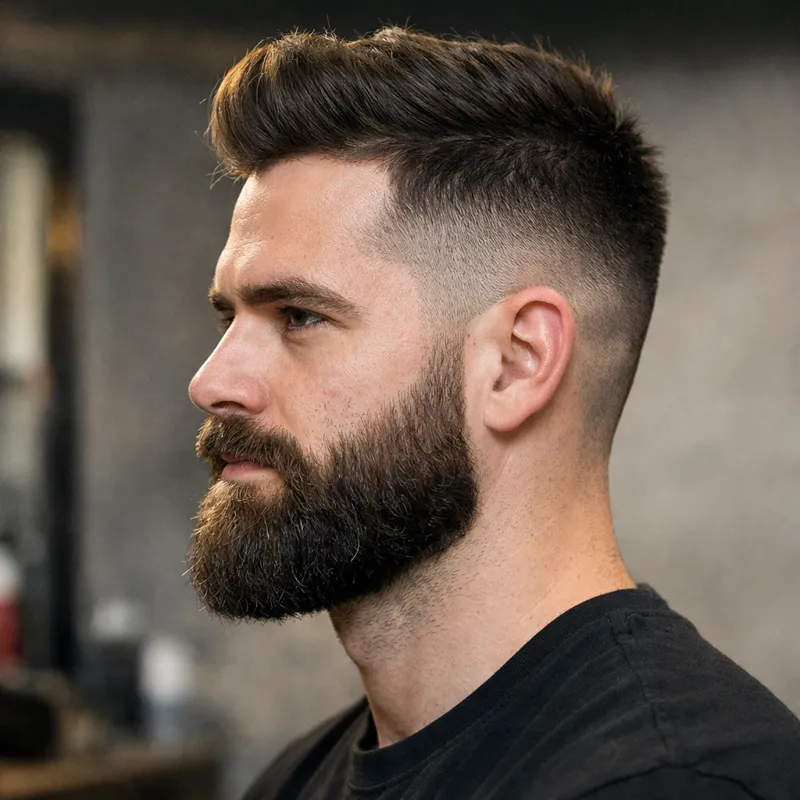
If you want a beard that looks sharp every day, you need two things: a clear idea of the shape you’re going for and a beard trimmer that actually fits your face, hair type and routine. The wrong tool makes grooming frustrating. The right one turns a five-minute trim into an easy habit you can stick to.
In this guide you’ll see what makes a great beard trimmer, how to compare the different types, and exactly what to look for depending on your beard style, budget and experience level.
Beard Trimmer vs Hair Clipper vs Shaver: Know Your Tool
Before you choose a beard trimmer, it helps to be clear about what it actually does compared with other grooming tools.
- Beard trimmer: Designed for detail work and controlled length on the face. Great for stubble, short beards and shaping cheek and neck lines.
- Hair clipper: Stronger motor and wider blades for bulk removal on the head. Can be used on long beards, but usually less precise for detailed shaping.
- Electric shaver: Built to shave down to almost clean skin. Perfect for a clean shave or blending the neckline, not for maintaining beard length.
You can trim your beard with clippers or even scissors, but if you want a consistent length and clean edges, a dedicated beard trimmer is the easiest and most efficient option.
Key Features That Make a Beard Trimmer “Good”
When you compare models, focus on the parts that change your daily experience: how clean the cut feels, how easy it is to control length, and how much maintenance the tool needs.
1. Blade Quality and Material
The blades are the heart of any beard trimmer. They decide whether the trim feels smooth and controlled or like the trimmer is dragging and pulling hairs.
- Stainless steel blades: The standard. Durable, rust-resistant and easy to maintain. A good choice for most users.
- Titanium-coated blades: Stay sharp longer and resist wear. Worth it if you have a thick, coarse beard or you trim several times a week.
- Ceramic blades: Run cooler and stay sharp, but can be more fragile if dropped and slightly harder to source replacements for on some models.
- Self-sharpening systems: Some trimmers are designed so the blades lightly rub and sharpen each other as they run, which helps keep the cut clean over time.
If your beard is dense or curly, prioritize a trimmer with strong, sharp blades and a solid reputation for not tugging. That’s usually mentioned clearly in product descriptions and user feedback.
2. Length Settings and Adjustability
Your ideal length control depends on the style you wear most of the time.
- Stubble (0.4–2 mm): Look for a trimmer with very fine increments (0.2–0.5 mm) and low minimum length. Rotary dials or integrated guards work well here.
- Short beards (3–10 mm): You need at least 5–10 solid length steps so you can shape the cheek area, jawline and moustache separately.
- Medium to long beards (10–25+ mm): Choose a trimmer that includes longer comb attachments and a motor strong enough to move through bulk without stalling.
Some trimmers use adjustable combs with a dial, while others rely on multiple snap-on guards. Dials are convenient and compact; multiple guards often feel more stable on longer beards but you’ll need to store them somewhere.
3. Motor Power and Performance
A weak motor means pulling, patchy spots and more passes over the same area. That’s uncomfortable and wastes time.
- If you have fine or average facial hair, most mid-range trimmers are powerful enough.
- If your beard is very thick, dense or curly, prioritize a trimmer with a high-torque motor or one marketed for “coarse” or “thick” hair.
- If you’ll also use it for head shaving or body grooming, consider a hybrid model closer to a clipper, with more power and wider blades.
Noise level is another clue: very quiet, weak trimmers often struggle on heavy growth. A solid buzz normally means enough power for most beards.
4. Corded vs Cordless (or Both)
The power source shapes how and where you can use your beard trimmer.
- Cordless trimmers: Flexible and easy to maneuver. Look for at least 45–60 minutes of runtime and a clear battery indicator.
- Corded trimmers: Constant power and no downtime, but you’re tied to a wall socket and the cable can get in the way.
- Corded/cordless hybrids: The most versatile option: you can trim cordless, then plug in if the battery is low.
If you travel a lot or trim in different rooms, cordless is usually more practical. If you rarely move the trimmer from your bathroom and you have a thick beard, a corded or hybrid model makes sense.
5. Battery Type and Charging
Battery quality matters more than most people think, especially if you trim two or three times per week.
- Ni-MH batteries: Older technology, cheaper, but tend to lose capacity over time and often need longer charging.
- Li-ion (lithium-ion) batteries: Modern standard. Faster charging, better power output and less memory effect.
- Quick-charge function: Useful if you forget to charge. Ten to fifteen minutes can give you enough power for a quick trim.
- USB charging: Convenient if you travel; you can plug into a power bank or laptop.
For daily or frequent use, a Li-ion battery with at least 60 minutes of runtime makes your routine smoother and more predictable.
6. Waterproofing and Cleaning
Cleaning your trimmer keeps the blades sharp and reduces irritation. How easy that is depends on the design.
- Fully washable/body waterproof: You can rinse the entire trimmer under the tap and sometimes use it in the shower. Convenient but always check the manual first.
- Washable heads only: You remove the blade assembly and rinse it, while keeping the body dry.
- Dry-clean only: You use the included brush to remove hair from the blades. This works, but it’s slower and you have to be more consistent.
If you know you’re not great at regular maintenance, a waterproof, easy-rinse trimmer lowers the barrier. Just remember to dry the blades properly afterwards.
7. Ergonomics and Grip
You hold a trimmer close to your face, often at angles that are a bit awkward. A comfortable grip helps you keep lines straight and pressure even.
- Check for rubberized or textured areas so the trimmer doesn’t slip.
- Look at the weight and balance: very heavy models can be tiring for longer sessions; very light models can feel cheap and unstable.
- A slim neck or taper near the head makes it easier to see what you’re doing when lining up edges.
If possible, pick up a similar-sized trimmer in a store before buying. Your hand size and grip style matter more than you might expect.
8. Attachments and Accessories
Attachments expand what your beard trimmer can do beyond basic shaping.
- Comb guards: Different lengths for cheeks, chin and neckline.
- Detail trimmer heads: Narrow blades for precision work around the moustache and lips.
- Nose and ear trimmer: Often included in multi-grooming kits.
- Storage stand or pouch: Helps keep guards together and protects the trimmer when travelling.
- Oil and cleaning brush: Simple but essential for maintenance.
If you only want a clean short beard, you don’t need a big set of attachments. But if you like experimenting with different lengths and shapes, a multi-grooming kit can be very good value.
How to Match a Beard Trimmer to Your Beard Style
Different beard styles demand different things from a trimmer. Think about the shape you wear most of the time, not the one you change to once a year.
For Designer Stubble
Stubble looks effortless, but it’s one of the most demanding styles in terms of precision. You’re working in millimetres.
- Choose a trimmer with very short minimum length (0.2–0.4 mm).
- Look for small, even length steps up to 2–3 mm so you can fine-tune your ideal look.
- A compact head helps reach tight areas around the nostrils and under the bottom lip.
For a neat finish, trim everything in one direction, then flip the trimmer and go against the grain to catch missed hairs. Finally, outline the cheeks and neck with no guard.
For Short Boxed Beards
The short boxed beard keeps a clean outline with controlled length on the cheeks and jaw. It suits many face shapes and works in most workplaces.
- You’ll need a trimmer that covers the 3–10 mm range comfortably.
- A detail edge or precision blade is useful for drawing in sharp cheek lines.
- Good battery life helps because this style needs maintenance every few days to stay sharp.
Start by trimming the whole beard to one length. Then adjust a guard 1–2 mm shorter and clean up the lower neck area to create a subtle fade. Finally, define the upper cheeks.
For Medium and Long Beards
Longer beards need a mix of tools: a solid beard trimmer and a good comb or brush to control the direction of the hair.
- Pick a trimmer with long guards (up to 20–25 mm or more).
- Look for a powerful motor and strong blades to handle bulk.
- Consider a model that’s closer to a clipper if you also cut your own hair.
Comb the beard outwards, then trim very small amounts at a time, especially around the chin and sides. Use the trimmer without a guard only for small detailing, such as the line where the beard meets the neck.
For Goatees and Detailed Styles
Goatees, anchor beards and sharp jawline styles rely heavily on clean edges. Detail control is more important than raw power.
- Use a trimmer with a narrow detail head or interchangeable precision blade.
- Make sure it has good visibility around the blade so you can see the exact line you’re cutting.
- Opt for multiple short length settings around the mouth to balance moustache and chin.
Draw the outline first with the guard off, using light pressure. Once you’re happy with the shape, snap on a guard and reduce the overall length inside the edges.
How to Choose the Right Beard Trimmer: Step-by-Step
Instead of comparing dozens of models at once, walk through these steps and narrow your options quickly.
Step 1: Define Your Main Use Case
Ask yourself three questions:
- Do you mainly wear stubble, short beard or long beard?
- Will you use the trimmer only on your face, or also on head and body?
- How often will you trim: daily, a few times a week, or less?
Your answers decide whether you need a precise stubble trimmer, a versatile all-rounder, or a more powerful hybrid closer to a clipper.
Step 2: Set a Realistic Budget
You don’t have to buy the most expensive trimmer to get a clean beard, but extremely cheap models usually cut corners on blades, motor or battery.
- Entry-level: Basic stainless steel blades, limited length settings, Ni-MH battery. Good for occasional trimming or backup.
- Mid-range: Better blades, Li-ion battery, solid power and more precise guards. Ideal for most users.
- Premium: High-quality materials, strong motors, wide length range and comfort features like waterproofing and quiet operation.
If you trim several times a week, a reliable mid-range or premium trimmer pays off over time in comfort and longevity.
Step 3: Decide on Cordless, Corded or Hybrid
Think about your routine and bathroom setup:
- If you often move around or trim away from a power outlet, go cordless.
- If you have a fixed grooming spot and a very thick beard, a corded or hybrid model ensures consistent power.
- If you travel frequently, cordless with USB charging is the most flexible option.
Step 4: Check Length Range and Precision
Match the product specs to your beard style.
- For stubble, look for 0.2–0.5 mm steps and a minimum length below 1 mm.
- For short beards, make sure the trimmer covers 3–10 mm with enough steps to fine-tune transitions.
- For long beards, verify that it includes combs in the 10–25 mm range and handles bulk well.
Step 5: Evaluate Maintenance and Cleaning
Be honest about how much effort you’ll really invest in cleaning your trimmer.
- If you like fast routines, a waterproof, fully washable model is more forgiving.
- If you enjoy taking care of your tools, a higher-end trimmer with oiling and brushing can last longer and feel smoother.
- Check how easy it is to remove the blade and whether replacement parts are available.
Step 6: Read the Fine Print on Warranty and Support
A beard trimmer is a tool you’ll use several times a week. Warranty, spare parts and support matter.
- Look for at least 2 years of warranty where possible.
- Check if the brand offers replacement blades and guards.
- Consider customer support reputation; it’s useful if anything goes wrong.
How to Use Your Beard Trimmer for a Clean, Even Beard
Once you’ve picked a good trimmer, the way you use it will decide how professional your beard looks. Follow this simple routine.
1. Start with a Clean, Dry Beard
Wash your face and beard with a gentle cleanser, then dry thoroughly. Wet hair lies flat and can hide its true length, so trimming dry gives a more accurate result.
2. Comb or Brush the Beard
Use a beard comb or small brush to detangle and direct the hair in one direction. This makes it easier for the trimmer to cut evenly and prevents snagging.
3. Begin Longer Than You Think
Always start at a longer guard length, then work down. It’s easy to remove more length if you need to; you can’t put hair back once you’ve gone too short.
4. Trim With and Against the Grain
First, go with the grain (in the direction your hair grows) to remove bulk gently. Then go against the grain to catch any stubborn hairs and refine the length.
5. Shape the Cheek Line
Remove the guard and define where your beard should start on the cheeks. Follow your natural growth pattern, cleaning up stray hairs above the main line.
6. Clean Up the Neckline
A clean neckline can transform your whole beard. As a simple rule, imagine a curve from behind one ear, under the jaw, to behind the other ear. The beard should sit above this line; everything below is trimmed or shaved.
7. Detail the Moustache
Use a short guard or no guard to tidy the moustache. Trim hairs that fall over your lip and blend the length into the rest of the beard so the transition looks intentional, not accidental.
8. Rinse or Brush the Trimmer
When you’re done, clean the blades according to the manufacturer’s instructions. A quick rinse or brush and a drop of oil on the blades keeps the trimmer working smoothly.
Finish with a small amount of beard oil to soften the hair and soothe the skin. It helps reduce itch and gives a healthier, controlled look.
Beard Trimmer Care: Make It Last Longer
Good maintenance extends the life of your trimmer and keeps every trim comfortable.
Clean After Every Use
Even a short trim leaves fine hair and skin cells in the blades. Over time, that buildup causes friction and dulls the cutting edges.
- Turn the trimmer off and remove the guard.
- Tap gently to remove loose hair, then brush between the teeth.
- If your model allows it, rinse the blades under warm water and dry thoroughly.
Oil the Blades Regularly
A single drop of oil on each side of the blade, then running the trimmer for a few seconds, reduces friction and prevents rust. Many manufacturers recommend oiling every few uses.
Store It Properly
Keep your trimmer in a dry place, away from direct moisture and steam. Use a stand or pouch if included, and avoid wrapping the cord too tightly around the body if it’s a corded model.
Replace Guards and Blades When Needed
If you notice pulling, uneven cutting or visible wear on the teeth, it may be time to replace the blades or guards. Check whether your model offers spare parts before you buy, especially if you plan to keep it for years.
Common Beard Trimmer Mistakes to Avoid
A few simple errors can ruin a good trim. Watch out for these common mistakes.
- Trimming when the beard is wet: It makes the hair lie differently and you may cut more than you intend.
- Starting at the shortest guard: This is how accidental “too short” beards happen.
- Ignoring the neckline: A messy neck can make even a well-shaped beard look unkempt.
- Pressing too hard: Let the trimmer do the work; heavy pressure irritates the skin and creates uneven patches.
- Skipping cleaning and oiling: Dirty, dry blades tug, heat up and wear out faster.
FAQ: Best Beard Trimmer and How to Choose the Right One
What should I look for in a beard trimmer if I have a very thick beard?
If your beard is thick or coarse, prioritize a trimmer with a strong motor, high-quality blades (titanium or ceramic are good options), and longer guards. Corded or hybrid models often perform better on dense facial hair.
Is a cordless beard trimmer better than a corded one?
Neither is automatically better. Cordless trimmers are more flexible and travel-friendly, while corded models provide constant power and never run out of battery. A corded/cordless hybrid combines both advantages and works well for most users.
How often should I replace my beard trimmer blades?
With regular cleaning and oiling, good-quality blades can last one to several years. Replace them when you notice pulling, uneven cutting or visible wear, or follow the interval recommended in the manufacturer’s manual.
Can I use a hair clipper as a beard trimmer?
You can use a hair clipper on a beard, especially if it is long, but clippers are less precise for detail work around the cheeks, neck and moustache. For controlled shapes and stubble, a dedicated beard trimmer is more practical.
Should I choose a waterproof beard trimmer?
A waterproof trimmer is convenient if you want to rinse the blades quickly under the tap or trim in the shower. If you prefer dry trimming and you clean your tools carefully, a non-waterproof model can work just as well.
What is the best beard trimmer length for stubble?
Most people find their ideal stubble between 0.5 mm and 2 mm. Start longer, see how it looks after a few hours, then adjust down in small steps until you find the length that suits your face shape and hair density.
How do I avoid irritation when trimming my beard?
Trim on clean, dry skin using light pressure and sharp, well-oiled blades. Avoid going over the same area too many times, and finish with a gentle, alcohol-free aftershave balm or a few drops of beard oil to calm the skin.