
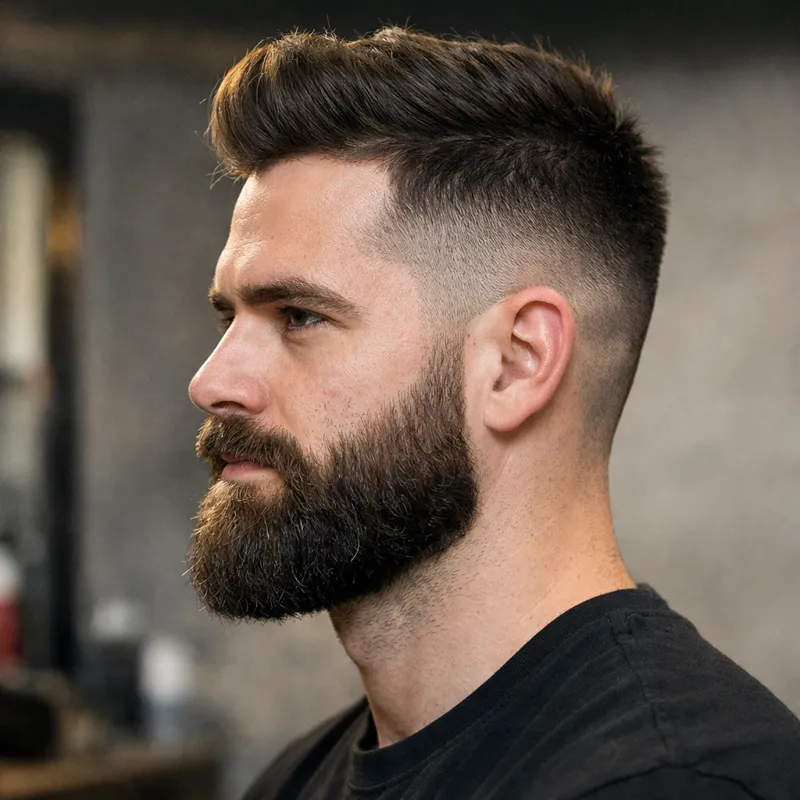
If you want a beard that looks sharp every single day, the right beard trimmer is your best friend. The wrong one will tug, leave uneven lines, and make you dread grooming. The right one will glide through your facial hair, keep your style consistent, and save you time and money on barbershop visits.
In this guide, you’ll learn how to choose the best beard trimmer for your face, your beard type, and your routine – and how to actually use it like a pro at home.
1. Start With Your Beard Goals (Length, Style and Lifestyle)
Before looking at brands or price tags, get clear on what you want your beard to look like and how much effort you’re willing to put in. Your goals will tell you exactly what kind of beard trimmer you need.
1.1 What beard length do you want most days?
- Light stubble (1–2 mm): You want that “I didn’t shave today but it’s on purpose” look. You’ll need a trimmer that adjusts in tiny steps (0.2–0.5 mm) for precision.
- Heavy stubble / short beard (3–7 mm): Great for definition without a big beard. You’ll need reliable guards in this range and a strong motor so the cut looks even.
- Medium to long beard (10 mm+): You want shape, bulk and clean cheek/neck lines. You’ll need long guards, a powerful motor and good battery life.
1.2 How defined do you want your edges?
- Soft, natural lines: A standard beard trimmer head is usually enough.
- Sharp, barbershop-style edges: Look for a trimmer with a detail or T-blade attachment, or a model that can cut down to 0–0.4 mm for crisp cheek and neck lines.
1.3 How much time do you realistically have?
- Everyday trimmer for quick touch-ups: Prioritize cordless use, fast charging and easy cleaning (ideally rinseable under water).
- Weekend grooming sessions: You can live with a corded model or longer charge time if performance is strong.
Once you know your usual length, edge preference and routine, it becomes much easier to filter out the trimmers that don’t fit your life.
2. Key Beard Trimmer Features You Should Actually Care About
Beard trimmers are full of marketing terms, but only a few features really matter for performance and comfort. Focus on these when you compare models.
2.1 Blade material and quality
- Stainless steel blades: The standard choice. Good durability, easy to maintain, suitable for most men.
- Titanium-coated blades: Stay sharp longer and resist corrosion better. Helpful if you have dense, coarse facial hair.
- Ceramic blades: Stay cooler and sharp for a long time, but can be more fragile if dropped.
Sharp blades matter more than most people think. They reduce tugging, skin irritation and patchy spots. If your current trimmer pulls, it’s usually a blade problem, not your beard.
2.2 Motor power
A weak motor struggles with thick or curly beards. You’ll feel it as tugging and uneven cutting. A stronger motor glides through dense growth and keeps the length even in fewer passes.
- Fine or average beard: Most mid-range trimmers will do the job.
- Thick, coarse or curly beard: Look for models that highlight a high-performance motor or “turbo” mode.
2.3 Length settings and guards
This is where a lot of regret happens. You buy a trimmer and then realize it doesn’t cover the length you actually wear.
- Built-in dial / adjustable head: Ideal for short beards and stubble (0.5–10 mm) with small step increments.
- Separate snap-on guards: Better if you vary from short beard to mid or long (up to 20–30 mm or more).
- Detailing attachments: Narrow heads for mustache, soul patch and tight areas around the lips.
2.4 Corded vs cordless and battery life
- Cordless only: Maximum freedom of movement. Check that you get at least 45–60 minutes of runtime from a full charge.
- Corded and cordless: Great if you sometimes forget to charge. You can plug in and finish your trim without waiting.
- Fast charging: A quick-charge feature (for example 5–10 minutes for one trim) is very convenient for busy mornings.
2.5 Wet & dry use and cleaning
- Dry use only: Fine for most men, as long as you brush or blow loose hair from the blades after each use.
- Rinseable head: You can rinse the cutting head under water. This keeps the trimmer cleaner with less effort.
- Fully waterproof: You can trim in the shower and rinse the whole unit. Handy if you prefer wet trimming or have sensitive skin.
2.6 Build quality and ergonomics
You’ll use your trimmer a few times a week, so how it feels in your hand matters.
- Look for a solid, balanced weight – not too heavy, but not flimsy.
- Check for a non-slip grip, especially if you plan to use it in the bathroom with damp hands.
- Prefer simple controls: an on/off button and a clear way to change lengths without guesswork.
3. Match Your Beard Type to the Right Trimmer
Not every beard behaves the same. Straight, soft stubble trims very differently from a dense, curly beard. Here’s how to match your facial hair type with the right tool.
3.1 For light stubble and 3-day beards
- Choose a trimmer with fine length control between 0.5 and 5 mm.
- Look for an adjustable dial so you can quickly find your sweet spot length and stay consistent.
- Prioritize a compact head to move easily around the lips and jawline.
If you always want that 3-day stubble, set your trimmer to your favorite length and use the same setting every 2–3 days. Consistency is what makes the look intentional.
3.2 For short boxed beards
A short boxed beard is neat, slightly fuller than stubble, with defined cheek and neck lines.
- Pick a trimmer that covers 3–10 mm comfortably.
- Make sure it includes detail attachments or a narrow blade for edges.
- Choose a model with a strong motor if your beard is dense around the chin.
3.3 For medium and long beards
Once your beard grows beyond 10–15 mm, you’re no longer just cutting; you’re shaping. You may even combine a beard trimmer with scissors.
- Choose a trimmer with long guards (up to 20–30 mm or more).
- Make sure the trimmer is powerful enough to go through thicker areas without stalling.
- Look for a wider head to cover more surface on the cheeks and jaw.
For long beards, many men keep two tools: a main trimmer for bulk and lines, and a small detail trimmer for the mustache and lip line.
3.4 For curly or very coarse beards
- Prioritize sharp, high-quality blades (titanium or premium steel).
- Pick a trimmer with a strong motor and possibly a “turbo” mode.
- Consider a model designed for both beard and hair if your beard is especially dense.
With curly beards, work slowly and stretch the skin slightly with your free hand so the hairs stand up to the blade. The right trimmer plus good technique makes a huge difference.
4. How to Use a Beard Trimmer Step by Step
Once you own a good trimmer, the way you use it will decide how your beard looks. Follow this step-by-step routine to get clean, even results at home.
4.1 Prepare your beard and skin
- Wash your face and beard with a gentle cleanser or beard wash to remove oil and dirt.
- Dry completely. Trimming a dry beard gives you more accurate length and shape.
- Comb your beard downwards with a beard comb to remove tangles and see the natural direction of growth.
4.2 Choose your starting length
Always start longer than you think you need. You can shorten a beard, but you cannot glue hair back.
- For stubble: start at 3–4 mm, then adjust.
- For short beards: start at 6–8 mm.
- For longer beards: start with your longest guard and work your way down.
4.3 Trim the bulk of the beard
- Attach the chosen guard.
- Trim against the direction of hair growth so the trimmer catches more hairs evenly.
- Work in sections: cheeks, jawline, chin, then neck.
- Use gentle, controlled strokes. Let the trimmer do the work; don’t press too hard.
4.4 Define the neckline
The neckline can make or break your beard. A clean, well-placed line instantly looks more professional.
- Look straight ahead in the mirror and tilt your head slightly back.
- Visualize a curved line from just above your Adam’s apple up to the point where your jaw meets your ear on each side.
- Remove the guard and outline this curve with the naked trimmer blade.
- Shave everything below this line either with the bare trimmer or a razor, depending on how smooth you want it.
4.5 Clean up the cheek lines
- Decide if you want a natural cheek line (following your natural growth) or a sharp, straight one.
- For a natural line, just clean any stray hairs above your main growth area with the naked blade.
- For a sharp line, use the corner of the blade or a detail trimmer to draw a smooth diagonal or slightly curved line from your sideburn to the corner of your mouth.
4.6 Shape the mustache
- Comb your mustache down over your upper lip.
- Use a shorter guard than your beard length if you want the mustache to stand out less.
- With no guard, carefully trim the hairs that sit on your upper lip using the edge of the blade.
Take your time with the mustache – it’s the part other people see up close when you talk.
4.7 Final checks and finishing touches
- Run your fingers through your beard and check for uneven spots.
- Turn your head side to side in the mirror to compare both cheeks and jawlines.
- Rinse your face or brush off loose hairs, then apply a beard oil or light balm to soften the hair and soothe the skin.
5. Essential Tools and Products to Use With Your Trimmer
A beard trimmer can do a lot on its own, but a few supporting tools make the process smoother and the result cleaner.
- Beard comb or brush: Helps you detangle, see your natural growth and guide the trimmer evenly.
- Beard scissors: Useful for snipping stray hairs or adjusting the mustache with more control.
- Beard wash: A gentle cleanser that doesn’t dry out your skin like regular shampoo can.
- Beard oil: Softens the hair, reduces itch and gives a healthy, subtle shine.
- Beard balm or styling cream: Adds light hold and control for shaping, especially on medium and long beards.
- Aftershave or soothing lotion: Calms the skin on your neck and cheeks after edging with a bare blade.
6. Beard Trimmer Maintenance: Make It Last and Cut Like New
Even the best trimmer will start to pull and cut unevenly if you don’t take care of it. The good news: basic maintenance only takes a couple of minutes.
6.1 Clean after every use
- Turn the trimmer off and unplug it if it’s corded.
- Use the small cleaning brush (usually included) to remove hair from the blades and guards.
- If the head is rinseable, remove the blade head and rinse it under warm water. Dry it completely before reattaching.
6.2 Oil the blades regularly
Oiling keeps the blades moving smoothly and reduces wear.
- Place a drop or two of clipper oil along the moving blades.
- Turn the trimmer on for 10–15 seconds to distribute the oil.
- Wipe any excess oil gently with a cloth.
For most home users, once every few trims is enough, unless the manufacturer suggests otherwise.
6.3 Protect the battery
- Avoid leaving the trimmer permanently on the charger if the manual advises against it.
- Every now and then, let the battery run lower before fully charging it to keep it healthy.
- Store your trimmer in a dry place, not directly on a damp bathroom sink.
6.4 Replace parts when needed
Blades and guards can wear out or break. If you notice more tugging, louder noise or visibly damaged teeth, it’s time for a replacement head or a new trimmer, depending on the model.
7. Common Beard Trimming Mistakes (and How to Avoid Them)
Almost every guy makes the same mistakes when he starts trimming his beard. Avoid these and your results will instantly look more professional.
- Starting with a guard that’s too short: Always begin longer and work down slowly.
- Trimming on wet hair without a waterproof trimmer: Wet hair lies flatter and looks longer, so you often over-trim.
- Setting the neckline too high: If you cut above your natural crease, the beard can look like it’s floating on your face.
- Ignoring symmetry: Take a moment to compare both sides. Small adjustments make a big difference.
- Pressing too hard: This can create uneven patches and irritate the skin.
- Not cleaning or oiling the trimmer: That’s when pulling, redness and inconsistent cutting start.
8. Choosing Between a Beard Trimmer, Hair Clipper and Multi-Groomer
Many men wonder if they should buy a dedicated beard trimmer, a hair clipper, or a multi-grooming kit. Each option has its strengths.
8.1 Beard trimmer
Designed specifically for facial hair, usually with more precise length settings and smaller guards suited for beards and mustaches.
- Best for: Men who mainly want to manage their beard and maybe detail their sideburns and neck.
- Pros: Precise, compact, comfortable for facial contours.
- Cons: Not ideal for full haircuts.
8.2 Hair clipper
Built to cut large amounts of hair, fast. The head is usually larger and the guards go much longer.
- Best for: Men who also cut their own hair or want to keep very long beards at one overall length.
- Pros: Powerful, great for bulk cutting.
- Cons: Less precise for edges, mustache and tight curves under the jaw.
8.3 Multi-groomer
A base unit with several heads: beard trimmer, detail trimmer, body groomer, sometimes even a nose hair trimmer.
- Best for: Men who want one device for beard, body and other grooming areas.
- Pros: Versatile, space-saving, good value overall.
- Cons: Individual attachments may not be as strong or precise as a dedicated beard trimmer.
If your main focus is a great-looking beard, a dedicated beard trimmer plus a small nose/ear trimmer is often the most effective combo.
9. Styling Ideas: What Your Beard Trimmer Can Help You Achieve
A good beard trimmer opens the door to several classic and modern styles you can manage yourself at home.
- Designer stubble: Keep everything between 1–3 mm and clean the neckline slightly above Adam’s apple. Great if you want low maintenance but defined edges.
- Short boxed beard: 4–10 mm overall, with sharp cheek and neck lines and a slightly shorter mustache for a clean, corporate-friendly look.
- Goatee or circle beard: Chin and mustache connected, cheeks clean. Use the bare blade to outline, then a guard to keep length even.
- Faded beard: Blend from shorter on the cheeks and sideburns to longer on the jaw and chin. Use multiple guard lengths and take your time.
- Full beard with natural cheeks: Keep the bulk at your preferred length but only remove stray cheek hairs above your natural line.
Feel free to experiment gradually. Change only one thing at a time – for example, shorten the sides or adjust the neckline – so you can see what you like best.
10. Quick Checklist Before You Buy a Beard Trimmer
Use this checklist to compare models and choose the one that will actually work for you, not just look good on the box.
- Does it cover your usual beard length (stubble, short, medium, long)?
- Are the length steps small enough for the detail you want?
- Is the motor strong enough for your beard thickness?
- Do you prefer cordless use with at least 45–60 minutes of runtime?
- Is it easy to clean (brush only, rinseable head, or fully waterproof)?
- How does it feel in your hand in terms of weight, grip and button placement?
- Can you easily get replacement blades or guards if needed?
If a trimmer passes this checklist, it’s likely a solid choice that will serve you well for years with basic care.
Frequently Asked Questions About Beard Trimmers
How often should I trim my beard?
For short beards and stubble, trimming every 2–3 days keeps the length consistent. For medium and long beards, shaping once or twice a week is usually enough, with quick touch-ups around the neck and cheeks as needed.
Can I use a hair clipper as a beard trimmer?
You can use a hair clipper on your beard, especially for longer lengths, but it is less precise around curves and edges. For neat cheek and neck lines, a dedicated beard trimmer or detail trimmer is usually more comfortable and accurate.
Should I trim my beard wet or dry?
Trim your beard dry if you want precise control over the final length, because wet hair looks longer and lies flatter. Only trim wet in the shower if your trimmer is fully waterproof and you accept that the result may be slightly shorter than expected.
Why does my beard trimmer pull my hair?
Pulling usually means the blades are dull, dirty or dry. Clean the head thoroughly, oil the blades according to the instructions and check that the guard is properly attached. If the problem continues, the blades may need to be replaced or upgraded to a stronger model.
What is the best length for a professional-looking beard?
Most offices accept a short, well-shaped beard between 3 and 10 mm, with a clean neckline and tidy cheek lines. The exact length depends on your face shape and growth pattern, but keeping the edges sharp always makes the beard look more professional.
Do I really need to oil my beard trimmer blades?
Yes. A few drops of oil reduce friction, help the blades stay sharp longer and make trimming smoother. It only takes a few seconds and can extend the life of your trimmer significantly while also reducing irritation on your skin.